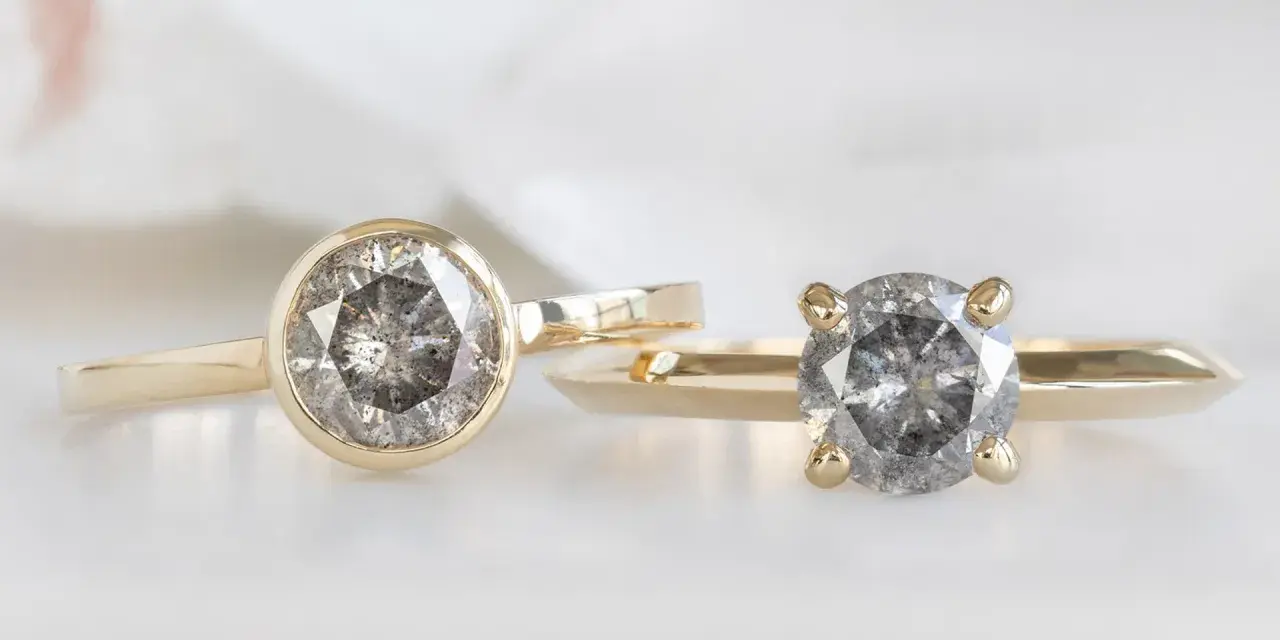
The bezel vs prong decision is really about how much protection, sparkle, and visual weight you want from a ring. In the UK, you will usually hear jewellers talk about claw settings rather than prongs, and bezel settings are often called rub-over settings. I will break down how each one changes the look, comfort, cleaning routine, and long-term care of a gemstone ring so you can choose the setting that fits real life, not just a photo.
What matters most is how the ring behaves on your hand
- A bezel wraps a rim of metal around the stone, so it is smoother, more secure, and less likely to snag.
- A claw setting shows more of the gemstone, which usually means more light, more sparkle, and a lighter look.
- Six claws are generally more secure than four, but a well-made four-claw ring still works well for many stones.
- Bezel settings are usually easier to live with day to day, while claw settings are usually easier to modify and resize.
- The best choice depends on stone shape, lifestyle, and whether you prefer modern restraint or classic brilliance.
How each setting holds the stone on a ring
At the structural level, the difference is simple. A bezel uses a continuous band of metal to hug the gemstone's edge, while a claw setting relies on small metal points to grip the stone from several sides. That makes the bezel feel more enclosed and architectural, while claws leave the centre stage open so the stone does most of the visual work.
In practical terms, the bezel grips the stone all around its edge, including the girdle, which is the stone's widest part. Claws hold the stone at discrete points, so more of the gemstone remains visible. That is why the same diamond can look sleeker in a bezel and more brilliant in claws, even before you factor in cut quality.
I also see a difference in personality. Bezels read as deliberate and modern; claws read as classic and light. Neither is automatically better, but they signal very different design priorities. Once that is clear, the real question becomes how each setting behaves in everyday wear.
Security and comfort are where the choice becomes obvious
If the ring will be worn every day, security and snagging matter just as much as style. A bezel has fewer exposed edges, so it is less likely to catch on knitwear, hair, gloves, or pockets. That smooth profile is one reason active wearers, healthcare workers, gardeners, and people who spend a lot of time with their hands often prefer it.
Claws can still be very secure, especially when they are well made and checked regularly. A six-claw setting generally offers more protection than a four-claw one, while four claws show a little more of the stone. The trade-off is that claws create more tiny contact points, which means more chances for wear, bending, or catching over time.
| Criterion | Bezel | Claw setting |
|---|---|---|
| Security | Very high, with metal wrapping the edge | High when well made, but dependent on claw integrity |
| Light and sparkle | More metal coverage, so a slightly quieter look | More open to light, usually brighter |
| Snagging | Minimal snag risk | More chance of catching on fabric or gloves |
| Maintenance | Lower daily fuss, harder to resize | More routine checking, easier to modify |
| Best for | Hands-on wear, clean lines, peace of mind | Classic solitaires, maximum visibility, extra brilliance |
If you wear the ring beside a wedding band, the whole head matters, not just the setting name. A bezel often makes stacking easier, but the gallery height and shank shape still decide whether the bands sit flush. That is the kind of detail people only notice after they have worn the ring for a few weeks, which is why I prefer to talk about comfort and structure together rather than as separate issues.
That leads naturally into the next part of the decision, because security is only half of the story. The other half is how the setting changes the way the stone looks.
Sparkle, shape, and the stone's silhouette change the result
Claws usually win on brilliance because they expose more of the gemstone to light. That extra openness lets the eye read the stone as brighter and less interrupted by metal. If you want the centre stone to feel like the star of the ring, claws usually do that job best.
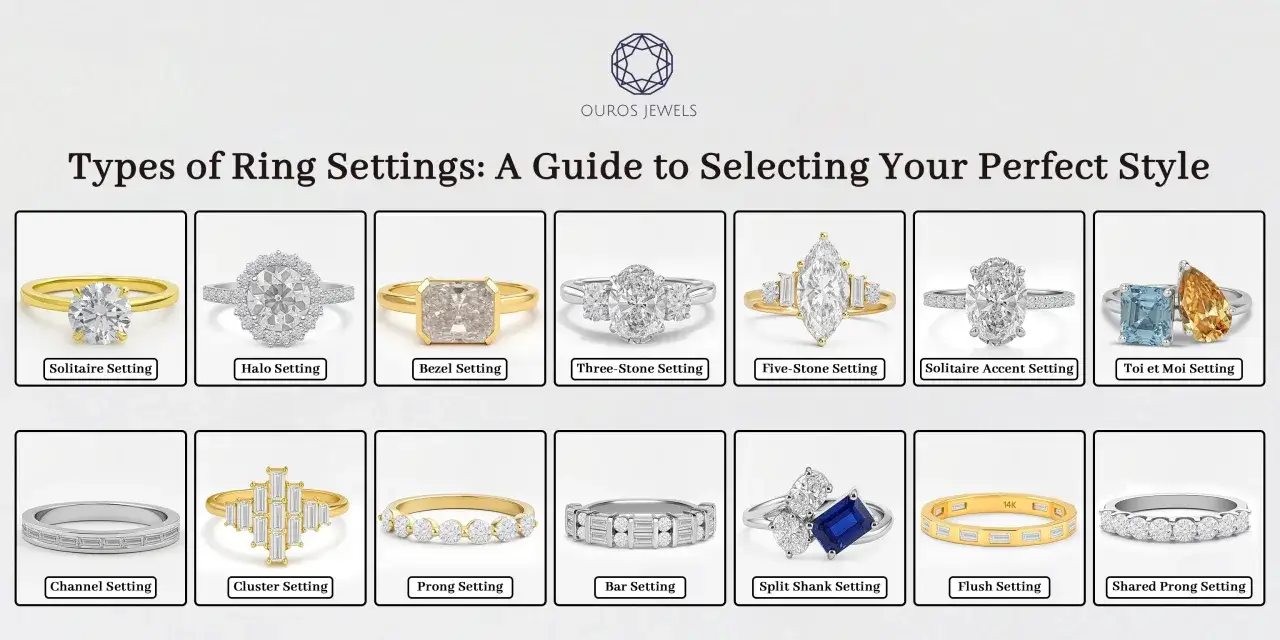
Bezel settings change the visual emphasis. They frame the stone, so the outline becomes more defined and the piece can feel more graphic. On a clean round or oval stone, that can be elegant; on a stone with sharp corners or a more delicate outline, it can feel more protective and purposeful.
Shape matters more than many buyers expect. Round and oval stones often sit comfortably in bezels, while pointed shapes such as pear, marquise, princess, and heart cuts usually need extra corner protection, such as a V-prong, partial bezel, or a carefully shaped full bezel. That is not a style rule so much as good engineering: vulnerable tips should not be left exposed if the ring is meant to be worn hard.
One caution I always give is this: a bezel can make a poorly cut stone look flatter, because the metal leaves less room for light to move. If the stone itself is weak in brilliance, a claw setting will usually forgive it more. That leads naturally to the practical side of upkeep, because the best setting is only as good as the care it gets.
Cleaning, resizing, and repair are not equally easy
Bezel settings are usually easier to wipe clean at the surface because there are no claw tips for residue to build up around. Claws, by contrast, collect soap, lotion, and grime in tiny ledges, so they benefit from more regular cleaning. I would still say both settings need a proper check from time to time, but claws ask for more attention at the bench.
Resizing is where the difference becomes more noticeable. A simple claw ring is often easier to resize because the setting is more open and forgiving. A bezel can be resized too, but it is more likely to need careful reworking because the metal rim is shaped closely around the stone. That does not make bezels impractical; it just means they demand a better jeweller and a little more patience.
The same logic applies to repairs. A bent claw can sometimes be corrected or rebuilt, while a damaged bezel may need more involved metalwork. On the other hand, a bezel usually has fewer failure points in the first place. For everyday wear, I tend to think of it as a lower-risk structure rather than a zero-maintenance one.
If you prefer claws, choose them with quality in mind: rounded, well-finished tips, strong shoulders, and regular checks every six to twelve months are far more important than the headline style alone. From here, it helps to match the setting to the kind of ring and wearer involved.
Which setting suits which kind of ring buyer
When I help someone choose, I usually start with lifestyle before style. The same gemstone can feel perfect in one setting and irritating in another, depending on how the ring will be worn.
- Choose a bezel if you want a smooth, low-profile ring for daily wear, travel, or hands-on work.
- Choose claws if you want maximum sparkle, a lighter visual profile, and a more traditional solitaire look.
- Choose a bezel if you often wear gloves, knitwear, or layered jewellery and want fewer snags.
- Choose claws if the stone is the main event and you want the setting to disappear as much as possible.
- Choose a bezel or a protective claw design if your stone has pointed corners that need extra security.
There is also a style question that matters more than many guides admit. A bezel can look minimalist, but it can also look bold if the metal is wide or the band is substantial. Claws can look delicate, but they can also look architectural if the head is elevated or the claws are substantial. In other words, the setting type is only the starting point; proportion does the real work.
That is why I think the most useful comparison is not "which is better?" but "which one will still feel right after a year of wear?"
The details that decide whether the ring still feels right after a year
If you want the ring to age well, look beyond the headline setting and check the small design choices. The metal matters: claws in softer metals need more vigilance, while platinum or sturdier gold alloys can help a claw setting stay secure for longer. The profile matters too: a low bezel can still be uncomfortable if the band is too wide or the edge is too sharp against the neighbouring fingers.
I would also pay attention to the underside of the head. A well-designed ring leaves enough space for cleaning, airflow, and comfort without making the stone feel exposed. That balance is what separates a ring that photographs well from one that feels genuinely easy to live with.
My simplest rule is this: choose bezel if you want protection, smoothness, and a cleaner daily-wear experience; choose claws if you want openness, sparkle, and a more classic gemstone-first look. If the ring is being custom made, ask the jeweller to show the side profile, the gallery height, and the finish on the tips or rim before you approve the final design. Those are the details that decide whether the ring feels thoughtful every time you wear it.