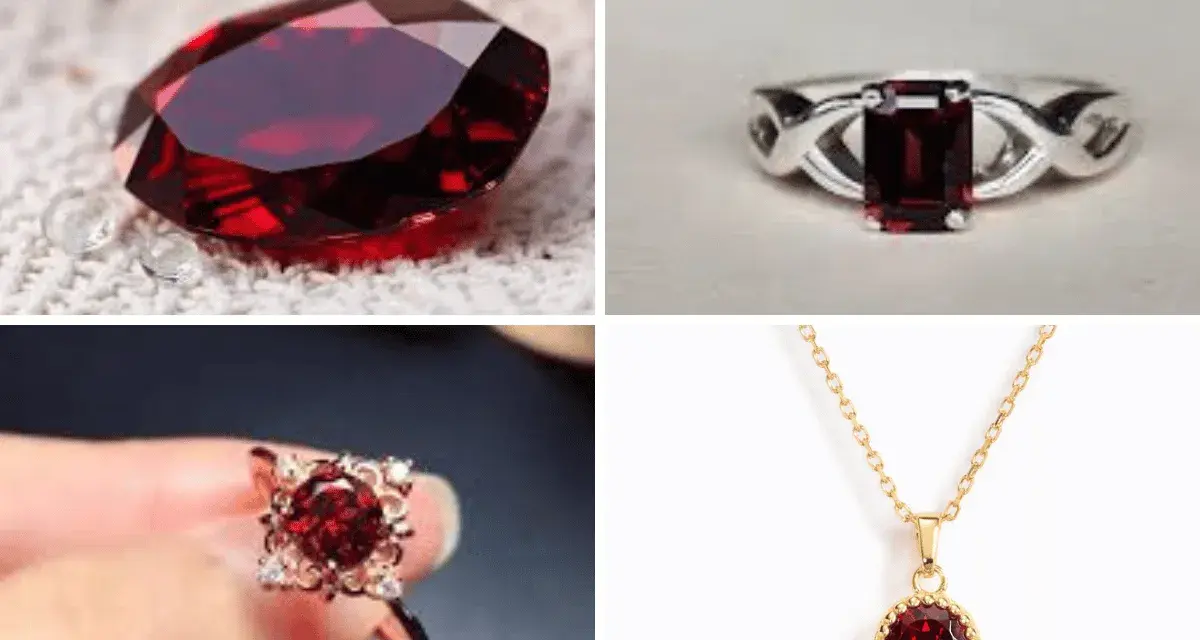
Garnet colours are broader than most buyers expect, and that is exactly why the stone deserves a closer look. In practical jewellery terms, garnet colors run from deep reds and smoky purples to vivid oranges, greens and rare colour-change stones. This article breaks down the main species behind those shades, which colours are common or scarce, and how lighting, cut and durability change what you actually see on the hand or at the ear.
The garnet family spans far more than classic red
- Pyrope and almandine give garnet its familiar red-to-purple-red look.
- Spessartine is the name to know for bright orange, especially mandarin stones.
- Grossular and andradite produce the best-known green garnets, including tsavorite and demantoid.
- Rare stones can be colour-change, colourless, black or vivid green.
- Colour, cut and lighting matter more than a generic garnet label when you judge value.
Why garnet is not just a red gemstone
I start with the chemistry because it explains nearly everything else. GIA treats garnet as a mineral group, not a single stone, and that is why the family can move from deep red through orange, yellow and green, with a few unusual extremes in between. The practical takeaway is simple: if someone says “garnet”, I always ask which kind, because the colour, rarity and price can change sharply from one species to the next.
Red remains the familiar face of the stone, but it is only the starting point. The colour you see depends on which minerals dominate the crystal structure, which is why a rhodolite can read as rosy purple, a tsavorite as electric green and a hessonite as warm cinnamon. That broad spread is what makes garnet so useful in jewellery: there is a shade for someone who wants a quiet classic and another for someone who wants a stone that looks anything but ordinary.Once you see garnet as a family, the rest of the colour map becomes much easier to read.
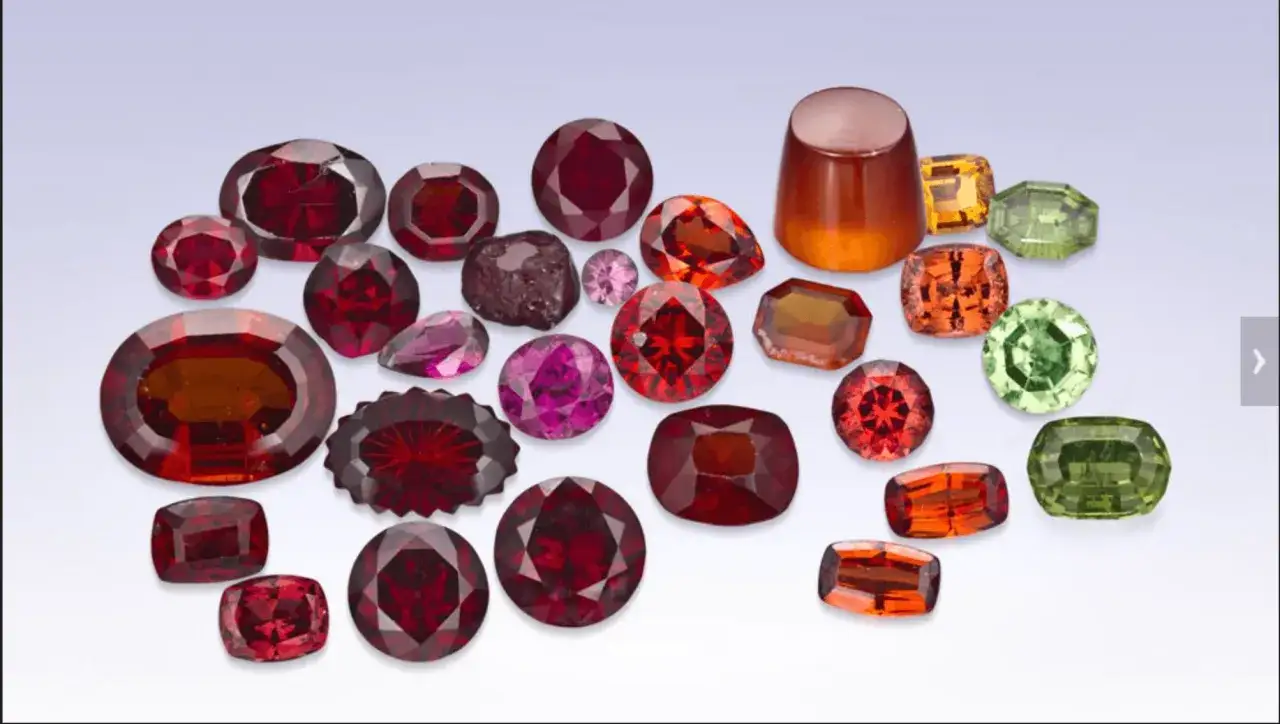
The main garnet species and the colours they produce
When I compare garnets, I think in species first and marketing names second. The table below is the quickest way to connect a colour to the garnet type you are likely seeing, and it also shows where the trade tends to attach the most familiar names.
| Species | Typical colours | Common trade names | Why it matters |
|---|---|---|---|
| Pyrope / almandine | Red, purplish red, orangy red | Classic red garnet, rhodolite | The most familiar garnet look, and the easiest place to start if you want a traditional stone |
| Spessartine | Orange to reddish orange | Mandarin garnet | The brightest orange family, often chosen for its lively, warm appearance |
| Grossular | Colourless, yellow, orange, brown, green | Hessonite, tsavorite, hydrogrossular | The broadest colour spread, with tsavorite at the premium end and hessonite at the warm, vintage end |
| Andradite | Yellow to green, black | Demantoid, topazolite, melanite, rainbow garnet | Home to some of the most dramatic greens and the most unusual optical effects |
| Uvarovite | Bright green | Usually drusy clusters | Rare as a cut gem, admired more as a specimen or cluster in jewellery |
The important thing is not memorising every mineral name. It is realising that a green garnet may be tsavorite or demantoid, while an orange stone may be spessartine or hessonite, and each of those names carries a different expectation for brightness, durability and price. Once that distinction is clear, the next question becomes much more useful: which shades are common, and which ones really sit in the premium range?
Which garnet colours are common, rare and premium
Price follows colour more than the word garnet itself. GIA notes that pure red garnet does exist, but it is uncommon in sizes above half a carat; many red stones lean brownish or very dark, especially when they absorb light. That is why a dark garnet can look nearly black in a shop window yet open up beautifully in direct daylight.
| Colour impression | How common it is | What usually happens to price | Practical note |
|---|---|---|---|
| Deep red | Common | Usually accessible | Can look very dark in low light |
| Purplish red and rhodolite | Fairly common | Moderate | Often more lively than very dark red |
| Orange | Less common | Rises with saturation | Spessartine is the key name to know |
| Vivid green | Rare | Premium | Tsavorite and demantoid lead the field |
| Colour-change or collector material | Rare | Usually highest | Buy only after seeing it in multiple lights |
For most buyers, the value jump comes from two things at once: saturation and scarcity. A bright, clean green garnet is harder to find than a good red one, and larger stones in tsavorite or demantoid become scarcer very quickly. That is why rare garnets often feel more dramatic not just because of their hue, but because the hue itself is difficult to source in a convincing size.
If you want the most accessible look, pyrope and almandine are usually the easiest starting point. If you want the most distinctive direction, orange spessartine or green grossular, especially tsavorite, will feel far more individual. From there, the real challenge is choosing a colour that suits the jewellery you actually plan to wear.
How to choose a garnet shade for jewellery you will actually wear
I would not choose a garnet colour only by what looks best under a bright counter lamp. The right shade depends on the jewellery type, the metal, and how often the piece will be worn.
- For rings: I favour pyrope, almandine or well-cut grossular if the piece is for regular wear. Deep red stones feel classic, but they should still show enough life in indoor light.
- For pendants: This is where tsavorite, demantoid and spessartine can shine. Pendants catch more light and take less abrasion, so the stone’s colour does more of the work.
- For earrings: You can be bolder. Bright orange, vivid green or even colour-change garnet reads well because earrings move and pick up light from different angles.
- With yellow gold: Warm reds, oranges and hessonite often look richer. The metal softens the tone rather than fighting it.
- With white metal: Green garnets and brighter oranges can look sharper and cooler, which gives a more modern contrast.
If I had to give one rule, it would be this: match the shade to the lighting you will live with, not the lighting you hope for. That leads directly into the part most buyers ignore until they are disappointed.
Lighting, cut and clarity change what the colour really looks like
A garnet’s apparent colour is not fixed. Under daylight, a stone may look cleaner and more saturated; under warm indoor lighting, red and orange garnets often look richer, while dark stones can sink into brown or near-black. Gem-A notes that some garnets even show colour change, which is exactly why I always advise buyers to inspect a candidate stone in at least two light sources before committing.
Cut matters almost as much as colour. Fine tsavorite and demantoid are often cut to preserve more weight from the rough, but the best cut is still the one that spreads light evenly across the face of the stone. That is why two garnets of the same species can feel very different: one looks lively and open, the other looks dense and sleepy.
Clarity is the final piece, and here garnet is refreshingly honest. Many red stones are clean to the eye, while some orange or green garnets carry visible inclusions that are either expected or even desirable. Demantoid’s horsetail inclusions and hessonite’s swirly internal texture are good examples: in the right stone, they add identity rather than taking it away.
Once you know how colour behaves in real life, caring for the stone becomes a much simpler decision.
How to care for coloured garnets without dulling them
Most garnets are sturdy enough for jewellery, but they are not all equal. GIA recommends warm, soapy water and gentle scrubbing, and that is the safest routine for most pieces. I would add one caution of my own: if the stone is an especially soft or included variety, such as some andradite pieces, be careful with ultrasonic cleaning and avoid heavy knocks.
- Clean with lukewarm water, mild soap and a soft brush.
- Rinse well and dry with a lint-free cloth.
- Store garnet pieces separately so they do not rub against harder stones.
- Take extra care with rings set in softer garnet varieties if you wear them daily.
- If a stone shows a colour change or unusual inclusions, ask a jeweller to confirm the species before using any aggressive cleaning method.
This kind of care does not just protect the polish, it protects the colour impression, which is the whole point of choosing garnet in the first place. From there, the last step is deciding which shade I would shortlist first.
The garnet shades I would shortlist first
When I narrow the field, I look for the colour that still feels strong outside the jeweller’s lights. For most people, that means one of five directions.
- Classic red: pyrope or almandine if you want a traditional stone that is easy to wear.
- Rhodolite: if you want the red family to feel softer, rosier and slightly more refined.
- Mandarin orange: spessartine if you want the brightest, most energetic warm tone.
- Green garnet: tsavorite for vivid colour, demantoid for brilliance and collector appeal.
- Antique warmth: hessonite if you like cinnamon, honey and vintage jewellery character.
If I were buying one garnet for a jewellery box rather than a specimen tray, I would choose the shade that stays interesting in ordinary indoor light and still feels balanced against the metal you plan to wear it with. That is the real test of good garnet colour, not just rarity, but whether the stone remains visually alive once it leaves the display case.