Amethyst looks straightforward at first glance, but the price can swing quickly once colour, cut, clarity, and treatment come into play. This guide breaks down a practical amethyst value chart, shows the loose-stone ranges I would actually use in 2026, and explains how to spot a stone that is priced fairly rather than just attractively photographed. If you are comparing jewellery for yourself or for a gift, the details here will help you see where the real value sits.
What decides the price of amethyst
- Colour is the biggest driver. Rich reddish purple usually sits highest, while pale, brownish, or uneven stones drop quickly in value.
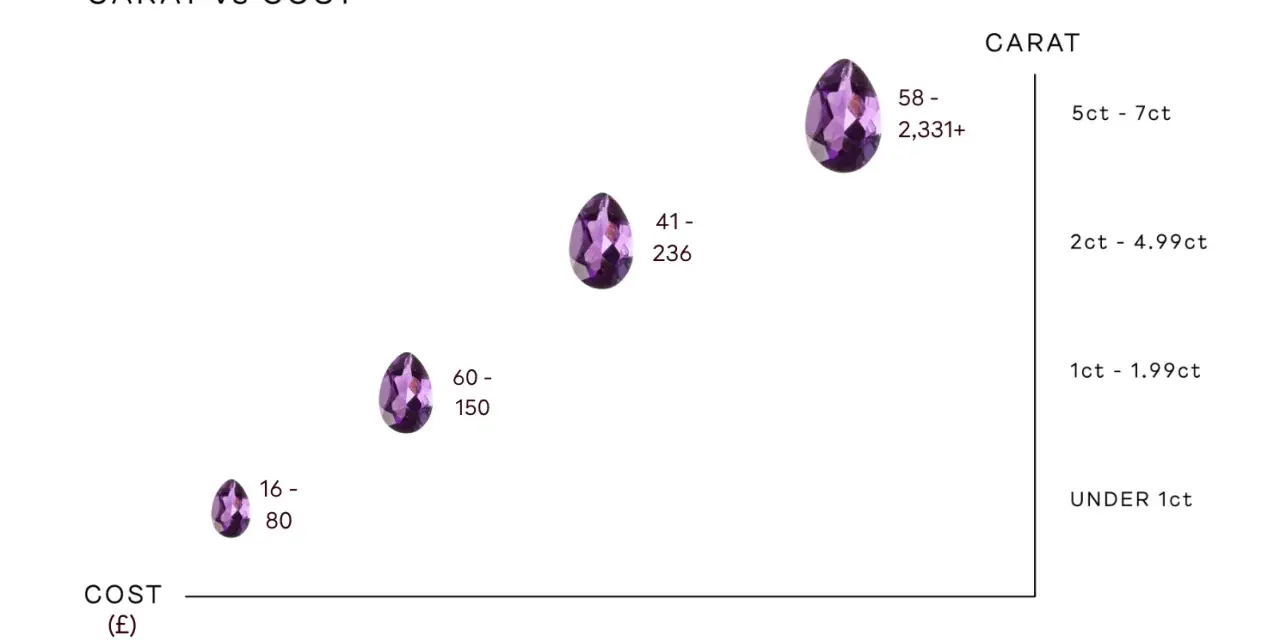
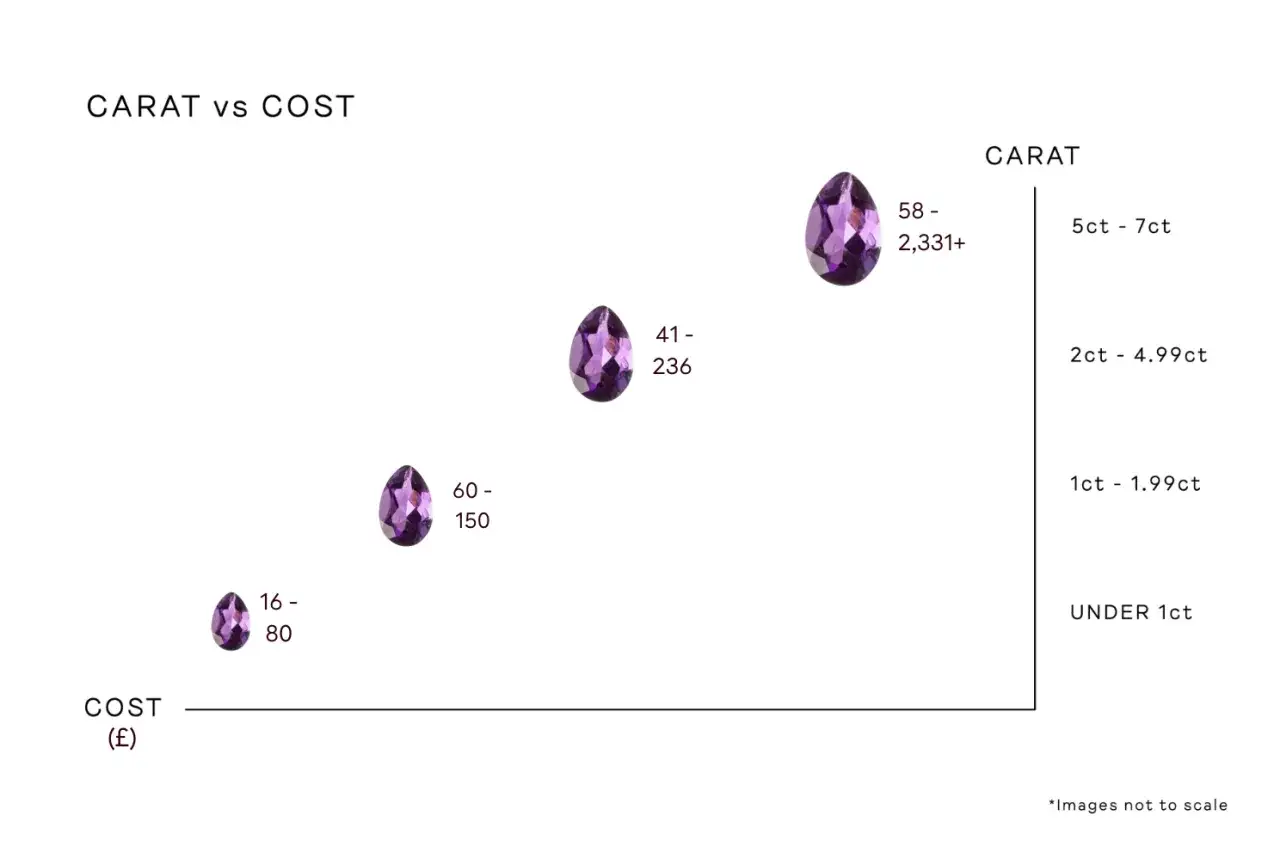
- Size helps, but not dramatically. Amethyst does not usually jump in price per carat the way diamond or sapphire often can.
- Clarity and cut still matter. Eye-clean, well-cut stones look livelier and sell better than dull or heavily included pieces.
- Treatments should be disclosed. Heat is common, but dyed or fracture-filled material needs more caution.
- Mounted jewellery is a different market. Metal, labour, and design can cost more than the stone itself.
What this value chart really measures
I read amethyst pricing as a hierarchy. Colour comes first, then clarity and cut, and only after that do size, origin, and treatment matter. GIA’s guidance is very consistent on this point: strong reddish purple with even colour tends to sit near the top, while brownish tints, obvious zoning, and very dark stones that go inky under indoor light all reduce value.
That is why I treat a price chart as a framework rather than a fixed tariff. A loose stone, a cabochon, and a finished ring are not competing in the same market. In the UK, the final ticket price can also include setting costs and VAT, so I never compare a mounted piece directly with a loose-stone price without adjusting for that. Once that is clear, the next step is to look at real price bands rather than theory.
A practical amethyst value chart for 2026
If I had to build a working chart for UK buyers in 2026, I would use the loose-stone ranges below. The International Gem Society’s price guide points in the same direction: amethyst generally rises in price gradually, not exponentially, which is why large stones can still be surprisingly affordable if the colour is ordinary.
| Quality tier | What it looks like | Approx. loose-stone price per carat | Typical use |
|---|---|---|---|
| Commercial | Pale lilac, visible zoning, or noticeable inclusions | £4-£9 | Beads, casual jewellery, budget settings |
| Good jewellery grade | Medium purple, fairly even colour, mostly eye-clean | £9-£18 | Everyday rings, pendants, and earrings |
| Fine | Saturated purple or reddish purple, lively cut, eye-clean appearance | £18-£30 | Better quality statement pieces and bespoke work |
| Exceptional | Vivid reddish purple, very even colour, excellent brilliance | £30-£45+ | Collector stones and premium jewellery |
These are rounded retail equivalents for loose stones, not appraisal values. If a seller asks far above these numbers, the stone should have something genuinely special going for it: stronger colour, cleaner face-up appearance, or unusually careful cutting. Otherwise, the premium is often sitting in the setting, not in the gem.
The quality factors that move the price fastest
Colour
Colour is where most of the value difference lives. The best stones are a strong purple or reddish purple that still looks bright in normal indoor light. If the gem has brown or bronze undertones, or if it turns too dark and almost black in dim light, I would expect the price to fall. Pale lavender can be pretty, but it rarely commands top money unless the cut is exceptional or the piece has another strong selling point.
Clarity
Most faceted amethyst on the market is eye-clean, so visible inclusions are not usually impressive in themselves. They matter more when the colour is already weak. In richer stones, a small inclusion may be acceptable if the gem is otherwise vivid and well cut. Cabochons and beads can still be attractive purchases when the colour is strong and the polish is clean, especially in decorative jewellery.
Cut and size
A good cut can make a stone look more saturated and much more alive. Poor cutting creates windowing, dullness, or uneven dark areas that drag value down fast. Size helps, but it does not usually create the dramatic price curve you see in rarer gems. A 10-carat amethyst is not automatically a luxury item; I would rather pay for a smaller stone with excellent face-up colour than for a larger one that looks sleepy.
Read Also: Sapphire Origins - Does Source Really Matter for Your Jewellery?
Origin and treatment
Origin can be interesting, especially for collectors, but it does not automatically raise value. Some localities are known for particularly attractive colour, yet the stone still has to earn its price on appearance. Treatment disclosure matters more. Heat treatment is common and often used to improve very dark material, but dyed quartz or fracture-filled stones should be treated with caution because they are no longer selling on the same basis as a natural, well-cut amethyst. If a seller leans heavily on origin without showing why the stone itself is better, I read that as a warning sign.
That is why I always inspect the stone in person or ask for a video before I look at the mount. The gem itself has to hold up first, and then the jewellery work should support it rather than disguise it.
How I judge amethyst before buying
When I inspect amethyst, I use daylight or a neutral lamp and compare the stone against a white background. That makes colour zoning obvious and shows whether the purple is truly even face-up or only looks good from one angle. I also check the stone table-down, because uneven patches and brownish undertones often reveal themselves there first.
- Look for life in the colour. The best stones are rich without turning black in low light.
- Check for zoning. A little zoning can be acceptable, but obvious bands lower value quickly.
- Ask about treatment. Heat treatment is common; dyed material and fracture-filled stones need much more caution.
- Ignore vague quality labels. Terms like AAA can be useful shorthand, but there is no standard industry-wide grading scale for amethyst.
- Ask for a return policy. A short return window matters if the online photos were flattering or over-lit.
If I am spending more than I would on a casual gift, I also want a clear description of whether the price refers to the loose gem or the finished piece. The more expensive the stone, the more I want the seller to explain exactly what I am paying for. Once that is clear, the jewellery itself starts to matter in its own right.
Why the setting can matter more than the stone
A finished jewel often costs far more than the stone chart suggests because metal, labour, and design sit on top of the gem price. I would not judge a ring purely by the amethyst inside it. A simple silver pendant with a solid stone can be very reasonable, while gold, accent diamonds, and a designer mount can push the retail price up quickly.
| Jewellery type | What usually drives the price | Typical UK retail range |
|---|---|---|
| Silver pendant | Design, silver weight, stone quality | £35-£120 |
| 9k or 14k gold ring | Metal, craftsmanship, colour quality | £150-£500 |
| Designer or diamond-accent piece | Brand, accent stones, bespoke work | £500+ |
Those are broad retail examples, not appraisal values, but they show the point clearly: the stone may be only one part of the bill. In a good piece, the setting should flatter the amethyst rather than hide weak colour or make a pale stone look artificially expensive. That distinction helps when you move from jewellery shopping to choosing the best stone for your budget.
What I would buy at different budgets
If I were shopping on a budget, I would buy the best colour I could afford before I chased carat weight. Under about £50, I would focus on a lively, well-cut stone with honest colour rather than a big but sleepy-looking one. Between about £50 and £150, I would expect cleaner colour, better symmetry, and fewer distractions in the face-up view.
- Budget choice. A smaller stone with even colour is usually better than a larger pale one.
- Mid-range choice. Prioritise strong purple, eye-clean appearance, and a cut that does not window.
- Higher-end choice. Pay only for exceptional colour, confirmed treatment disclosure, and a setting that matches the gem.
- Gift choice. Choose a secure mount and a shape the wearer will actually use, not just a big headline size.
For everyday wear, amethyst is durable enough for regular jewellery at hardness 7, but I still keep it away from harsh heat, ultrasonic cleaning, and rough storage with harder stones. My own rule is simple: buy the stone that still looks rich when the light changes, because that is the one you will enjoy long after the purchase feels routine.