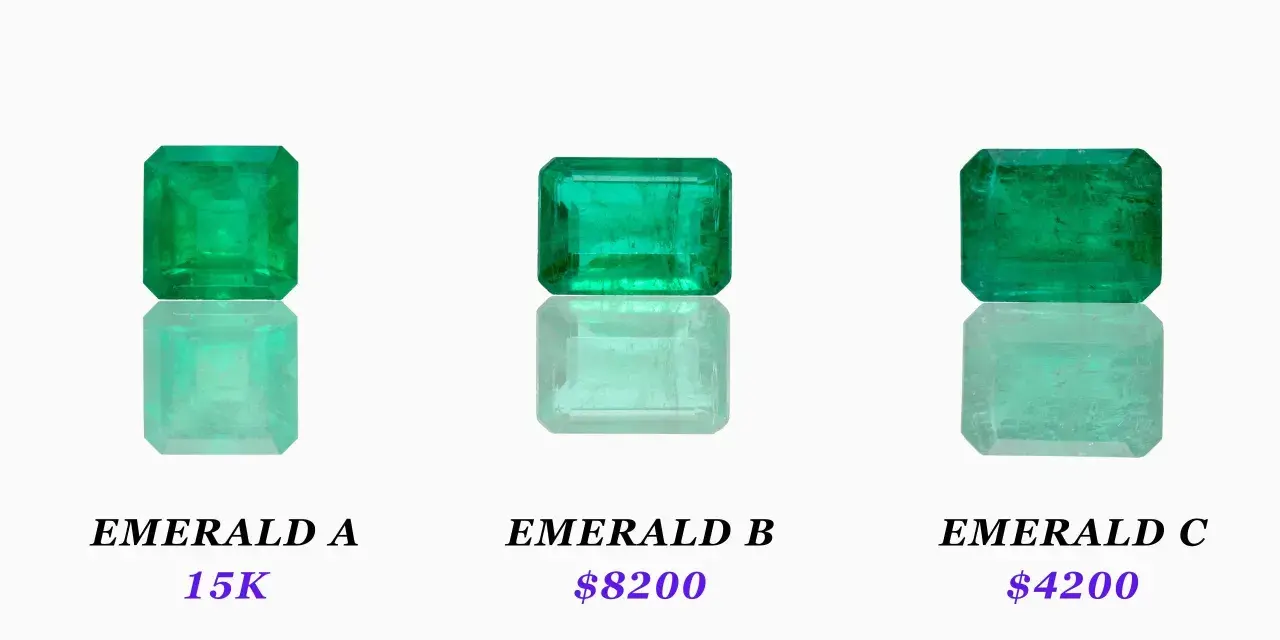
Emerald prices are notoriously uneven, which is exactly why a simple price tag rarely tells the whole story. This article breaks down what a stone is really worth, how colour, clarity, cut, size, origin, and treatment change the number, and how I would judge a loose gem versus a ring in the UK market. The honest answer to how much are emeralds worth is that the range is wide enough to surprise even experienced buyers.
The price is driven more by colour and treatment than by size alone
- Commercial loose emeralds in the UK can begin in the low hundreds of pounds per carat, while fine stones move into the thousands.
- Colour matters most: vivid bluish green to pure green stones with even saturation tend to command the strongest prices.
- Visible inclusions are normal in emeralds, but eye-clean stones are rare and expensive.
- Heavy oil or resin filling usually lowers value; a clean, well-documented no-oil stone can be much more desirable.
- Signed jewellery, antique settings, and notable provenance can push a piece far above the value of the centre stone alone.
A realistic price range for emeralds in Britain
The honest answer to how much are emeralds worth is that the market splits into very different tiers. A small commercial loose stone in Britain may sit in the low hundreds of pounds per carat, a genuinely attractive natural emerald can move into the thousands, and exceptional pieces with top colour and strong provenance can reach five or six figures per carat.
| Quality level | Rough UK value per carat | What it usually means |
|---|---|---|
| Commercial | £100 to £500 | Small stones, visible inclusions, lighter colour, or noticeable treatment |
| Good mid-market | £500 to £2,500 | Pleasant colour, decent transparency, attractive in modern jewellery |
| Fine natural | £2,500 to £15,000+ | Rich colour, stronger transparency, limited treatment, better size |
| Exceptional collector grade | £15,000 to £100,000+ | Top colour, excellent transparency, strong provenance, larger size, very little treatment |
I keep this table broad on purpose, because emeralds do not price neatly. On UK retail listings, small loose stones can start in the low hundreds of pounds before VAT, while fine auction pieces can run from tens of thousands into the high hundreds of thousands. That is not marketing hype, it is the effect of rarity.
That is also why a signed Boucheron emerald and diamond ring can realise £1.129 million, while another 10.37-carat emerald ring can reach £597,300. Those are not everyday prices, but they show what happens when size, quality, and provenance line up.
The next question is why the spread is so large, and the answer starts with colour.
Why colour is the first thing I check
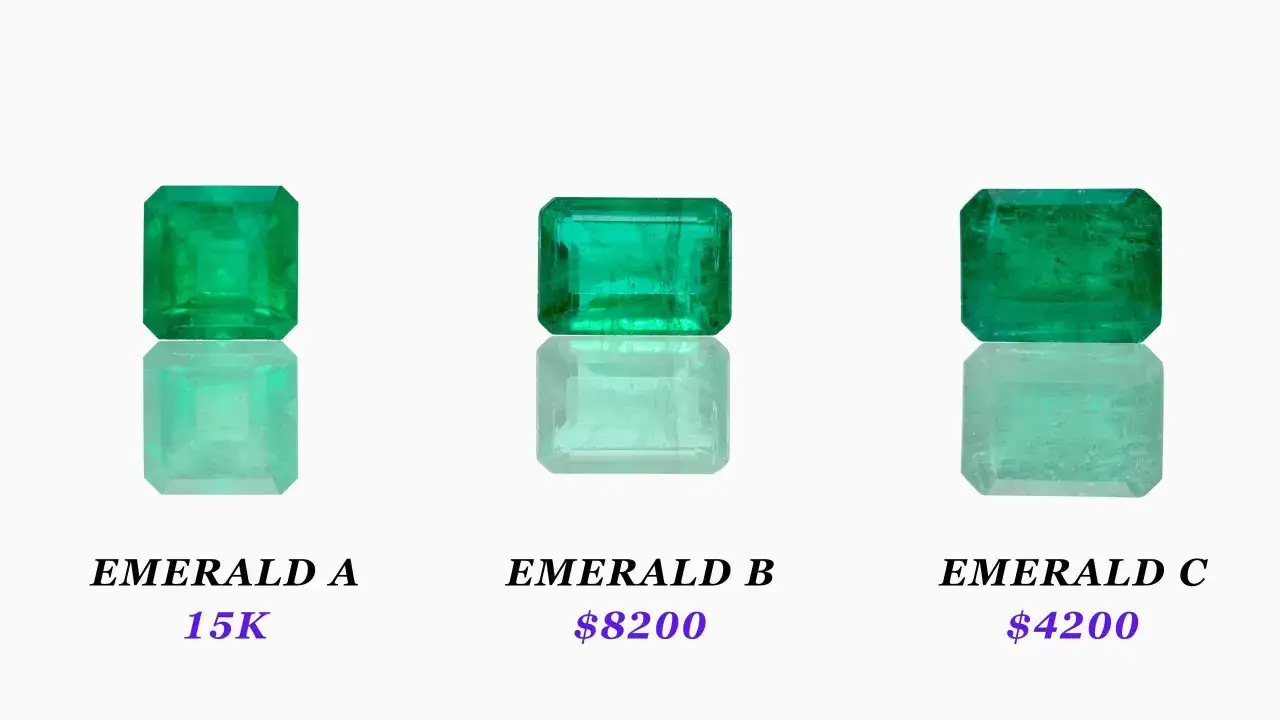
With emeralds, colour leads everything. The most desirable stones are a vivid bluish green to pure green, with strong saturation and a tone that is not so dark that the gem looks sleepy. If the colour is too yellow, too blue, or muddy in daylight, value usually falls quickly.
I also look for even colour distribution. A good emerald should not look patchy or washed out from one angle and lively from another. That kind of inconsistency can be tolerated in a commercial stone, but it becomes a problem as the price climbs.One practical rule helps here: the richer and cleaner the green, the more the market pays attention. That does not mean every darker stone is bad, but it does mean buyers pay a premium for colour that feels alive rather than merely green on paper.
Once colour is strong, the next value conversation is about what the eye can see, and that is where clarity, cut, and size start to matter together.
Clarity, cut and carat weight all pull in different directions
Clarity: Emeralds almost always contain inclusions, which are internal features left by the crystal's formation. The question is not whether they exist, but whether they destroy transparency or create a fragile stone. Eye-clean emeralds are especially valuable because they are rare.
Cut: The cut should preserve colour and minimize the visibility of fissures, the small fractures common in emerald. A well-cut stone looks lively and balanced; a poor cut can make even a strong crystal seem flat or overly dark.
Carat weight: Emerald pricing is not linear. Once size increases, top material becomes harder to find, so a 2-carat stone can cost far more than double a 1-carat gem if the colour and clarity are strong. In other words, size helps, but only when the stone already has something worth paying for.
That is why a larger emerald with dull colour often disappoints, while a smaller one with great colour can surprise buyers. From there, the market starts rewarding another pair of factors: origin and treatment.
Origin, treatment and lab-grown stones do not belong in the same bracket
Origin: Colombian emeralds often carry a premium, especially when the colour is vivid and the stone is exceptionally attractive, but origin alone does not guarantee a high price. A mediocre stone from a famous source is still mediocre, and a superb stone from another source can be highly desirable.
Treatment: Many emeralds are oiled or resin-filled to reduce the look of surface-reaching fractures. Light, well-disclosed treatment is common and accepted in the trade. Heavy filling usually lowers confidence, and that usually lowers value as well.
Lab-grown stones: These sit in a separate market. They can be attractive jewellery stones, but they are not priced like natural emeralds, and I would not compare them directly when judging worth. If a stone is laboratory-grown, the monetary conversation changes completely.
Once origin and treatment are clear, the last major question is whether you are valuing just the gemstone or the entire jewel around it.
The setting can add style, but the stone still drives most of the money
A loose emerald is valued mostly on the stone itself. Once it is mounted, the setting, metal, and maker start to matter, but not always in the way owners expect. A generic gold mount may add only modest scrap value, while a signed period piece can add real collector appeal.
That is why I separate the centre stone from the jewellery as a whole. A modern ring with a good emerald may resell for less than the sum of its parts, while a desirable vintage design can do the opposite because the whole object has become more interesting than the gem alone.
Provenance matters here. The maker, era, original paperwork, and condition can all lift a piece well beyond the price of the emerald itself, especially in the auction market. In practice, the same stone can behave very differently once it is set, signed, or historically important.
So if you want a number that actually makes sense, you need to evaluate the stone and the jewel separately before you compare offers.
How I would estimate an emerald before asking for a valuation
- Check whether it is loose or mounted. A mounted stone needs the gem and the jewellery valued separately.
- Record the basic measurements. Carat, dimensions, shape, and whether the stone is natural or laboratory-grown all matter.
- Inspect the colour in daylight. Look for a rich, even green without a muddy or overly dark tone.
- Look for visible inclusions and surface-reaching fissures. These are normal in emeralds, but they influence beauty, durability, and price.
- Ask for treatment disclosure and a lab report. The absence or presence of oil, resin, and origin opinion can change the number a lot.
- Get two valuations if you can. One for insurance replacement and one for likely resale, because those figures are rarely the same.
When I compare quotes in Britain, I always check whether the price is ex VAT or inclusive, and whether the valuer is pricing the loose gem or the finished piece. That simple check prevents a lot of false comparisons, especially when two dealers describe the same stone very differently.
The paperwork that protects the value
For emeralds, paperwork is not decoration. A reliable report, original invoice, earlier photos, and any note about treatment or repairs can make a real difference to the number buyers trust. If a stone has a known history, I would keep every document with it, because credibility is part of value.
My rule is simple: if the emerald is worth enough to care about, it is worth documenting properly. Once you know the colour quality, treatment status, and whether the item is a loose gemstone or a signed jewel, the price stops feeling mysterious and starts feeling explainable.For most owners, that is the cleanest way to answer the question in real life: not with a single number, but with a range anchored by evidence, condition, and market context.