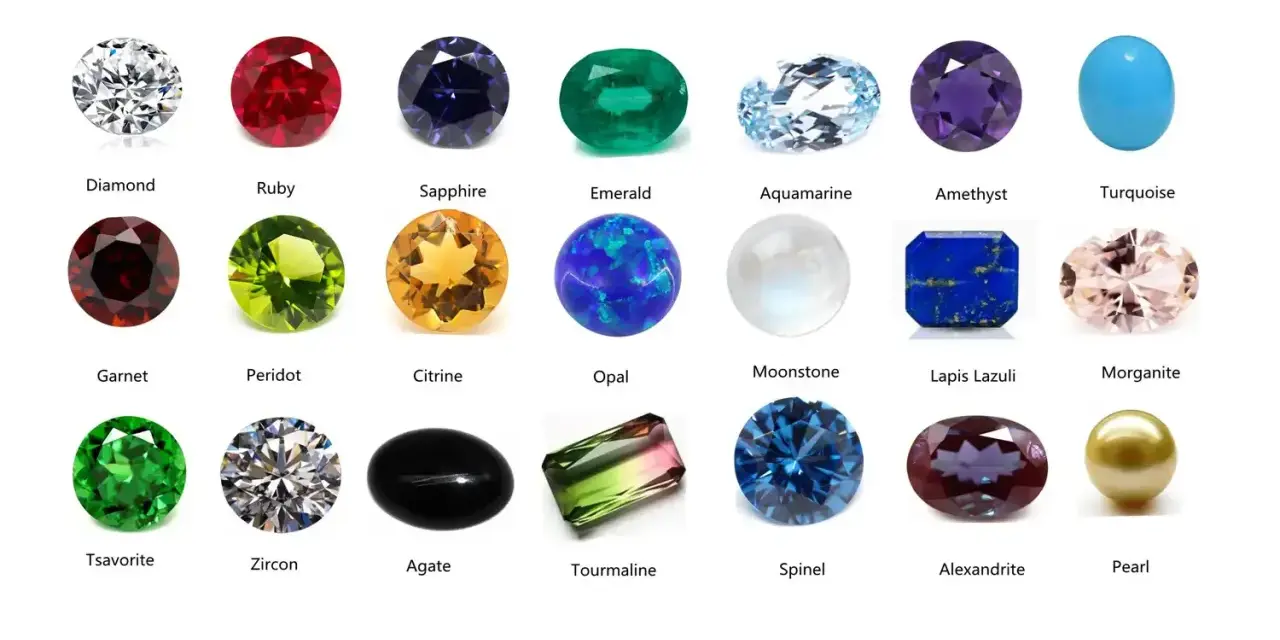
A feldspar gemstone is never just about colour; it is about movement, glow, and how a stone behaves once it is set in jewellery. In this guide I look at the best-known feldspar members, how to judge their quality, what makes them durable enough for wear, and why they work so well beside pearls and classic metals. I am also keeping the advice practical, because these stones can be beautiful without being the best choice for every setting.
The feldspar family rewards careful choosing and gentle wear
- Feldspar is a mineral family, so moonstone, labradorite, sunstone, and amazonite do not behave the same way.
- The best pieces are judged by their optical effect, cut, and body colour as much as by size.
- Most feldspars are better in pendants, earrings, and protective settings than in hard-wearing daily rings.
- Adularescence, labradorescence, and schiller are the key light effects to know before you buy.
- Clean feldspar jewellery with mild soap, lukewarm water, and a soft brush only.
- They pair especially well with pearls because both depend on soft, reflective light rather than sharp brilliance.
What makes feldspar gems different
Feldspar is a broad mineral group rather than a single gem species, which is why the name covers such different looks. Some stones are chosen for a floating glow, others for sharp flashes, and others for colour alone. The terms I use most often are adularescence, a soft light that seems to float under the surface; labradorescence, a more vivid flash of blue, green, gold, or violet; and schiller, a pearly or metallic shimmer that shifts as the stone moves.
| Effect | What it looks like | Why it matters in jewellery |
|---|---|---|
| Adularescence | A milky, moonlike glow that appears to drift under the surface | It gives moonstone its romantic, softly lit look |
| Labradorescence | Bright flashes that can change with angle and movement | It makes labradorite feel dramatic and more graphic |
| Schiller | A reflective sheen, sometimes pearly or metallic | It adds life to sunstone and some other feldspars |
That is why a good feldspar piece is often more about light performance than pure transparency. Once you understand the effects, the differences between the individual stones become much easier to read.
The main stones in the family
When people talk about feldspar in jewellery, they usually mean one of a handful of familiar stones. Each has its own character, and in practice that character matters more than the mineral label on paper.
| Stone | Typical look | Best use | What I watch for |
|---|---|---|---|
| Moonstone | White, cream, peach, grey, or colourless with a floating sheen | Pendants, earrings, occasional rings | A weak or off-centre glow, cloudy body colour, fractures near the surface |
| Rainbow moonstone | Usually a trade name for labradorite with blue or multicoloured flash | Statement pieces and modern settings | Trade-name confusion and flashes that disappear when the stone is tilted |
| Labradorite | Grey to dark body colour with blue, green, gold, or violet flashes | Bold pendants, rings in protective settings, earrings | Great colour from one angle only, which can make a large stone look flat |
| Sunstone | Warm orange, peach, pink, or brown with sparkling internal glitter | Bright everyday jewellery, especially pendants and earrings | Sparkle that is too sparse or too dark a body colour |
| Amazonite | Blue-green to greenish blue, usually opaque or lightly translucent | Beads, cabochons, layered pieces | Surface wear, since colour alone does not hide scratches well |
If I had to reduce the whole family to one buying rule, it would be this: pick the stone that still feels alive when you move it. A smaller gem with a clean, convincing effect is usually more satisfying than a bigger one that looks sleepy.
How I judge quality before I buy
Quality in feldspar jewellery is not just about clarity, and it is not just about colour either. I look at how the stone behaves in motion, how carefully it was cut, and whether the visible character survives the setting. In a moonstone, for example, I want the glow to sit near the surface and travel cleanly. In labradorite, I want broad, confident flashes rather than a tiny patch of colour trapped in one corner.
| What I check | Good sign | Red flag |
|---|---|---|
| Optical effect | The glow or flash appears quickly and moves cleanly as the stone tilts | The effect is weak, patchy, or only visible from one very exact angle |
| Cut | The shape flatters the effect, often with a smooth cabochon cut | Sharp facets or awkward proportions hide the internal life of the stone |
| Body colour | Colour supports the effect without looking muddy or over-dark | The stone is so dark or cloudy that the light effect gets lost |
| Clarity and surface | Some internal features are fine if they do not interrupt the look | Obvious cracks or surface-reaching fractures weaken durability |
| Disclosure | The seller is clear about the species, trade name, and any treatment | The label sounds impressive but leaves the actual material vague |
One practical detail matters more than most buyers expect: a cabochon, which is a smooth domed cut, often flatters feldspar better than a faceted shape. That is not a style rule, just a reflection of how these stones work with light. Once you know what good looks like, care becomes the next issue, because beauty alone does not make them robust.
How to wear and care for feldspar jewellery
Most feldspars sit around 6 to 6.5 on the Mohs scale, and some sunstones are a little higher, roughly 6.5 to 7.2. That is perfectly respectable for jewellery, but it does mean the stones can scratch or chip if they are worn hard. The bigger concern is cleavage in two directions, which is a mineral term for built-in planes of weakness. In plain English, a sharp knock can do more damage than the hardness number alone suggests.
- Choose pendants, earrings, and brooches first if you want the safest everyday wear.
- Use rings only when the setting protects the stone, ideally with a bezel, which is a metal rim that surrounds the gem.
- Remove feldspar pieces before sport, gardening, lifting weights, or heavy housework.
- Clean them with lukewarm water, mild soap, and a soft brush, then dry with a lint-free cloth.
- Avoid ultrasonic and steam cleaners, which are too aggressive for stones with cleavage or surface fractures.
- Store each piece separately in a soft pouch so harder gems do not mark the surface.
- Check settings every 6 to 12 months if the piece gets regular wear.
In practice, that means I treat feldspar as a stone for considered wear rather than constant punishment. A well-set moonstone ring can be lovely, but I would rather see it in a protected, low-profile design than in a high, exposed mount. That softer wear profile is also exactly why these gems pair so naturally with pearls.
Why they work so well with pearls and classic metals
Feldspar stones and pearls share something that brighter, more faceted gems often lack: they rely on atmospheric light. Neither tries to outshine the other. Instead, they build a calm, reflective surface that feels polished without being severe. That is why moonstone and pearls can look so elegant together in a necklace or bracelet, especially when the goal is a gentle, romantic finish.
| Stone | Best pearl match | Metal that usually works best | Style effect |
|---|---|---|---|
| Moonstone | Freshwater pearls in white or cream | Silver or white gold | Soft, luminous, and quietly classic |
| Labradorite | Grey or black pearls | White gold or oxidised silver | Sharper contrast with a more dramatic mood |
| Sunstone | Champagne or golden-toned pearls | Yellow or rose gold | Warm, glowy, and slightly vintage |
| Amazonite | Bright white pearls | Silver or pale gold | Fresh, clean, and easy to wear with summer clothes |
I also like the way these combinations behave in a modern wardrobe. A moonstone pendant with a pearl necklace can feel delicate rather than old-fashioned. Labradorite beside baroque pearls has more edge. Sunstone with pearls reads warm and polished, which suits both minimal pieces and more decorative jewellery. The point is not to make the stones look identical; it is to let their shared softness do the work.
What to keep in mind before you buy one
If you are choosing a stone from this family, start with the job it needs to do. A ring for daily wear needs more protection than a pendant you wear occasionally. A dramatic labradorite should be judged differently from a pale moonstone, because the right look is not the same for both. I also pay attention to whether the seller uses the mineral name, the trade name, or both, because that often tells you how clearly they understand the material.
- Buy for the effect you can actually see, not just for size on paper.
- Match the setting to the stone’s weakness, not only to the design idea.
- Prefer reputable disclosure for any treatment, enhancement, or trade name.
- Look at the stone in daylight and indoor light, because feldspar often changes character between the two.
- Choose pieces you will wear in the right way, since these gems reward care more than force.
If you want a feldspar gemstone that earns its keep, choose the one that still looks alive when it moves, then put it in a setting that protects it from hard knocks.