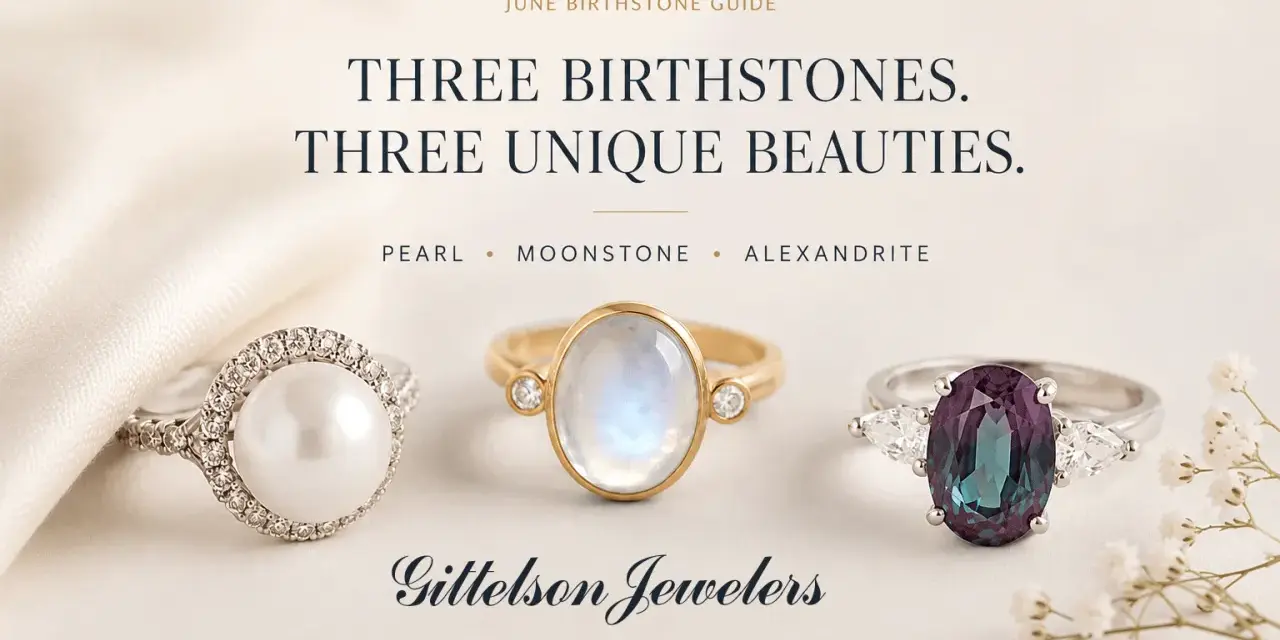
Pearls bring a different kind of appeal from most gemstones: softer, more organic, and easier to wear than many people expect. I like them because they still feel refined without being stiff, which is exactly why they work so well as June’s birthstone. In this guide, I’m looking at what the June pearl means, how it compares with moonstone and alexandrite, how to choose a good piece, how to style it now, and how to care for it properly.
The June pearl in one glance
- Pearl is the classic June birthstone, while moonstone and alexandrite are the other recognised June options.
- Pearls are organic gems, so their beauty depends heavily on luster, surface quality and care.
- Freshwater pearls are usually the most accessible, while Akoya, South Sea and Tahitian pearls move higher in rarity and price.
- A pearl that looks modern in 2026 is usually styled with clean lines, mixed metals and one focal piece.
- Pearls need gentle treatment: avoid perfume, wipe them after wear and store them separately from harder jewellery.
Why pearls are the classic June birthstone
Pearl is the traditional birthstone for June, and it has earned that place for good reason. Unlike most gems, a pearl is formed inside a living mollusc, so it brings a literal sense of natural growth to jewellery. That origin also shaped its symbolism: pearls have long been linked with purity, humility and calm, which is why they have often been given as wedding and milestone gifts.
What I find interesting is that pearls manage to feel both ceremonial and restrained. They are special without shouting about it, which is a rare balance in jewellery. June also has two other birthstones, but pearl remains the most recognisable choice when someone wants the month to feel elegant rather than dramatic. That difference becomes clearer once you compare it with the other June stones.
How June's three birthstones differ in practice
June is one of the few months with three birthstones, and each one creates a very different mood. If you are choosing a gift or buying for yourself, the right stone usually comes down to style, durability and how much maintenance you are willing to accept.
| Stone | What it looks like | Best use | Main limitation |
|---|---|---|---|
| Pearl | Soft lustre, often white, cream, blush or dark with overtones | Classic necklaces, studs, bridal pieces, heirloom gifts | Soft and easily scratched |
| Moonstone | Milky glow with an inner shimmer, often white, peach or grey | Romantic pendants, softer rings, layered styling | Still relatively delicate, especially in rings |
| Alexandrite | Rare colour-change gemstone that can shift from green to red or purple tones | Statement jewellery, investment pieces, distinctive gifts | Usually far more expensive and less traditionally “soft” in feel |
If I’m advising someone who simply wants the most recognisable June stone, I point them to pearl every time. If they want atmosphere, moonstone is the gentler alternative. If they want rarity and a more dramatic story, alexandrite is the outlier. Once you know which direction you prefer, the next question is how to judge the pearl itself.
How to choose a pearl piece that feels right
This is the section that saves people from buying on size alone. I usually start with luster, because it tells you more about the pearl than its diameter does: a smaller pearl with a sharp, clean glow often looks richer than a larger one that sits flat. The other factors matter too, but luster is the detail that makes a pearl feel alive instead of merely pale.
| What I check | What good looks like | Why it matters |
|---|---|---|
| Luster | A crisp reflection with depth, not a chalky surface | This is the most visible sign of quality |
| Surface | Few visible blemishes on the front face | A cleaner surface usually reads as more elegant |
| Shape | Round for classic style, baroque for something more modern | Shape controls the overall personality of the piece |
| Nacre and matching | Even coverage and a harmonious look across a strand | Important for longevity and for a polished finish |
For a single pendant or pair of earrings, I care most about luster, surface and shape. For a strand, matching matters much more because the eye compares every pearl at once. As a practical rule, freshwater pearls are often the easiest place to start, Akoya pearls give the most classic round look, South Sea pearls bring size and a softer satin finish, and Tahitian pearls are the best choice when you want depth and drama. Once those basics are clear, styling becomes much easier.
How I would style pearls in 2026
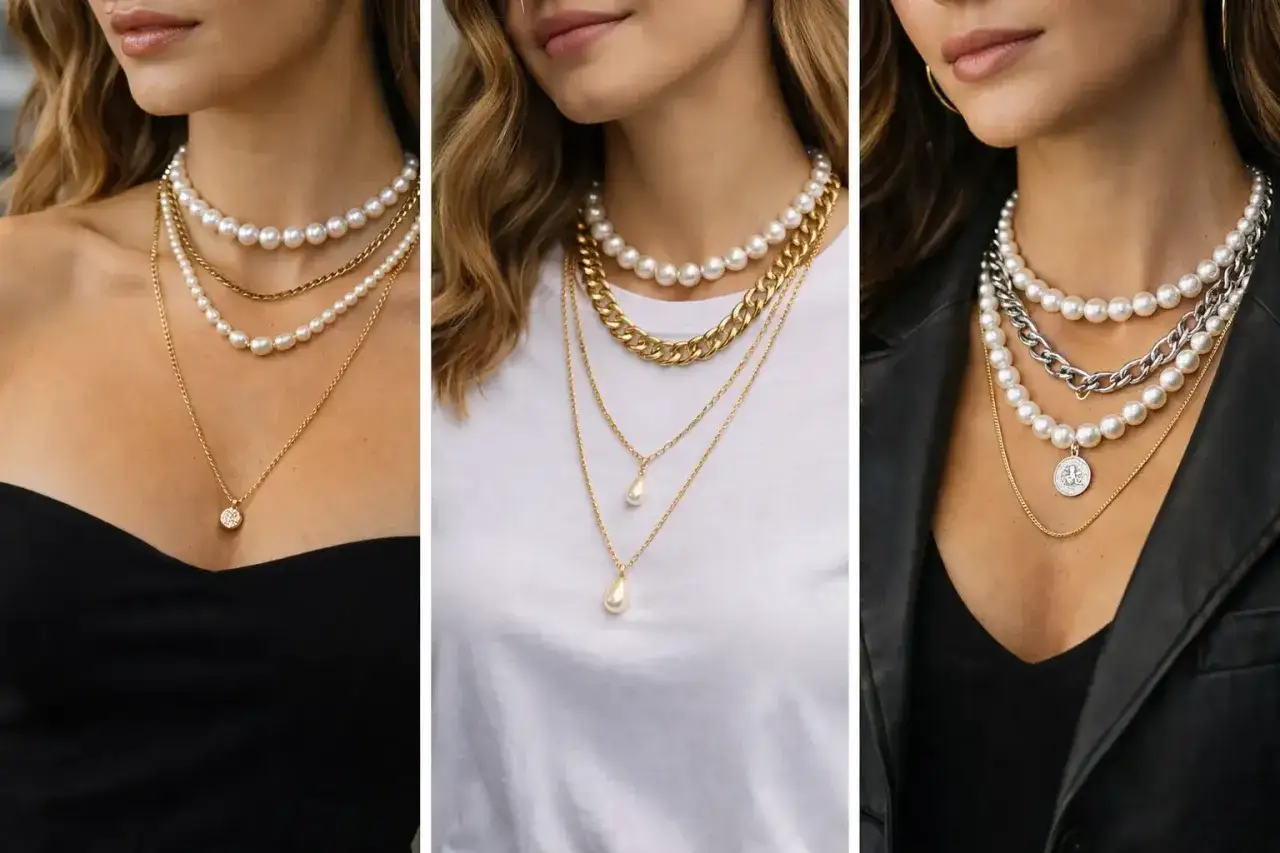
Pearls look strongest now when they are treated as part of an outfit, not as a costume from a past decade. British Vogue has repeatedly shown that pearls work best when they are pushed slightly off the expected path: a single baroque drop with tailoring, a pearl pendant over a fine knit, or studs worn with a sharp blazer. My own rule is simple: let one pearl element lead and keep everything else clean.
- A white shirt and pearl studs create a crisp, quiet look that works in the office or at dinner.
- A single pearl pendant over a crew neck gives you a softer version of everyday jewellery.
- Baroque pearl drops feel more contemporary than a perfectly matched set, especially with gold.
- Mixed metals can stop pearls from looking too formal, particularly if the rest of the outfit is modern.
- A strand still works, but it looks freshest when the rest of the styling is minimal and tailored.
That approach keeps pearls versatile rather than precious in the brittle sense. When the silhouette is clean, the pearl becomes the focal point instead of a nostalgic accessory, and that is what makes it feel relevant now. The only catch is that pearls need more care than most people realise.
How to care for pearls without dulling their lustre
Pearls are tougher than their reputation, but they are still soft by gemstone standards. GIA lists pearl at 2.5 on the Mohs hardness scale, which is why I treat them differently from diamonds, sapphires or even most coloured stones. GIA also advises keeping pearls away from harsh chemicals, wiping them after wear and storing them in a soft pouch or case, and that is exactly the routine I would follow.
- Put pearls on after perfume, sunscreen, hairspray and makeup.
- Take them off before showering, swimming, exercising or cleaning.
- Wipe them gently with a soft, slightly damp cloth after wearing them.
- Let them air-dry fully before storing them away.
- Keep them separate from harder stones and sharp metal edges.
- Avoid ultrasonic and steam cleaners, which are too aggressive for pearls.
If you wear a strand often, check the thread from time to time. Loose silk or stretched knots are a sign that the piece needs attention before it starts to abrade. Good care is not complicated; it just has to be consistent. That consistency matters even more when you are buying pearls as a gift.
The small details that make a June pearl gift feel thoughtful
The best pearl gift is rarely the largest one. It is the piece that matches the wearer’s pace: studs for someone who likes daily jewellery, a pendant for someone who prefers one neat focal point, or a strand when you know they already dress with a classic eye. I also think colour matters more than many buyers realise. Cream and white feel timeless, blush-toned freshwater pearls soften a look, and darker Tahitian pearls suit someone who prefers contrast and depth.
- Choose studs if the person wears minimal jewellery.
- Choose a pendant if they like layering and keeping the neckline simple.
- Choose a strand if they already wear tailored pieces or lean towards a more formal wardrobe.
- Choose baroque pearls if they like jewellery that feels a little less polished and a little more current.
- Match the metal to what they already wear most often, rather than forcing a new finish onto their style.
For me, that is the real strength of June’s pearl: it can look ceremonial when you want a special gift, but it still works in ordinary life. Choose the type and shape that fit the wearer, and the piece will feel relevant long after the birthday itself.