What matters most about emerald as May's birthstone
- Emerald is the green variety of beryl and the modern birthstone for May.
- Its appeal comes from colour first: strong, even green matters more than perfect clarity.
- Many stones are treated with oil or resin, so disclosure matters when you buy.
- Emeralds need gentler care than harder gems such as diamonds, especially in rings.
- In the UK, check the precious-metal hallmark as well as the stone details.
Why emerald became May's birthstone
In modern birthstone lists, emerald represents May. Gemmologically, it is the green variety of beryl, and its colour usually comes from trace chromium, sometimes with vanadium contributing to the tone. That green fits the month unusually well: May is the point in the year when the landscape feels fully alive again, and emerald carries that same sense of renewal without looking overly sweet or seasonal.
What I find interesting is that emerald does not need to be explained into significance. The stone has always done a lot of the work itself. Its colour is immediate, unmistakable, and unlike the sparkle-first logic of diamonds or colourless gems, emerald asks you to value depth, mood, and presence. That is why it has remained one of the most recognisable stones in birthstone tradition, and it is also why buyers often feel a stronger emotional pull toward it than they expect. That history is what makes the buying choices worth getting right.
Why emerald still feels luxurious
Emerald has a long memory. It has been prized in royal collections, high jewellery, and ceremonial pieces for centuries, and that heritage still shapes how we read the stone today. Even now, it feels less like a neutral accessory and more like a statement with intention. I think that is part of its charm: emerald does not pretend to be effortless. It looks rich, and it looks like it matters.
Natural inclusions are part of that identity. In emerald, the tiny internal features are not automatically flaws in the way people sometimes assume they are. They are part of the stone’s geological story, and in many pieces they are exactly what separates a genuine emerald from something that merely imitates the colour. When I see an emerald that looks perfectly blank inside, I do not celebrate too quickly; I ask more questions. The best stones usually have character, not sterility.
That long reputation is also why emerald works so well in both antique and modern settings. It can look regal in yellow gold, sharp in white metal, or unexpectedly fresh in a minimalist mount. Once you understand that character, the next step is learning how to separate a beautiful emerald from a merely expensive one.
How to judge quality before you buy
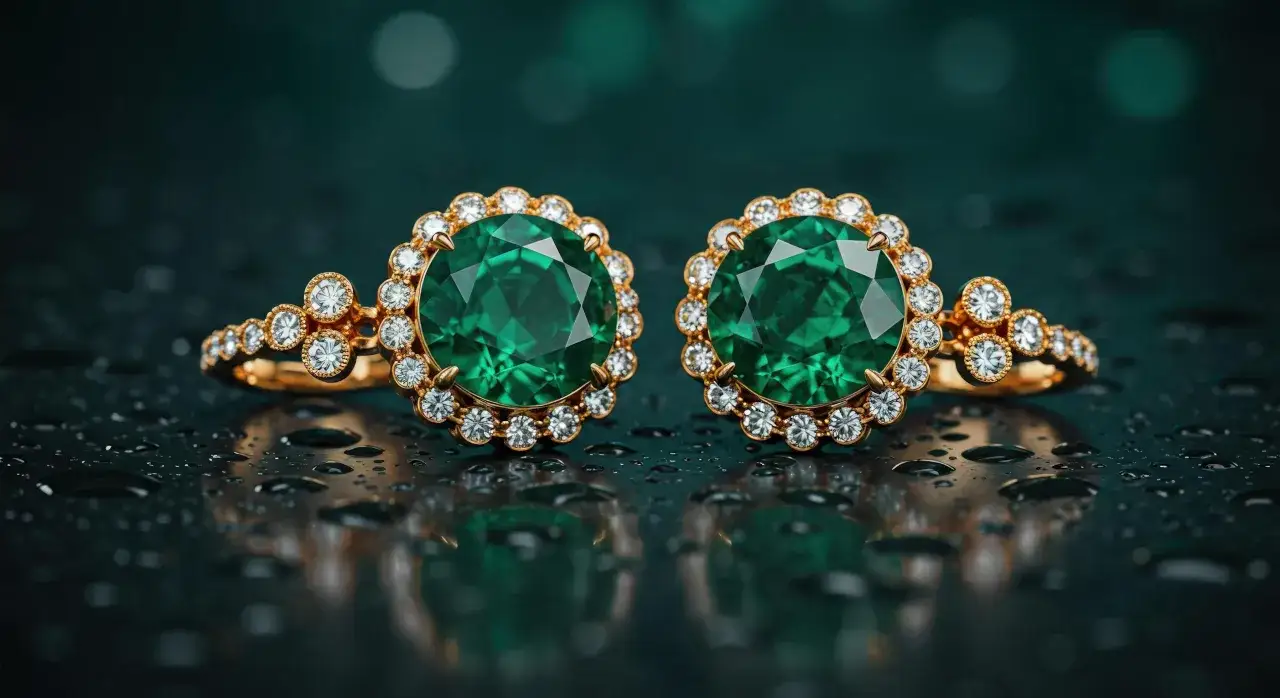
With emeralds, colour comes first. I look for a vivid, even green with enough brightness to keep the stone alive. Saturation is the strength of the green; tone is how light or dark it appears. A stone can be dark and expensive-looking yet still feel lifeless, so I would rather choose a lively medium-to-strong green than the deepest one in the tray.
| Factor | What to look for | Common mistake |
|---|---|---|
| Colour | Rich green with good balance between depth and brightness | Chasing the darkest stone instead of the most vivid one |
| Clarity | Some visible inclusions are normal and often expected | Assuming eye-clean is always better |
| Cut | A cut that protects the stone and keeps the colour active | Choosing shape only for size |
| Treatment | Clear disclosure of oiling, resin filling, or other enhancement | Buying without asking how the stone was improved |
Clarity matters, but not in the diamond sense. Emeralds are naturally included, and many stones are treated to improve the look of surface-reaching fissures. GIA notes that emerald is around 7.5 to 8 on the Mohs scale and recommends warm, soapy water rather than ultrasonic or steam cleaning; it also points out that many fashioned natural emeralds are fracture-filled, which is why disclosure matters so much. Fracture filling simply means a substance has been used to reduce the appearance of tiny cracks.
If a price seems too good for a large, very clean emerald, I ask whether it is natural, lab-grown, or a simulant. There is nothing wrong with a lab-grown stone if that is what the buyer wants, but the value story changes completely when rarity is the point. For UK buyers, I also check the hallmark on the metal setting. That tells you about the gold, silver, platinum, or palladium, not the gem itself, so both parts of the piece deserve scrutiny. After that, the real question is where and how the piece will actually be worn.
Which emerald jewellery styles work best in real life
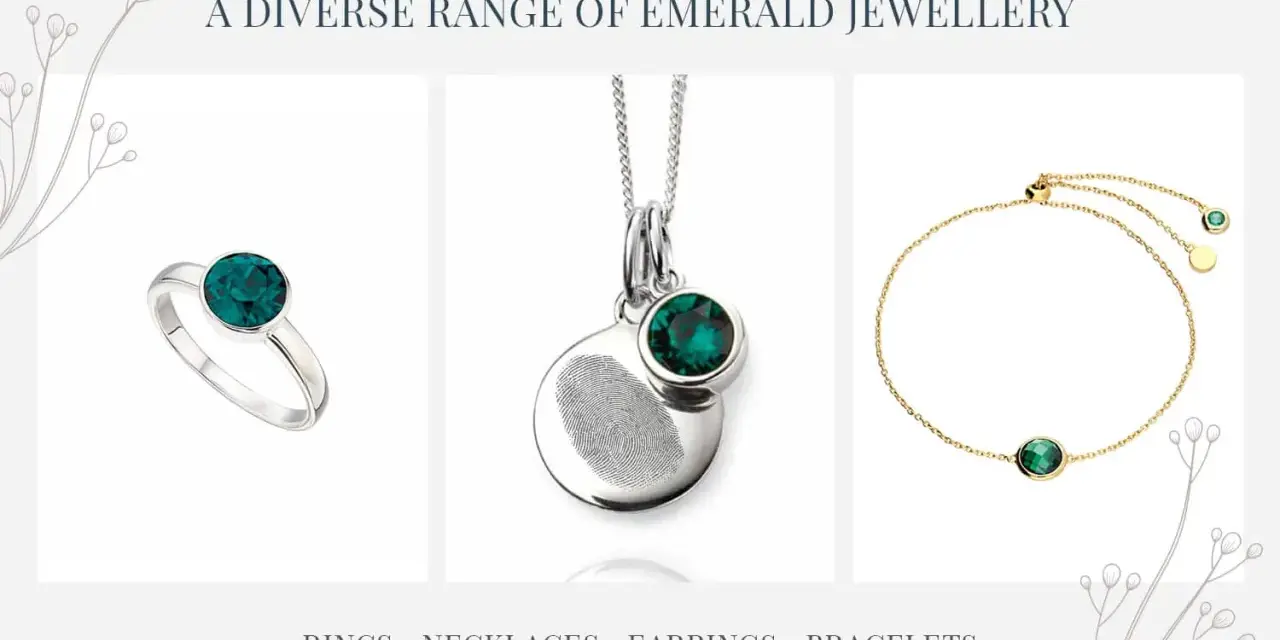
Rings are the most exposed, so I prefer protective settings such as bezel or low-profile halo styles for everyday use. A tall claw setting can look elegant, but it puts the stone at greater risk of impact. If the ring is meant for frequent wear, the setting matters as much as the stone.
Pendants are usually the easiest place to start. They show off the colour beautifully, they are less likely to take a knock, and they work well in both simple and dressed-up outfits. If you are buying for a birthday or a milestone gift, a pendant often feels easier to wear than a ring because it does not have to survive the same level of friction.
Earrings are underrated. They deliver a strong flash of colour with less abrasion than a ring or bracelet, which makes them a sensible choice for someone who loves emerald but wants lower-maintenance jewellery. Bracelets, by contrast, are the most exposed of all and are best reserved for occasional wear unless the design is especially robust.
Metal choice also changes the mood. Yellow gold makes emerald feel warmer and more classical. White gold or platinum gives it a cleaner, cooler edge. I tend to think of the setting as the frame, not the afterthought: it can sharpen the stone, soften it, or quietly ruin it. Whatever style you choose, the stone will only stay beautiful if the care routine is gentle.
How to care for emerald jewellery without damaging it
Emerald needs a softer routine than many people expect. Because the stone often contains internal fissures and is frequently treated, aggressive cleaning is a poor trade-off. Warm water, a drop of mild soap, and a soft brush are usually enough for routine care. If I am cleaning an emerald piece at home, I keep the process slow and uncomplicated.
- Clean the stone with lukewarm water, mild soap, and a soft cloth or brush.
- Avoid ultrasonic cleaners and steam cleaning.
- Keep emerald jewellery separate from harder gems such as diamond and sapphire.
- Remove rings before gym work, gardening, housework, or anything involving impact.
- Check settings regularly, especially on rings and bracelets, because a loose stone is easier to lose than to scratch.
Never use harsh chemical dips or chlorine-heavy cleaners. They are not worth the risk, especially if the stone has been oiled or resin-filled. If an emerald has visible fractures, I am even more conservative: fewer chemicals, less heat, and no unnecessary vibration. A small routine done consistently is much better than a dramatic rescue clean every few months. That care question matters even more when the stone is being bought as a gift.
When emerald is the right gift and when it is not
Emerald is an excellent gift for May birthdays, anniversary pieces, and anyone who likes jewellery with a strong point of view. It is especially good for people who enjoy colour and do not want something that disappears into the background. A well-chosen emerald pendant or pair of earrings can feel personal without being overly formal.
It is a weaker choice for someone who wants a hard-wearing, low-maintenance ring they can forget about. If the wearer is active, rough with their jewellery, or simply not interested in delicate care, I would steer the gift toward a pendant or earrings instead of a daily ring. That is not a compromise; it is a better match between gemstone and lifestyle.
If I am buying for someone else, I try to match the piece to their routine before I match it to their birth month. A gift feels more thoughtful when it fits how the person actually lives. If you keep those checks in mind, the final decision becomes much easier.
The details I would check before I choose one
If I were buying an emerald piece today, I would start with four questions: is the colour genuinely beautiful, is the treatment disclosed, does the setting suit the way it will be worn, and is the metal properly hallmarked if the piece is sold in the UK? Those four checks solve most of the practical problems people run into later.
I would also remember that emerald rewards judgement more than impulse. The best piece is not always the clearest, the largest, or the cheapest. It is the one where the colour feels alive, the setting protects the stone, and the care routine makes sense in real life. When those three things line up, emerald stops being just a May stone and becomes the kind of jewellery people keep, wear, and remember.