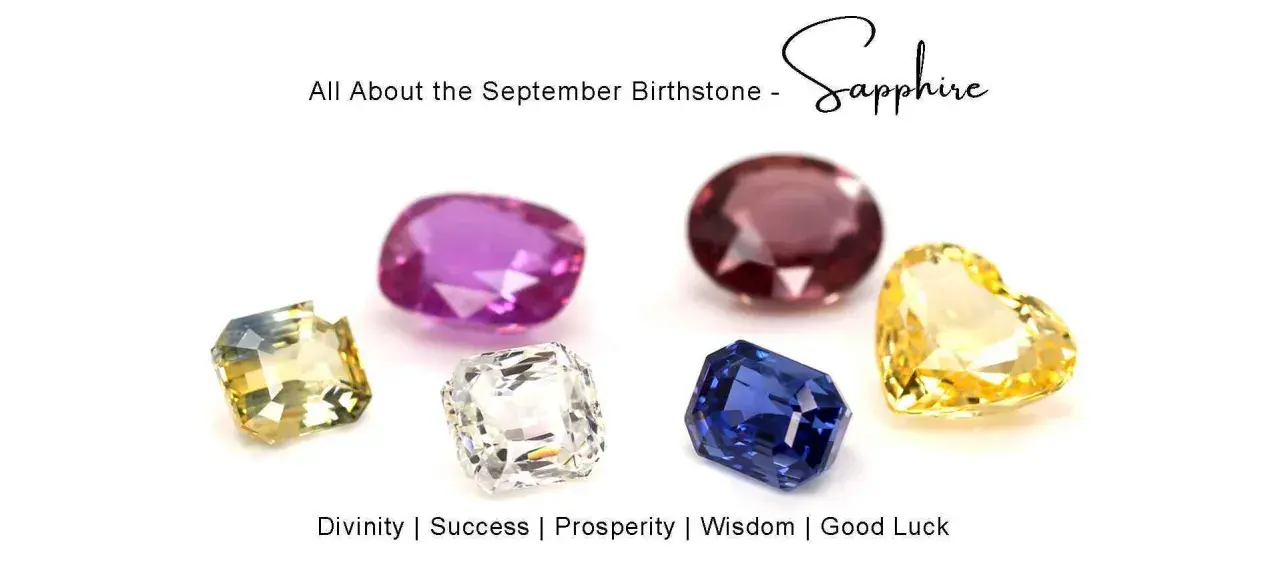
The answer is sapphire, but the details are worth knowing
- 7 September falls under September, so sapphire is the standard birthstone.
- Sapphire is the blue variety most people picture, but the gem also appears in pink, yellow, green, white and other colours.
- It is a corundum gem with excellent durability, which is why it works well in rings, earrings and pendants.
- Blue sapphire is the classic choice, but fancy sapphires and white sapphire give you more styling options.
- Ask about treatment before buying, because that affects both value and care.
There is no separate stone for 7 September
Birthstones are assigned by month, not by individual day, so 7 September does not have a different gem from 1 September or 30 September. That is why the standard answer is sapphire, even if some alternative charts or older traditions seem to complicate the picture. I find it useful to keep the rule simple: the date sits inside September, and September belongs to sapphire.
This matters because it saves you from chasing a day-specific stone that does not really exist in the modern system. Once you accept that, the rest of the choice becomes more interesting, because sapphire has a lot more range than many people expect.
Why sapphire became September's stone
Sapphire has held onto the September spot for a long time because it combines history, symbolism and real-world durability. It has long been linked with sincerity, truth, faithfulness and nobility, which explains why it turns up so often in royal and ecclesiastical jewellery. I think that combination is a big part of its appeal: it feels meaningful without becoming sentimental in a forced way.
Geologically, sapphire is the blue variety most people recognise from the corundum family, the same mineral family that gives us ruby in red. That helps explain the gem's reputation. It is not just beautiful, it is structurally strong, and that is a rare combination in coloured stones. The symbolism gives it emotional weight, but the durability is what keeps it relevant in modern jewellery.
That strong foundation is also why sapphire is still one of the easiest birthstones to wear every day, which leads naturally to the colour choices people actually face when they shop.
What sapphire colours actually matter
Blue is the classic look, but sapphire is not a one-note gem. In practice, the most useful way to think about it is as a family of stones with different moods, budgets and levels of rarity. The colour you choose should match the wearer, not just the calendar.
| Type | What it looks like | Best for | My take |
|---|---|---|---|
| Blue sapphire | Deep to vivid blue, from soft cornflower tones to richer royal shades | Traditional gifts and classic jewellery | The safest and most recognisable September choice |
| Fancy sapphire | Pink, yellow, green, purple or white | People who want something less expected | Still a sapphire, just with more personality |
| White sapphire | Colourless or near-colourless | Minimalist pieces and diamond-like looks | Useful if you want brightness without a blue tone |
| Padparadscha sapphire | Peach-pink to orange | Collectors and statement gifts | Beautiful and uncommon, but usually a premium choice |
If I were choosing for a birthday, I would not overthink the colour beyond the wearer's style. Blue is timeless, but a pink or yellow sapphire can feel more personal, and that often makes the gift stronger. The common thread is still sapphire, which is why the stone remains so versatile.
How I would choose a sapphire piece for everyday wear
For a September birthday, the form of the jewellery matters almost as much as the stone itself. A pendant is usually the easiest all-round choice because it stays relatively protected. Earrings are another safe option, especially if you want the colour to sit close to the face. Rings feel more intimate, but they also take more knocks, so I pay closer attention to setting quality there.
My practical rule is simple. Choose the most secure setting you can live with, then choose the colour and cut that suit the wearer's wardrobe. A well-cut sapphire with strong colour saturation will usually look better than a larger stone that lacks life. That is especially true in the UK market, where buyers often compare pieces side by side and notice tone before carat weight.
- For a ring, look for a setting that protects the stone, such as a low profile or a secure bezel-style mount.
- For a pendant, focus on colour and cut, because the stone will usually face less wear.
- For earrings, smaller stones often look elegant and are easier to wear often.
- For a gift, ask whether the sapphire is natural, lab-grown or treated before you commit.
That last point is not a technical footnote, it is part of making a sensible purchase. Treatment affects price, disclosure and sometimes care, so it is worth asking upfront rather than assuming every sapphire is the same.
How to care for sapphire without ruining the finish
Sapphire is one of the easiest coloured gemstones to maintain, and that is one of the reasons I recommend it so often for daily wear. Its hardness makes it resistant to scratching, and its stability means it can handle normal light and temperature conditions well. In plain English, it is a stone that can cope with real life.
Cleaning should still be gentle. Warm water with mild soap and a soft brush is usually enough for untreated or heat-treated sapphire. If a stone has been fracture-filled, cavity-filled or dyed, I would avoid steam and ultrasonic cleaning and keep to a damp cloth instead. That sounds cautious, but it is the sensible approach when the treatment history is unclear.
A few habits make a real difference:
- Store sapphire jewellery separately so harder pieces do not mark neighbouring gems or metals.
- Remove rings before heavy manual work, even if the stone itself is durable.
- Check prongs and settings periodically, especially on rings worn often.
- Keep treated stones away from harsh cleaners and unnecessary chemicals.
The better you understand the treatment, the easier the care becomes, and that knowledge also helps when you are comparing pieces in the first place.
What I would remember before buying September birthstone jewellery
If I were buying for a 7 September birthday, I would start with the simplest truth: sapphire is the correct birthstone, but the best piece is the one the wearer will actually use. That means balancing symbolism with style. A restrained blue sapphire pendant works beautifully for someone who prefers quiet elegance, while a pink or yellow sapphire suits a person who wants the birthstone idea without a predictable look.
I would also check three things before paying for a piece. First, whether the stone is natural, lab-grown or treated. Second, whether the colour is vivid enough to hold interest in everyday light. Third, whether the setting suits the way the jewellery will be worn. Those checks take minutes, but they prevent most disappointing purchases.
For a date as specific as 7 September, the answer does not need to be complicated. Sapphire is the stone to know, and once you know that, you can decide whether you want the classic blue version, a modern fancy sapphire, or a piece designed for daily wear rather than display.