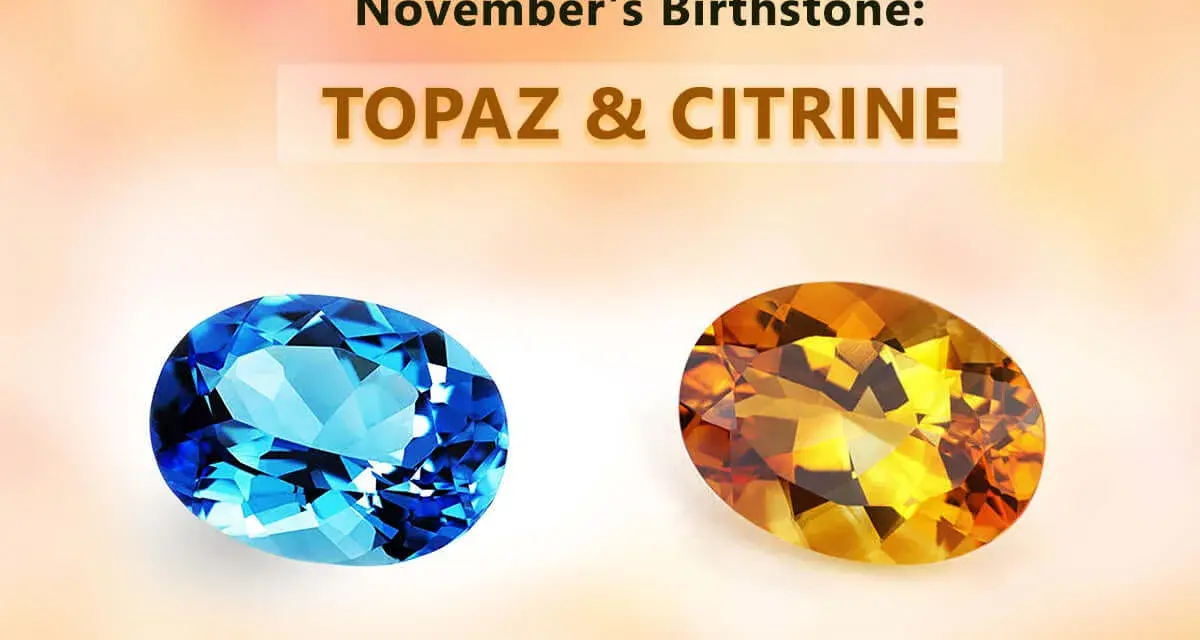
The two November stones are easy to love, but they suit different habits
- Topaz has the higher hardness rating, but it still needs careful setting because of its natural cleavage.
- Citrine is a variety of quartz, usually in yellow-to-orange shades, and it is often heat-treated amethyst.
- Both stones are usually more accessible than rarer coloured gems, so style and durability matter more than prestige.
- For daily wear, the setting design matters almost as much as the gemstone itself.
- Warm, soapy water is the safest cleaning method for both stones.
What November's birthstones really mean
Birthstones are a tradition rather than a hard rule, and that is part of their appeal. For November, the modern pairing is topaz and citrine, two stones that share a warm seasonal feel but have very different mineral make-up. Topaz is its own mineral, while citrine is a quartz variety, so they may look similar in a tray yet behave differently once they are set and worn.
That distinction is not just technical. It changes how I think about value, durability, and styling. Topaz often feels more varied and a little more dramatic, while citrine reads as lighter, softer, and more relaxed. Once that is clear, the next step is to see how each stone performs in real jewellery.
Topaz brings range, not just one colour
Topaz is the more surprising of the two because people often picture only a golden stone, yet topaz can appear colourless, blue, pink, peach, or in the prized imperial shades that lean golden-orange with a pinkish cast. On the Mohs scale it sits at 8, which sounds reassuring, but hardness is not the same as toughness. Topaz has perfect cleavage, which means it can split along a natural plane if it takes a hard knock.That is why I tend to recommend topaz for pieces that will not be knocked around constantly, or for settings that protect the stone well. Pendants, earrings, and low-profile rings work well, especially if the stone is set securely. I would also avoid steam or ultrasonic cleaning; warm water, mild soap, and a soft brush are the safer choice. If you like a gem with more personality than a simple yellow stone, topaz gives you plenty to work with. Citrine takes that warm story in a gentler direction.
Citrine gives November its easiest everyday glow
Citrine is a yellow-to-orange variety of quartz, and it is usually the easier stone to wear if you want something sunny without looking overly formal. Natural citrine exists, but most citrine on the market is created by heating amethyst, which is fine as long as the seller is transparent about it. It measures 7 on the Mohs scale, so it is durable enough for regular use, although abrupt temperature changes can still cause problems.
Styling-wise, citrine often looks especially good in yellow gold because the metal and the stone share the same warm language. It also works neatly in simple pendants and earrings, where the colour can do the talking without competing with a complicated setting. If the stone is too pale, it can disappear in flat light, so I look for enough saturation to keep the gem visible from normal viewing distance. When topaz and citrine are compared directly, the choice usually comes down to personality and wear pattern rather than right or wrong.
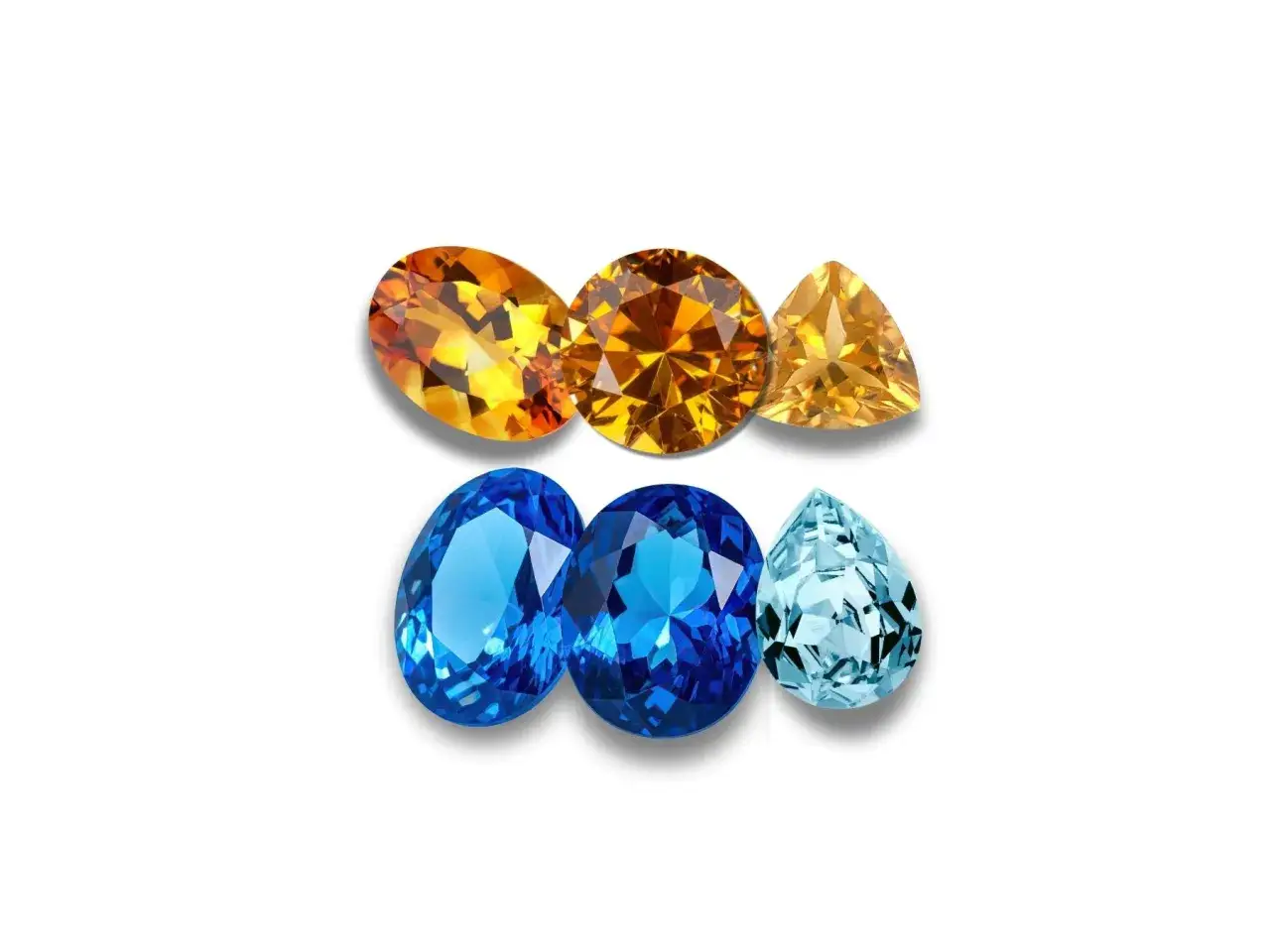
Topaz and citrine compared side by side
I find a side-by-side view is the fastest way to separate the two. The table below is the practical version, not the romantic one.
| Point | Topaz | Citrine |
|---|---|---|
| What it is | A distinct mineral | A variety of quartz |
| Typical colour | Colourless, blue, pink, peach, golden-orange | Pale yellow, honey, amber, orange |
| Hardness | 8 on the Mohs scale | 7 on the Mohs scale |
| Buying note | Beautiful but more vulnerable to chipping if the setting is exposed | Usually straightforward to wear, with colour and treatment disclosure worth checking |
| Best use | Statement pieces, protected rings, more structured designs | Easy everyday pieces, warm-toned jewellery, gifts that feel simple and wearable |
If I were buying for someone who likes a fuller range of colour, I would lean towards topaz. If I wanted a stone that feels instantly easy and autumnal, I would choose citrine. Neither choice is a compromise; they simply answer different style questions. The next question is how to buy one well, especially if you are choosing a piece in the UK.
How I would choose one in the UK
When I am helping someone choose a piece, I start with the wearer rather than the gemstone. A birthday gift that never leaves the box is a poor result, even if the stone is technically impressive.
- Choose topaz if the wearer likes colour variety, cleaner lines, or a slightly more distinctive stone.
- Choose citrine if the wearer wants a warm, easy-going gem that fits everyday outfits and autumn palettes.
- Use a pendant or earrings for frequent wear if you want to reduce the risk of knocks.
- Pick a secure setting for rings, especially for topaz, because exposed edges are where chips happen.
- Ask about treatments before you buy. Heat treatment is common for citrine, and any colour treatment on topaz should be stated clearly.
- Check the metal too. In the UK, hallmarking on precious-metal settings is useful, but it does not tell you anything about the gemstone itself.
For more expensive pieces, I would want a straightforward written description of the stone, the treatment status, and the setting materials. That is especially sensible online, where a photo can flatter a gem far more than natural light would. Once the piece is chosen, the long-term question becomes care, because the two stones reward slightly different habits.
How to care for it so it still looks good in a few years
Topaz care
Topaz deserves gentle handling despite its good hardness. I would clean it with warm water, mild soap, and a soft brush, then dry it with a lint-free cloth. I would not use steam or an ultrasonic cleaner, and I would keep it away from sudden temperature changes, hard impacts, and storage next to harder stones that could scratch the setting or the gem. If the colour is treated, extra caution is sensible because some treatments are less forgiving than the stone itself.
Read Also: Pearl Birthstone Month - Why June & How to Choose Pearls
Citrine care
Citrine is more forgiving, but it is not carefree. Warm, soapy water is again the safest cleaning method, and I would keep it out of prolonged strong sunlight or high heat, especially if the piece is frequently left on a windowsill or in a hot room. I would also store it separately so it does not pick up scratches from other jewellery. For both stones, a quick prong check once a year is a sensible habit if the piece is worn regularly.
These care habits are simple, but they make the difference between a piece that keeps its polish and one that starts looking tired after a season or two.
What I would buy first for a November birthday
- For a person who wears jewellery every day, I would start with citrine in a pendant or small pair of earrings.
- For someone who likes richer colour or a slightly more characterful gift, I would choose topaz in a secure setting.
- For the best overall value, I would look for clear colour, honest treatment disclosure, and a setting that suits the wearer’s routine.
- For a gift that feels considered rather than generic, I would match the metal to the person’s wardrobe, not just the birth month.
That is why I see November’s stones as a useful pair rather than a problem to solve: topaz offers range and character, while citrine offers warmth and ease. Choose the one that fits the wearer’s habits, and the piece will feel far more personal than a simple label ever could.