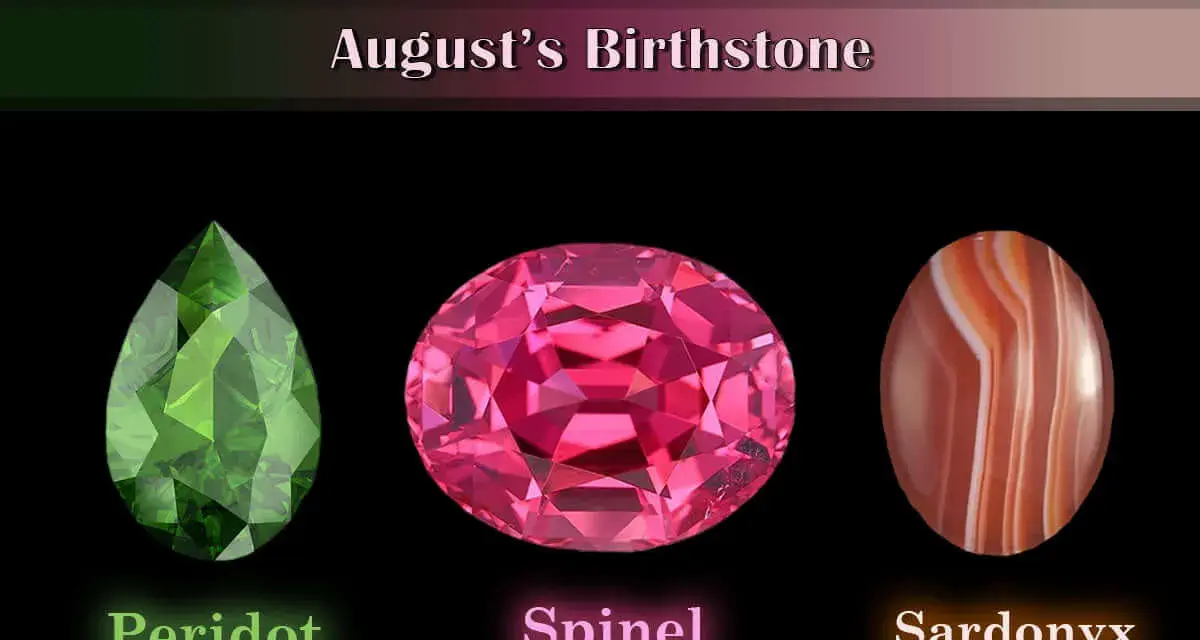
The misspelt query august burthstone usually points to one simple question: which gemstone belongs to August, and which version is worth buying or wearing? The answer is a little broader than a single stone, because August has a classic birthstone and two recognised alternatives. I’m going to clear up the naming confusion first, then show you how the stones differ in colour, durability, style and care.
Here’s the shortest useful answer before we go deeper
- The classic August birthstone is peridot, but spinel and sardonyx are also recognised.
- Peridot gives the most familiar green August look; spinel is the toughest all-round choice; sardonyx is the most traditional-looking.
- For daily rings, spinel is usually the safest pick. Peridot and sardonyx need a gentler setting and more careful cleaning.
- In UK jewellery, yellow gold flatters peridot, while white metals often make spinel look sharper and more modern.
What the August birthstone question usually means
When I see this kind of misspelt search, I treat it as a definition problem with a style problem attached. The definition is simple: August is unusual because it has three recognised birthstones, and most people who want the “main” answer are looking for peridot. The style problem is the more useful one, because the right gemstone depends on whether you want a classic birthday gift, an everyday ring or a piece with more historical character.
That is why different jewellers sometimes phrase the answer differently. Some lead with peridot because it is the most familiar August stone, while others list all three because the modern birthstone chart is broader. Once that is clear, the differences between them make a lot more sense.
The three August birthstones and how they compare
GIA lists peridot, spinel and sardonyx as August birthstones, and the practical differences between them matter more than the label alone. If you are choosing a piece for yourself or someone else, I would compare them side by side rather than defaulting to the first stone you recognise.
| Gemstone | Look | Hardness | Best use | Practical note |
|---|---|---|---|---|
| Peridot | Yellow-green to olive green, bright and summery | 6.5 to 7 | Pendants, earrings, occasional rings | Beautiful, but it needs a gentler setting and careful cleaning |
| Spinel | Red, pink, blue, purple and more | 8 | Daily rings, versatile gifts, bolder designs | The most durable of the three and the easiest to live with |
| Sardonyx | Banded cream, orange, brown and white | 6.5 to 7 | Cameos, signet-style pieces, vintage-inspired jewellery | Often chosen for its pattern and old-world feel rather than sparkle |
Spinel is the sleeper pick here, and it has a neat British footnote as well: the Black Prince’s Ruby in the British Imperial Crown is actually red spinel. Peridot is the most visually obvious August stone, while sardonyx is the one that rewards anyone who likes carved detail, banding and antique references. That balance is exactly why the month has stayed interesting instead of one-note.
Why peridot remains the classic August choice
Peridot is the stone most people picture first because its yellow-green colour feels unmistakably summer-like without being neon. I also like that it has a genuinely interesting origin story: peridot can form in hardened lava and even in meteorites, which gives it a stronger sense of identity than many birthstones that rely mainly on tradition.
In jewellery, peridot works best when the design lets the colour breathe. A slim pendant, a pair of studs or a clean bezel-set ring can look modern; a heavy setting can make the stone feel dated very quickly. Yellow gold usually brings out its warmth, while silver or white gold gives it a cooler, fresher look.
If someone wants the safest “I know this is an August piece” answer, peridot is still the one I would reach for first. The next question is whether it is the best stone for the way the jewellery will actually be worn.
Which August stone works best for everyday wear
This is where practicality starts to matter more than symbolism. Peridot sits at 6.5 to 7 on the Mohs scale, sardonyx is similar, and spinel is harder at 8, so the stone you choose should match the job you expect it to do. A birthstone ring that lives on the hand every day has a very different life from a pendant worn on occasion.GIA recommends gentle cleaning for peridot, and I would apply that same cautious approach to sardonyx, especially if the stone has been dyed. Spinel is the most tolerant of the three, but even then I prefer warm soapy water and a soft brush over anything aggressive.
- Choose spinel for rings, bracelets and gifts that need to survive frequent wear.
- Choose peridot for pendants, earrings and occasional rings where colour matters most.
- Choose sardonyx for cameo pieces, signet-style jewellery or anyone who likes a more antique look.
- Store each piece separately so the stones do not scratch each other in a drawer or box.
- Skip steam and ultrasonic cleaning unless you are certain the piece can handle it.
Once the practical part is settled, choosing a gift becomes much easier, because the best stone is usually the one that suits the wearer’s habits rather than the calendar alone.
How I would choose an August gift in 2026
If I were helping someone buy August birthstone jewellery today, I would start with the wearer’s style before I started with the gemstone list. A person who likes clean, everyday jewellery usually does better with spinel. Someone who wants the obvious birthstone connection usually prefers peridot. Someone who loves old-world details, cameos or engraved pieces often responds best to sardonyx.- For a classic birthday gift, I would pick peridot in a simple setting.
- For a ring that will be worn often, I would choose spinel and spend more attention on the setting.
- For a vintage-inspired piece, sardonyx usually feels more distinctive than the other two.
- For UK buyers, I would match yellow gold with peridot, white metals with spinel, and slightly softer settings with sardonyx.
That approach keeps the gift personal without forcing a single rule onto every buyer. The month tells you the theme; the wearer tells you which stone will actually be loved, worn and looked after.