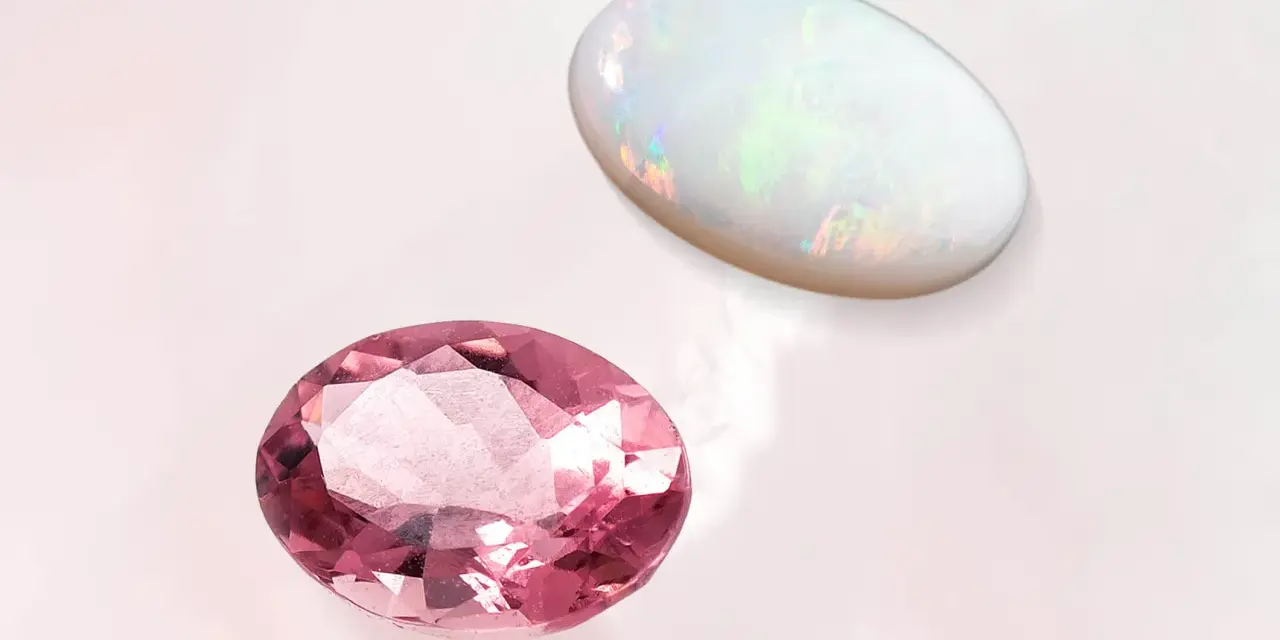
October has a rare kind of flexibility in the birthstone world: two stones, two very different personalities, and two good reasons to choose one over the other. The split makes more sense once you look at how birthstone charts changed over time, and why jewellers eventually wanted a second option that was easier to wear every day. I usually explain it as a balance between tradition and practicality, which is exactly what makes the October story worth understanding.
October’s birthstones reflect history and practicality
- Opal is the traditional October birthstone and the more historic choice.
- Tourmaline was added later as a modern alternative, giving October a second official stone.
- The dual listing helps buyers choose between opal’s dramatic play-of-colour and tourmaline’s broader durability.
- Opal is more delicate and better suited to protected settings, while tourmaline is usually easier for regular wear.
- Both stones can make excellent birthstone jewellery, but they suit different lifestyles and tastes.
Why October has two birthstones?
The short answer is that birthstone lists are not fixed in stone themselves. They evolved from folklore, trade practice and changing jewellery tastes, so months could gain a second stone when another gem became popular, available or easier to sell as a gift. October is a good example of that shift: opal came first as the traditional stone, and tourmaline was added later as a modern alternative.
That matters because the modern list is not simply a duplicate of the old one. It reflects how people actually buy and wear jewellery. In October’s case, the second stone gave the month a more durable, more widely available option without removing opal’s historic place. Once you see that pattern, the rest of the October story becomes much easier to read.
Opal is the stone that gave October its original identity
Opal is the emotional heart of October’s birthstone story. It has long been admired for its play-of-colour, the shifting flashes that can move between red, green, blue and gold as the stone turns in the light. I find opal interesting because it feels almost theatrical; it is less about a single stable colour and more about movement, which is why it has stayed desirable for centuries.
There is also a practical side to its reputation. Opal is a mineraloid rather than a classic crystal, and it contains water, which means it needs gentler treatment than many other gems. On the Mohs scale, opal is typically around 5.0 to 6.5, so it can scratch more easily than harder stones. It is beautiful, but it is not the stone I would automatically place in a low-set ring for someone who works with their hands all day.
That combination of romance and fragility is exactly why opal stayed important but did not remain the only answer for October. The next step in the story is the gem that filled the gap.
Tourmaline was added because October needed a more versatile choice
Tourmaline was officially added to October’s birthstone list in the modern era, and that addition solved a real problem: not everyone wanted a soft, delicate stone. Tourmaline offers a much wider range of colours, from pink and green to blue, teal, black and striking bi-colour stones. It also wears better in everyday jewellery, which made it a natural companion to opal rather than a replacement for it.
Durability is the main reason people still appreciate that decision. Tourmaline usually sits around 7.0 to 7.5 on the Mohs scale, so it stands up better to regular use than opal does. It is also a particularly adaptable gem in design terms. A jeweller can use a vivid green stone for a cleaner, more modern look or choose a watermelon tourmaline when the client wants something more playful and unusual. That flexibility is part of why the October list expanded.
In other words, October ended up with two birthstones because one stone gave the month heritage, and the other gave it practicality. That balance becomes clearer when you compare them side by side.
How opal and tourmaline compare in jewellery
When I compare these stones for buyers, I focus on how they behave in real jewellery, not just how they look loose on a tray. The difference is not subtle, and it affects everything from setting style to daily wear.
| Feature | Opal | Tourmaline |
|---|---|---|
| Visual character | Play-of-colour, with flashes that shift as the stone moves | Wide colour range, including rich solids and bi-colour gems |
| Durability | More delicate, around 5.0 to 6.5 on the Mohs scale | More durable, around 7.0 to 7.5 on the Mohs scale |
| Best use | Pendants, earrings and protected rings | Rings, earrings, pendants and everyday wear pieces |
| Care level | Needs gentler handling and stable storage conditions | Easier to care for, though still best protected from hard knocks |
| Style impression | Dreamy, vintage, artistic | Fresh, adaptable, sometimes more contemporary |
The main takeaway is simple: opal is the more expressive stone, while tourmaline is the more wearable one. That does not make one better than the other. It just means they solve different problems. If someone wants a birthstone ring they can wear often, I usually lean towards tourmaline. If they want a piece with a softer, more unusual glow, opal still has no real substitute.
Those differences matter most when you start thinking about the actual piece of jewellery, not just the stone inside it.
How to choose the right October birthstone piece
If you are choosing October birthstone jewellery, I would start with lifestyle before style. A stone that looks perfect in a display case can be the wrong choice if it will live on a hand that types, lifts, gardens or travels every day.- Choose opal if you want drama, symbolism and a softer, more romantic look.
- Choose tourmaline if you want more colour options and easier day-to-day wear.
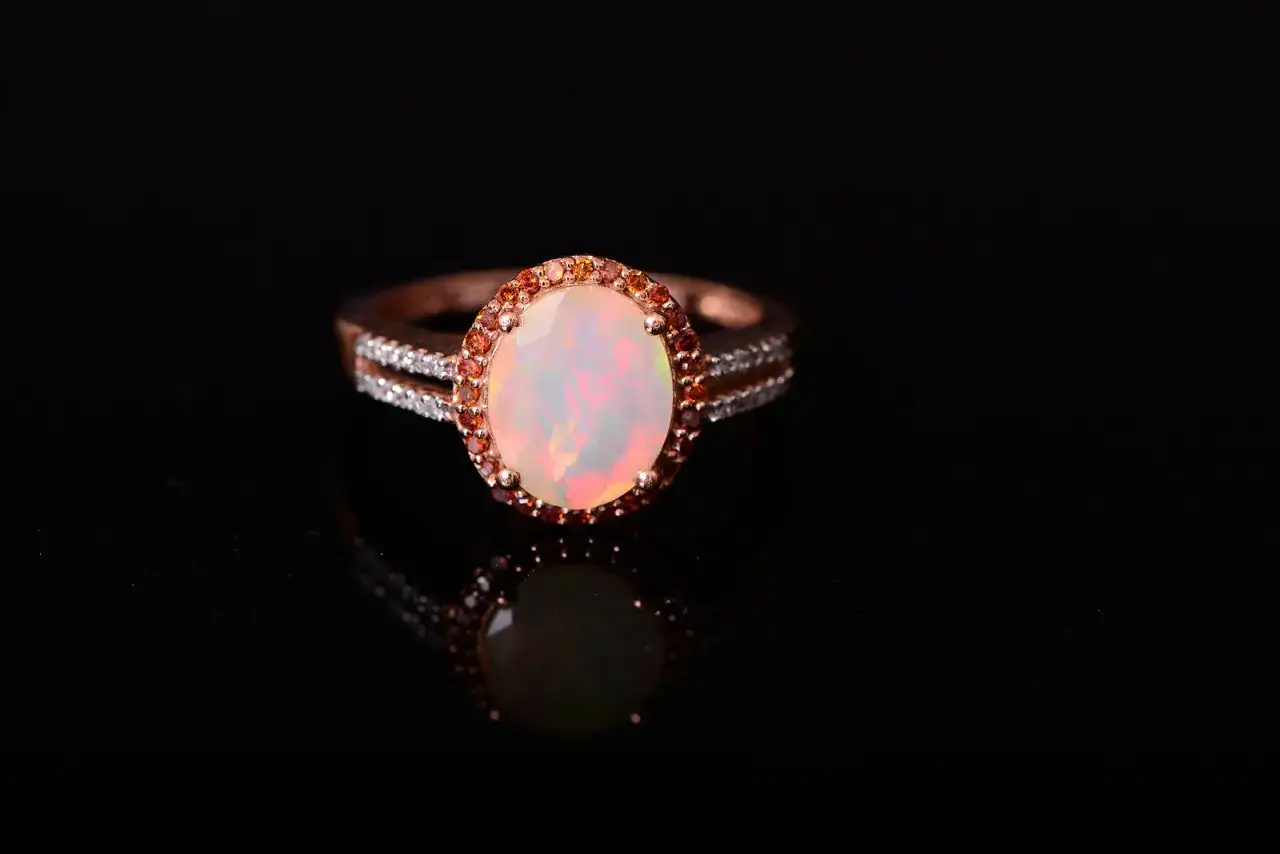
- Pick a protective setting for opal, especially in rings; bezel and halo settings usually give it more security.
- Use opal in pieces with less impact, such as pendants or drop earrings, if you want to reduce wear.
- Let colour drive the design; tourmaline often shines best when the setting complements its natural hue rather than competing with it.
Care matters just as much as the setting. Opal should be handled gently, kept away from harsh heat and cleaned with mild soapy water rather than aggressive tools. Tourmaline is easier to manage, but I would still avoid strong heat and sudden temperature changes. If you are buying for yourself, that difference is useful. If you are buying as a gift, it can save you from choosing a stone that looks perfect but is awkward for the wearer’s routine.
Once you know how the stone will be worn, the October birthstone choice stops being abstract and starts becoming personal.
What the October birthstone story means when you are buying now
The real value of October’s dual birthstone list is choice with purpose. Opal gives the month its historic identity and its most distinctive optical effect. Tourmaline gives it versatility, stronger everyday performance and a colour palette broad enough to suit almost any style. That is why the October chart feels unusually complete: it covers both sentiment and function.
If I were advising someone today, I would frame it like this: choose opal when the story matters most, choose tourmaline when wearability matters most, and choose a well-made setting when you want the piece to last. That approach is more useful than chasing a single “correct” answer, because October genuinely has two good ones. In jewellery, that kind of flexibility is rarely accidental and often the sign of a well-evolved tradition.For October birthstone jewellery, the smartest choice is the one that matches the wearer’s habits as closely as it matches their taste, and that is exactly why the month’s two-stone identity still works so well.