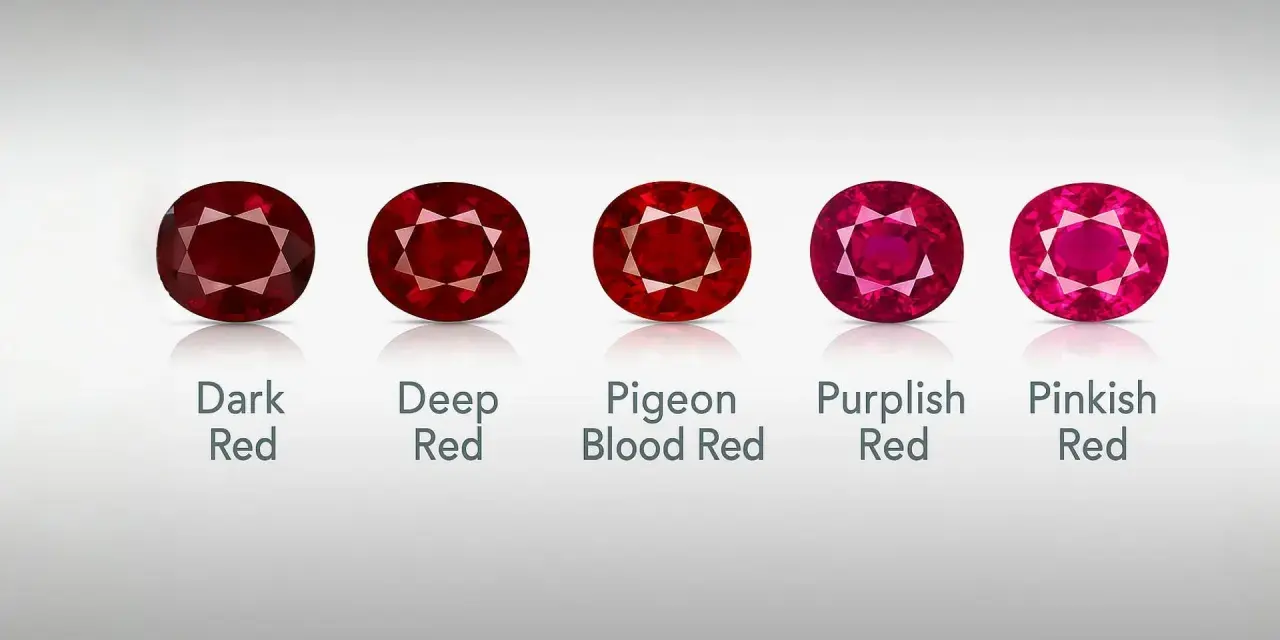
The July 2 birthstone is ruby, the classic July gem known for its vivid red colour, strong symbolism and real-world durability. In this guide I explain what that means, how to choose a good stone, which settings flatter it most, and how to keep ruby jewellery looking sharp for years.
Key facts at a glance
- 2 July follows the standard July birthstone chart, so the stone is ruby.
- Ruby is a red variety of corundum and ranks 9 on the Mohs scale, which makes it suitable for regular wear.
- When buying ruby, colour usually matters more than size; a vivid smaller stone often looks better than a pale larger one.
- Low-profile rings, pendants and stud earrings are the easiest ruby pieces to wear often.
- Routine care is simple: warm water, mild soap and a soft brush are usually enough.
What the birthstone for 2 July actually is
Birthstones are assigned by month rather than by individual day, so there is no separate stone just for 2 July. On the standard monthly chart used in fine jewellery, July’s stone is ruby, which makes the answer pleasantly straightforward.
If you have seen another gem linked to the date, that is usually coming from a different tradition or a zodiac-style system. For a normal birthday gift, card or keepsake, ruby is the safe and traditional choice.
I like that kind of clarity. Once you know the date maps to July rather than to a unique day stone, the rest of the decision becomes about taste, budget and wearability, which is where ruby really earns its place.
That leads naturally to the more interesting question: why has ruby stayed so firmly attached to July in the first place?
Why ruby still feels right for July birthdays
Ruby works because it looks and feels deliberate. The stone has a colour people recognise instantly, and that colour has long been tied to ideas of passion, vitality, courage and protection. It also has the kind of presence that suits a birthday piece without needing much explanation.
- Colour - ruby’s red is the whole point. The best stones look vivid and lively rather than flat or brownish.
- Durability - ruby is a red variety of corundum and scores 9 on the Mohs scale, so it is one of the best coloured gems for everyday jewellery.
- History - rubies have been prized for centuries, especially in royal and ceremonial jewellery, which gives them a sense of weight that many modern gems lack.
- Tradition - ruby is also associated with the 15th and 40th wedding anniversaries, so it already carries gift value beyond birthdays.
The colour itself comes from trace chromium in the crystal structure, which is why ruby feels more intense than a plain red stone. In the trade, the most desired colour is often described as a rich red with a slight purplish undertone, and that is the look I would aim for first if I were choosing one for a meaningful gift.
With that in mind, the next step is not chasing the biggest stone you can find, but choosing one that looks balanced and well made.
How to choose a ruby that looks rich rather than merely red
When I assess ruby, I start with colour and work outward from there. Size matters less than many buyers expect, and a smaller stone with strong saturation usually reads as more luxurious than a larger stone that looks sleepy under indoor light.
| What to check | What good looks like | Why it matters |
|---|---|---|
| Colour | Strong, lively red with good saturation and minimal brownness | Colour is the main reason people choose ruby in the first place |
| Cut | Even proportions and no obvious windowing, where the centre looks see-through | A better cut helps the stone hold its colour and life |
| Clarity | Natural inclusions are fine, but the stone should not look cloudy or dead | Rubies are not judged like diamonds; a little character is normal |
| Treatment | Ask whether the stone is heat-treated, fracture-filled or dyed | Treatment affects both durability and how you should clean it |
| Setting | A secure low-profile setting if it will be worn often | The best ruby can still be damaged if the mount is too exposed |
If the budget is tighter, lab-grown ruby is worth considering. It gives you the same gem type and the same red look, but without the rarity premium attached to a natural stone. That makes it a sensible route if the goal is a bold, wearable birthday piece rather than a collector’s specimen.
Once the stone itself is right, the setting becomes the part that decides whether the piece feels everyday-friendly or too precious to wear.
Best ruby jewellery styles for everyday wear
Ruby is one of those gems that can look formal in one setting and surprisingly easy in another. For a birthday piece, I usually favour designs that let the colour do the work without piling on too much metal or detail.
- Stud earrings - the cleanest way to wear ruby daily, especially if the wearer prefers subtle colour close to the face.
- Pendant necklaces - ideal if you want a piece that feels personal but still works with most outfits.
- Small rings - best with a bezel or low prong setting if the ring will be worn constantly.
- Bracelets - attractive, but usually better for occasional wear because they take more knocks.
Metal choice changes the mood. Yellow gold makes ruby feel warmer and more traditional, white gold or platinum gives it sharper contrast, and rose gold softens the look if the wearer does not want the stone to feel too dramatic. If you want the piece to live in a jewellery box only briefly, choose a more delicate design; if you want it worn often, keep the profile lower and the setting sturdier.
After style comes care, and this is where ruby is refreshingly low-maintenance if you treat it properly.
How to care for ruby jewellery without overdoing it
Ruby is one of the easier coloured stones to look after, but treatment still changes the rules. Untreated and heat-treated rubies are generally robust, while fracture-filled or dyed stones need more caution, so I always advise people to assume less and clean gently unless they know exactly what they own.
The American Gem Society recommends keeping routine cleaning simple, and that is exactly how I would handle it at home.
- Use warm water, a little mild dish soap and a soft brush.
- Rinse thoroughly so no soap film stays behind the stone or in the setting.
- Dry with a lint-free cloth rather than rubbing hard.
- Store ruby separately from softer gems so it does not scratch them, or get scratched by loose settings nearby.
- Skip harsh cleaners, abrasives and anything acidic if you are unsure about treatment.
If the piece is a star ruby, a heavily treated stone or a family heirloom with unknown history, I would avoid ultrasonic and steam cleaning until a jeweller has checked it. That one precaution saves a lot of preventable damage.
With the practical side covered, the final question is how to make the gift feel personal instead of predictable.
Why ruby makes a stronger gift than a generic red stone
Ruby has enough history to feel meaningful, but not so much formality that it becomes hard to wear. That balance is exactly why it works so well as a birthday gift: it carries symbolism, yet it still fits into everyday jewellery if the design is kept clean.
- If the wearer likes minimal pieces, a small ruby pendant or pair of studs will feel thoughtful without being loud.
- If they prefer statement jewellery, a simple ring with a vivid centre stone gives you the colour payoff without overcomplicating the design.
- If you want the piece to feel bespoke, add an engraved date, initials or a matching metal choice that reflects their usual jewellery wardrobe.
- If the gift is meant for regular wear, prioritise secure settings and a lower profile over a larger stone.
For anyone born on 2 July, ruby is the clear and classic answer: rich in colour, easy to recognise and practical enough to wear beyond the birthday itself. If I were choosing one today, I would start with a well-cut stone, insist on a secure setting and let the colour do the talking.