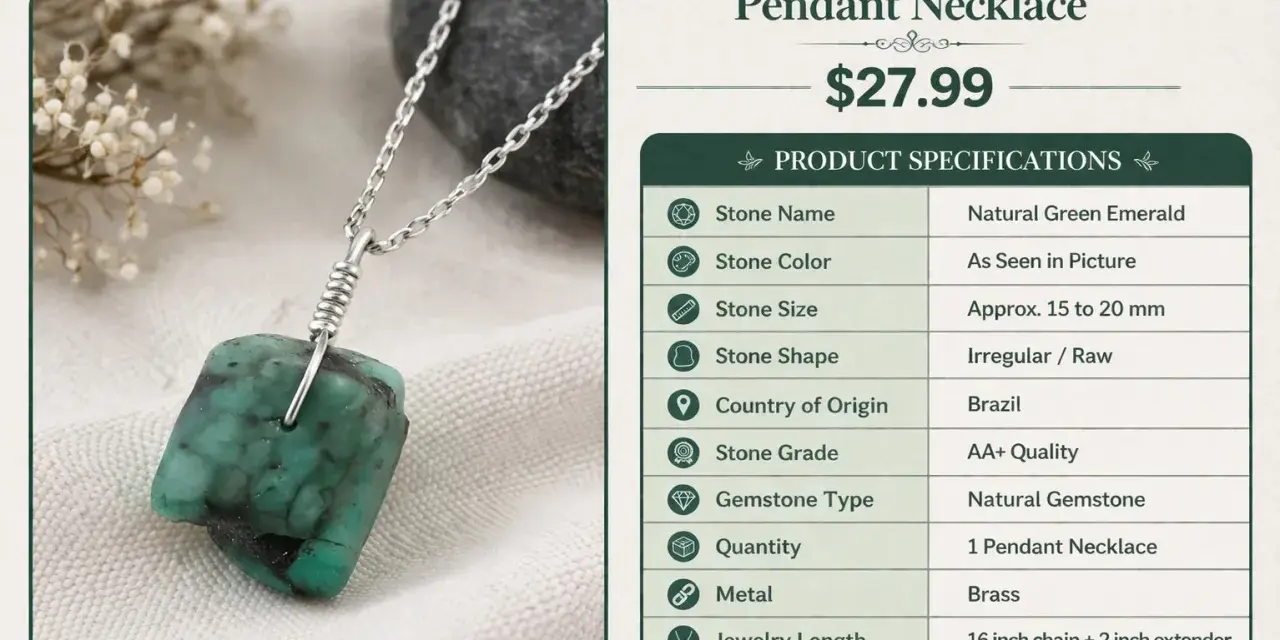
Emerald is the birthstone tied to 8 May, and it earns that place for reasons that go beyond colour alone. In this guide, I’ll explain the stone itself, show where chrysoprase fits as a UK alternative, and cover the buying and care details that matter if you want the jewellery to be both beautiful and practical.
The essentials at a glance
- Emerald is the traditional birthstone for anyone born on 8 May.
- Some UK birthstone charts also recognise chrysoprase as a modern alternative.
- Emerald’s green colour is linked with renewal, growth, love, and spring.
- It is durable enough for jewellery, but many stones are fracture-filled and need gentle handling.
- For gifts, pendants, earrings, and protected ring settings are usually the safest choices.
What the birthstone for 8 May is
The straightforward answer is emerald. Because 8 May sits inside the month of May, it inherits May’s traditional birthstone rather than a separate date-specific gem. That is why the answer stays the same whether you are looking for a birthday gift, a keepsake piece, or a stone to match a May-born family member’s jewellery box.
There is one small wrinkle worth knowing about. In the UK, some modern charts also include chrysoprase as an alternative May stone, but emerald remains the classic and most widely recognised choice. I would treat chrysoprase as a useful second option, not a replacement, especially if you want the most traditional answer.
| Stone | Status | Look | Why people choose it |
|---|---|---|---|
| Emerald | Traditional May birthstone | Deep to vivid green | Most recognisable, rich symbolism, timeless feel |
| Chrysoprase | Modern alternative in some UK lists | Apple green to soft green | Fresh look, gentler price point, slightly less formal |
One other point often causes confusion: 8 May falls under Taurus, but zodiac signs do not replace the month birthstone in this case. Once that is clear, the more interesting question is why emerald became so closely tied to May in the first place.
Why emerald feels so right for May
Emerald works because its colour matches the season in a way that still feels elevated. May is full of fresh growth, and emerald carries that same sense of renewal without looking overly bright or casual. The stone has also been associated with love, wisdom, and balance for centuries, which gives it a depth that many green gems do not quite match.
Historically, emerald has been prized for a very long time. GIA describes it as a gemstone linked with rebirth and renewal, and that association is not just decorative language; it comes from generations of cultural meaning built around the stone. I also think its royal reputation matters here. Emerald has long been worn as a statement gem, from ancient Egyptian collections to modern fine jewellery, so it feels ceremonial in a way that suits a birthday gift.
The name itself points to its identity. Emerald comes from an old word meaning green gem, and that is still the whole appeal in one glance: a stone that looks alive, refined, and unmistakably seasonal. Once you understand that, the next step is choosing a piece that suits the person, not just the gemstone.
How I would choose an emerald piece that wears well
When I’m choosing emerald jewellery, I start with how it will actually be worn. Emerald looks gorgeous in a ring, but it also makes strong pendants and earrings, and those can be better choices if the piece is meant for regular use. The setting matters almost as much as the stone, because a beautifully cut emerald still needs protection.
| Jewellery type | Why it works | What to watch for |
|---|---|---|
| Pendant | Low risk of knocks, easy to wear every day | Check the chain strength and clasp quality |
| Earrings | Show the colour without exposing the stone to constant impact | Choose secure backs if the stones are valuable |
| Ring | Most classic and most visible | Look for bezel, halo, or protective prong settings |
| Bracelet | Elegant for occasional wear | More exposed to knocks and abrasion |
Metal choice changes the mood too. Yellow gold deepens the green and gives emerald a warmer, more antique character. White gold or platinum makes the colour look cooler and more modern. Silver can work beautifully for lighter budgets, but I usually prefer a setting that gives the stone enough visual weight to feel intentional rather than decorative for its own sake.
If the buyer is comparing options, I would keep one practical rule in mind: a slightly smaller emerald in a secure setting often beats a larger stone that feels fragile or overexposed. That leads naturally into the part many people overlook, which is care.
How to care for emerald jewellery
Emerald is not a difficult stone to love, but it does ask for respect. GIA places emerald at 7.5 to 8 on the Mohs scale, which sounds reassuringly hard, yet that number does not tell the full story. Many emeralds contain natural inclusions, and a lot of them are fracture-filled to improve clarity. That means they can be more vulnerable to heat, vibration, and sharp impact than the hardness figure suggests.
For routine cleaning, I would keep it simple: warm water, a drop of mild soap, and a soft cloth or very gentle brush. That is enough for most pieces. What I would avoid is just as important:
- Ultrasonic cleaners, which can worsen internal fractures.
- Steam cleaning, which can affect oils or resins used in the stone.
- Harsh chemicals such as bleach, acetone, or abrasive powders.
- Soaking for long periods, especially if the stone has been treated.
- Wearing the piece during workouts, gardening, or heavy housework.
Storage matters too. Keep emerald pieces separate from harder gems like sapphire or diamond so they do not scratch each other. A soft pouch or lined compartment is better than a crowded jewellery dish. If you treat emerald like a fine, slightly temperamental gemstone rather than a tough daily beater, it will reward you with years of strong colour and clean polish. From there, the buying checklist becomes much easier to use.
What to check before buying one as a gift
If I were buying for someone with an 8 May birthday, I would look at four things before I looked at price. First, colour: a good emerald should read as green first, not yellowish or muddy. Second, treatment: ask whether the stone has been oiled or resin-filled, because that is common and should be disclosed clearly. Third, setting: the more secure the mounting, the better the piece will survive normal life. Fourth, the wearer’s habits: a person who wears jewellery daily may be better served by earrings or a pendant than by an open, high-set ring.
| What to check | What I would look for | Why it matters |
|---|---|---|
| Colour | Rich, even green with enough depth | Colour is the first thing people notice and the main reason emerald feels special |
| Treatment | Clear disclosure of any oiling or filling | Treatments affect care, value, and long-term expectations |
| Clarity | Natural inclusions are fine, but avoid unrealistic perfection claims | Emerald is rarely crystal clear, and that is normal |
| Setting | Protective prongs, bezel, or halo for added security | Good mounting reduces the risk of chips and loose stones |
| Budget | Smaller stones or chrysoprase if emerald is out of range | A thoughtful gift does not have to be the most expensive option |
I also think it helps to be honest about expectations. A fine emerald is beautiful, but it is not the easiest stone to keep immaculate, and that is part of its appeal. It has character. If that character is what you want, the final choice becomes much simpler.
The simplest way to choose well for 8 May
For an 8 May birthday, emerald is the clearest and most satisfying answer. If you want the classic stone with the strongest tradition behind it, that is the one I would choose first. If you want something a little lighter, less formal, or easier on the budget, chrysoprase is the alternative worth considering.
From there, I would choose the piece that fits the person’s life as much as their style: a pendant for easy wear, earrings for everyday colour, or a protected ring if the goal is a more dramatic gift. That balance between symbolism, practicality, and craftsmanship is what makes birthstone jewellery feel personal rather than generic, and it is exactly why emerald still stands out so clearly for May birthdays.