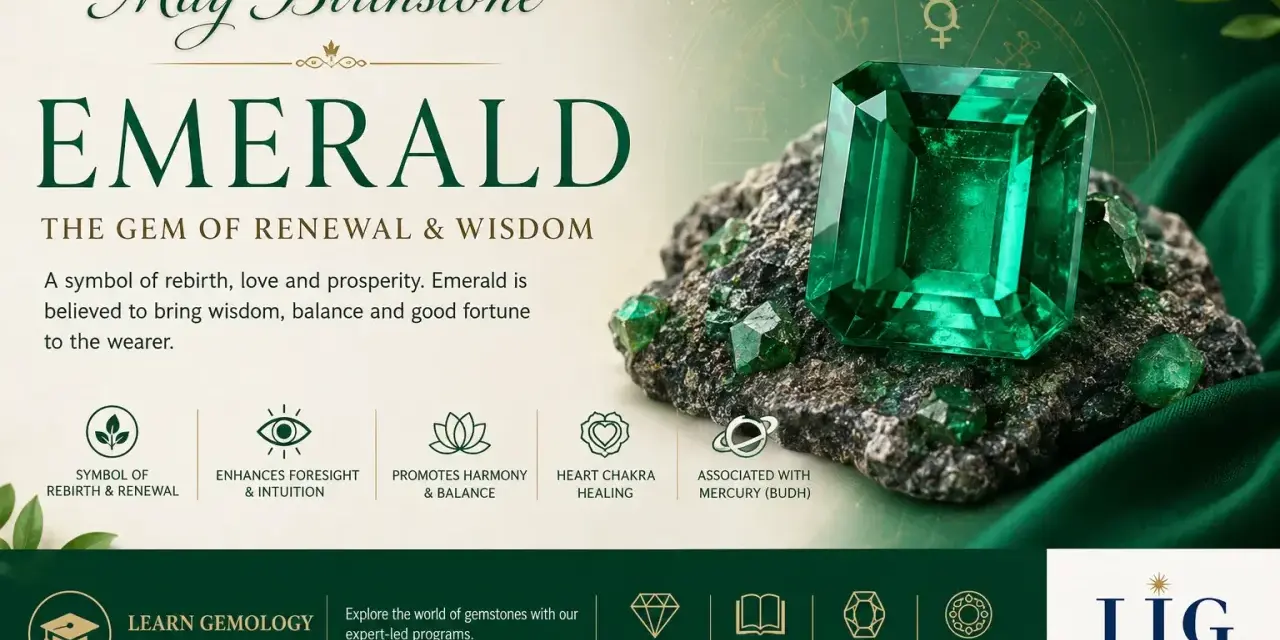
The May 25th birthstone is emerald, the classic green gem linked with May birthdays across the standard birthstone chart. I’ll break down why that is the usual answer, where chrysoprase sometimes appears as an alternative, and how to choose jewellery that looks refined without being impractical to wear.
The essential answer at a glance
- Emerald is the standard birthstone for 25 May.
- Birthstones are usually assigned by month, so the date itself does not change the gem.
- Chrysoprase can appear as an alternative May stone in some modern or traditional charts.
- Emerald is prized for colour and character, not flawless clarity.
- It needs gentle care, especially if the stone has been oiled or fracture-filled.
What the birthstone for 25 May actually is
If you want the short answer, it is emerald. There is not a separate gemstone for every day of the month, so a birth date of 25 May does not change the standard May birthstone.That matters because birthstone charts are often mixed up with zodiac stones or alternative gemstone lists. A late-May birthday can sit close to Gemini-based references, but the conventional month-based answer remains emerald. For me, that is the cleanest way to think about it: month birthstones give you the standard answer, while zodiac or alternative charts give you optional variations.
Once that is clear, the real question becomes why emerald has held on to the May slot so confidently for so long.
Why emerald is May’s signature gem
Emerald works because the symbolism and the colour line up almost perfectly with May. GIA describes emerald as May’s birthstone and connects it with rebirth and renewal, which suits a month associated with fresh growth and longer light. That seasonal fit is not a small detail; it is a big part of why the stone still feels current rather than historical.
What also helps is the tone of the gem itself. A good emerald does not look loud in the cheap sense of the word. It looks alive, rich, and deliberate. That is why it has remained a favourite in fine jewellery for centuries, from classic rings to pendants and drop earrings.
I also think emerald has a useful kind of flexibility. It can look regal in yellow gold, cool in white metals, and unexpectedly modern in a simple bezel setting. That range is one reason people keep coming back to it, even when they are not buying strictly by birthstone tradition.
That said, emerald is not the only green stone people see when they look into May birthdays, and that is where the nuance starts to matter.
When chrysoprase is the better fit
Chrysoprase appears in some alternative May birthstone charts, so it is worth knowing about if you want a greener, softer-looking stone or a piece that feels a little less formal. I would not treat it as a replacement for emerald, but I would absolutely treat it as a sensible option when the wearer wants a different mood.
| Stone | Look | Best for | What to keep in mind |
|---|---|---|---|
| Emerald | Deep green, often with visible internal character | Classic birthstone jewellery, statement pieces, heirloom gifts | Usually treated, and the stone deserves gentle handling |
| Chrysoprase | Lighter apple-green or minty green, often softer in appearance | Understated jewellery, a more relaxed alternative, green lovers who want something less formal | Usually chosen for colour mood rather than prestige |
If you are shopping for someone who likes colour but not the formality of a classic precious stone, chrysoprase can be the smarter emotional choice. If the brief is “traditional May birthstone”, emerald still wins. That distinction is what keeps the decision useful rather than confusing.
From there, the buying question becomes practical: which emerald actually looks good on the hand or at the neckline?
How to choose an emerald piece that feels worth wearing
When I look at emerald jewellery, I start with colour, not size. A smaller stone with a vivid, even green usually reads better than a larger stone that looks washed out. Emeralds are valued for personality, and trying to force them to behave like diamonds is usually where buyers go wrong.
| Buying factor | What I would look for | Why it matters |
|---|---|---|
| Colour | Rich, balanced green with good saturation | The colour is the main attraction and the main value driver |
| Clarity | Some visible inclusions are normal | Emeralds are rarely “clean”, and that is part of the stone’s character |
| Cut | Even face-up colour, often with a classic emerald cut | A good cut helps the stone look lively and can reduce stress on corners |
| Setting | Protective designs such as bezel, halo, or a well-made three-stone ring | These help the gem survive real life better than an exposed setting |
| Treatment disclosure | Clear information on oiling or fracture filling | Treated emeralds are common, but the treatment should be disclosed |
For rings, I lean toward protective settings because emerald is not a stone I would treat casually. For earrings or pendants, you have more freedom, since those pieces take less impact than a ring does. If you are buying in the UK, ask the jeweller to explain the stone treatment plainly and in writing if the piece is a meaningful purchase.
Those buying choices matter even more once you know how emerald behaves day to day.
How to care for emerald jewellery so it stays beautiful
Emerald is tougher than many people assume, but not tough enough to be careless with. GIA places it at 7.5 to 8 on the Mohs scale, which sounds robust until you remember that emeralds often contain fractures and treatment materials. In practice, that means you should think “careful wear” rather than “wear anywhere”.
My basic rule is simple. Clean emerald jewellery with warm soapy water, a soft brush, and a light touch. Avoid ultrasonic cleaners, steam, harsh chemicals, and sudden heat changes. Those are exactly the conditions that can damage fracture filling or stress an already vulnerable stone.
- Store emeralds separately from harder stones like diamonds and sapphires.
- Take rings off before gym work, gardening, or heavy cleaning.
- Do not soak treated stones for long periods unless the jeweller has specifically advised it.
- Wipe the piece after wear so lotions and oils do not build up.
That approach keeps the stone attractive without turning ownership into a chore, and it leads neatly into the last decision most people care about, which is how to make the piece feel personal rather than generic.
The small choices that make an emerald gift feel deliberate
If I were choosing a May birthday gift now, I would start with the personality of the wearer before I worried about the gemstone label. Yellow gold brings warmth to emerald’s green and gives the piece a richer, more traditional look. White gold or platinum makes the colour feel sharper and cleaner. Rose gold softens the contrast and can work beautifully, although it can mute the stone a little if the emerald is very dark.
For everyday wear, I would usually favour a pendant or earrings over a large ring. That is not because rings are wrong, but because rings take the most impact and emerald is happier when it is not knocked around. A well-sized emerald in a thoughtful setting often looks more expensive than a bigger stone set without restraint.
So if you remember only one thing, remember this: the standard answer for a 25 May birthday is emerald, but the best version of that answer depends on colour, setting, and how the jewellery will actually be worn. That is the difference between a birthstone piece that merely matches a chart and one that someone keeps reaching for.