The key facts about a 4 May birthstone
- Emerald is the standard birthstone for 4 May.
- Major gem references, including the American Gem Society, list emerald as May’s birthstone.
- Look for strong green colour first; size matters less than saturation and life.
- Expect natural inclusions and ask about any clarity enhancement.
- Clean emerald jewellery gently with warm soapy water, not steam or ultrasonic tools.
- If you want a tougher alternative, green tourmaline or tsavorite can be practical substitutes.
Why emerald is the right answer for a 4 May birthday
Birthstones are usually assigned by month, not by individual day, so there is no separate stone for 4 May. For a 4 May birthday, emerald is the standard and most widely accepted choice. That is the answer I would give in a jewellery guide, a gift note, or a quick lookup for a birthday piece.
The American Gem Society lists emerald as May’s birthstone, and that matches the modern birthstone chart used by most jewellers. In practice, this means a person born on 4 May shares the same stone as everyone else born in May, even if they were born early in the month.You may occasionally see zodiac-linked gemstone lists connected to Taurus, but that is a different tradition. If your goal is the birthstone tied to the date itself, emerald is the clean, reliable answer. Once that is clear, the more interesting question becomes what makes a good emerald worth wearing.
What emerald symbolises and why it suits May
I like emerald for May because it does more than match the calendar. It also matches the season. Its green colour feels like fresh growth, new leaves, and the softer light of spring turning into early summer.
Emerald has long been linked with renewal, wisdom, growth, patience, love, and good fortune. Those meanings make sense visually too: it is one of the few gemstones whose colour can feel lush rather than merely decorative. That is part of its appeal. Emerald does not just sparkle; it looks alive.
Historically, emerald has been prized for centuries and was admired in ancient Egypt, where it became closely associated with royalty. That old-world heritage still matters today. When I see a well-cut emerald, I do not read it as a trendy green stone. I read it as a gem with status, story, and a very specific visual identity. Once you know what the stone stands for, it becomes easier to choose the right one in real life.
How I judge emerald jewellery before buying
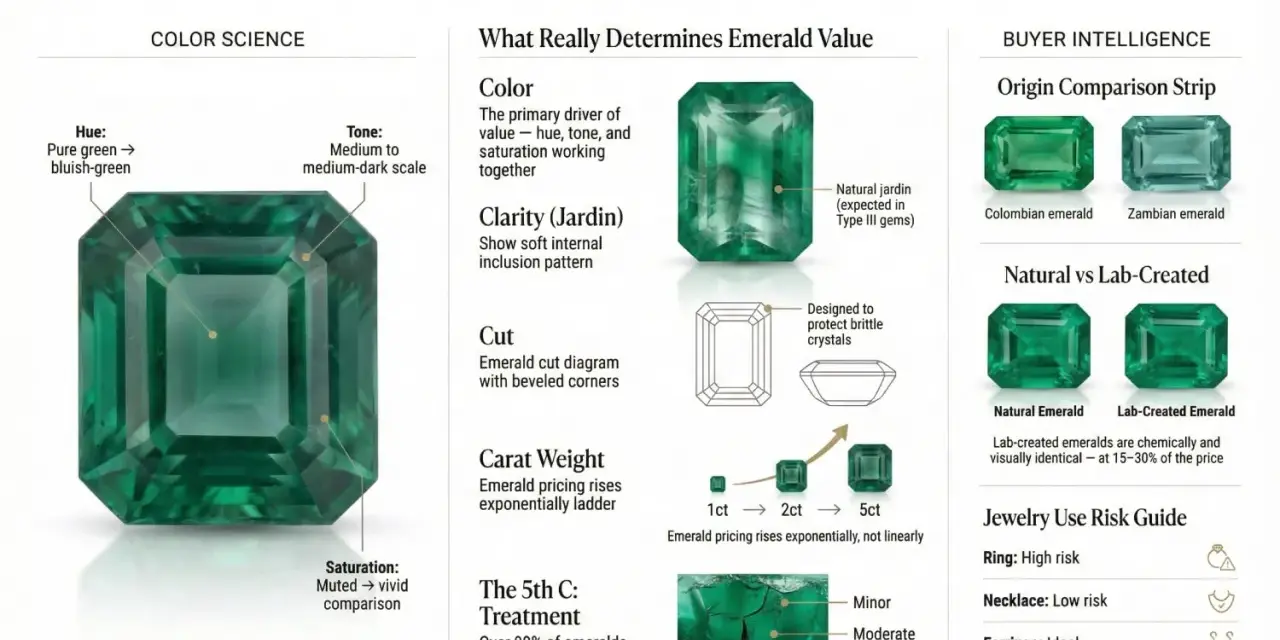
With emerald, colour is the first thing I look at. A smaller stone with rich, even green usually beats a larger stone that looks pale or muddy. The best emeralds have a vivid green tone with enough depth to feel luxurious, but not so much darkness that the gem loses life in indoor light.
| What to check | What good looks like | Why it matters |
|---|---|---|
| Colour | Fresh, saturated green with a balanced tone | Colour drives most of the stone’s visual impact and value |
| Clarity | Visible inclusions that do not make the gem look dead or heavily clouded | Emeralds are expected to have internal features; the key is whether they distract |
| Cut | Proportions that keep the colour lively and the stone well centred | A good cut can make a modest emerald look far better than a larger, poorly cut one |
| Treatment | Clear disclosure of oil, resin, or other clarity enhancement | Treatment is common, and buyers should know what they are getting |
| Setting | A design that protects edges and corners | Emerald can be beautiful in daily wear, but it should not be left overly exposed |
Emeralds often contain what gemmologists call jardin, a French term for the internal “garden” of inclusions that many stones naturally carry. That does not automatically lower the charm or value of an emerald. It does mean I want the inclusions to look like part of the stone’s character, not like a crack running through the middle of the face.
Origin can matter too, but only as one clue. Colombian emeralds are often treated as the benchmark, while Zambian stones can show a cooler, slightly bluish green. I would never buy on origin alone, but it can help explain why two emeralds with similar size may look very different. After colour and clarity, the next decision is how to wear the stone without putting it under unnecessary stress.
How to wear emerald without overthinking it
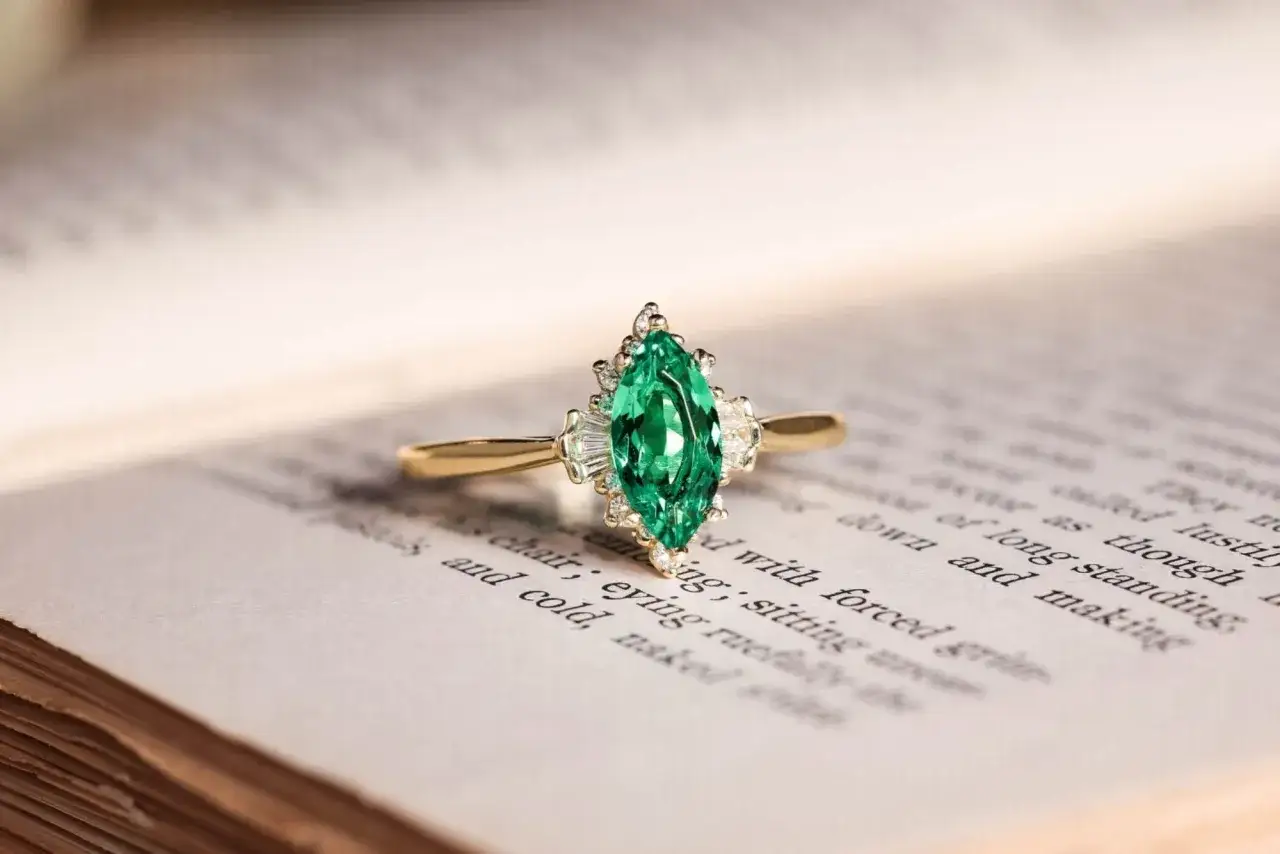
For everyday wear, I usually prefer emerald in a pendant, earrings, or a carefully protected ring setting. A bezel setting, for example, wraps metal around more of the stone’s edge, which gives better protection than a tall, exposed mount. A halo setting can also work well because it frames the gem and makes the centre stone feel a little larger.
Yellow gold gives emerald a classic, rich look. White gold and platinum make the green feel cleaner and more modern. I would choose yellow gold if I wanted warmth and heritage, and white metal if I wanted contrast and a sharper finish. Both work; the difference is mood, not correctness.
Cut matters here too. The emerald cut is a rectangular step cut, and it is popular because it suits the stone’s colour and gives a calm, elegant look. But ovals, pears, and round stones can also be excellent if the goal is brightness or a softer silhouette. In practical terms, I would choose the shape that best supports colour rather than chasing the most obvious form. Once the jewellery style is clear, care becomes the last major piece of the puzzle.
How to care for emerald jewellery so it stays beautiful
Emerald needs a lighter touch than many people expect. GIA notes that some estimates place fracture-filled emeralds at 90 per cent or more, which is exactly why I never recommend aggressive cleaning methods. Heat, steam, and ultrasonic cleaners can all cause trouble, especially when a stone contains filled fractures or existing internal weakness.
My routine for emerald is simple:
- Clean it with lukewarm water, mild soap, and a soft brush.
- Dry it with a lint-free cloth rather than paper towels.
- Store it separately so harder jewellery does not scratch it.
- Remove it before gardening, sports, or heavy cleaning.
- Ask a jeweller to check the setting if the piece is worn often.
GIA rates emerald at 7.5 to 8 on the Mohs scale, so it is not a fragile museum piece, but it is also not a stone I would treat casually. That combination is easy to misunderstand: emerald is durable enough for jewellery, yet sensitive enough that good habits matter. If the wearer wants something green with fewer compromises, another gemstone may be the better fit.
When another green gemstone makes more sense
Sometimes the best gift is not the official birthstone. If the goal is daily wear, a lower-maintenance green gem can be a smarter choice than emerald. I would especially consider alternatives when the wearer wants a stone that can take more knocks, needs less special care, or fits a tighter budget without losing the green colour family.
| Gemstone | Best for | Trade-off |
|---|---|---|
| Emerald | The classic 4 May birthday stone and the strongest symbolic match | Needs more careful cleaning and handling |
| Green tourmaline | Everyday wear with a broad range of green tones | Less instantly associated with May birthdays |
| Tsavorite garnet | Bright, vivid green with a refined feel | Usually chosen by people who already know coloured gemstones well |
| Peridot | A lighter, fresher green and often a friendlier price point | Different colour mood, so it does not replace emerald visually |
If I were advising someone buying a gift, I would say this plainly: choose emerald when the birthday message matters most; choose a tougher green gemstone when daily wear matters most. That distinction keeps the decision practical instead of sentimental in the wrong way. It also leads neatly to the final question, which is how to turn that choice into a piece the wearer will actually use.
A practical way to choose a 4 May gift
- Choose emerald if you want the standard birthstone and the clearest symbolic link to 4 May.
- Choose a protective setting if the jewellery will be worn often.
- Ask for treatment disclosure before you buy, especially for rings and pendants at the higher end of the market.
- Put colour ahead of size; a smaller, vivid emerald usually looks better than a larger weak one.
- Pick a setting metal that matches the wearer’s style, not just the stone.
For a 4 May birthday, I would start with emerald every time, then narrow the choice by colour, setting, and care needs. That is the simplest way to move from a birthstone answer on paper to a piece of jewellery that feels personal, wearable, and worth keeping for years.