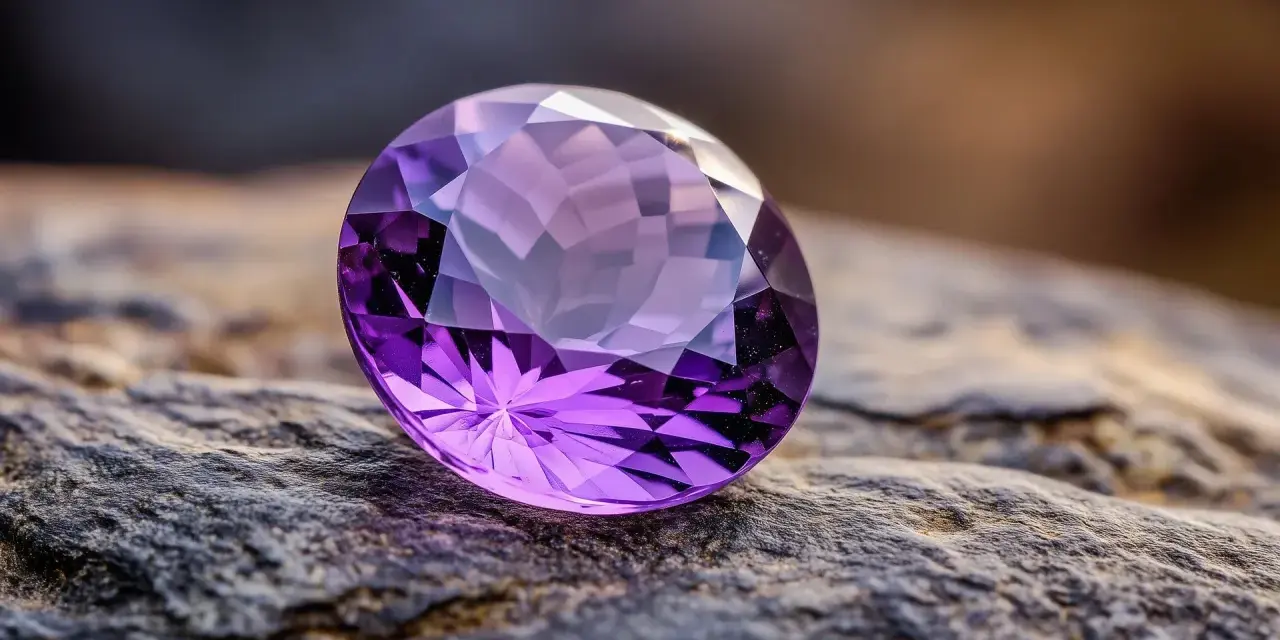
February’s birthstone is amethyst, and it earns its place for more than just its colour. It is one of those gemstones that feels personal without being hard to wear, which makes it useful whether you are choosing a gift, building a keepsake piece, or simply trying to understand why this stone keeps appearing in jewellery collections. In this article, I cover what amethyst is, why it became the February stone, how to judge quality, how to style it, and how to care for it properly.
Key points to know before you choose an amethyst piece
- Amethyst is the modern February birthstone and the purple variety of quartz.
- The best stones usually show an even lilac-to-deep-purple colour without looking brown or grey.
- With a Mohs hardness of 7, amethyst is durable enough for everyday jewellery if you avoid rough treatment.
- In UK retail, silver pieces are usually the most affordable, while gold settings and larger stones raise the price quickly.
- Warm soapy water and a soft brush are usually enough for cleaning; steam and ultrasonic cleaners are better avoided.
What February’s birthstone actually is
The modern February birthstone is amethyst. In practical terms, that means a purple gemstone from the quartz family, usually ranging from soft lilac to a richer grape tone. Older birthstone charts sometimes vary by tradition, but if you are shopping today in the UK, amethyst is the standard answer.I like that amethyst is easy to identify without feeling ordinary. It has a clear visual signature, yet it still works across different jewellery styles, from delicate silver pendants to more formal gold rings. That combination of recognisability and versatility is part of why it has stayed so popular.
If you ever see a product described as a February birthstone piece, read the stone details rather than assuming the colour alone tells you everything. A good amethyst should look intentional, not simply “purple by default”. That distinction matters more than most people realise, and it leads neatly into why the stone has lasted so long in jewellery.
Why amethyst has stayed the February favourite
Amethyst has real staying power because it sits in a sweet spot between symbolism, history, and wearability. Its name comes from the Greek amethystos, linked to the old belief that the stone protected against intoxication. Whether or not that belief interests you, the story gives the gem a memorable identity that goes beyond colour alone.
Visually, amethyst is strong without being loud. I think that is one of its best qualities. The stone can feel calm and refined in pale lavender, or more dramatic in a deeper purple, yet it rarely becomes harsh or theatrical. That makes it easy to match with both modern and vintage jewellery design.
There is also a practical reason it remains popular: amethyst has enough presence to stand on its own, but it does not need a high budget to look elegant. That matters for birthstone jewellery, because the piece should feel meaningful first and expensive second. For many buyers, especially those choosing a gift, that balance is exactly what makes amethyst the right choice.
How to choose an amethyst piece that looks good in real life
When I judge amethyst, I look at colour before anything else. A smaller stone with lively, even colour almost always looks better than a larger one that appears washed out in daylight. The sweet spot is usually a clean purple with good saturation and no muddy brown or grey cast.
Cut matters too. Brilliant and mixed cuts often bring out sparkle, while step cuts can look elegant but may reveal more of the stone’s internal structure. In gem terms, a shallow cut can create windowing, which is the pale see-through patch that appears when light leaks through the bottom of the stone instead of returning to the eye. For amethyst, I generally prefer a cut that keeps the body colour rich and avoids that flat, glassy look.
| Buying factor | What I’d look for | Why it matters |
|---|---|---|
| Colour | Even lilac to deep purple with no dull brown tint | Colour has the biggest effect on how expensive and polished the stone looks |
| Cut | Good symmetry and enough depth to avoid windowing | A well-cut stone looks brighter and more balanced on the hand |
| Clarity | Eye-clean for faceted stones; light texture may be fine in cabochons | Visible inclusions can distract from the colour and reduce sparkle |
| Setting | Prong or bezel for rings, secure mountings for daily wear | The right setting protects the stone and affects how wearable it feels |
| Metal | Silver for a cool look, yellow gold for warmth, rose gold for softness | Metal choice changes the whole mood of the piece |
For UK buyers, I’d treat price as a guide rather than a rule. A simple silver amethyst ring often starts around £30 to £120, depending on craftsmanship and stone size. Gold designs usually begin closer to £150 and can move well beyond £500 for larger stones, finer settings, or branded work. Once you add better colour, better cutting, and more metal, the cost rises quickly, so it makes sense to decide whether you want a stronger stone or a more substantial setting.
One more detail worth checking is whether the seller clearly describes the stone. Some amethyst is natural, and lab-grown versions also exist. If provenance matters to you, ask directly. I would always rather buy a piece that is honestly described than one that relies on vague wording and a polished product photo. That clarity also helps when you move from buying to styling, because the right setting is only part of how the stone will look in everyday wear.
How to wear amethyst without making it look overdone
Amethyst works best when the rest of the design lets the colour breathe. If I were choosing one piece for regular wear, I would usually start with studs, a slim pendant, or a small ring rather than a large cocktail design. The stone already has enough character, so it does not need excess decoration to make an impression.
Metal choice changes the tone quickly. Silver gives amethyst a cool, clean look that suits everyday outfits and lighter wardrobes. Yellow gold makes the purple feel warmer and more luxurious, which is especially effective if you want a richer, more traditional finish. Rose gold can soften the contrast and gives the stone a more romantic feel, although I would use it carefully if the purple is already very pale.
For clothing, amethyst tends to look sharp against navy, charcoal, cream, black, and white. Deep purple stones also work well with jewel tones if you want a more layered look, while paler stones suit lighter fabrics and spring styling. If you are buying a gift and do not know the wearer’s size, a pendant is usually the safest choice. Rings are more personal and can be more dramatic, but they are less forgiving if the fit or setting is wrong.
I also think amethyst pairs well with smaller accent stones rather than heavy clusters. Diamonds, pearls, or plain metal borders can frame the colour neatly. Too many competing details can flatten the purple, and that is usually where a good design starts to feel busy.
How to care for amethyst so the colour stays clean
Amethyst is durable enough for regular jewellery, but it is not invincible. On the Mohs scale it sits at 7, which means it stands up well to everyday use while still needing sensible handling. The main weakness is not fragility in the dramatic sense; it is colour sensitivity and avoidable surface wear over time.
The easiest cleaning method is simple: warm water, mild soap, and a soft brush. I would avoid harsh chemicals, strong steam, and ultrasonic cleaners unless a jeweller has confirmed that the setting and stone are suitable. Heat can also affect the colour of amethyst, so prolonged sun exposure or very hot storage is not a good idea if you want the stone to keep its depth.| Do | Avoid | Reason |
|---|---|---|
| Clean with warm soapy water and a soft cloth or brush | Bleach, aggressive cleaners, and abrasive pastes | Gentle cleaning removes dirt without scratching the stone or metal |
| Store it separately from harder gemstones | Loose storage in a mixed jewellery box | Diamonds and sapphires can scratch the surface during contact |
| Remove it before gym sessions, gardening, and heavy housework | Wearing it during impact-heavy tasks | Settings can loosen and stone edges can chip over time |
| Keep it away from direct, prolonged heat | Leaving it on a sunny windowsill or near a radiator | Excess heat can alter colour and reduce the stone’s visual appeal |
For rings especially, I would check the prongs or bezel every so often. That is the part people forget. A stone can look perfect while the setting is quietly loosening underneath it. A quick inspection at home, plus an occasional professional check, is a small habit that protects a much larger emotional investment.
What I would check before buying a February piece
If I were buying amethyst for myself or as a gift, I would keep the decision simple. First, I would choose colour. Second, I would decide whether I want a practical everyday piece or something more decorative. Third, I would make sure the setting suits the stone instead of fighting it. That order sounds basic, but it prevents most disappointing purchases.
- Choose an even purple first, not just the largest stone you can afford.
- Match the metal to the wardrobe the wearer actually uses.
- Ask whether the stone is natural or lab-grown if that matters to you.
- Prefer pendants or earrings when you do not know the recipient’s ring size.
- Check that the setting protects the stone if the piece will be worn often.
What makes amethyst so effective as February’s stone is that it feels personal without being difficult. It can be quiet or dramatic, affordable or refined, modern or antique in mood, and it still remains recognisably itself. If you want a birthstone that is easy to live with and easy to love, amethyst is still one of the strongest choices.