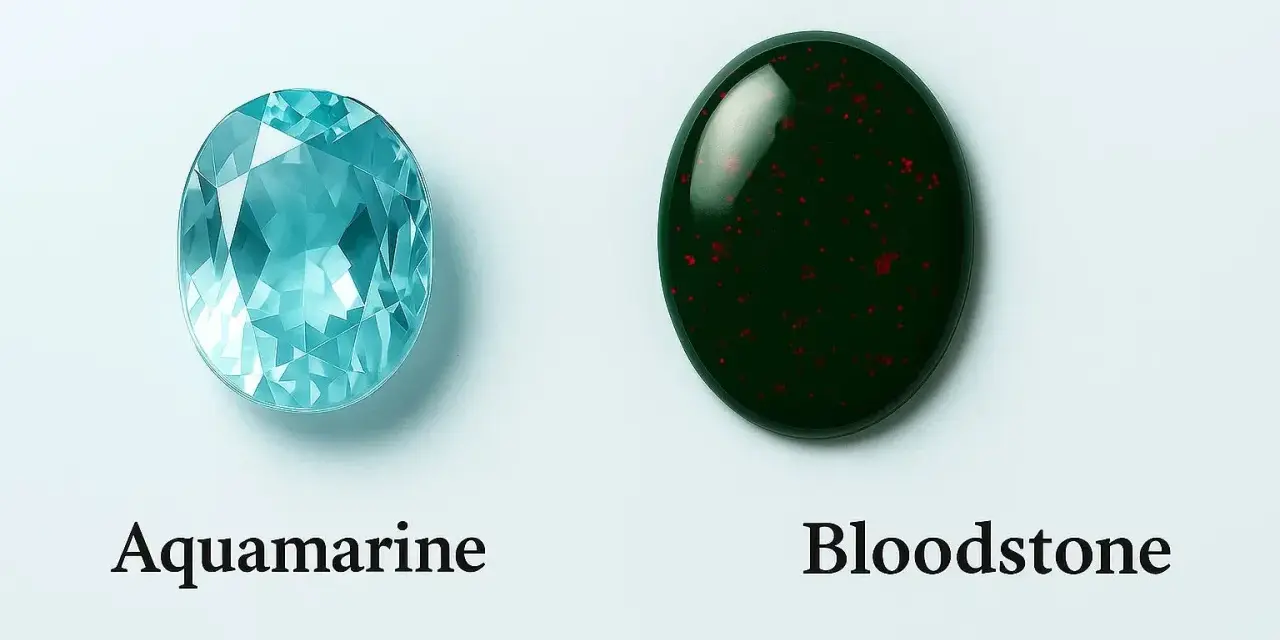
The March 6 birthstone is usually aquamarine, with bloodstone as the traditional alternative, so the real choice is less about the date and more about the look you want to wear. I’d treat this as a practical jewellery decision: do you want a calm, sea-blue gem that feels easy to style, or a darker stone with more history and a stronger visual edge? Below, I break down what each stone means, how they differ in jewellery, and how to choose and care for the one that suits the wearer best.
The essential answer for 6 March is aquamarine first, bloodstone second
- Aquamarine is the modern default for March birthdays and the most straightforward answer for 6 March.
- Bloodstone is the traditional March alternative, valued for its darker colour and historic symbolism.
- Aquamarine is harder at 7.5-8 on the Mohs scale, which makes it a strong candidate for everyday jewellery.
- Bloodstone sits around 6-7 Mohs and usually looks best as a cabochon, bead, or carved piece.
- The best choice depends on style: aquamarine feels airy and refined, while bloodstone feels more vintage and grounded.
Why March has two birthstones
March is one of the months with more than one accepted gem, and that matters because it explains why different charts sometimes give you different answers. In practice, aquamarine is the modern favourite, while bloodstone keeps the older, more symbolic side of the month alive. There is no separate stone just for 6 March; the date sits inside March’s wider birthstone tradition. Once you understand that split, the rest becomes much easier to read.
For me, that duality is part of the appeal. One stone is bright and clear, the other is dark and earthy, yet both have enough history to feel meaningful rather than decorative for the sake of it. That contrast is exactly why March jewellery can feel personal instead of generic, and aquamarine is usually where I would start.
Aquamarine is the cleanest modern choice
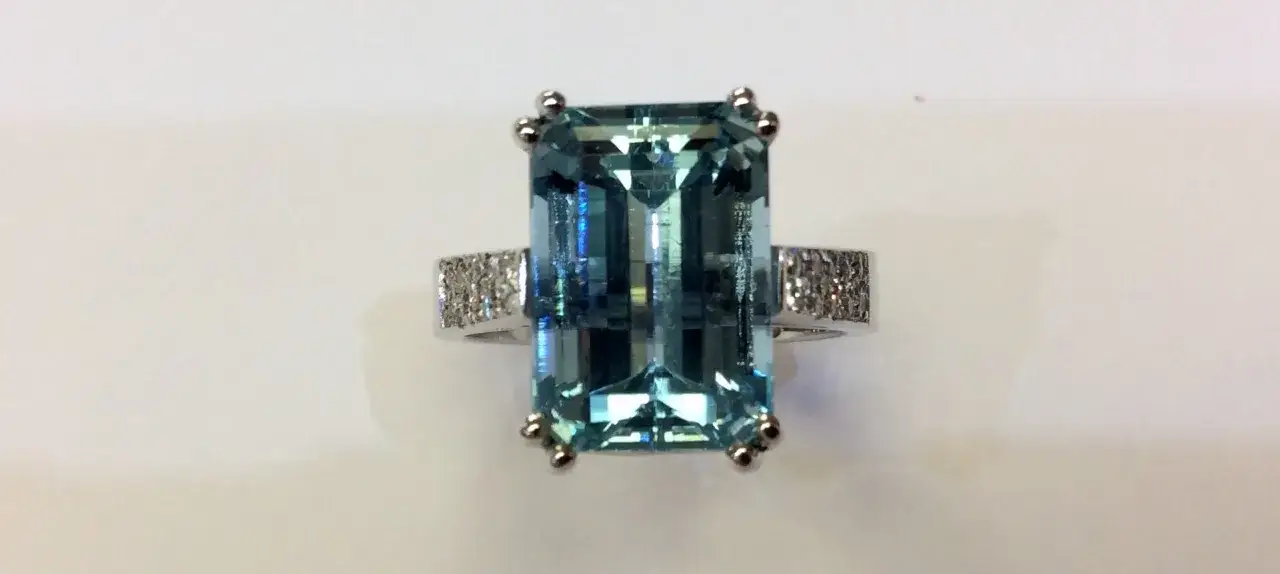
Aquamarine takes its name from the Latin for seawater, and the stone earns that name immediately: pale sky blue, blue-green, sometimes almost glass-clear, and very easy on the eye. If someone wants a March birthstone that feels elegant rather than niche, this is the safest and most versatile answer. I often recommend it for rings, pendants, and earrings because it works with everyday wardrobes without shouting for attention.
Colour is the main value signal here. Deeper blue tones usually read richer and more desirable than washed-out stones, especially when the gem is well cut. Aquamarine also scores well for wearability, since it is durable enough for regular use as long as the setting protects it from hard knocks. That makes it an especially good choice for a gift that is meant to be worn, not just kept for special occasions.
- Best cuts: Emerald, oval, and pear cuts are common because they help the colour appear cleaner and more balanced.
- Best metals: White gold, platinum, and silver keep the tone crisp; rose gold can soften the look without making it dull.
- Best settings: I prefer protective settings for rings, especially if the stone is lighter in colour or worn daily.
- Extra note: Aquamarine is also the gem traditionally linked to the 19th wedding anniversary, which gives it a second layer of gifting value.
What I like most about aquamarine is that it does not need a complicated story to justify itself. It is simply a beautiful, wearable stone with enough heritage to feel special. If that sounds too polished or familiar, bloodstone offers a completely different mood.
Bloodstone brings the older March tradition
Bloodstone is the more dramatic of the two March stones. It is an opaque green chalcedony with red spots of iron oxide, and those red flecks are exactly what give the gem its name. Bloodstone is also known as heliotrope or blood jasper, and it has long been tied to vitality, protection, and older talismanic traditions. It feels less like a bright spring gemstone and more like a piece of history you can actually wear.
Here, the cut matters in a different way. Bloodstone is usually shown as a cabochon, which means a smooth domed polish rather than a faceted cut. That approach suits the stone because its interest comes from pattern and surface, not transparency. In jewellery, it often appears in signet rings, beads, pendants, and classic men's pieces, but I would not treat it as gendered; it just happens to suit more structured designs very well.
Its durability is good enough for regular wear, but I still like bloodstone more in protected or lower-profile settings than in tall, exposed ring mounts. The character is the point. You are buying the contrast between the deep green body and the red speckling, so the best stones look balanced, natural, and distinctly themselves rather than overly shiny or flat.
How to choose the right piece for the wearer
This is the point where style matters more than gemstone lore. If I am choosing for a gift, I look at what the wearer already reaches for: clean lines and pale metals usually point to aquamarine, while vintage styling, darker wardrobes, or statement silver pieces often suit bloodstone better. The birthstone should feel like it belongs to the person, not just to the calendar.
| Feature | Aquamarine | Bloodstone |
|---|---|---|
| Look | Pale sky blue to deeper sea blue-green | Dark green with red iron-oxide spots |
| Hardness | 7.5-8 Mohs | 6-7 Mohs |
| Best cuts | Emerald, oval, pear, and other faceted cuts | Cabochon, bead, and carved forms |
| Style mood | Bright, refined, coastal, and modern | Historic, grounded, and slightly more dramatic |
| Best use | Rings, pendants, earrings, occasion jewellery | Signet rings, bracelets, beads, and statement pieces |
If the goal is an easy-to-wear gift, I would usually lean aquamarine. If the goal is something a little less obvious and a bit more individual, bloodstone wins. That is the practical difference that matters most, and it leads directly into care, because the right way to look after the stone depends on which one you choose.
How to care for March birthstone jewellery
Both stones are manageable, but they benefit from slightly different treatment. For aquamarine, warm soapy water is the safest everyday clean, and ultrasonic or steam cleaning is usually fine unless the stone has liquid inclusions, fractures, or fracture filling. Bloodstone is simpler: use a soft cloth or brush with warm, soapy water and avoid rough handling. In both cases, the setting matters as much as the stone, because a secure mount protects the gem from unnecessary damage.
- Clean gently: Use warm water, mild soap, and a soft brush for routine cleaning.
- Avoid harsh chemicals: Remove jewellery before using household cleaners, swimming, or applying strong cosmetics.
- Protect the setting: Check prongs and mounts regularly, especially for rings worn every day.
- Store separately: Keep each piece in a soft pouch or lined box so harder stones do not mark softer ones.
One detail I always point out is that aquamarine can look tougher than it is if you are careless with it. It is durable, yes, but not indestructible. Bloodstone is similarly dependable, yet its lower profile and opaque surface mean scratches or chips are easier to notice if the piece has been knocked around. Gentle storage and simple cleaning go a long way with both.
What I would buy for a March 6 gift in the UK
If I were buying for a March birthday in the UK, I would start with the wearer’s wardrobe and habits, not the gem chart. For someone who likes understated, polished jewellery, aquamarine is the better buy because it reads cleanly in silver, white gold, and platinum. For someone who likes antique-inspired pieces, darker tailoring, or signet-ring style jewellery, bloodstone feels more considered and more distinctive.
That is the practical answer I keep coming back to: aquamarine is the safer everyday choice, bloodstone is the more characterful alternative. Neither stone is a compromise, and both can make a thoughtful March gift when the cut, setting, and style are matched properly. If you want the easiest route, choose aquamarine; if you want the more memorable one, choose bloodstone. Either way, the best piece is the one the wearer will actually want to put on.