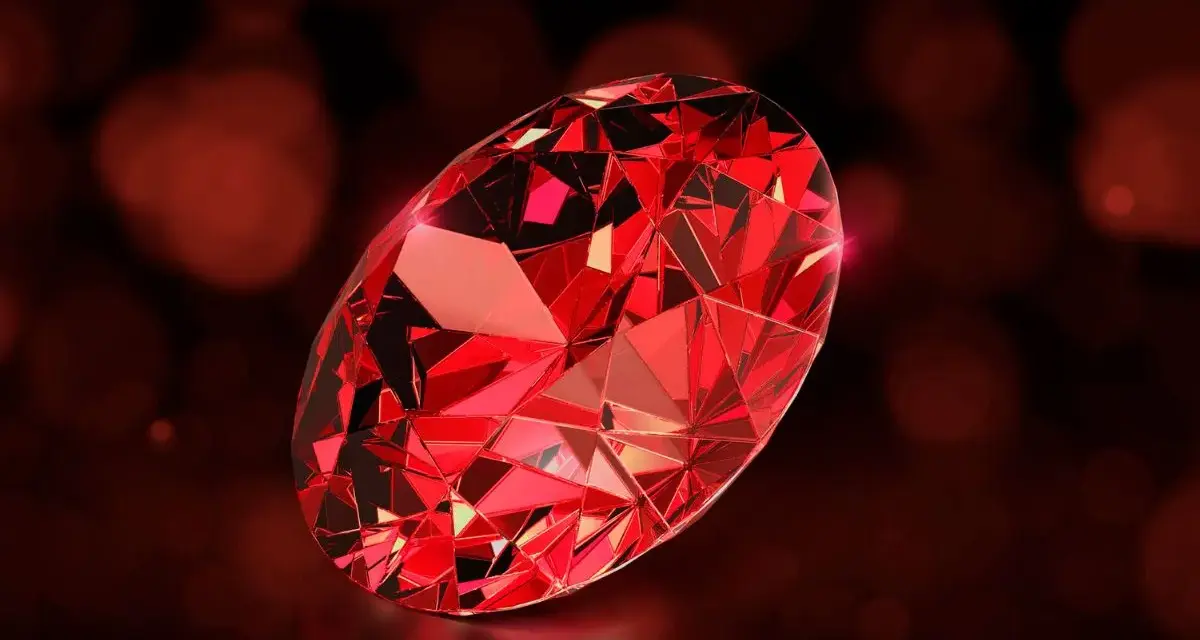
The July birth colour is usually read as a deep, ruby red rather than a bright, flat red. That makes sense once you connect it to the month’s birthstone: ruby, a gem that has long stood for passion, strength, and a certain unmistakable richness in jewellery. In this article, I’m looking at the colour itself, why it became linked to July, and how to choose or wear it well in real pieces.
July is best understood as a ruby red month, not a single exact shade
- The colour most people mean for July is red in the ruby range, often described as deep red, crimson, or purplish red.
- Ruby is the standard July birthstone in the UK and in most modern birthstone charts.
- The strongest ruby shades are saturated but not muddy; they should still look lively in daylight.
- Yellow gold warms the colour, while white metals make it look sharper and more modern.
- Ruby jewellery is durable enough for frequent wear, but treatment and setting still matter.
- For gifts, a modest ruby pendant or ring is usually more wearable than a very large statement stone.
What the July birth colour actually is
If I had to name July’s colour in one line, I’d call it ruby red. That is the clearest and most useful answer for jewellery lovers, because there is not one official paint-swatch shade attached to the month. Instead, the colour sits in a family of reds: deep red, crimson, blood red, and sometimes a slightly purplish red.
What matters most is the overall impression. July’s colour should feel rich, warm, and gemstone-like. It should not drift too far into orange-red, and it should not become so dark that the stone or accessory looks blackish in normal light. In practice, I usually think of it as a red with depth, not a red that shouts for attention.
| Shade | How it reads | Where it works best |
|---|---|---|
| Deep ruby red | Rich, saturated, classic | Heirloom rings, pendants, formal pieces |
| Crimson | Slightly brighter and more vivid | Modern designs, everyday jewellery |
| Purplish red | Cooler, more dramatic, often very refined | White metals, statement settings |
| Pinkish red | Lighter and softer | Delicate pieces, stacking jewellery |
That range is useful because it explains why two July pieces can look different and still both feel correct. Once you understand the colour family, the next step is seeing why ruby became its signature stone in the first place.
Why ruby red became July’s signature stone
Ruby is the red variety of corundum, the same mineral family as sapphire. What gives it that famous colour is chromium, and the best stones are prized for a vivid red that still has life in it. In gem terms, the top colour is often described as a deep red with a slight purple undertone, which is where the trade term “pigeon’s blood” comes in. It sounds dramatic because it is meant to describe the most coveted end of the ruby spectrum.
The symbolism is just as strong as the colour. Ruby has long been linked with love, courage, vitality, and protection. That red association is easy to understand: it feels warm, energetic, and powerful, which suits a summer birth month. I also think ruby works so well for July because it feels substantial rather than decorative. It has presence.
In the UK, ruby remains the most accepted July birthstone, so the colour and the gem are tightly linked. That matters if you are buying a birthday gift, because you are not choosing a random red stone; you are choosing a stone with a long jewellery history and a very clear visual identity. From there, the real question becomes how that colour behaves once it is set into a piece you can wear.How ruby red looks in different jewellery settings
Ruby is one of those stones that changes character depending on the metal around it. I find that the same gem can look regal, modern, or romantic with only a setting change, which is why July jewellery is more flexible than people expect.
| Setting | Effect on the colour | Best for |
|---|---|---|
| Yellow gold | Warms the ruby and deepens the red | Classic rings, vintage-inspired pieces |
| White gold or platinum | Adds contrast and makes the colour feel sharper | Clean, contemporary designs |
| Rose gold | Softens the red and gives it a romantic cast | Delicate pendants, feminine everyday wear |
| Diamond halo | Brightens the centre stone and increases visual size | Gift jewellery, cocktail rings, statement pieces |
Shape matters too. Oval and cushion cuts tend to show ruby colour beautifully because they hold a lot of body colour without making the stone feel too heavy. A well-cut round ruby can look lively and sparkly, while a too-dark stone can lose some of its impact even if the gem itself is valuable. When I look at ruby jewellery, I always check whether the red still reads clearly in daylight, not just under shop lighting.
That brings us to the part people often get wrong: choosing a piece based on size alone instead of how the stone actually looks on the hand or neck.
How I would choose a July ruby piece that feels worth owning
If you are buying July jewellery for yourself or as a gift, I would focus on four things before anything else: colour, cut, treatment, and setting. Size comes later. A smaller ruby with strong colour will usually look more luxurious than a larger stone that is dull, overly dark, or uneven in tone.
- Colour first - the best ruby should look rich and alive, not brownish or overly black.
- Cut second - a good cut keeps the colour balanced and avoids a flat, lifeless centre.
- Treatment matters - heat treatment is common and widely accepted, but glass-filled or dyed stones need more caution.
- Setting protects the stone - claws or bezels should hold the ruby securely, especially in rings.
- Clarity should be judged realistically - natural rubies often have inclusions, and that is not automatically a problem.
The most common mistake I see is people chasing perfection on paper. They want the cleanest stone, the biggest carat weight, or the lowest price, and they ignore the actual look of the gem. With ruby, that usually backfires. The stone is at its best when the colour is convincing and the setting supports it rather than competing with it.
Another useful rule: if a ruby looks stunning in one type of light but dull in another, keep looking. The month’s colour should feel dependable, not theatrical. Once you have a piece you like, the final job is simple care, and that part is easier than most people assume.
How to care for ruby jewellery so the colour stays sharp
Ruby is one of the tougher coloured gemstones, ranking 9 on the Mohs scale, so it handles daily wear far better than softer birthstones. That does not mean you can forget about it. Durability and indestructibility are not the same thing, especially if the stone has been filled or heavily treated.
For routine cleaning, warm soapy water and a soft brush are usually enough. Untreated, heat-treated, and many lattice-diffused rubies can generally tolerate ultrasonic or steam cleaning, but glass-filled or dyed stones should be treated much more gently. If you are not sure what you own, I would always err on the cautious side and use a damp cloth instead of aggressive cleaning.
- Store ruby pieces separately from softer gems to avoid scratches.
- Check claws and bezels regularly, especially on rings worn every day.
- Remove jewellery before hard manual work or sports.
- Ask about treatments if you are buying a finer stone, because that affects both value and care.
Good care does not need to be complicated. It just needs to be consistent. If the setting stays secure and the surface stays clean, ruby keeps its colour beautifully for a long time, which is exactly what you want from a birthstone piece.
The July piece I would choose first
If I were choosing one July jewel for real-life wear, I would start with a small ruby pendant or a simple ring in yellow gold. That combination gives you the most recognisable version of the month’s colour without making the piece feel overdone. It also works across styles, which is important if the jewellery is meant to be worn often rather than kept for special occasions.
For a more modern look, I would switch to white gold or platinum and let the ruby sit in contrast. For something softer and more romantic, rose gold does a surprisingly good job of taking the edge off the red while keeping the stone unmistakable. The best July jewellery does not try to hide the colour. It lets the red do the work.
If you remember only one thing, remember this: July’s colour is not just “red” in the abstract. It is ruby red, with depth, warmth, and enough intensity to feel like a proper birthstone rather than a decorative afterthought. That is the version I would buy, wear, and trust to age well.