The short answer is that lookalike and real diamond are not the same thing
- Lab-grown diamond means a real diamond with a laboratory origin.
- Simulated diamond means a stone that copies diamond’s appearance but is not diamond.
- Lab-grown and natural diamonds share the same chemical and crystal structure; simulants do not.
- Cubic zirconia and moissanite are the most common diamond simulants people encounter.
- Durability, resale value, and grading all change depending on which category you choose.
- A clear seller description is more important than any marketing label.
The term people mean is not always the same stone
When I talk clients through this, I start with one simple question: are we discussing a real diamond grown in a lab, or a different stone that only copies diamond’s look? Those are not interchangeable terms, even though shoppers often use them as if they were. A lab-grown diamond is still diamond; a simulant is not.
That distinction matters because the stone’s identity affects everything that follows, from how it is priced to how it is tested and sold. In jewellery, the same visual impression can hide very different materials, and that is where confusion usually starts. Once that is clear, the growth process makes much more sense.
How a lab-grown diamond is actually created
A lab-grown diamond is made by reproducing the conditions that allow carbon to crystallise into diamond. The result has the same basic chemistry and crystal structure as a mined diamond, which is why it is considered a diamond rather than a substitute. In practical terms, that means it can be cut, polished, mounted and worn in the same way as a natural stone.The two main production methods are HPHT and CVD. HPHT, or high pressure high temperature, uses intense pressure and heat to mimic the environment deep inside the earth. CVD, or chemical vapour deposition, grows diamond layer by layer from a carbon-rich gas in a controlled chamber. The methods are different, but the goal is the same: to create actual diamond crystal, not a lookalike.
That is why lab-grown diamonds are often the right answer when someone says they want an “artificial diamond.” They are artificial in origin, but they are still real diamonds in material terms. The next comparison is where the market becomes easier to navigate, because not every stone that looks like diamond belongs in the same category.
How simulated diamonds differ from real diamonds
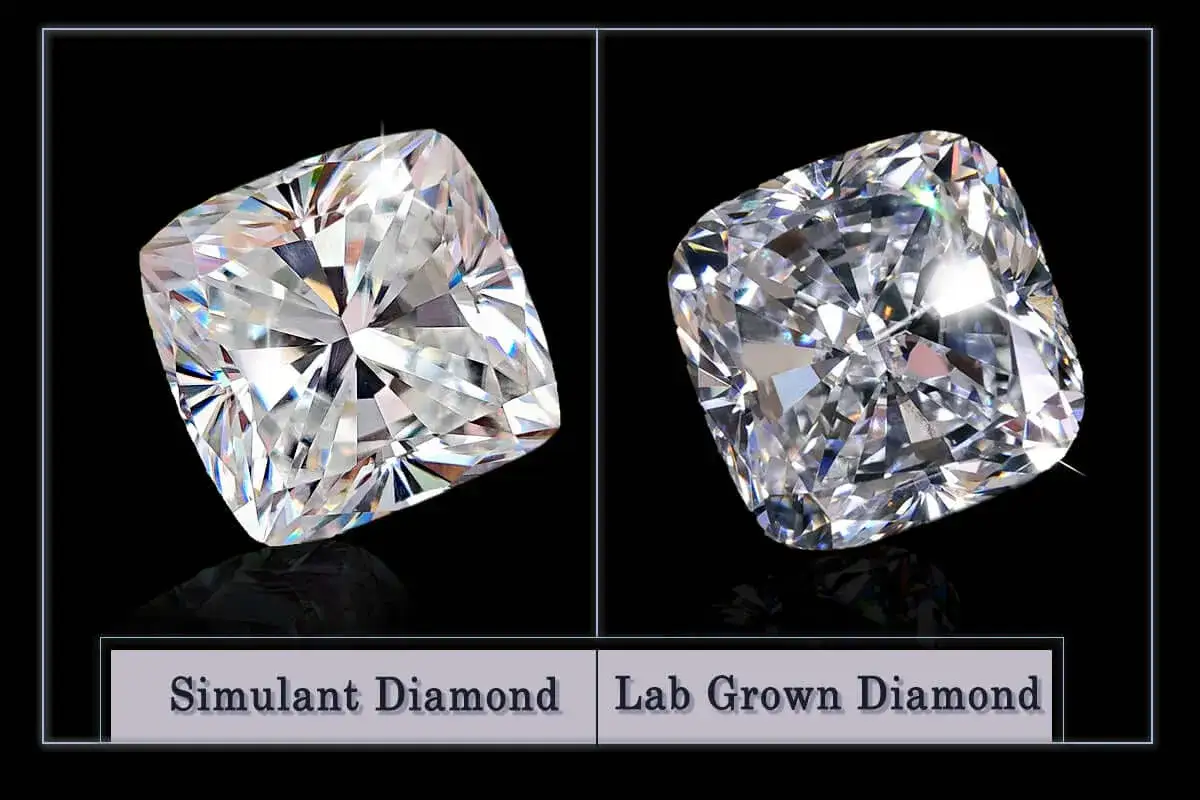
A simulated diamond is a stone chosen because it resembles diamond, not because it shares diamond’s chemistry. That is the key line I would keep in mind. The visual effect may be close enough for casual wear, but the structure, hardness and long-term behaviour can be very different.
| Stone type | What it is | Typical hardness | What it means for you |
|---|---|---|---|
| Natural diamond | A mined carbon crystal formed over geological time | 10 | Maximum diamond durability and the strongest traditional market recognition |
| Lab-grown diamond | A diamond grown in a controlled setting by HPHT or CVD | 10 | Same material identity as natural diamond, with different origin and typically lower price |
| Simulated diamond | A different material made to imitate diamond’s appearance | Varies by material | Chosen mainly for look and budget, not because it is diamond |
In my experience, this is where buyers most often get tripped up. A simulant can look excellent in a photograph or under showroom lighting, but that does not make it diamond. It only means the stone has been chosen or manufactured to borrow the diamond aesthetic. From there, the material itself becomes the real clue.
The materials most often used as diamond simulants
Most people will encounter three names first: cubic zirconia, moissanite and glass or crystal-based imitations. They are not all equal, and they do not age in the same way. That is why “simulated diamond” is a broad label rather than a single gem type.
| Material | Why people choose it | Main limitation |
|---|---|---|
| Cubic zirconia | Very affordable, bright, and easy to find in many sizes | Less durable than diamond, and it can lose polish or look tired with heavy wear |
| Moissanite | Strong everyday durability and a lively sparkle | Its fire is more dramatic than diamond, which some people love and others notice immediately |
| Glass or crystal | Low cost and simple fashion appeal | Soft enough to scratch quickly, so it is best for occasional wear only |
| Colourless natural stones such as zircon or quartz | Useful when someone wants a natural material with a diamond-like look | Still not diamond, and their optical behaviour is different under close inspection |
What UK buyers should check before paying
For buyers in the UK, the first filter is simple: the description should be clear enough that you know whether the stone is natural, lab-grown or a simulant. If the listing just says “diamond” while the price looks far below expectation, I would pause and ask for a more precise description. A reputable jeweller should be willing to say exactly what the stone is.
Then check the paperwork. A proper report or receipt should match the stone type, and it should not blur the line between a real diamond and a diamond lookalike. If a seller is vague about origin, treatment or materials, that is a warning sign. The same is true if the stone is mounted in a way that makes testing or replacement difficult, because that can hide problems later.
- Ask whether the stone is natural, lab-grown or simulated.
- Read the wording on the receipt and any report, not just the product page.
- Check the return policy before you buy, especially for mounted jewellery.
- Decide whether you care more about appearance, durability, or long-term value.
- Be cautious if the price seems too low for the claimed material.
The last point matters more than people think. Simulants are usually bought for visual effect and affordability, so they rarely behave like investment pieces. Lab-grown diamonds are different, because they are real diamonds, but they still tend to follow their own market logic. That brings us to how the stone will actually live with you day to day.
Care, longevity and the mistakes people make
A stone can look beautiful on day one and still be the wrong choice for how you plan to wear it. That is the mistake I see most often. Buyers focus on the first impression and ignore the long-term behaviour, which is where the differences between diamond, lab-grown diamond and simulant become obvious.
For regular wear, diamond and moissanite are much tougher choices than glass or many CZ pieces. Diamond sits at 10 on the Mohs scale, moissanite is around 9.25, and cubic zirconia is about 8.5. Those numbers sound close, but in jewellery they matter. A ring worn every day is much less forgiving than a pendant or pair of earrings.
My practical advice is to clean most pieces gently with warm water, a little mild soap and a soft brush, then dry them with a lint-free cloth. Avoid harsh chemicals, and be careful with steam or ultrasonic cleaning if the stone is glued, composite, or set in a delicate mounting. If a piece is meant to be worn hard and often, I would rather choose a durable stone with honest disclosure than a cheaper one that needs constant caution.
Another common error is expecting simulants to hold value like diamonds. They usually do not. Their job is to deliver a look, not rarity or resale confidence. Once that expectation is set correctly, the final choice becomes much easier.
The choice that matters most for daily wear
If you want a diamond with a laboratory origin, choose a lab-grown diamond. If you want the diamond look at a lower entry price, a simulant may be enough. If you want the strongest blend of durability and affordability without going to a mined stone, moissanite is often the practical middle ground.
That is the cleanest way to read the market. My rule of thumb is simple: buy the material that matches your expectations, not the one that sounds most impressive in a listing. In jewellery, clear naming is not a technicality; it is the difference between a stone that fits the brief and one that only seems to.
Once you keep that distinction in mind, the whole subject becomes less confusing. The label tells you what the stone is, the material tells you how it behaves, and your priorities tell you whether it is the right choice for you.