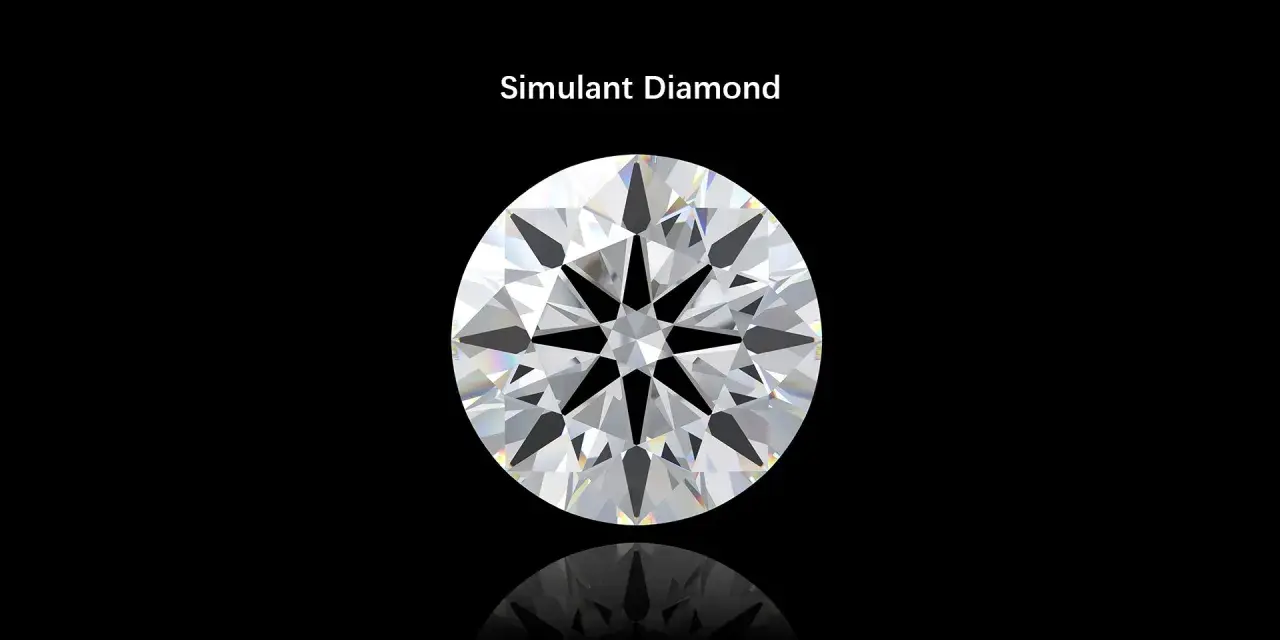
When people ask what are simulated diamonds, they usually want a plain answer they can use when comparing a ring, pendant, or pair of earrings: what is the stone, how does it behave, and when is it worth choosing over a diamond? I separate that decision into three categories straight away: simulants, lab-grown diamonds, and natural diamonds. Once those are clear, the rest of the choice becomes much easier.
The essentials at a glance
- Simulated diamonds are diamond lookalikes, not diamonds.
- They are made from different materials, most often cubic zirconia, moissanite, white sapphire, or glass-based substitutes.
- Lab-grown diamonds are different because they are real diamonds with the same chemical and physical properties as mined diamonds.
- Durability matters as much as appearance: a cheap simulant can look convincing at first, but it may wear differently over time.
- In the UK, clear wording on the invoice or product listing matters more than marketing language on the box.
What a simulated diamond actually is
A simulated diamond is a stone made to imitate the look of a diamond without sharing its chemistry, crystal structure, or physical behaviour. That is the cleanest definition I know, and it keeps the category honest: if the stone is actually diamond, it is not a simulant.In the UK, the National Association of Jewellers uses the same basic idea. A diamond simulant is an imitation that copies the appearance of diamond, but not its material properties. I think that distinction matters because it stops buyers from lumping together very different stones that just happen to sparkle in similar ways.
This is also where a lot of confusion starts. A natural diamond formed in the earth. A lab-grown diamond was created in a controlled environment, but it is still diamond. A simulant is neither of those things. It is simply a substitute that borrows the look. That difference is the thread that runs through everything else in this article, so the next step is to look at the materials themselves.
The materials most often sold as diamond lookalikes
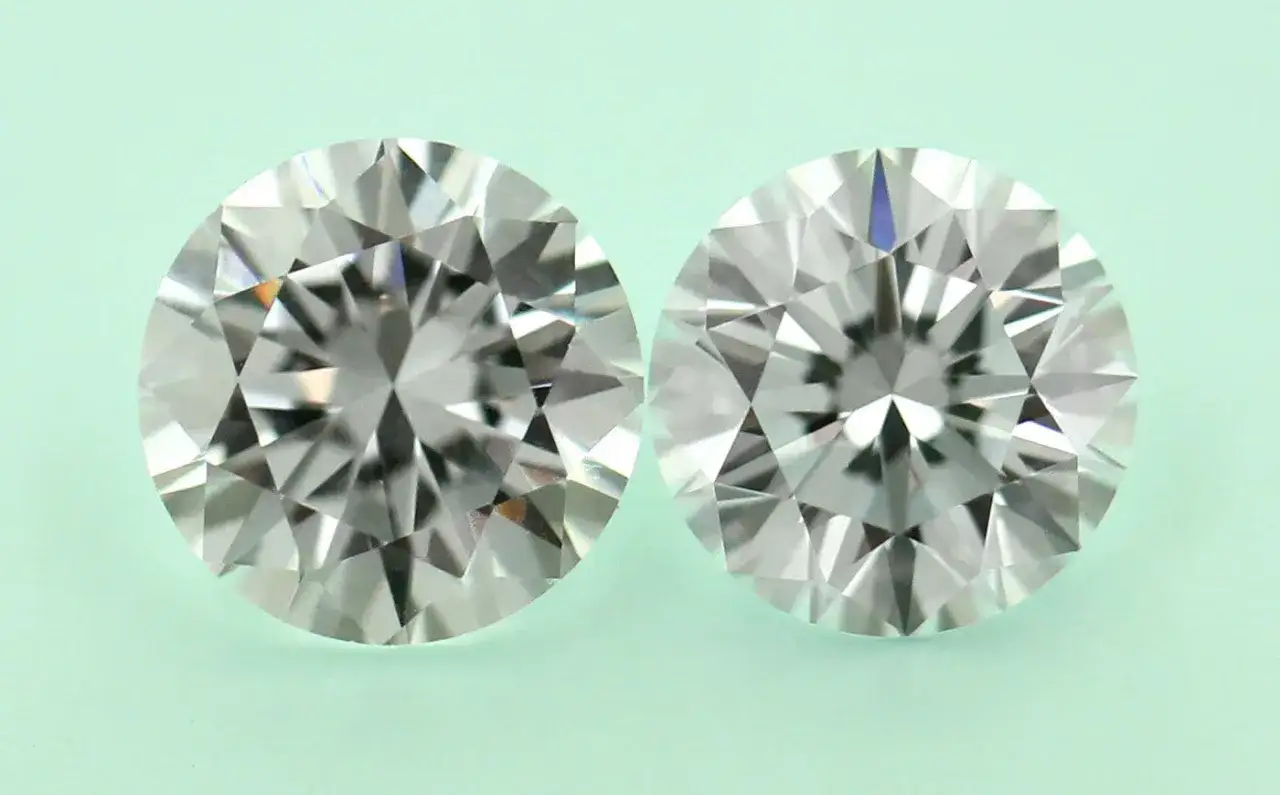
There is no single material behind all diamond lookalikes. Some are chosen for cost, some for durability, and some because they produce a convincing face-up appearance in jewellery.
| Material | What it is | Mohs hardness | How it tends to look | Best suited to |
|---|---|---|---|---|
| Cubic zirconia | A synthetic zirconium dioxide stone widely used as a diamond substitute | 8.5 | Bright, clean, and often very colourless, but sometimes a little glassy or overly perfect | Budget-friendly pieces and occasional wear |
| Moissanite | A silicon carbide gemstone often grouped with diamond simulants in jewellery retail | 9.25 | Very lively with strong fire, sometimes showing more rainbow flashes than a diamond | Daily wear and engagement-style rings |
| White sapphire | A natural corundum gem used as a diamond alternative | 9 | Subtler and quieter, with less sparkle than diamond or moissanite | Understated designs and classic settings |
| Glass or composite stones | Lower-cost materials made to copy diamond appearance | Varies | Can look convincing from a distance, but may show bubbles, seams, or rapid wear under magnification | Costume jewellery and short-term use |
I see cubic zirconia and moissanite discussed most often because they cover two very different use cases. CZ is the easy budget option. Moissanite is the one people choose when they want something tougher and more durable, even if the visual character is a little different. White sapphire sits in a quieter corner: elegant, but not especially diamond-like once you compare the light return side by side.
The practical lesson is simple. The material determines how the stone will age, not just how it looks on day one. That leads straight into the more useful comparison with natural and lab-grown diamonds.
How simulated stones differ from natural and lab-grown diamonds
This is the distinction that clears up most buying mistakes. A lab-grown diamond is still diamond. A simulated stone is not. They may all sit in the same ring style, but they do not belong to the same material family.
| Category | Composition | Is it diamond? | How it is made | Why buyers choose it |
|---|---|---|---|---|
| Natural diamond | Carbon | Yes | Formed naturally over geological time | Rarity, tradition, and the classic diamond identity |
| Lab-grown diamond | Carbon | Yes | Grown in a laboratory using HPHT or CVD methods | Diamond properties at a lower price than many mined stones |
| Simulant | Varies | No | Made to resemble diamond visually | Lower cost or a specific look without paying for a diamond |
GIA draws a sharp line between lab-grown diamonds and simulants, and I think that clarity is useful for buyers. If you want the chemical and optical behaviour of diamond, you need an actual diamond, whether mined or lab-grown. If you want the look only, a simulant may be enough.
That is also why paperwork matters. A good seller should name the material plainly, because appearance alone does not tell you which category you are in. Once that is understood, the next question is how to judge a stone in real life rather than in a glossy product photo.
How to judge them in jewellery without guesswork
I never trust face-up sparkle alone. Lighting, setting style, and photography can make almost any clear stone look better than it really is. What helps is a simple checklist that moves from appearance to evidence.
- Ask for the exact material name. “Simulated diamond” is a broad label; cubic zirconia, moissanite, white sapphire, and glass are not the same thing.
- Look at the light pattern, not just the brightness. CZ often gives broad, colourful flashes; moissanite can look even more fiery; white sapphire is usually calmer and less dramatic.
- Check the edges and surface after wear. Softer materials lose crispness sooner, especially in rings that are worn every day.
- Read the invoice and product description carefully. The important word should appear consistently everywhere, not only in one line of marketing copy.
- Do not rely on hallmarks for the centre stone. In the UK, hallmarks tell you about the metal, not whether the stone is diamond, lab-grown, or a simulant.
If the purchase is meaningful or expensive, a professional identification is the only reliable answer. For everyday browsing, though, this checklist is usually enough to stop the most common mistakes. From there, the more useful question becomes whether a simulant is actually the right choice for the way you plan to wear the piece.
When a simulant makes sense
There are situations where a simulant is a sensible, well-balanced choice. I would not treat them as second-best by default; I would treat them as tools with a specific job.
| Situation | Stone I would consider first | Why it fits |
|---|---|---|
| Fashion jewellery or occasional wear | Cubic zirconia | Low cost and a convincing look for pieces that do not face daily abuse |
| Everyday ring with better durability | Moissanite | Much harder-wearing than CZ and well suited to frequent use |
| Quiet, traditional styling | White sapphire | More subdued sparkle that works well in minimalist settings |
| Short-term or trend-led piece | Glass or similar low-cost substitute | Cheap to replace if the design is temporary |
The trade-off is obvious, but it is worth saying plainly. A cheaper stone is not automatically a better value if it scratches quickly, loses clarity, or looks tired after a few months. CZ is fine when the piece is meant to be replaceable. Moissanite is the stronger pick when you want something you can wear often without worrying as much. That difference matters even more when you are buying in a market like the UK, where clear disclosure is your best protection.
What I would check before buying in the UK
When I am buying jewellery in the UK, I want the description to be boringly clear. That is a good sign. The best listings do not try to make every stone sound like a diamond; they name the material and leave no room for guesswork.
- Check whether the seller says natural diamond, lab-grown diamond, or a specific simulant such as cubic zirconia or moissanite.
- Make sure the same wording appears on the receipt, product page, and any certificate or care card.
- Ask about the return window, especially if the stone is being bought online and judged from photos only.
- Confirm whether the setting is suitable for the stone's hardness and wear pattern.
- Ask how cleaning should be done; some pieces are fine with routine care, while others should avoid ultrasonic cleaning unless the jeweller approves it.
I would also keep the paperwork. If you ever need insurance, a repair, or a valuation, the exact material name makes the conversation much easier. That is especially helpful for rings, where the metal can be hallmarked but the stone can still be described loosely unless you insist on precision. Once that is in place, the final decision is usually less complicated than people expect.
Choose the stone for the way it will be worn
The simplest way to think about it is this: choose diamond if you want diamond, choose a simulant if you want the look at a different price point, and choose the specific simulant that matches the life of the piece. I would not buy cubic zirconia for a ring I expect to wear hard every day, and I would not pay for moissanite if the piece is only going to come out for special occasions.
That is the real answer behind the question. Simulated stones are not bad versions of diamond; they are different materials with different strengths. Once you separate appearance from composition, it becomes much easier to choose with confidence, and much harder to be misled by sparkle alone.