The quality of a diamond's cut decides far more than most people expect. Understanding the meaning of a diamond's cut helps you judge what you are really paying for: not the outline of the stone, but the way it handles light, balances on the hand, and presents itself in everyday wear. In this article, I look at what cut actually means, how it differs from shape, how grading works, and what I would check before buying.
Cut is the part of a diamond that shapes sparkle, face-up beauty, and value
- Cut is about proportions, symmetry, and polish, not just the diamond’s outline.
- A better cut usually means stronger brilliance, fire, and scintillation.
- The official cut grade is standardised for round brilliant diamonds.
- Shape and cut are different, so an oval can be well cut or badly cut.
- If budget is tight, cut is usually the first quality factor I would protect.
What diamond cut actually means
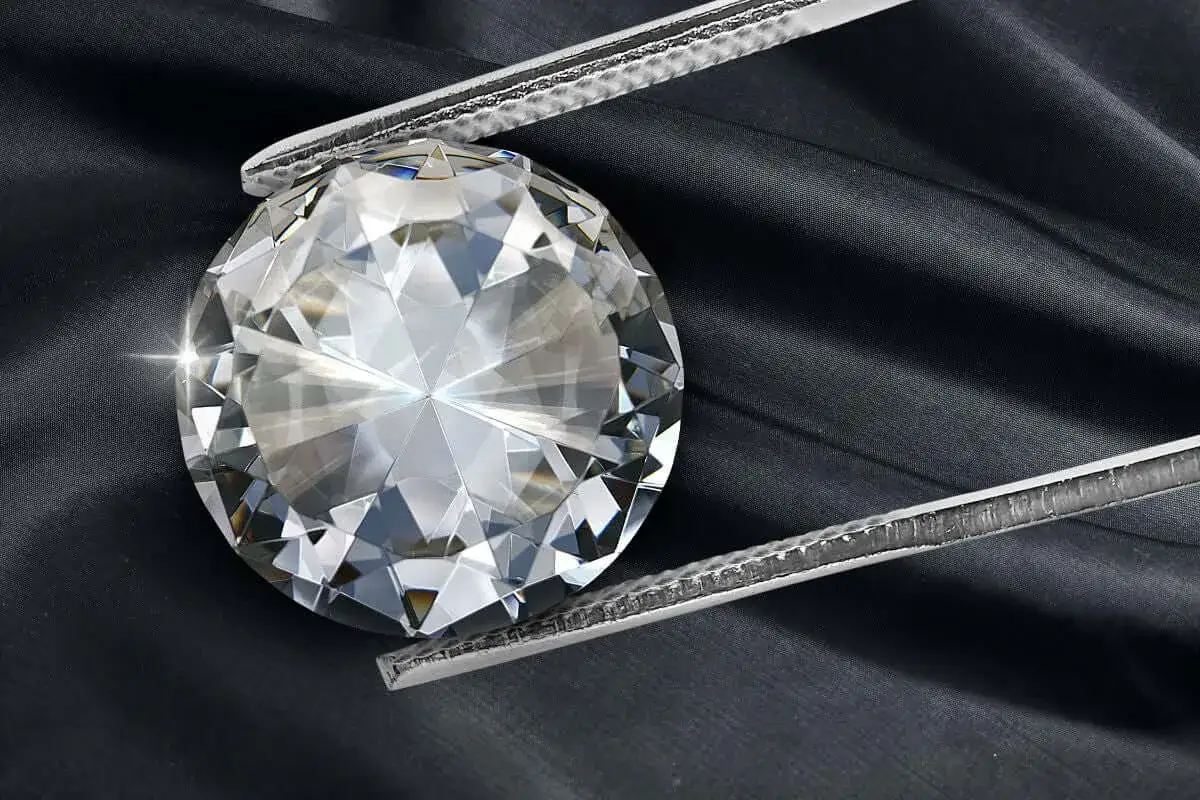
In gemmology, cut is not the stone’s outline. It is the way a rough diamond has been fashioned: the facet arrangement, proportions, symmetry, and polish that determine how light moves through it. Facets are the small flat surfaces on the stone, and their geometry is what makes a diamond lively or flat.
I think this is the simplest way to remember it: shape tells you the silhouette, while cut tells you how intelligently the stone has been made. Two diamonds can both be round, for example, and still look completely different because one has been cut to return light well and the other has not.
That distinction matters because most buyers look at a diamond face-up first. The cut is what makes that first impression either convincing or disappointing, and that leads directly to how sparkle is created.
Why cut changes sparkle and value
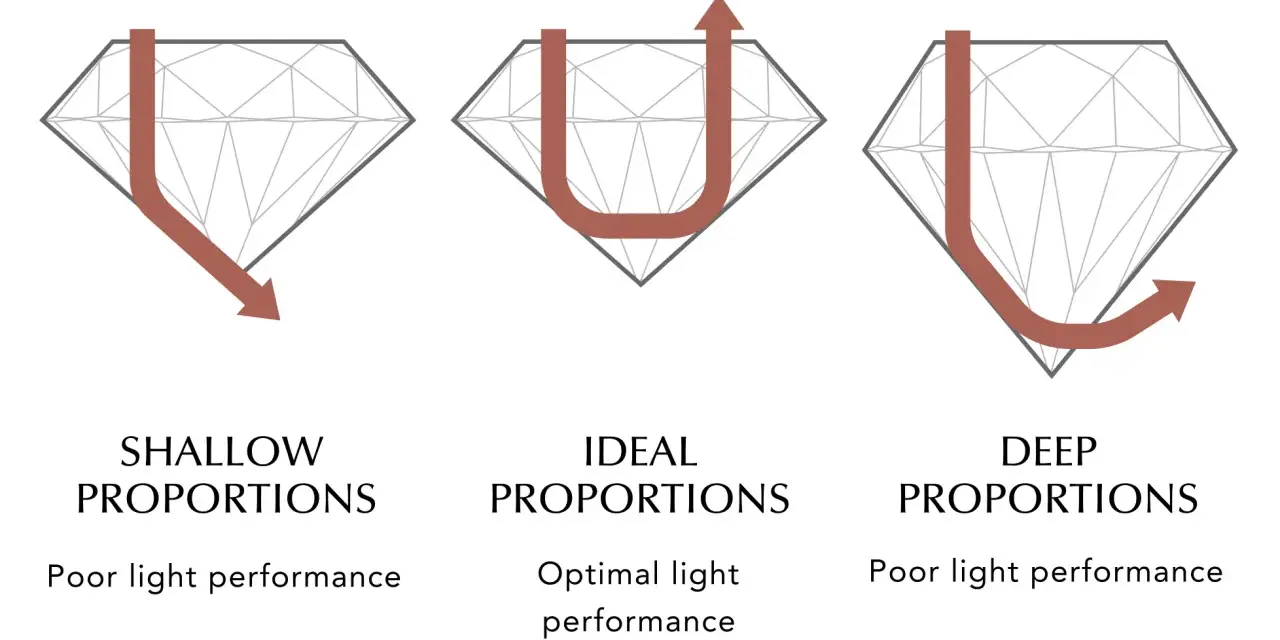
Light performance is the reason cut matters so much. A well-cut diamond reflects white light back to the eye, splits light into flashes of colour, and creates the contrast pattern that makes the stone look sharp rather than sleepy.
| Effect | What it means | What you notice |
|---|---|---|
| Brilliance | White light returned from the diamond | The stone looks bright face-up |
| Fire | Flashes of spectral colour | Small rainbow flashes in movement |
| Scintillation | Pattern of light and dark as the stone moves | Life, contrast, and changing sparkle |
When proportions are off, light leaks through the pavilion, the lower part of the stone below the girdle, instead of bouncing back. That does not just reduce sparkle; it can also make a diamond appear smaller or less elegant than its weight suggests. This is one reason I rarely think of cut as a cosmetic detail. It is structural.
In other words, a diamond with a great cut can often look more impressive than a heavier stone with a weak one. That idea becomes clearer once you separate cut from the other terms on a grading report.
Cut, shape, symmetry and polish are not the same thing
Buyers often use these words interchangeably, but they point to different things. Shape is the outline; cut is the overall fashioning; symmetry is how precisely the facets line up; polish is the quality of the surface finish.
| Term | What it describes | Why it matters |
|---|---|---|
| Shape | The stone’s outline, such as round, oval, pear, or emerald | Sets the overall style and silhouette |
| Cut | The way the diamond has been fashioned to handle light | Drives sparkle, brightness, and face-up balance |
| Symmetry | How evenly the facets line up | Affects pattern, balance, and optical precision |
| Polish | How smooth and clean the facet surfaces are | Influences how clearly light moves across the stone |
A diamond can have a pleasing shape and still be poorly cut. It can also have excellent polish and symmetry but still underperform if the proportions are wrong. I see this mistake a lot: people assume that a clean-looking stone must be well cut, when in fact the light return may be mediocre.
This is why inspection at face-up view is useful, but never enough on its own.
How cut grades appear on diamond reports
On a grading report, cut grades for round brilliant diamonds typically run from Excellent to Poor, with Very Good, Good, and Fair in between. That scale gives you a quick read on how well the stone was fashioned, but it is still a summary, not a substitute for seeing the diamond.
- Excellent signals strong light return and a balanced face-up pattern.
- Very Good is often close to Excellent in daily wear, though differences can show in certain lighting.
- Good can still be attractive, but the stone may give up some brightness or crispness.
- Fair and Poor are where the eye usually starts noticing weaker light performance more clearly.
One practical detail matters here: the standard cut grade is applied to the round brilliant shape. Fancy shapes such as oval, pear, emerald, or marquise do not receive the same universal cut grade, so you have to judge them more by proportions, visual balance, and how the stone performs in person or in good images.
If you see the term “Triple Excellent”, it usually means Excellent cut, Excellent polish, and Excellent symmetry on a round brilliant diamond. That combination is often a strong starting point, but I still would not buy on the grade alone without checking the actual look of the stone.
How I would judge cut for different shapes and budgets
Not every diamond needs the same level of scrutiny in the same place. Round brilliants reward precise cut grading because their optical formula is standardised. Fancy shapes are more about personal preference, but the same basic rule still applies: if the stone handles light badly, the size and clarity will not rescue it.
| Diamond type | What I prioritise | Why |
|---|---|---|
| Round brilliant | Cut grade first, then symmetry and polish | Light performance is easiest to grade and easiest to notice |
| Oval or pear | Face-up shape, bow-tie effect, and even brightness | These shapes can show dark areas if the proportions are off |
| Emerald cut | Clarity, symmetry, and step pattern | Large open facets reveal the stone’s architecture |
| Princess cut | Corner protection and even sparkle | Sharp corners and mixed facet patterns change the look quickly |
If I were balancing quality against budget, I would usually protect cut before size. A slightly smaller diamond with better proportions often looks more expensive on the hand than a larger stone that struggles to return light. That is especially true for engagement rings, where the stone is viewed at arm’s length and under mixed lighting.
The real compromise is not between cut and carat weight alone. It is between visible beauty and invisible numbers, and cut has the strongest effect on what your eye actually sees.
Common mistakes that make buyers misread cut
- Confusing cut with shape and assuming “oval” or “round” is a quality statement.
- Judging sparkle from one bright showroom light instead of checking the stone in different lighting.
- Focusing on carat weight while ignoring deep or shallow proportions.
- Assuming symmetry alone guarantees a beautiful diamond.
- Buying from photos without asking for a grading report or light-performance details.
The deepest practical error is paying for weight the diamond does not show. A stone can carry carat weight in ways that hide brightness, and that is why cut deserves more attention than most first-time buyers give it. The eye tends to forgive a lot, but it does not forgive a dull centre.
This is also where a good jeweller earns their keep: they should be able to explain why a diamond looks lively, not just recite a grade.
What I would check before paying for a diamond
When I want a practical answer rather than a textbook one, I look at three things in order: the report, the face-up view, and the stone’s behaviour in movement. If those three agree, I usually have a reliable read on cut quality.
- Start with the report. Confirm the cut grade where it exists, then check symmetry and polish.
- Look at the outline. A diamond should feel balanced, not stretched, pinched, or oddly deep.
- Watch the stone move. Good cut shows life across the surface, not one bright patch and one dead area.
- Compare under different light. Daylight, spot lighting, and indoor lighting reveal different weaknesses.
If you want one rule to carry with you, make it this: a diamond’s cut is the bridge between raw material and visual beauty. It is the part of the stone that turns weight into presence, and it is usually the first place I would invest if the goal is a diamond that looks elegant rather than merely expensive.
For a well-chosen diamond, the cut does more than shape sparkle. It shapes the whole impression of the piece, which is why I treat it as the starting point rather than the finishing touch.