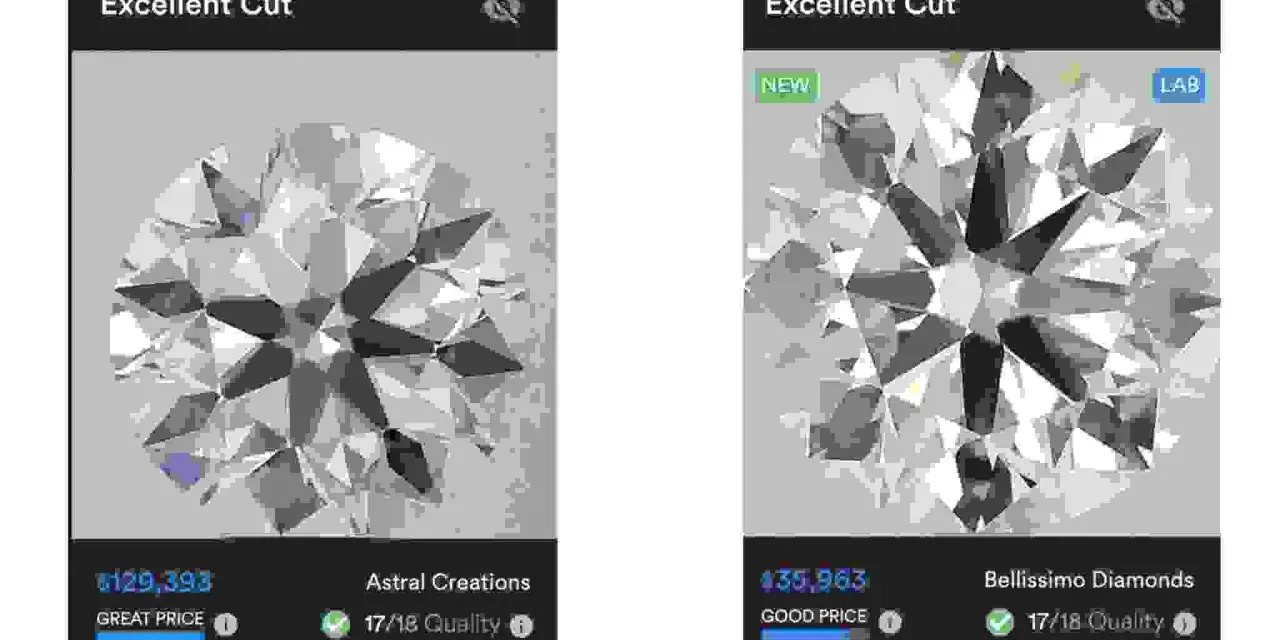
Lab-grown diamonds can create real confusion because they look and behave like mined diamonds in normal wear. In practice, I treat a handheld diamond tester as a screening tool, not a final answer: it can tell you whether a stone behaves like diamond, but it cannot reliably tell you where that diamond formed. If you care about provenance, valuation or resale, that distinction matters.
What a tester can confirm, and what it cannot
- A standard diamond tester will usually read a lab-grown diamond as diamond, because the stone is still diamond.
- The reading does not prove the stone is natural; it only shows that it is not behaving like a common simulant.
- To separate natural from lab-grown, you need advanced screening or a gemological laboratory.
- Mounted stones, small stones and dirty settings can make simple testing less reliable.
- For a meaningful purchase, paperwork and disclosure matter more than a quick probe reading.
Why a standard diamond tester usually says yes
Standard pen-style testers usually rely on thermal conductivity, sometimes with an electrical check layered on top. Because lab-grown diamonds are still diamond, they share the same crystal structure and the same core physical behaviour, so the device reads them as diamond. The Gemological Institute of America notes that laboratory-grown and natural diamonds are chemically and optically so similar that traditional observation and simple instrumentation cannot separate them reliably.
| Tool | What it usually tells you | What it cannot tell you | Best use |
|---|---|---|---|
| Handheld thermal tester | Whether the stone conducts heat like diamond | Whether it is natural or lab-grown | Quick screening for obvious simulants |
| Thermal or electrical combo tester | Whether the stone behaves like a diamond under more than one check | Diamond origin | Retail counter screening |
| Advanced screener | Whether the stone needs deeper analysis | May still refer some stones for lab work | Professional sorting and disclosure |
| Gemological laboratory | Natural versus laboratory-grown identification | Nothing meaningful for this question | Final identification and reporting |
My takeaway is simple: a pass reading tells you the stone is very likely diamond, but it does not tell you whether it formed underground or in a laboratory. That is where the next layer of testing becomes important.
Where the reading stops being useful
The main trap is thinking that a diamond tester answers the wrong question. It usually does not. A positive result can still leave the origin unknown, and in some situations the reading is less reliable than people assume.
- Mounted jewellery can interfere. Prongs, bezels and tight settings can make probe contact inconsistent.
- Small stones are harder to judge. Melee and delicate cluster settings are not ideal for cheap pocket testers.
- Dirt and residue matter. Oils, polishing residue and surface grime can affect the contact point.
- One reading is not enough. A single pass does not tell you anything about growth history.
- Simulants are a different question. Moissanite or cubic zirconia may be screened out as non-diamond, but that still does not prove a diamond is natural.
In other words, the tester is excellent at screening for obvious lookalikes, but it is not a provenance tool. Once that distinction clicks, the rest of the process makes a lot more sense.
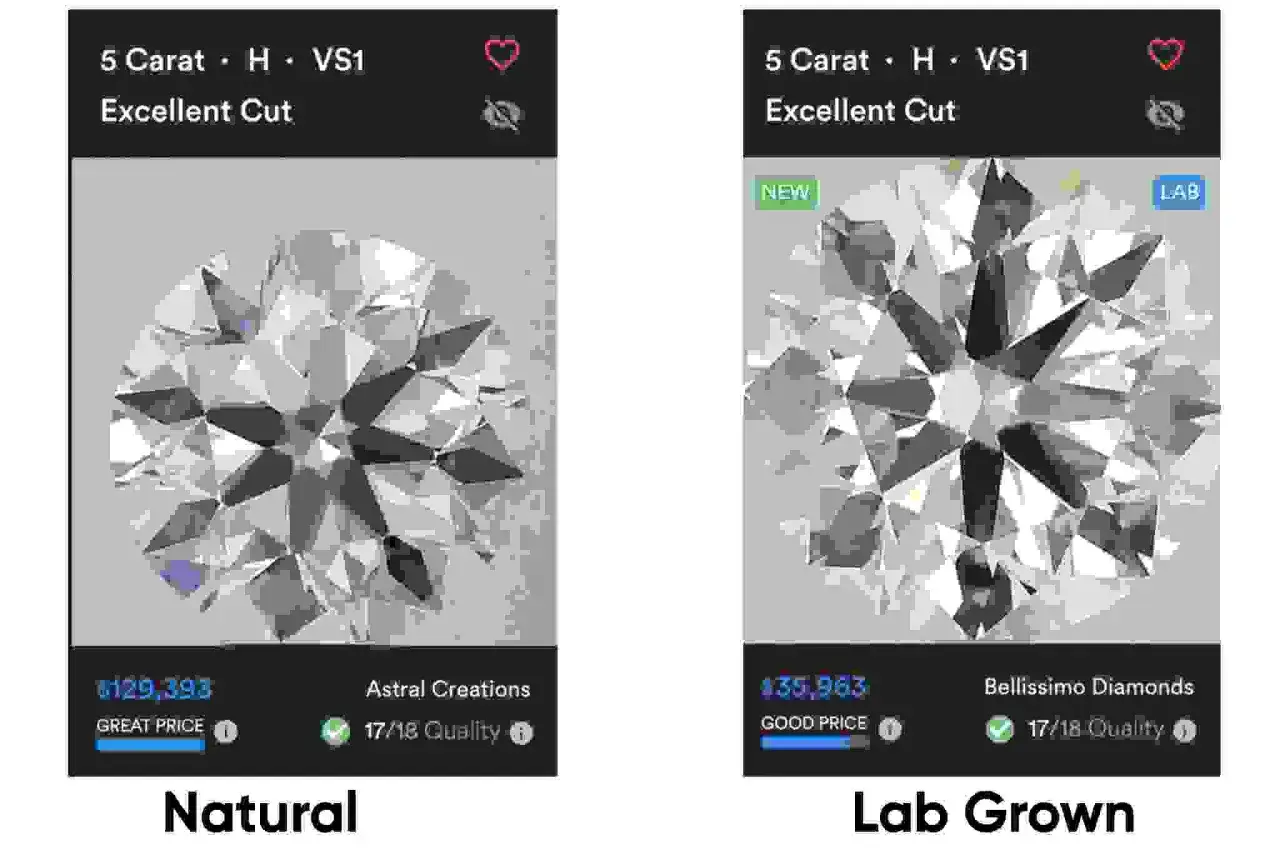
How jewellers separate natural diamonds from lab-grown stones
To separate natural and lab-grown stones, jewellers and laboratories look for clues inside the crystal itself: growth patterns, trace defects, impurity patterns and fluorescence behaviour. Advanced screeners use more than a simple probe; they look for spectroscopic signatures that reveal how the stone formed. That is why tools such as GIA’s iD100 can distinguish natural diamonds from lab-grown diamonds and simulants, even in mounted jewellery, and can work on stones as small as 0.9 mm with a result in under two seconds.
That kind of machine does not just say “diamond” or “not diamond”. It is trying to answer a deeper question: what kind of diamond is it? If the device returns a “refer” result, I would not read that as bad news; I would read it as a request for better analysis.
Traditional lab-grown identification also depends on the growth method. HPHT and CVD diamonds leave different structural clues, and experienced gemologists use those differences, plus spectroscopy, to classify the stone with confidence. That is the point where a handheld tester stops being enough and a proper identification process begins.
That distinction matters most when you are buying, insuring or reselling a stone, which is where paperwork starts to matter more than the probe.
What to do when you're buying in the UK
For a ring or loose stone in the UK, I would start with one question: do you want to know that it is diamond, or do you want to know whether it is natural? Those are different checks, and a serious purchase should answer both. If the seller cannot explain the difference clearly, I treat that as a warning sign.
- Ask the seller to state clearly whether the stone is natural, lab-grown or not yet fully identified.
- Request an independent report, not just a sales receipt or a verbal assurance.
- Check that the paperwork matches the stone, including carat weight, shape and any inscription.
- If the piece is already mounted, ask how the stone was screened and whether the setting limited the result.
- Keep the report with your insurance documents if the piece has meaningful value.
That approach is especially sensible for engagement rings and inherited jewellery, where the story attached to the stone matters almost as much as the stone itself. A tester reading is useful, but clear paperwork is what saves time later.
The mistakes that create false confidence
I see the same few errors repeated over and over:
- Assuming “pass” means natural. It only means the stone behaved like diamond under that test.
- Testing through dirt or residue. A dirty surface can interfere with contact and distort the reading.
- Using the wrong tool for the job. A pocket tester and a lab screener are built for different questions.
- Checking one point only. Irregular settings, chips or mixed materials can change how the probe behaves.
- Ignoring the mounting. Metal settings and tight clasps can make a reading harder to trust.
If a result feels strangely convenient, I usually slow down rather than speed up. The more valuable the stone, the less I want to rely on a single hand-held reading.
The rule I trust when origin really matters
My rule is straightforward: a handheld tester can help me rule out obvious lookalikes, but it cannot prove natural origin. If I need certainty, I move from screening to identification, which means advanced equipment or a gemological laboratory. That is the cleanest answer to the whole lab-grown-versus-natural problem.
For everyday shopping, the practical move is to ask for a report and keep the stone’s origin clearly documented. For anything expensive enough that you would insure, gift or resell it later, that paper trail is worth more than the green light on a pen-style tester.