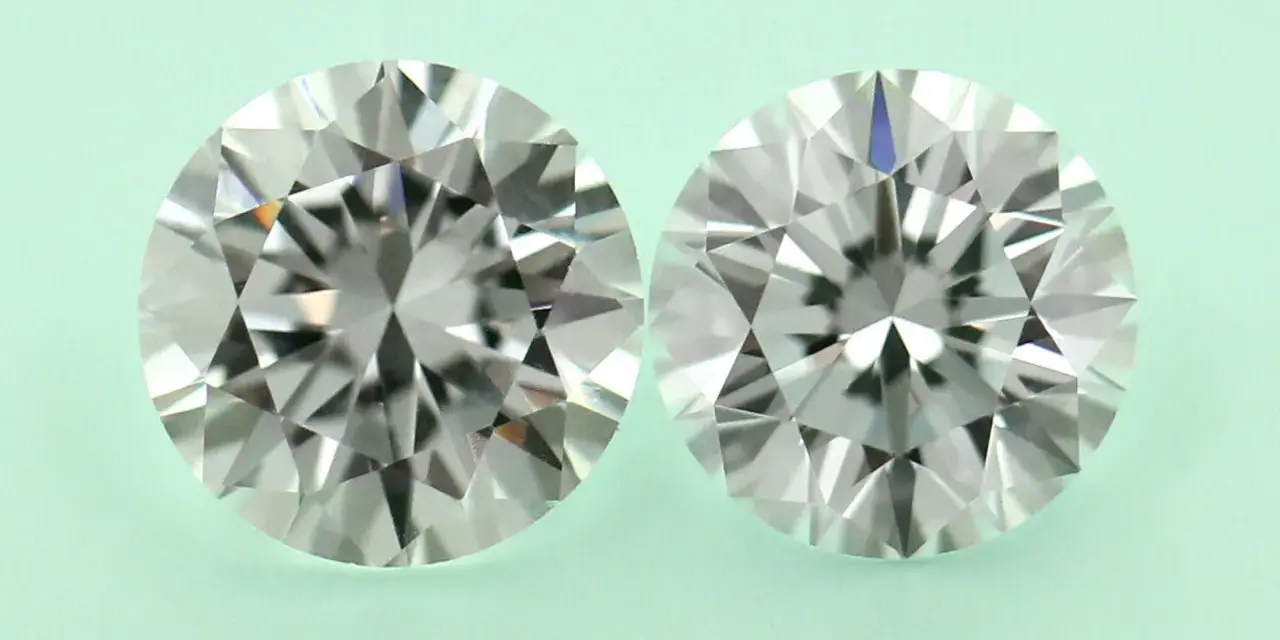
The short version before you compare the details
- Diamond simulants imitate the look of a diamond, but they are made from different materials.
- Lab-grown diamonds are real diamonds, just created in controlled conditions instead of mined.
- Simulants are usually the cheapest option; lab-grown stones cost more, but they behave like diamonds in daily wear.
- If you want the diamond look for the lowest spend, a simulant usually wins.
- If you want a real diamond with a lower price than a mined stone, lab-grown is the better match.
What each stone actually is
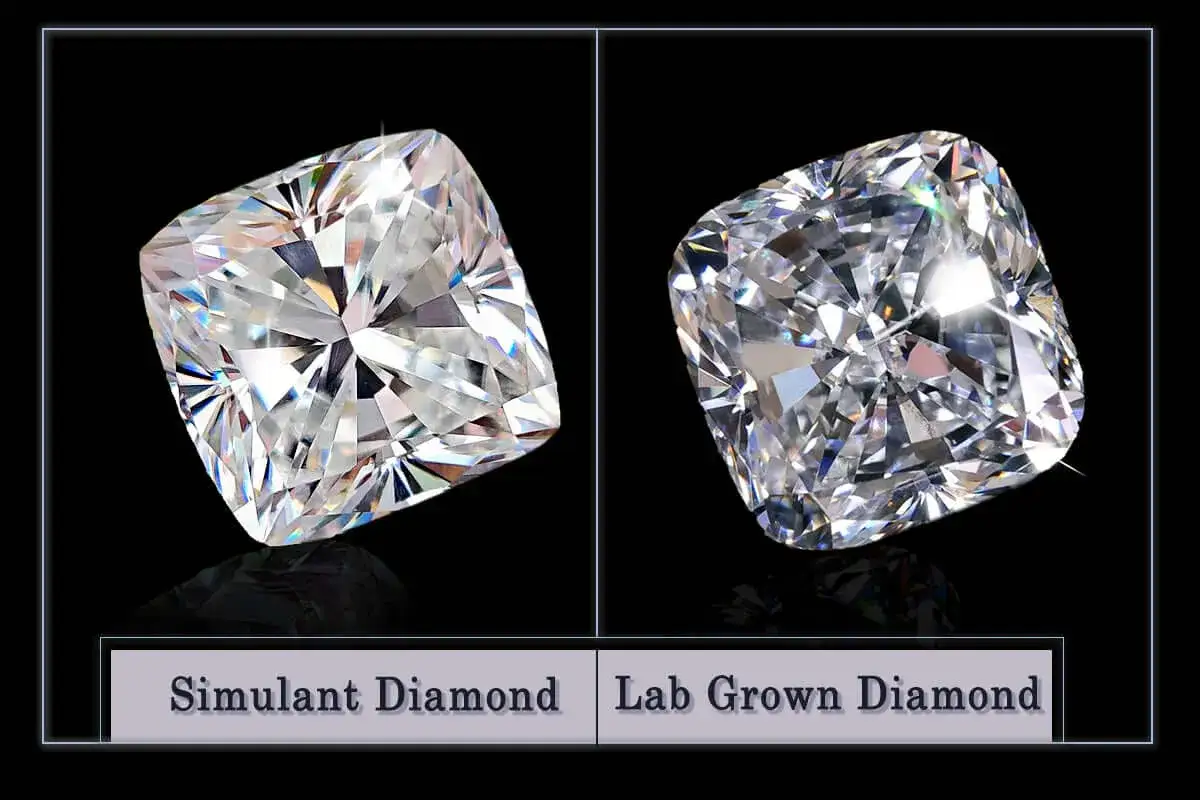
I start with the material, because most confusion disappears once that is clear. A diamond simulant is any stone or material made to resemble a diamond’s appearance without sharing its chemistry, crystal structure, or physical properties. Common examples include cubic zirconia, moissanite, and white sapphire; they can look convincing, but they are not diamonds.
A lab-grown diamond is different. It is still carbon arranged in the same crystal structure as a mined diamond, produced through methods such as HPHT or CVD. Gem labs like GIA separate lab-grown diamonds from simulants for a simple reason: one is a real diamond, the other is an imitation.
| Factor | Diamond simulant | Lab-grown diamond |
|---|---|---|
| What it is | A different material designed to imitate diamond | A real diamond created in a laboratory |
| Chemistry | Not carbon like diamond | Carbon crystal, same family as mined diamond |
| Diamond grading | Usually not graded as a diamond | Graded with the same 4Cs framework |
| Wear performance | Depends on the material; varies a lot | Excellent for daily wear |
| Typical cost | Lowest | Higher, but still far below many mined diamonds |
That distinction matters more than the marketing labels. Once you know whether you are buying a lookalike or a real diamond, the next question becomes how each one behaves on the hand.
How they differ in wear, sparkle, and upkeep
When I compare these stones for real-world use, I focus on three things: how they sparkle, how they age, and how much maintenance they need. A simulant can look very bright in the shop, but that does not automatically mean it will keep the same finish after years of contact with keys, skincare products, handbag zips, and daily cleaning.
Sparkle is not the same as authenticity
Some simulants throw a lot of rainbow fire, which can look lively under boutique lighting. Cubic zirconia often has a vivid, high-flash look, while moissanite can have even stronger fire and a more distinctive sparkle pattern. Lab-grown diamonds, by contrast, have the familiar diamond balance of brilliance and fire, because they are diamonds.
Durability changes the long-term experience
Diamond sits at the top of the Mohs hardness scale at 10, which is why it resists scratching so well. Simulants vary widely. Cubic zirconia is much softer, moissanite is harder and more durable, and white sapphire sits somewhere in between. That means two simulants can age very differently, even if they look similar on day one.
For everyday rings, this matters a lot. A lab-grown diamond can handle regular wear in much the same way a mined diamond can. A simulant may be absolutely fine for occasional use, but if you wear it every day, you should expect some materials to lose polish, pick up scratches, or look tired faster.
Cleaning is simple, but the finish can still change
Lab-grown diamonds are usually easy to keep clean with warm water, mild soap, and a soft brush. Many simulants also clean well, but they may be more sensitive to clouding, surface wear, or chemical exposure depending on the material. I would treat a simulant more like a fashion piece and a lab-grown diamond more like fine jewellery you expect to keep.
Once wear and upkeep are clear, the next issue is the one most buyers care about first: what the price difference really buys you.
What the price gap really means
Simulants are cheap because the underlying material is inexpensive and widely available. That is why the stone itself can cost very little, sometimes so little that the metal, setting, and workmanship make up most of the final price. A simple simulant ring can be under £100, and loose stones can be much less.
Lab-grown diamonds sit in a very different band. They are often many times cheaper than mined diamonds of comparable size and quality, but they are still real diamonds, so the price reflects cut, colour, clarity, carat weight, and the cost of production and grading. In practice, you are usually looking at hundreds to low thousands of pounds for a well-made piece, not the bargain-basement pricing of a simulant.
That is why the value question is not just “which is cheaper?”. It is “what am I paying for?” If you want the diamond look at the lowest possible cost, a simulant is hard to beat. If you want diamond substance, not just diamond style, lab-grown is where the money starts to make sense.
Which choice fits your jewellery goals
I would not choose these stones the same way for every piece. The right answer depends on how the jewellery will be worn and what role it is meant to play.
For an engagement ring
If the ring is meant to be worn daily and carry emotional weight for years, I lean toward lab-grown. It gives you the durability, identity, and grading framework of a real diamond, while keeping the cost lower than many mined options. That is especially useful if you want a larger centre stone without pushing the budget into uncomfortable territory.
For fashion jewellery or occasional wear
If you want a piece for events, outfits, or style rotation, a simulant can be the smarter purchase. You can get a strong visual effect for far less money, which means you can experiment with shapes, sizes, or trends without treating the jewellery as a long-term asset.
Read Also: Black Diamonds: What You Need to Know Before You Buy
For a piece you want to keep for years
If you want something that still feels substantial after years of wear, lab-grown has the advantage. It behaves like a diamond because it is one. A simulant can still be a good choice, but I would buy it with the understanding that it is a style choice first, not a material substitute with the same lifespan.
So the decision is not really about which one is “better” in the abstract. It is about whether you want a diamond look, a diamond, or a low-risk way to enjoy the look without overcommitting to the stone itself.
How to shop with confidence in the UK
In the UK market, I am especially careful with wording. A reputable seller should tell you exactly what the centre stone is: cubic zirconia, moissanite, white sapphire, or lab-grown diamond. If the listing hides behind vague language like “diamond alternative” or “ethical diamond” without stating the material, I treat that as a red flag.
There are a few checks that make the choice much easier:
- Ask for the exact stone name, not just a marketing description.
- For lab-grown diamonds, look for a grading report and a clear statement that the stone is laboratory-grown.
- For simulants, ask whether the material is cubic zirconia, moissanite, sapphire, or something else, because performance varies.
- Check the return policy, especially if you are buying online and judging sparkle from photos.
- Consider the setting as carefully as the stone, because a cheaper centre stone can still be a beautifully made piece if the metalwork is strong.
I also recommend paying attention to how the seller describes brilliance, size, and colour. Good jewellers are precise because precision protects the customer. If the terminology feels slippery, the product probably is too.
How I would choose for different jewellery goals
If I wanted the lowest-cost way to get a diamond-like look, I would choose a simulant without hesitation. If I wanted a real diamond that I could wear daily and feel confident about years from now, I would choose lab-grown. And if I were buying a gift where style mattered more than long-term material value, I would judge the stone by the overall design rather than by the word “diamond” alone.The part I would never compromise on is clarity. Whether the stone is a simulant or a lab-grown diamond, the seller should say exactly what it is, how it performs, and what I should expect over time. That is the difference between a smart purchase and a polished misunderstanding.