A convincing diamond look is not one single product, and that is where most buying mistakes begin. The phrase simulated diamond covers everything from cubic zirconia to moissanite, while lab-grown diamond sits in a different category altogether. In this article, I break down the differences, what each material is good for, and how I would choose one for a ring, pendant, or everyday piece in the UK.
The three decisions that matter most before you buy
- A simulant imitates a diamond’s appearance; a lab-grown diamond is still a real diamond.
- Moissanite is the strongest all-round diamond alternative, while cubic zirconia is the budget option.
- In the UK, hallmarking applies to the precious metal, not to the stone in the setting.
- For daily wear, hardness, setting quality, and cleaning habits matter more than the label.
- If the spend is meaningful, ask for a precise stone description and, for lab-grown diamond, a grading report.
What the term really covers
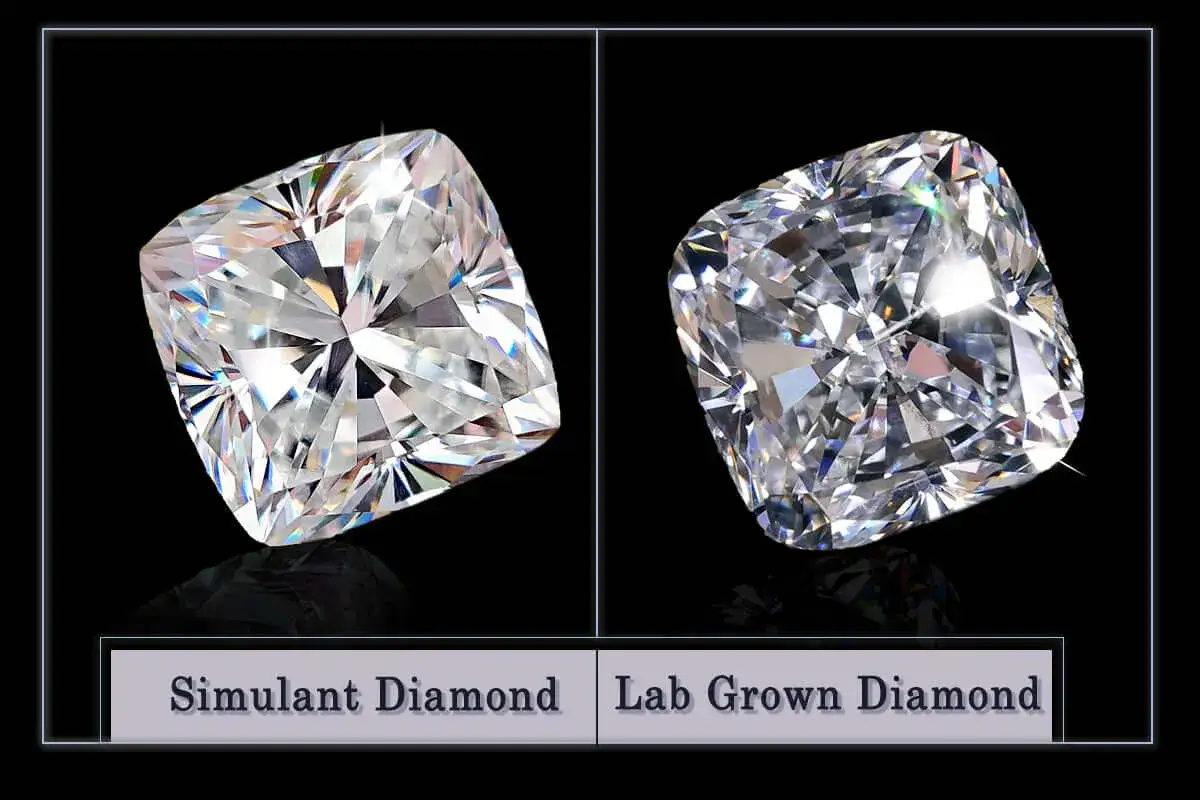
I separate this topic into three buckets, because the word “diamond” gets used very loosely in retail. A simulant is any material designed to imitate the look of diamond, whether that is cubic zirconia, moissanite, colourless sapphire, or even glass. A lab-grown diamond is different: GIA notes that it has the same basic chemical, optical, and physical properties as a natural diamond, so it is not an imitation at all.
That distinction matters because the buying logic changes completely. If you want the cheapest possible sparkle, a simulant makes sense. If you want the diamond material itself without the geological origin, lab-grown is the smarter route. If you want rarity, provenance, and the traditional story attached to diamonds, natural stone is still in a category of its own. Once you understand that split, the rest of the decision becomes far more straightforward.
How the main lookalikes differ in practice
The best way to compare these stones is to look at how they behave in real jewellery, not just how they sound in a product description. I care about brilliance, durability, maintenance, and how believable the stone looks at different sizes. A small stone can hide a lot; a larger one usually reveals its nature quickly.
| Material | What it is | Look and durability | Best for | Main trade-off |
|---|---|---|---|---|
| Cubic zirconia | Synthetic simulant made to resemble diamond | Very bright at first, around 8 to 8.5 on the Mohs scale, but can cloud or scratch with wear | Affordable fashion pieces and occasional wear | Can lose the crisp, clean look faster than harder stones |
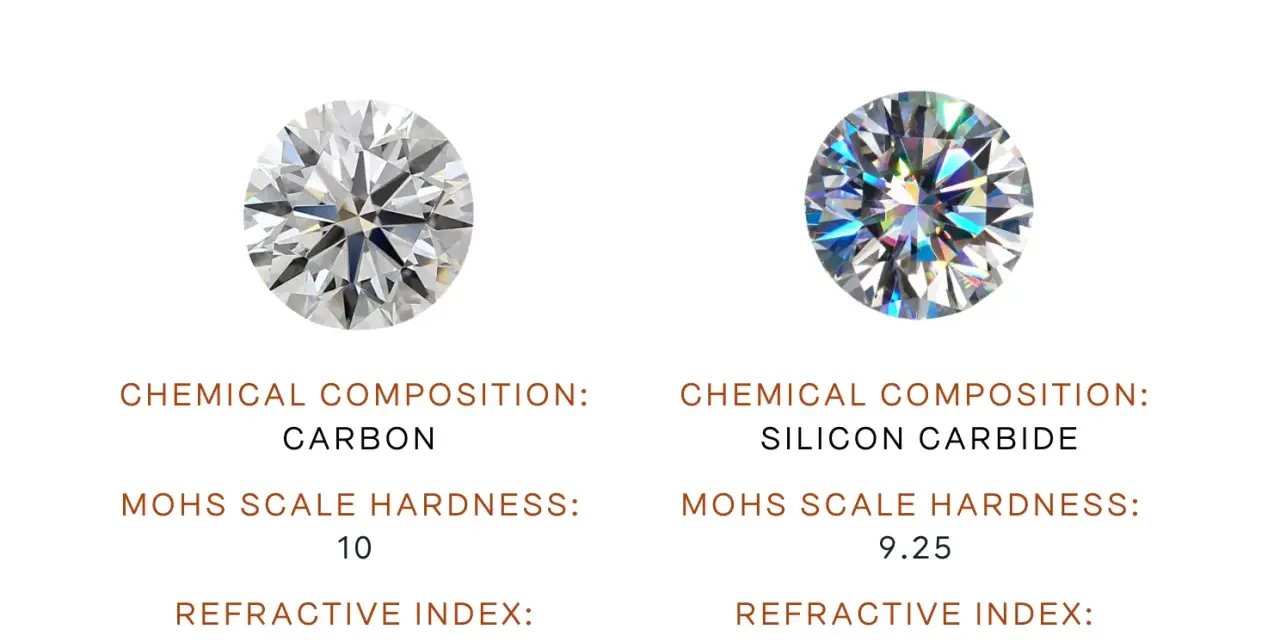
| Moissanite | Synthetic gemstone with strong fire and high hardness | Very durable, about 9.25 on the Mohs scale, with more rainbow fire than diamond | Everyday rings and people who want strong sparkle for less than diamond | The extra fire can read as less diamond-like to some eyes |
| Colourless sapphire | Natural or synthetic sapphire used as a diamond substitute | Hard enough for regular wear at 9 on the Mohs scale, but usually less brilliant than diamond | Classic, understated jewellery | Looks softer and less lively in low light |
| Glass | Simple low-cost imitation | Cheap and flashy at first, but soft and easy to scratch, around 5 to 6 on the Mohs scale | Short-term costume jewellery | Least durable and least convincing up close |
| Lab-grown diamond | Real diamond grown in a laboratory | Excellent durability at 10 on the Mohs scale, with the same essential properties as natural diamond | Engagement rings, heirloom-style pieces, and buyers who want diamond material rather than imitation | Lower rarity than natural diamond, so the emotional value is different |
My practical shorthand is simple: cubic zirconia sells the look, moissanite sells performance, and lab-grown diamond sells diamond identity without the mine. That last point is where many shoppers either save money wisely or confuse themselves completely. The better the cut and the better the setting, the less obvious the compromise becomes.
How to choose the right stone for the piece
The right answer depends on where the jewellery will live. For an everyday ring, I would prioritise hardness, toughness, and a setting that protects the stone. For earrings or a pendant, I can be more relaxed because those pieces take less contact with tables, bags, and hand sanitiser.
- If the piece is for daily wear, choose a harder stone and a secure setting. Moissanite and lab-grown diamond are usually the safest bets.
- If the piece is trend-led or worn only occasionally, cubic zirconia gives you the most visual effect for the least cost.
- If you want a quieter, more traditional look, colourless sapphire can be elegant because it does not flash as aggressively.
- If size matters more than long-term value, a well-cut simulant can give you a larger visual presence than you could afford in diamond.
One mistake I see often is buyers choosing carat-equivalent size first and everything else second. That is backwards. A large stone in a flimsy setting will disappoint faster than a smaller stone that is well cut and properly mounted. When in doubt, I would rather buy the better setting and the more believable cut than chase one extra millimetre of size.
That leads naturally to the next question: what should a UK buyer check before money changes hands?
What UK buyers should check first
In the UK, hallmarking protects the precious metal, not the stone. GOV.UK makes this point clearly: if a ring is sold as gold, silver, platinum, or palladium over the legal weight threshold, the metal must be hallmarked, but that mark does not tell you whether the centre stone is a simulant, a lab-grown diamond, or a natural one.
- Check the invoice or product page for a precise stone name, not vague wording like “diamond-style” or “diamond alternative”.
- Ask whether the stone is a simulant or a lab-grown diamond, because those are not the same thing.
- If you are paying serious money for a lab-grown diamond, ask for an independent grading report.
- Confirm the hallmark if the piece is made from precious metal over the legal weight limit: 1g for gold, 7.78g for silver, 0.5g for platinum, and 1g for palladium.
- Check the return policy, resizing terms, and whether the retailer shows the stone in daylight as well as indoor light.
I also pay attention to how a seller talks about the product. If the description sounds slippery, I assume the aftercare will be slippery too. Good jewellers describe the stone plainly, explain the setting, and are comfortable telling you what the piece is not.
Once the buying language is clear, the only thing left is looking after the piece properly.
How to care for the stone without ruining the look
Most diamond-look stones are not difficult to care for, but they are not all equally forgiving. My safe default is warm water, a drop of mild washing-up liquid, a soft brush, and a lint-free cloth. That works well for sturdy stones in solid settings and is gentle enough for regular cleaning.
- For moissanite, lab-grown diamond, and natural diamond, that routine is usually enough for home care.
- For cubic zirconia and glass, avoid harsh chemicals and aggressive machine cleaning, especially if the piece is glued or lightly set.
- Keep each piece separate in a pouch or compartment, because harder stones can scratch softer ones.
- Remove rings before gym work, chlorine, heavy cleaning, or anything that can loosen claws and settings.
- Take extra care with plated fashion jewellery, since over-cleaning can wear through the finish faster than you expect.
The practical rule is this: the more delicate the material or setting, the more I lean on gentle hand cleaning instead of shortcuts. A stone can still sparkle beautifully after years of wear, but only if the mounting and maintenance are treated as part of the design, not an afterthought.
The rule I use when the decision is still open
When I am helping someone choose, I ask three questions. Do you want an actual diamond, or do you simply want the appearance? Will the piece be worn every day or only sometimes? Is the budget meant to cover the stone, the setting, or the whole look?
- If the answer is “I want a real diamond and everyday durability”, I point to lab-grown or natural diamond.
- If the answer is “I want strong sparkle at a lower cost”, moissanite is usually the best compromise.
- If the answer is “I want an attractive piece for occasional wear”, cubic zirconia is perfectly sensible.
That is the cleanest way to think about the whole category. Once the terminology is honest and the use case is clear, the right choice usually reveals itself quickly. For me, the best jewellery purchase is never just the brightest one; it is the one that still feels right after the first year of wear, not just the first minute of attention.