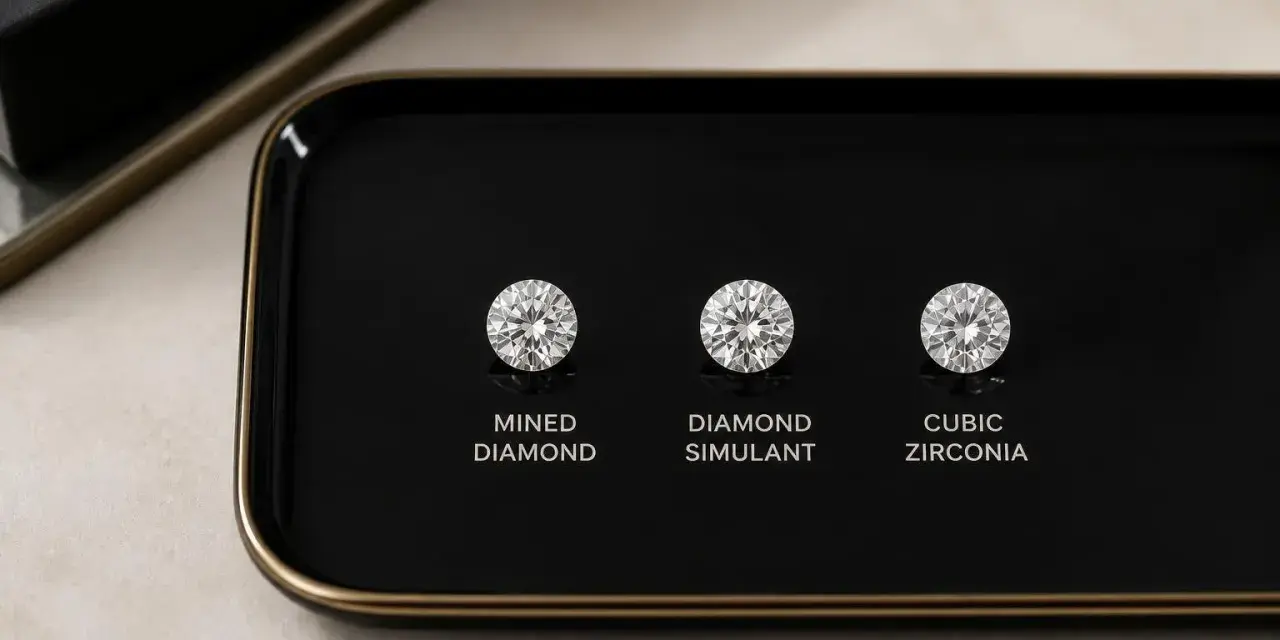
The difference is simple, but the buying decision is not
- Internally flawless describes a diamond clarity grade, not a style of imitation.
- Diamond simulants can copy the look of a diamond, but they are different materials with different properties.
- Cut and setting still matter more than perfection on paper if you want the best sparkle.
- Moissanite usually sits closer to diamond in performance than cubic zirconia, but it is still not a diamond.
- In the UK, IF natural diamonds can move into five figures, while good simulants can stay in the low hundreds or far below.
What internally flawless actually means
GIA defines internally flawless as a diamond with no internal inclusions and only insignificant surface blemishes visible under 10x magnification. That matters because IF is about how clean the stone is, not whether it is natural or lab-grown; it is still a real diamond either way. The key point is that a cleaner clarity grade rarely changes the naked-eye look as much as cut does.
| Grade | What it means |
|---|---|
| FL | No inclusions or blemishes visible under 10x magnification. |
| IF | No internal inclusions, with only insignificant surface blemishes visible under 10x magnification. |
So if someone is paying for IF, they are paying for rarity and grading, not for a stone that suddenly looks dramatically brighter than a very well cut lower-clarity diamond. Once that distinction is clear, the simulant side becomes much easier to read.
Why diamond simulants are a different category entirely
GIA draws a clear line here: simulants may look like diamonds, but they do not share diamond’s chemical, physical, or optical properties. The usual examples are cubic zirconia, moissanite, white sapphire, and glass. A lab-grown diamond is not a simulant, because it is still diamond at the atomic level, which is exactly why this comparison needs careful wording.That distinction is important in real life. A simulant can be a smart purchase if you want the appearance of a diamond without the price tag, but it should never be sold as “almost the same thing” without the materials being named clearly. If a seller cannot say exactly what the stone is, I treat that as a red flag.
Once the material itself is clear, the next question is what you will actually see on the finger.
How they look in everyday light
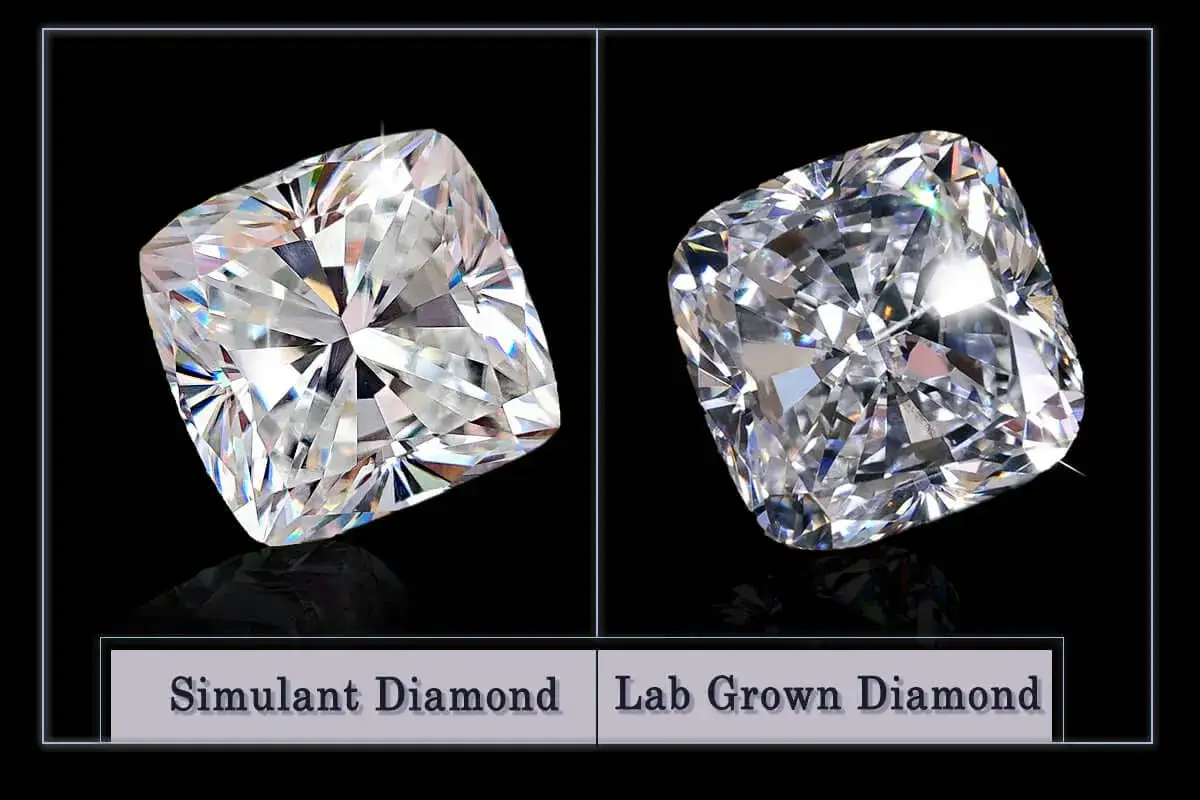
This is where the comparison becomes more practical than technical. A well-cut internally flawless diamond gives you balanced white light, crisp reflections, and usually a more restrained kind of fire. Moissanite tends to throw more rainbow flashes, which some people love and others find too obvious; cubic zirconia can look bright at first glance, but it often lacks the same sharpness and can go hazy with wear.
| Stone | What stands out | What to watch for | Best for |
|---|---|---|---|
| Internally flawless diamond | Balanced brilliance and a natural diamond look | Only shines properly if the cut is good | Collectors, heirloom rings, buyers who want the real article |
| Moissanite | High sparkle and strong rainbow fire | Can look more “dramatic” than diamond in some lighting | People who want a bold look with strong durability |
| Cubic zirconia | Very bright at first and highly affordable | Can lose polish and look less crisp over time | Fashion jewellery and short-term wear |
I also think it helps to remember that “sparkle” is not one thing. Brilliance is the return of white light, fire is the coloured flashes, and scintillation is the pattern of sparkle as the stone moves. Two stones can score well on one of those and still feel very different in person. That difference matters even more once the ring starts seeing daily wear.
Durability matters, but clarity is not the same thing as strength
An internally flawless diamond is not tougher than another diamond just because it is cleaner inside. Clarity and durability are separate ideas. Diamond is still the hardest common gemstone and very resistant to scratching, but it can chip at vulnerable edges if it takes a hard blow.
Simulants behave differently. Moissanite is durable enough for everyday jewellery and usually holds up well, while cubic zirconia is much more likely to scratch, abrade, or lose its crisp surface finish over time. That is why a cheap simulant can be perfect for occasional wear, yet frustrating if you expect it to age like a diamond. In practical terms, the setting also matters: a protective bezel or sturdy prongs can do more for longevity than an extra step up in clarity.
If you are comparing stones for an engagement ring, I would not obsess over IF alone. I would look first at cut quality, then at the mounting, then at the stone type. That order saves people from paying a premium for a grading word that barely changes what they see every day.Price, resale value, and what you are really paying for
In the UK market, the spread is dramatic. A 1-carat internally flawless natural diamond often sits in the five-figure range, and a specialist guide puts a flawless 1-carat stone at around £12,000 before you even start factoring in exact colour, cut, and setting. By contrast, moissanite loose stones are often priced in the low hundreds, and cubic zirconia jewellery can be much cheaper again.
| Stone | Typical UK retail feel | Resale outlook | What you are paying for |
|---|---|---|---|
| Internally flawless diamond | From several thousand pounds; 1 carat often around £10,000+ and sometimes much more | Strongest of the three, though resale is still below retail | Rarity, grading, and long-term ownership |
| Moissanite | Loose stones often around £50-£300; finished rings usually a few hundred pounds upwards | Modest at best | Maximum visual impact per pound |
| Cubic zirconia | Often under £100 for loose stones; finished jewellery commonly £20-£200, with precious-metal settings pushing higher | Minimal | Affordable sparkle for fashion pieces |
The resale gap is the part buyers underestimate. An internally flawless diamond holds a recognised position in the market because it is rare and graded; a simulant usually holds sentimental value, not asset value. If your goal is investment or heirloom ownership, that difference should be part of the decision from the start, not a surprise later.
How I would choose between them in a real purchase
I usually reduce the decision to one question: do you want diamond ownership or do you want diamond appearance? If you want the real material, an internally flawless diamond makes sense when rarity, certification, and long-term ownership matter. If you want the look first, a simulant can be the smarter choice because you can spend less and often go larger.
- Choose an internally flawless diamond if you want a genuine diamond with top-tier clarity and strong long-term appeal.
- Choose moissanite if you want the closest all-round alternative for daily wear and strong sparkle.
- Choose cubic zirconia if the piece is fashion-led, seasonal, or likely to be worn occasionally.
- Choose lab-grown diamond, not a simulant, if you want a real diamond but do not want to pay natural-diamond rarity pricing.
The rule I use when the ring has to do a job
My practical rule is straightforward: name the priority before you name the stone. If rarity and diamond authenticity matter most, buy the diamond and choose the best cut and setting you can afford. If budget and look matter most, buy the simulant that matches the way the piece will actually be worn.
For UK buyers, I also check the paperwork before I check the sparkle. The stone should be named clearly, the metal should be disclosed, and the price should make sense once VAT, setting, and craftsmanship are included. That is the cleanest way to avoid paying diamond money for a simulant, or simulant money for a stone you meant to treat as an investment.