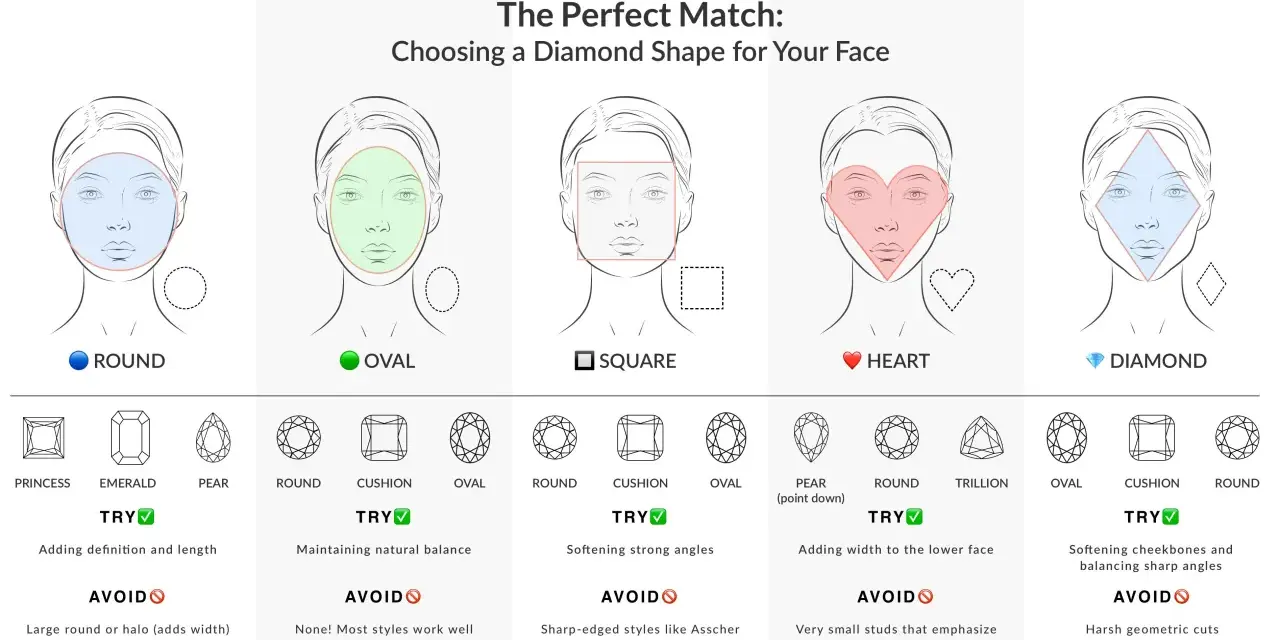
Diamond shape changes far more than a stone’s outline. It affects sparkle, face-up size, how secure the diamond feels in a setting, and the whole tone of a ring or pendant. I like to separate shape from cut first, then compare the forms by how they look, wear and age over time.
What matters most when comparing diamond shapes
- Shape is the outline; cut is the facet arrangement and the way the stone handles light.
- Round brilliant gives the most familiar sparkle and is the only style with a standard cut grade.
- Fancy shapes can look larger, softer, more vintage or more dramatic, depending on the outline.
- Elongated shapes need extra attention to bow tie, length-to-width ratio and tip protection.
- The setting can change how practical a shape feels just as much as the shape itself.
What diamond shape actually tells you
When I talk about diamond shape, I mean the outline you see from above: round, oval, pear, square, rectangular and so on. That outline is only one part of the story. Two stones with the same shape can look completely different if their facet arrangement, proportions and finishing are not equally good.
Shape gives you the silhouette; cut controls how the facets are arranged to return light. A round brilliant usually has 57 or 58 facets and can receive a standard cut grade, while most non-round shapes are judged more on polish, symmetry and overall appearance than on one universal number. That difference matters because the shape you love and the cut quality you need are related, but they are not the same decision.
- Shape changes the outline and the style impression.
- Cut changes brightness, fire and scintillation.
- Proportions change how large the stone looks face-up.
- Finishing changes how precise and balanced the diamond feels.
Once that distinction is clear, comparing the main silhouettes becomes much easier, because each one carries its own strengths and trade-offs.
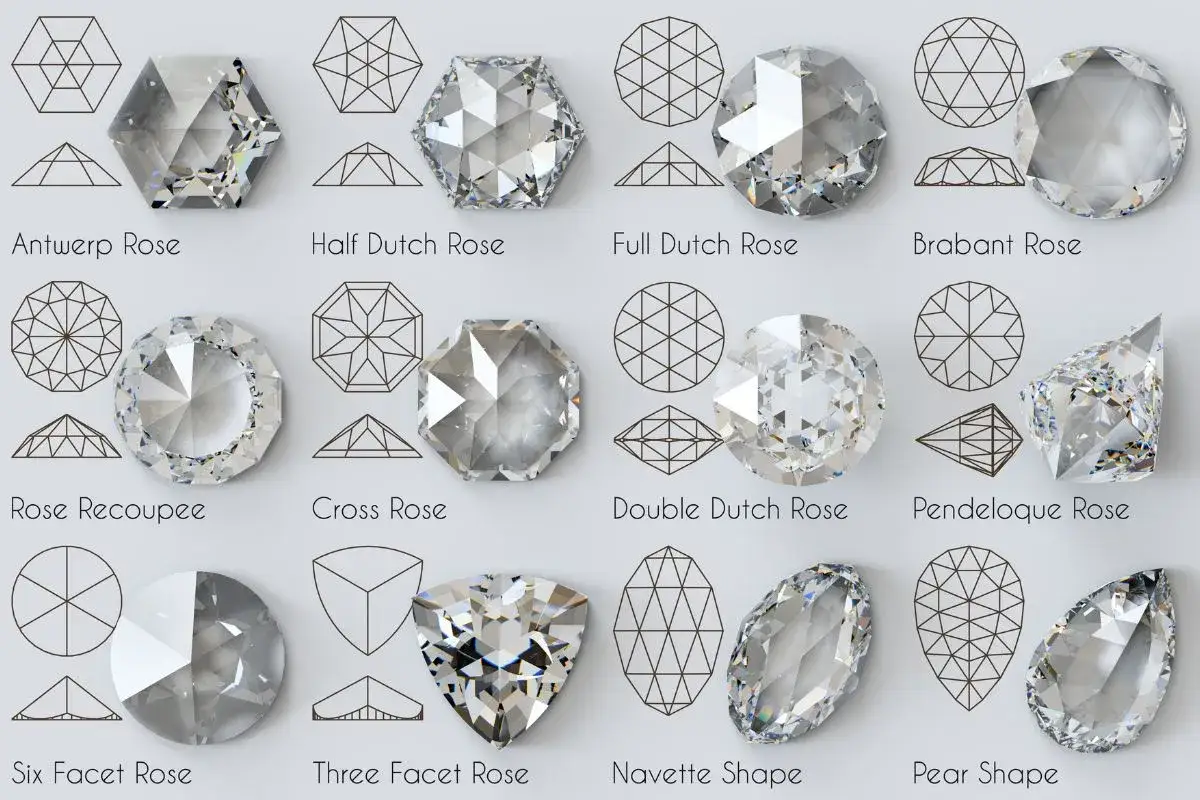
The main diamond shapes and where each one shines
There is no single “best” outline. The right choice depends on whether you want classic brilliance, a softer vintage mood, a bolder profile or a shape that visually lengthens the finger. I usually look at shape in terms of personality first and practicality second, because the two are closely linked.
| Shape | Look | What it does well | What to watch for |
|---|---|---|---|
| Round brilliant | Classic circle | Most familiar sparkle, very balanced face-up look | Less distinctive, often the most expensive per carat |
| Princess | Square with sharp corners | Modern, lively and crisp; strong brilliance | Corners need protection in the setting |
| Oval | Elongated soft outline | Elegant, flattering and good visual spread | Check for bow tie and balance |
| Pear | Teardrop | Distinctive, graceful and lengthening | The point needs secure protection |
| Marquise | Boat-like outline with pointed ends | Maximum finger coverage and a dramatic silhouette | Tips are vulnerable; proportions matter a lot |
| Cushion | Rounded square or rectangle | Soft, romantic and often very flattering in vintage settings | Faceting style varies widely from stone to stone |
| Emerald | Rectangular step cut | Clean, architectural and quietly elegant | Clarity and colour can be more visible |
| Asscher | Square step cut | Art Deco character with a neat, structured look | Usually shows less face-up spread than brilliant styles |
| Radiant | Square or rectangular hybrid | Strong sparkle with softened edges | Can look busy if the pattern is not well judged |
| Heart | Symbolic heart outline | Pure sentiment and a clearly intentional design choice | Needs excellent symmetry to look convincing |
If I had to simplify the decision, I would say this: round is the safest classic choice, oval and pear are the easiest ways to create an elongated look, and emerald or Asscher are for people who prefer structure over sparkle intensity. The next question is how those shapes actually behave with light.
Sparkle changes with the cut style, not just the outline
I often tell readers that sparkle is not one thing. Some diamonds glitter in tiny flashes; others throw broader flashes of light. That difference comes from the cut style, not just the shape. A round brilliant is built to maximise brightness and scintillation, while step cuts and mixed cuts create a more measured, mirror-like effect.
Brilliant cuts
Round brilliants are the benchmark here, but princess, oval, pear, marquise and radiant cuts also sit in the brilliant family. They usually produce lively sparkle because their facet patterns are designed to break light into many reflections. If you want a diamond that looks active in low light and under movement, this family is where I would start.
Step cuts
Emerald and Asscher cuts are step cuts, which means the facets run in broad, stair-step lines rather than a tightly packed brilliant pattern. The result is less of a glittering flash and more of a calm, hall-of-mirrors effect. I think they suit people who want elegance and geometry more than maximum sparkle.
Read Also: What Is Considered a Big Diamond? - The Real Size Guide
Hybrid cuts
Cushion and radiant cuts often sit between those two worlds. They can deliver plenty of life, but the exact look depends heavily on facet arrangement. That is why two cushions can feel worlds apart: one may look soft and romantic, while another has a livelier, crushed-ice appearance.
Elongated shapes deserve special attention here because they can show a bow-tie shadow across the centre. A small one is common; a dark, persistent bow tie that stays visible as the stone moves is a genuine drawback. On the practical side, ovals, pears and marquises are often described with common length-to-width starting points of about 1.2 to 1.7 for ovals, 1.3 to 1.8 for pears and 1.5 to 2.5 for marquises, although taste still matters more than a rigid formula. Once you know how the light behaves, the next step is choosing the shape that fits real life.
How to choose a shape that fits the way you actually wear jewellery
The best diamond shape is the one that matches the wearer’s habits, not only the mood board. I look at four things first: daily wear, hand shape, setting style and whether the goal is classic, modern or vintage. Those four details usually tell me more than carat weight alone.
- For daily wear, round, oval, cushion and radiant shapes tend to be easier to live with because they have fewer exposed corners.
- For a longer, slimmer visual effect, oval, pear and marquise shapes usually do the most work.
- For a clean, architectural feel, emerald and Asscher cuts are hard to beat.
- For a bold modern look, princess and radiant shapes can feel sharper and more graphic.
- For a soft vintage mood, cushion and old-style step cuts usually feel the most authentic.
Setting choice matters just as much. Pears and marquises benefit from protective prongs or a bezel, because their points are the most fragile part of the stone. Princess cuts also need careful corner protection. By contrast, a round brilliant is forgiving in many settings, which is one reason it remains the most versatile outline in diamond jewellery.
Finger shape can influence the visual effect too, but I treat that as a styling cue rather than a rule. Elongated shapes can make shorter fingers look longer, while wider shapes can feel more balanced on longer fingers. The important point is not to chase an idealised match, but to choose a stone that looks intentional from the first glance.
The mistakes that lead people to buy the wrong shape
Most regret comes from reading shape too simplistically. The outline is visible immediately, so people assume they understand the whole stone before checking the details that actually affect long-term satisfaction.
- Buying by carat alone without looking at face-up spread. A deep stone may weigh more but look smaller.
- Ignoring the centre shadow in elongated shapes. A noticeable bow tie can flatten the whole look.
- Forgetting about durability. Sharp points and corners need better protection than rounded edges.
- Assuming all stones of one shape look the same. Two ovals or two cushions can have very different character.
- Chasing a trend without thinking about the setting. Some shapes only look right when the mount is designed for them.
- Confusing sparkle with quality. A bright shape still needs good proportions and finishing to feel refined.
One of the clearest examples is the fancy-shaped diamond with a heavy, dark bow tie. It may still look impressive in a photo, but it usually feels less lively in motion. I would rather see a slightly less fashionable outline with clean, balanced optics than a trendy shape that goes dull at the centre. That leads naturally to the practical checklist I use before making a final choice.
A practical checklist before you buy
When I compare diamonds in person or online, I use a short checklist that keeps the decision grounded. It stops me from falling for a flattering photo or an oversized-looking carat weight that does not actually wear well.
- Check the report and confirm the stone’s exact measurements, not just its carat weight.
- Look for polish and symmetry, especially on fancy shapes where there is no single universal overall cut grade.
- Compare the face-up outline in neutral light and in warmer indoor light.
- For oval, pear and marquise shapes, review the length-to-width ratio and decide whether you want a softer or more elongated look.
- Inspect the centre of the stone for bow tie, windowing or flat-looking areas.
- Match the setting to the shape, especially if the diamond has corners or points.
What I would prioritise for long-term wear
If someone asked me for the most enduring choice, I would still start with a round brilliant. It is the easiest shape to place in almost any design, it gives the most familiar sparkle pattern and it stays recognisable decades later. That does not make it the only good answer, but it is the most forgiving one.
For a more individual look, I would usually steer people towards oval, emerald, pear or cushion, depending on the wearer’s style and routine. Those shapes can feel more personal than round without becoming difficult to live with. The real trick is to choose a shape that still makes sense when the trend pressure has gone.
In the end, the best diamond shape is the one that looks deliberate on the hand, feels comfortable in daily life and still feels like the right choice after the novelty has faded. If you keep style, structure and wearability in view at the same time, the diamond will do the rest.