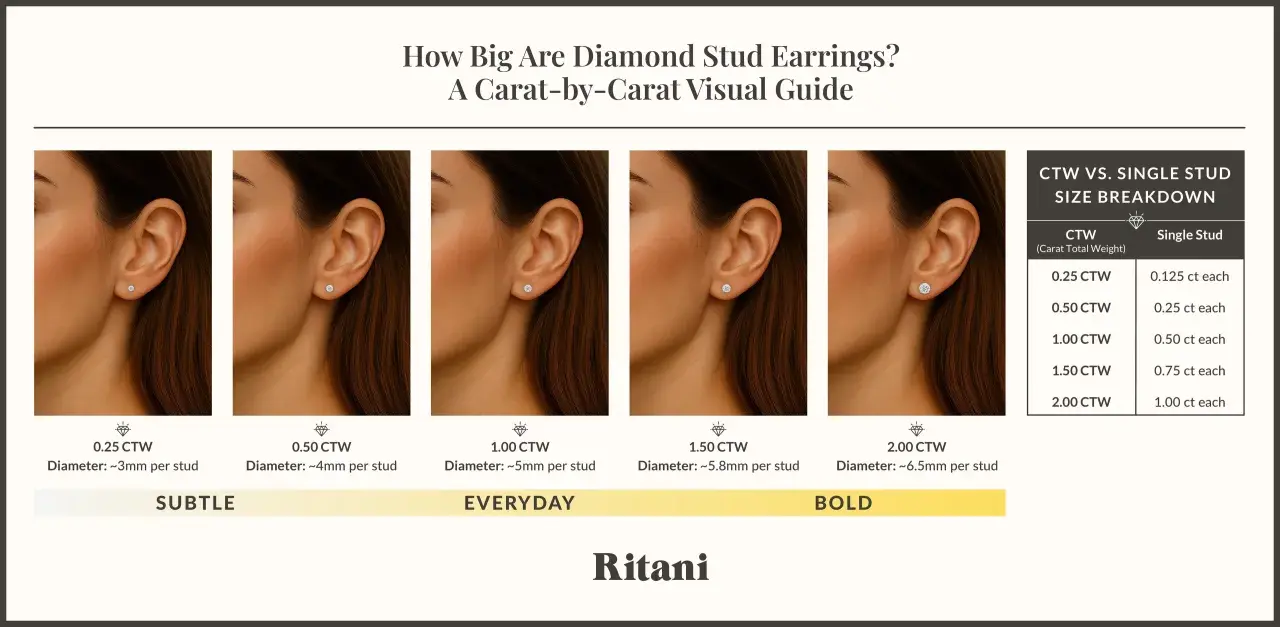
Diamond jewellery abbreviations can look tidy until you realise that one small label may refer to a single stone, a whole cluster, or a pair of earrings. The short answer to what does ctw mean in jewelry is simple: it stands for carat total weight, the combined weight of all the diamonds in the piece. That matters most in halo rings, stud earrings, pendants and tennis-style designs, where the headline number can hide more than it reveals.
The essentials you need before comparing diamond pieces
- CTW means the total carat weight of all the diamonds in one item, not the weight of one centre stone.
- One carat equals 200 milligrams, so the figure is a weight measurement, not a direct size promise.
- On earrings, the total usually refers to both pieces together; on rings, it often includes accent stones around the centre diamond.
- Retailers may write the same idea as ctw, cttw or ct tw.
- The number matters, but cut, colour, clarity and setting style still decide how impressive the jewellery looks.
What ctw means in a diamond listing
In plain English, ctw is the sum of the diamond weights in the whole piece. If a ring has a centre stone plus small side stones, you add them together. If a pendant contains several tiny diamonds, their combined weight is the ctw. GIA uses the term tcw in its educational material, but many retailers prefer ctw or cttw on product pages.
That distinction matters because a single diamond and a multi-stone design do not tell the same story. A 1.00 ct tw ring might contain a 0.70 ct centre stone with 0.30 ct spread across accents, or a completely different mix of smaller stones. The label gives you the total, not the layout.
It also helps to remember the basic unit. One carat is 200 milligrams, and each carat is divided into 100 points, so 0.25 ct is 25 points and 0.50 ct is 50 points. That makes the number precise, but not necessarily complete. For that reason, I never treat ctw as the whole buying picture. It is the starting point, not the verdict.
Once you understand that, the next step is separating ctw from the other abbreviations you will see in listings.
How ctw differs from ct, cttw and total gem weight
The easiest way to avoid confusion is to read each abbreviation as a different question.
| Term | What it measures | Where you usually see it | Why it matters |
|---|---|---|---|
| ct | The weight of one diamond | Loose stones and solitaire rings | Tells you the weight of a single stone, not the full item |
| ctw | The combined weight of all diamonds in the piece | Multi-stone rings, earrings, pendants and bracelets | Useful for totals, but easy to misread as one large stone |
| cttw | The same idea as ctw in many retail listings | Product pages and catalog descriptions | Formatting changes, but the meaning is usually the same |
| tgw | Total gem weight, including non-diamond stones | Mixed gemstone jewellery | Important when diamonds are not the only stones in the design |
Retailers are not always perfectly consistent. Kay, for example, uses CTW to mean Carat Total Weight, while many listings simply spell out “total diamond weight.” If the product page is vague, I would ask one direct question: does the number refer to the centre stone, the whole item, or the pair?
That clarity matters, because the price can change much more from the stone arrangement than from the total alone.
Why a bigger total can still be a weaker buy
A higher ctw does not automatically mean a better-looking or more valuable diamond piece. What matters is how that weight is distributed. A ring with one 1.00 ct centre stone will feel very different from a ring with 1.00 ct tw spread across many smaller stones, even if the total number is the same.
GIA makes this point clearly in its carat-weight guidance. A ring with a 1.00 ct centre stone and two 0.15 ct side stones can have the same total as another ring built from smaller side stones, yet the visual impact and price can differ. The same logic explains why a 1.50 ct solitaire usually costs more than a 1.50 ct tw multi-stone ring: the single stone is rarer, more concentrated, and usually the star of the design.
This is also where “magic sizes” come into play. Buyers often pay more at round thresholds such as 0.50, 1.00, 1.50 and 2.00 carats, even when the visual difference is tiny. A 0.99 ct diamond can look almost identical to a 1.00 ct stone, but the price may still jump. If symbolic weight matters to you, fine. If it does not, I would rather spend the money on better cut quality.
- Single large stone = more focus on rarity and centre-stone presence.
- Multiple small stones = more spread and sparkle across the surface.
- Same ctw does not guarantee the same visual size or value.
So when you compare pieces, the better question is not just how much diamond there is, but what the design is doing with that weight. That leads naturally into reading the product page the right way.
How to read the label on rings, earrings and necklaces
I usually read a diamond listing in three passes. In UK shop listings, the spelling and spacing vary, but the logic is the same. First, I check whether the weight belongs to one stone or the full piece. Second, I look for whether the item is sold singly or as a pair. Third, I check whether the total is described as approximate, minimum or guaranteed.
- Rings often combine a centre diamond with accent stones, so ctw may include more than you think at first glance.
- Stud earrings usually show the weight for both earrings together, not for one side only.
- Pendants and necklaces normally count every diamond set into the pendant, and sometimes the bail if stones are included there.
- Bracelets may look like one continuous line of sparkle, but the total still comes from many smaller stones.
- Mixed gemstone pieces may use total gem weight instead of ctw, which changes the comparison completely.
A practical example helps. A pair listed as “1 ct tw diamond stud earrings” does not mean each stud is 1 carat. It means the two studs together total 1 carat, so each one may be around 0.50 ct, give or take. That is a small wording difference with a very real budget impact.
One more detail I check: whether the item uses approximate weights. Some manufacturers round slightly, and some listings are based on a target weight rather than an exact lab measurement. If precision matters to you, especially above the half-carat mark, I would ask for the individual stone weights instead of relying on the headline figure alone.
Once you can read the label without guessing, the main buying mistakes become much easier to spot.
The mistakes I see most often when shoppers compare diamond pieces
The most common mistake is treating ctw as if it were the size of one diamond. It is not. Another classic error is comparing a solitaire ring with a halo ring only by the total number, which usually overstates how much visual presence the solitaire will have. The two styles are answering different design questions.
- Assuming ctw equals centre-stone size when the total may be spread across many accents.
- Comparing a single-stone ring with a multi-stone ring as though the numbers were interchangeable.
- Forgetting pair-based jewellery, especially earrings, where the total usually covers both pieces together.
- Ignoring the quality grades and focusing only on carat weight, even though cut, colour and clarity can change the look dramatically.
- Missing the price effect of magic sizes, where a tiny jump in weight can trigger a noticeably higher price.
I also see buyers overlook the setting. A well-designed halo or pavé setting can make modest stones look fuller and brighter across the finger, while a heavy-looking total in a cramped setting may feel underwhelming. That is why a smart comparison includes the layout, not just the maths.
After those traps are removed, the last step is simple: check the details that tell you whether the number is useful or just decorative.
The details I check before I trust the number
When I am evaluating diamond jewellery, I want four things before I trust the headline ctw figure: the stone breakdown, the setting style, the grading information and the way the item is sold. If a listing gives me only a total and nothing else, I treat it as incomplete.
- Centre stone weight if there is one, because that usually drives the visual impression.
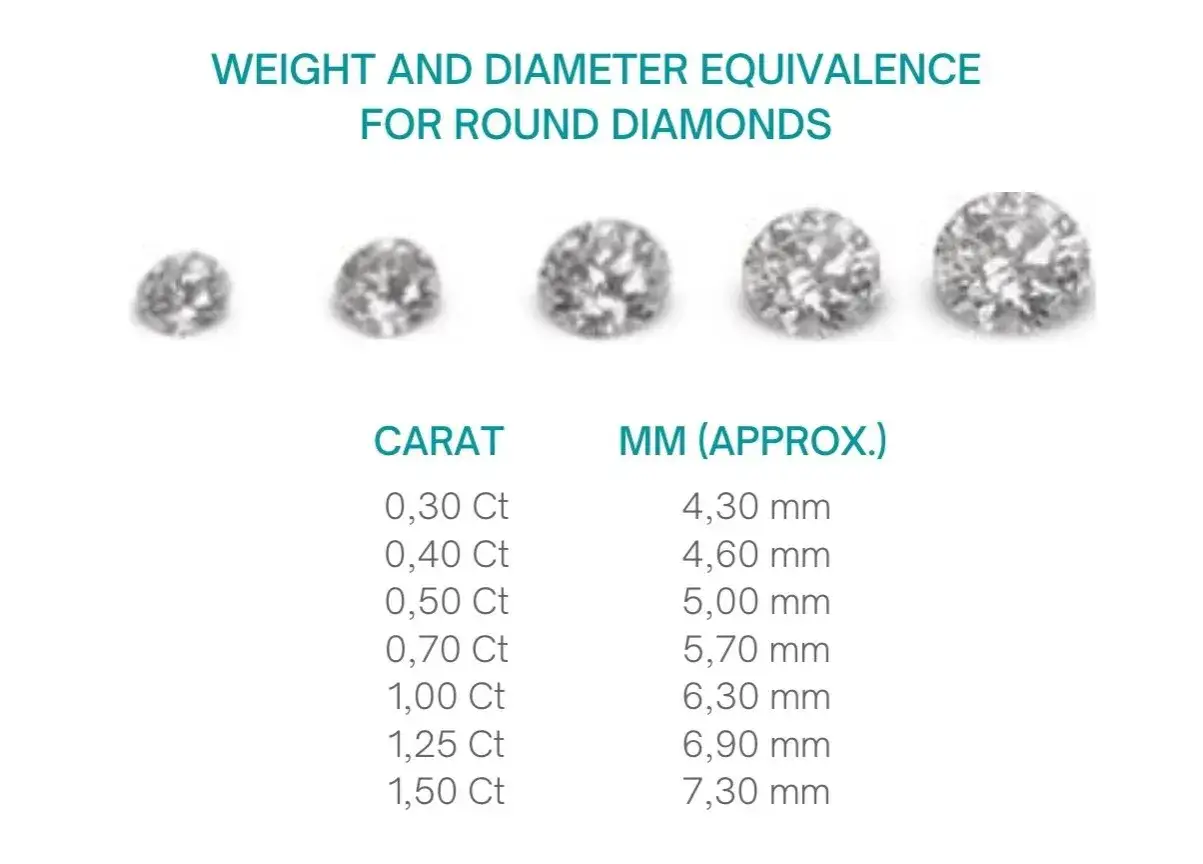
- Centre stone dimensions in millimetres, because two diamonds with the same carat weight can face up very differently.
- Individual accent-stone weight, so I know whether the total is spread thinly or concentrated.
- Cut, colour and clarity, because a well-cut diamond often looks better than a heavier one with poor light performance.
- Whether the piece is sold as one item or a pair, which is especially important for earrings.
- Certification or grading paperwork, when the purchase is substantial enough to justify it.
That is the practical rule I keep coming back to: ctw tells you how much diamond is in the piece, but it does not tell you how beautiful, rare or balanced the piece will feel on the hand or the ear. If you read the label carefully and compare it with the setting, the stone breakdown and the grading, you will make a better decision than the carat number alone could ever give you.
That is the simplest way to read ctw: treat it as a useful total, not as a substitute for judging the centre stone, the setting and the grading. If you remember nothing else, remember this: the label tells you how much diamond is in the piece, but the design tells you how that diamond will actually look and feel.