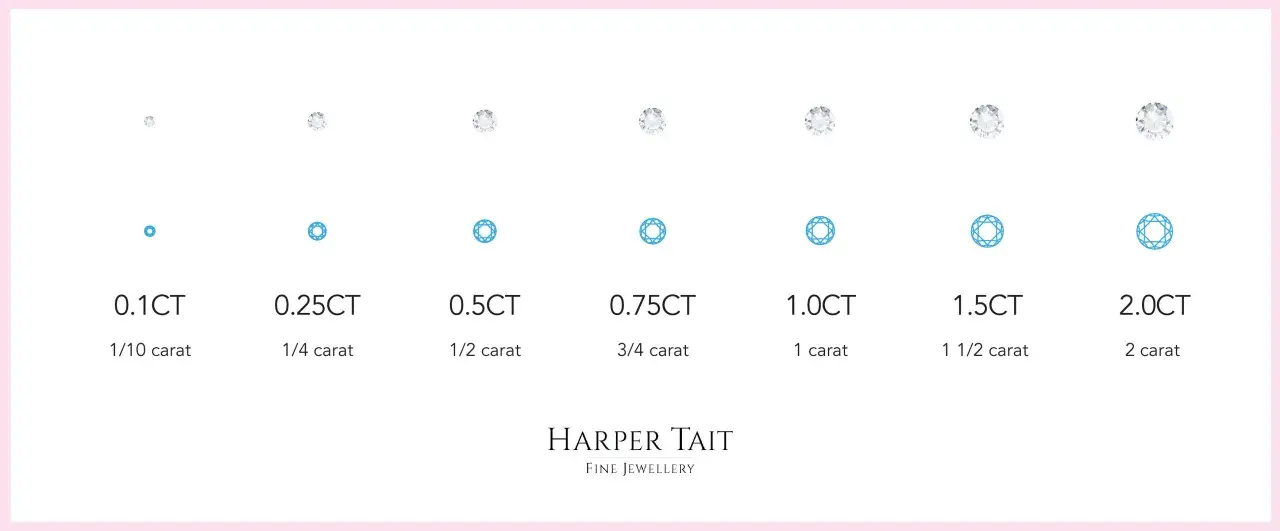
Diamond carat weight is one of the first numbers I check when comparing stones, but it is also the easiest to misunderstand. The answer to what is a carat in diamonds is simple: it is a unit of weight, not a size grade. That distinction matters because two diamonds with the same carat can look different, cost very different amounts, and behave differently once they are set.
The essential points on diamond carat weight
- 1 carat = 200 milligrams, or 0.2 grams.
- Carat measures weight, not how large the diamond looks.
- 100 points make up 1 carat, so 0.50 ct is 50 points.
- Price usually rises faster than weight, especially around popular marks such as 1.00 ct.
- Cut, shape, depth, and setting can make a lighter diamond look larger than a heavier one.
What the carat number actually measures
In diamonds, a carat is a metric unit of mass. One carat equals 200 milligrams, which is the same as 0.2 grams. Jewellers normally shorten it to ct, and stones under one carat are often described in points, where 1 point equals 0.01 carat.
I find the point system useful because it makes sub-carat stones much easier to read. A 0.25 ct diamond is a 25-point stone, 0.50 ct is 50 points, and 0.75 ct is 75 points. In UK jewellery listings, that notation is common and it helps you compare stones with far less guesswork.
| Carat weight | Points | Weight in milligrams | Plain-English reading |
|---|---|---|---|
| 0.25 ct | 25 | 50 mg | Quarter carat |
| 0.50 ct | 50 | 100 mg | Half carat |
| 0.75 ct | 75 | 150 mg | Three-quarter carat |
| 1.00 ct | 100 | 200 mg | One full carat |
| 1.50 ct | 150 | 300 mg | One and a half carats |
| 2.00 ct | 200 | 400 mg | Two carats |
That basic conversion is the foundation for everything else. Once it is clear, the next question is why two diamonds with the same weight can still look so different.
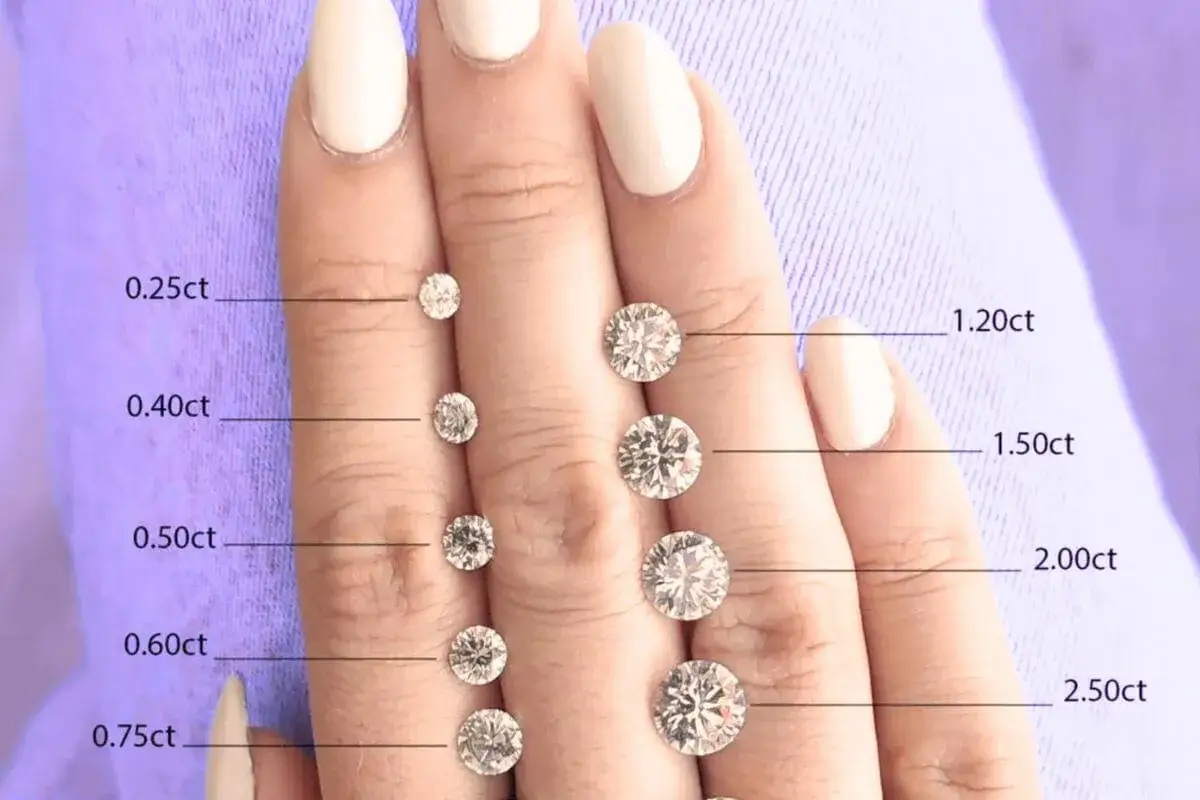
Why a bigger carat does not always look bigger
Carat tells you how much a diamond weighs, but your eye reads face-up size. That is the visible area you see when the stone is set and viewed from above. A diamond can carry extra weight in depth, in a thicker girdle, or in a cut that makes it look smaller than another stone of the same carat.
When I compare stones, I never stop at the carat number. I also look at the millimetre measurements, the shape, and the proportions of the cut. Those details matter because a well-cut stone can look more impressive than a heavier one that hides weight in the wrong places.
- Cut depth affects how much of the weight is visible from the top.
- Shape changes how the carat is spread across the surface.
- Girdle thickness can add weight without adding much visible size.
- Setting style can make a stone look larger or smaller once it is mounted.
That is why I always treat carat as only one part of the visual story. The weight matters, but the way the diamond presents itself matters just as much, and that leads directly to price.
Why carat has such a strong effect on price
All else being equal, diamonds usually become more expensive as carat weight rises. The reason is simple: larger stones are rarer. A rough crystal has to be big enough, clean enough, and structurally sound enough to survive cutting into a polished diamond, so each jump in carat tends to cost more than the last.
The market also creates price jumps around popular thresholds. The biggest one is often 1.00 ct, but similar premiums can appear near 1.50 ct and 2.00 ct. A 0.90 ct diamond may cost noticeably less than a 1.00 ct stone of similar quality, even though the visual difference can be very small.
| Weight comparison | Typical price pattern | What to watch |
|---|---|---|
| 0.90 ct vs 1.00 ct | 1.00 ct often carries a clear premium | The extra cost may buy a label more than a visible jump in size |
| 1.40 ct vs 1.50 ct | 1.50 ct may rise faster than the extra 0.10 ct suggests | Popular milestone pricing can distort value |
| 1.90 ct vs 2.00 ct | 2.00 ct often sits in another demand band | A slight weight increase can trigger a larger price step |
This is why a diamond purchase is rarely about the heaviest stone you can reach. It is about getting the best balance of weight, cut, and overall appearance for the budget you actually want to spend.
How to choose the right carat for a ring or pendant
If I were choosing a diamond for everyday wear, I would start with the setting and the lifestyle, not the headline weight. A low-profile ring, for example, can feel more comfortable with a moderate carat and an excellent cut than with a larger stone that sits too high or feels awkward on the hand. The same logic applies to pendants and earrings, where proportion often matters more than raw size.For many buyers, the most useful question is not “How big can I go?” but “What size will still look elegant, practical, and proportionate?” That is especially true in the UK market, where buyers often compare a few nearby sizes and then decide whether the visual gain is worth the extra spend.
- Ask for the millimetre dimensions, not just the carat weight.
- Compare stones with the same shape whenever possible.
- Prioritise cut quality if you want more sparkle per pound spent.
- Think about how the diamond will sit on the finger, neck, or ear.
- Use carat as a guide, but let the overall look make the final decision.
I would rather see someone choose a slightly smaller stone that looks bright and balanced than pay more for a heavier diamond that underperforms visually. Once you see carat that way, the common buying mistakes become much easier to spot.
Common mistakes that make carat weight misleading
The first mistake is confusing carat with the weight or purity marks used elsewhere in jewellery. For diamonds, carat is a weight unit. It does not tell you anything about colour, clarity, or brilliance, and it certainly does not guarantee a better-looking stone.
The second mistake is treating the 1.00 ct mark like a magic finish line. It is a useful benchmark, but it is still just a number. A well-cut 0.92 ct diamond can look smarter and shine more strongly than a poorly proportioned 1.00 ct stone, which is why I always read the full specification before I judge value.
- Do not assume a heavier stone will look larger.
- Do not pay for a threshold weight without checking the visual difference.
- Do not ignore cut depth, because it can hide weight.
- Do not compare carat numbers without comparing shape and measurements.
- Do not forget that a grading report is there to verify what you are paying for.
Those are simple errors, but they are expensive ones. Once you stop reading carat in isolation, the entire diamond starts to make more sense.
The details I would check before paying for more weight
Before I spend extra money for a higher carat, I want three things in front of me: the grading report, the exact measurements, and a clear view of the stone in different light. That combination usually tells you whether the extra weight is real value or just a more expensive number.
I also pay close attention to how the diamond will live in the setting. A ring that looks beautiful on paper can feel too tall, too flashy, or simply less practical once worn every day. A stone that sits well and looks balanced is usually the one people stay happiest with.
- Check that the carat weight is listed clearly on the report.
- Compare the diamond’s dimensions in millimetres, not only its weight.
- Ask how the setting will change the apparent size.
- Look at the stone loose, if possible, before making a final decision.
- Remember that the best diamond is the one whose weight and cut work together.
That is the practical answer I come back to again and again: carat tells you how much a diamond weighs, but cut, proportion, and presentation decide how convincing it looks. Once those pieces are read together, the numbers stop feeling abstract and start helping you choose with confidence.