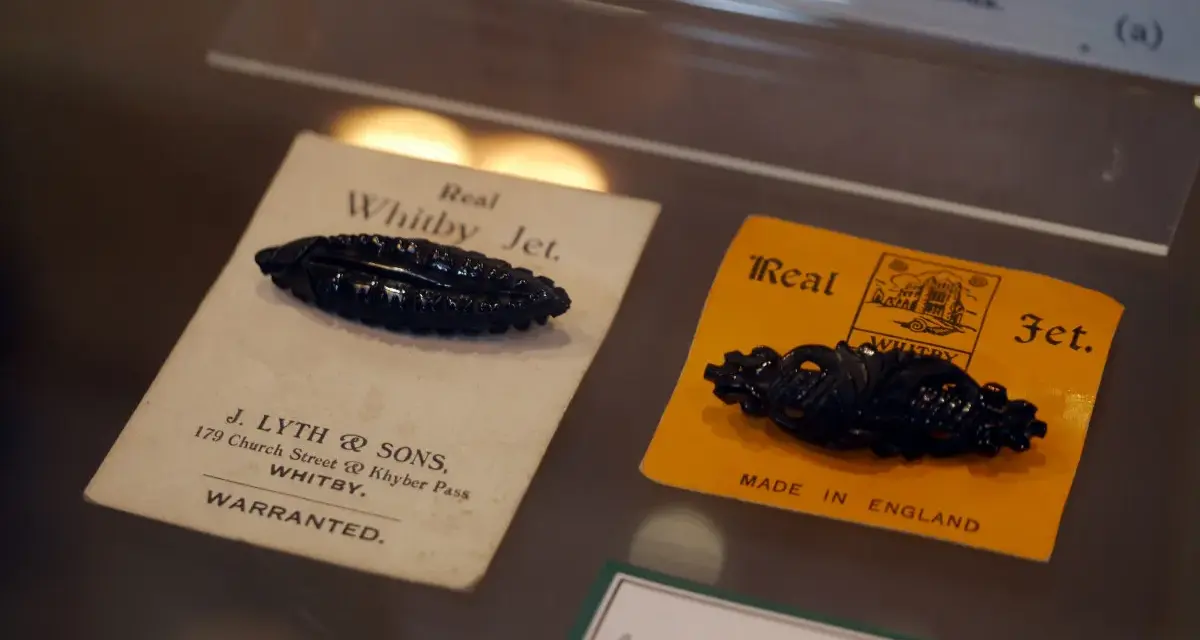
Jet is one of the most distinctive organic gem materials in British jewellery: deep black, light in the hand, and historically tied to Whitby. A black jet stone can look severe at first glance, but the material has real character once you understand what it is, how it is cut, and why so many imitations were made. In the sections below, I cover the geology, the British history, the easiest ways to recognise genuine jet, and the care rules that keep it looking polished rather than tired.
The quick version for buyers and collectors
- Jet is not a mineral; it is an organic gem material made from fossilised wood and classified as a form of lignite.
- Its appeal comes from the combination of deep black colour, low weight, and a warm, smooth feel.
- Whitby in Yorkshire remains the most important name associated with jet in the UK.
- Common lookalikes include French jet, vulcanite, pressed horn, bog oak, and black glass.
- Jet is soft, so it is best worn in pendants, earrings, and brooches rather than in everyday rings.
- Gentle cleaning, separate storage, and no ultrasonic cleaner are the rules I would follow.
What jet is and why jewellers still value it
Jet belongs to the small group of organic gem materials, alongside pearl and amber, rather than to the usual mineral family. In geological terms, it is a high-grade lithified lignite formed from ancient plant material, usually described as fossilised driftwood. That origin is part of the charm: it is black, but it is not a dead, inert black. It carries texture, history, and a very specific kind of depth that glass and synthetic substitutes rarely match.
What makes it useful in jewellery is not hardness, but workability. Jet can be carved, turned, and polished to a strong lustre, yet it remains light enough for long necklaces and large brooches. Its specific gravity is typically around 1.2 to 1.3, which means a strand of beads can feel surprisingly light, and its hardness is low, roughly 2.5 to 4 on the Mohs scale. I treat that as the key practical fact: jet looks dramatic, but it behaves like a delicate organic material, not a tough gemstone.
That low density is also the reason it became so comfortable in statement jewellery. A heavy-looking necklace can still sit neatly at the collarbone, and carved ornaments do not drag on the fabric the way denser stones often do. Once you understand that balance of lightness and polish, the appeal becomes obvious. From there, the next question is why one British place became so closely tied to the material.
Why Whitby matters so much
The British Museum's collection includes jet beads from a Bronze Age burial, which is a useful reminder that this material has been valued far longer than the Victorian image suggests. The strongest modern association, though, is with Whitby in North Yorkshire, where jet was worked and sold for centuries. The coastal source matters because the material is not abundant in a simple, mining-style way; it appears in limited seams and lenses, and much of what is available today depends on coastal exposure and careful gathering.
The Whitby area gave jet its strongest identity because it combined material, craft, and fashion. The jet rock in the Whitby Mudstone Formation became the reference point for the trade, and the town grew into the place where jet was cut, polished, and marketed. Gem-A notes that the Victorian mourning boom pushed Whitby jet workshops from 50 in 1850 to 204 after Prince Albert's death in 1861. That scale matters because it explains why jet is so often linked to mourning jewellery, even though its use is much broader than that.
What I find most interesting is that jet was never only about grief. It appears in older ornamental pieces too, and it still works in modern design because the visual effect is clean and immediate. Once you know the history, the imitators make more sense too, because they were created to satisfy demand for a material that was never truly plentiful. That leads directly to the practical issue every buyer faces: how to tell the real thing from the rest.
How I separate genuine jet from lookalikes
I usually trust three clues first: weight, warmth, and surface character. Genuine jet feels light, warmer than glass, and less rigidly shiny than most artificial substitutes. It often has a smooth, almost oily polish, but that finish still looks organic rather than factory-perfect. If a piece feels cold and heavy in the hand, I start doubting it immediately.
| Material | What gives it away | Why it is confused with jet |
|---|---|---|
| Jet | Very light, warm to the touch, deep black with a soft-to-glossy polish | It is the reference material, so it sets the visual standard |
| French jet / Vauxhall glass | Glassy lustre, mould marks, greater weight, occasional silvering on the reverse | It was made specifically to mimic the look of jet jewellery |
| Vulcanite | Can fade to brown, may smell sulphurous when rubbed, often shows moulded details | Victorian jewellery used it widely as a cheaper substitute |
| Pressed horn | Shows lamination, slight transparency at damaged edges, and a layered structure | Dark-dyed examples can look convincing at a glance |
| Bog oak | Brown-black rather than inky black, with visible wood grain or growth rings | It is also organic and dark, so it can sit in the same visual family |
Black onyx is another common confusion point, but it behaves differently: it is a hard chalcedony, so it usually feels colder and denser, and it will not show wood grain or mould lines. I also avoid destructive tests on finished jewellery. The hot-needle test, scratch test, and anything that might scar the surface are not worth it when a visual check and a reputable seller can tell you far more safely. If a dealer cannot state clearly whether a piece is jet, glass, vulcanite, or horn, I would want better documentation before buying. With the material identified, the next job is wearing it well and keeping it in good condition.
How to wear and care for jet without dulling it
Jet works best in jewellery that is carried by design rather than force. Pendants, earrings, and brooches are the safest and most flattering choices, because they let the material show off its polish without constant impact. Rings are possible, but I would reserve them for occasional wear rather than daily use. The same softness that makes jet pleasant to carve also makes it vulnerable to knocks, surface scratches, and careless storage.
For style, jet has a natural partnership with pearls. Cream or white pearls soften the severity of the black, which is why the combination still feels elegant rather than costume-like. I also like jet with silver for a cool, graphic look, or with marcasite when the aim is vintage sparkle. Gold can work too, but it needs a little more restraint so the piece does not become visually busy.
- Wipe jet after wear with a soft, dry microfibre cloth.
- If it needs cleaning, use lukewarm water with a tiny amount of mild soap, then dry it immediately.
- Store it separately in a soft pouch or lined box so it does not rub against harder stones or chains.
- Avoid ultrasonic cleaners, steam, abrasive cloths, perfume, hairspray, bleach, and household polish.
- Put jet on after cosmetics and remove it before cleaning, exercise, or showering.
That care routine is simple, but it matters. Jet is not fragile in the way an opal can be fragile, yet it is easily dulled by thoughtless handling. Once you know how to wear it, the last step is deciding what kind of piece is worth paying for and what kind of condition is acceptable.
What I check before buying jet jewellery
In the UK market, small modern jet pieces often sit under £100, neatly made silver-set designs are commonly in the £100 to £300 range, and well-carved antique or signed pieces can move from about £300 into the high hundreds. Exceptional Victorian brooches, strong provenance, or unusually fine carving can push higher still. Those numbers are not fixed rules, but they are a realistic way to think about value in 2026: simple form, clear material, and good condition usually matter more than size.
When I evaluate a piece, I look first at the drilling points, clasps, and edges. Chips around bead holes, hairline cracks near a brooch fitting, and repairs hidden under old patina are common in antique jet, so condition matters just as much as appearance. I also ask whether the piece is natural jet or a simulant, because a lot of dark jewellery from the Victorian period was made to look like jet without actually being jet. Provenance helps, but condition and honesty matter more than a romantic label.
If you want a jet piece for regular wear, I would choose a simple pendant or pair of earrings in a clean, modern setting. If you want a collector's object, ask for details on origin, material, and any restoration. The best jet jewellery is not the loudest piece on the table; it is the one that keeps its depth, stays comfortable, and still feels elegant after years of wear.
Jet rewards a slower eye than most black jewellery materials. Once you know how light it should feel, how warm it should seem, and how much care it needs, it stops being just a dark accent and becomes a very specific kind of British gem with real personality.