The details that change the answer
- There is no universal winner because rarity depends on the pearl family, not just the shade.
- Peacock is one of the rarest colours most buyers encounter in cultured pearls, while some natural purple or blue pearls can be even scarcer.
- Colour is only one factor; luster, surface and matching often decide the real value.
- Lighting can mislead you, so daylight photos and honest disclosure matter.
- The setting changes the look, which is why rare colours need the right metal and styling.
Why there is no single rarest shade
Pearls do not all come from the same animal, so they do not all play by the same colour rules. Akoya pearls are usually white or cream with soft pink or green hints, Tahitian pearls are famous for darker grey and black bodies, South Sea pearls lean white, silver or golden, and freshwater pearls can appear in a wider spread of colours. When people ask about the rarest pearl colour, what they usually want is the least common shade within a specific pearl family, not a universal ranking across the whole category.
That distinction matters because colour in pearls is built from more than one layer. The body colour is the base, the overtone is the secondary colour you notice at the surface, and orient is the subtle iridescent glow that seems to float under the skin of the pearl. Once you understand that, it becomes much easier to see why one pearl looks ordinary in a showroom and extraordinary in daylight. The more useful question is which rare shades actually show up in the market.
The shades collectors chase most often
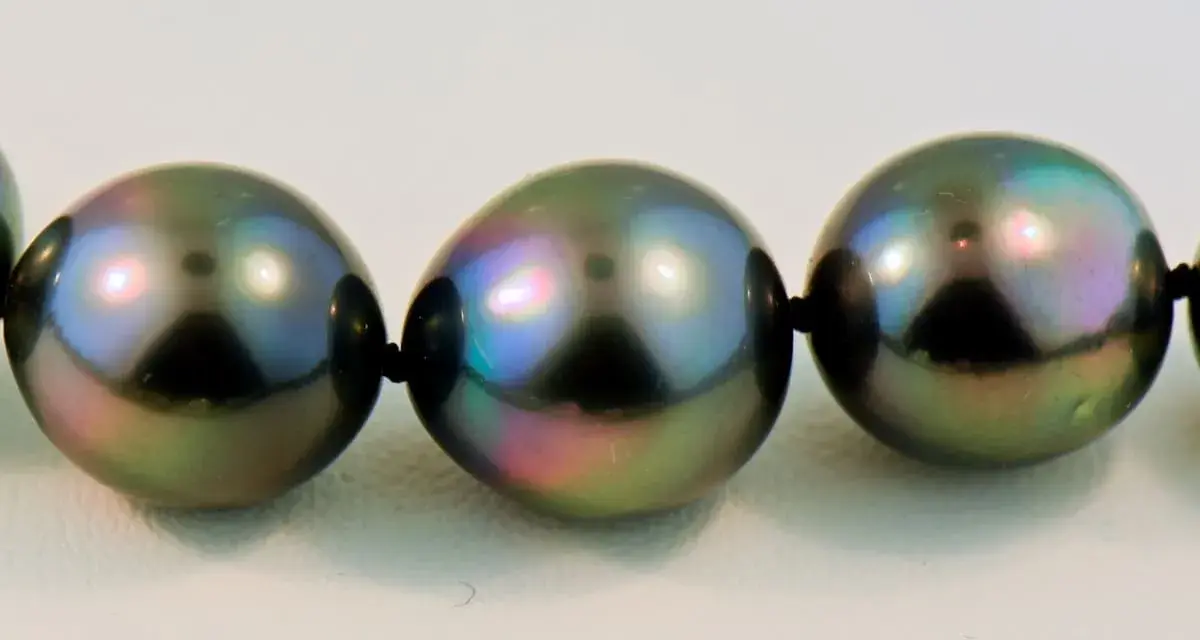
When I narrow the field to genuinely scarce colours, a few names keep coming up. Some are prized because they are hard to produce consistently; others because they appear only in a handful of mollusc species. In the pearl trade, peacock is the colour term most buyers hear most often, and GIA uses it for a specific green body-colour range with strong overtones. Mikimoto also describes it as the rarest colour in black South Sea cultured pearls, which shows how much weight the market gives to that look.
| Pearl colour | Where it is most often seen | Why it is rare | Style impression |
|---|---|---|---|
| Peacock green | Tahitian pearls | Needs a narrow green body colour plus strong overtone and orient | Dramatic, modern, high contrast |
| Deep gold | South Sea pearls | Rich, even saturation is limited and not every pearl develops it | Warm, formal, luxurious |
| Natural blue | A few pearl types and very rare natural examples | Saturated blue is uncommon and often difficult to find in quality pieces | Cool, collector-led, unusual |
| Reddish purple | Conch pearls and some other non-nacreous pearls | Extremely limited natural occurrence | Romantic, distinctive, softly dramatic |
| Lilac or deep purple | Quahog pearls and similar natural curiosities | Produced in tiny numbers and often seen in irregular forms | Artful, uncommon, highly individual |
What I would not do is treat every rare colour label as if it meant the same thing. Peacock is a trade term, not a single shade on a paint chart, and blue or purple can mean very different things depending on whether the pearl is nacreous or non-nacreous. That is why the next step is separating colour rarity from overall gem quality.
Why colour alone does not make a pearl valuable
A rare colour with weak luster can look flat, and a less unusual colour with brilliant luster can be far more compelling. That is why pearl graders and serious jewellers always look at the full package. The GIA 7 Pearl Value Factors are a useful reminder that colour is only one piece of the puzzle, alongside size, shape, surface, nacre, matching and luster.
- Luster is the brightness and sharpness of reflection; it is often the first thing your eye registers.
- Surface quality covers pits, ridges and blemishes that interrupt the look of the pearl.
- Nacre is the pearl material built around the nucleus or irritant; thicker nacre usually gives a richer appearance.
- Matching matters most in strands and earrings, where even small colour differences stand out.
- Shape changes perception; a perfectly round pearl with a rare colour usually costs more than a baroque pearl with the same hue.
If you are new to pearls, remember one technical pair: overtone is the secondary colour you see over the body colour, while orient is the shimmering effect that appears to sit just below the surface. Once you can separate those layers, you stop chasing the label and start judging the gem itself. The next challenge is making sure the colour you see is real and not a lighting trick.
How lighting, treatments and photography change what you see
Pearls are notoriously easy to misread in the wrong light. Warm shop lighting can make a grey pearl look greener, phone cameras can push saturation too far, and a flattering angle can hide a dull surface. That is why I always want daylight images or, better still, a short video filmed in neutral light with the pearl turned slowly so I can see how the colour behaves across the whole surface.
Be especially careful with unusually vivid colours at unusually low prices. Some pearls are naturally dark or vividly tinted, but other pieces may be dyed, coated or otherwise treated, and that should always be disclosed. If a seller cannot explain whether the colour is natural or treated, I treat that as a warning sign rather than a mystery to solve later. Once the visual check is honest, the next question becomes how to wear the colour well.
How rare pearl colours change the look of jewellery
For style, I think in terms of contrast. Cool peacock and grey pearls come alive next to white gold or platinum, because the metal sharpens the colour and keeps the look crisp. Golden South Sea pearls usually feel richer in yellow gold, while pink or lilac pearls often look softer in rose gold or plain white metal. In a British wardrobe, that means a peacock strand can look excellent with navy tailoring, charcoal knitwear and evening black, while golden pearls feel especially at home with cream, camel and autumn fabrics.
- White gold or platinum sharpens peacock, grey and purple tones.
- Yellow gold deepens golden South Sea pearls.
- Rose gold softens pink, mauve and conch-like shades.
There is also a practical side to styling rare colours. A dramatic hue works best when the setting is simple, because elaborate halos or heavy metalwork can compete with the pearl instead of framing it. If the colour is the point, let the jewellery do less and the pearl do more. Once you know how you want the piece to live in your wardrobe, buying it becomes much easier.
What I would check before paying a premium
When a pearl is being sold as exceptional, I want proof at three levels: the colour, the quality and the description. A polished sales pitch is not enough.
- Ask whether the colour is natural, cultured, dyed, coated or otherwise treated.
- Look for daylight photos and, ideally, a short video that shows the pearl rotating.
- Check the surface closely; rare colour does not excuse obvious damage or lifeless luster.
- For strands, inspect how closely the pearls match in tone, size and brightness.
- Ask for the origin and any gemmological report if the piece is expensive.
- Compare the seller's return policy with the price; if the colour is supposedly rare but the paperwork is vague, I slow down immediately.
If the price seems too friendly for the colour being claimed, one of two things is usually true: the pearl is not as rare as described, or the rest of the quality has been pushed aside to make the colour look more important. That is why the final rule is less glamorous than people expect, but far more reliable.
What I would remember before paying for rarity
The answer to the colour question is less tidy than a headline suggests: peacock is the shade most people mean when they talk about rare cultured pearls, but specialised natural pearls can reach even scarcer purple, pink or blue territory. For ownership, keep pearls away from perfume and harsh cleaners, store them separately, and wipe them with a soft cloth after wearing so the surface keeps its sheen.
If I were choosing one today, I would pick the pearl that still looks alive in daylight, still feels balanced on the skin, and still fits real clothes I actually wear. That is usually the gem that will matter longest.