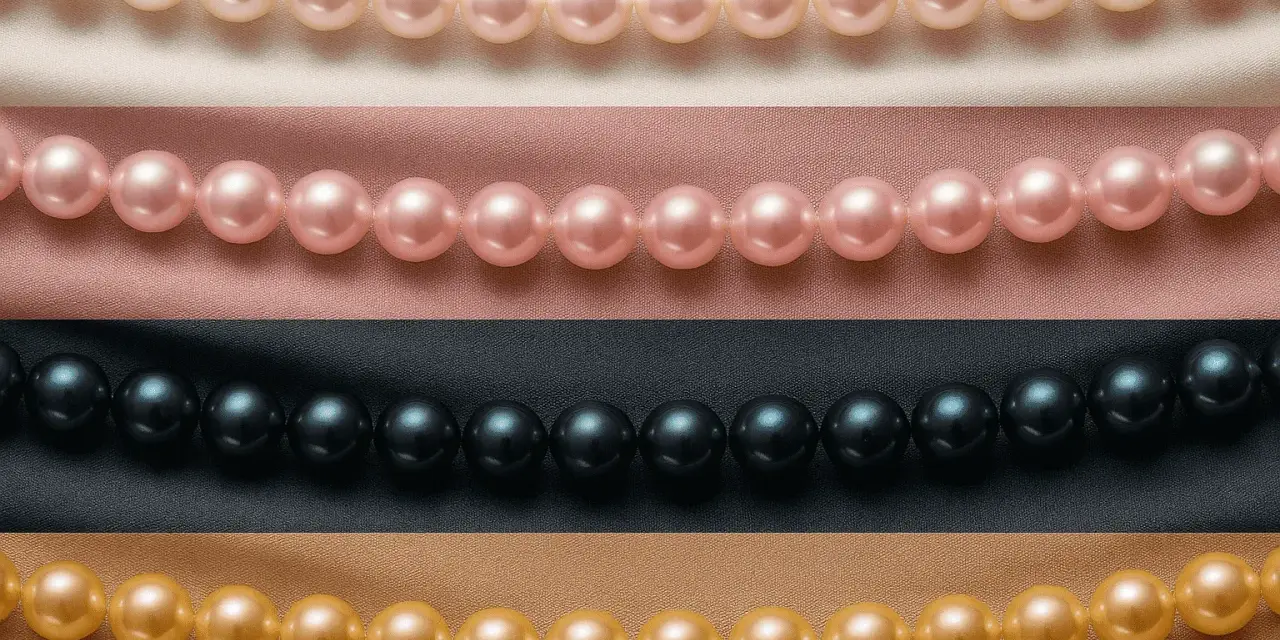
Pearls are one of the few jewellery materials where colour feels organic rather than engineered. This article breaks down how pearl colour is formed, which shades appear most often, how different pearl types shape the palette, and how to choose a tone that works in real jewellery rather than under showroom lights.
The essentials at a glance
- Pearls are not limited to white; they can be cream, silver, gold, pink, lavender, grey, black, green, blue, and more subtle blends.
- The main colour is only part of the story. Bodycolour, overtone, and orient all affect how a pearl reads.
- Type matters. Akoya, South Sea, Tahitian, and freshwater pearls each tend to show different colour ranges.
- White is classic, but gold, pink, and peacock tones can be more distinctive and flattering depending on the wearer.
- Natural colour, bleaching, and dyeing can change value, so colour should always be read alongside lustre, surface quality, and matching.
- Good care matters because chemicals and rough storage can dull both the shine and the depth of colour.
What creates a pearl’s colour
When I assess pearls, I never look at the shade in isolation. The dominant bodycolour, the translucent overtone above it, and the orient-like rainbow shimmer underneath are what create the final impression, and each one can shift the way the pearl reads in daylight. GIA describes pearls as having this layered colour structure, which is why two strands that both look “white” at first glance can still feel very different in person.
The mollusc species, the colour of the shell interior, and the nacre that forms around the nucleus all influence the result. Water conditions and the pearl’s growth environment also play a role, so colour is not as mechanical as it is in many gemstones. That matters because it explains why the same family of pearls can produce soft cream tones, cool silvers, or darker and more dramatic shades, which leads neatly into the colour families most buyers actually encounter.
The colours you will see most often
Most pearl colours live in a muted register. Even when the hue is unusual, the surface usually softens it, so the result feels luminous rather than loud. That is part of the appeal: pearls rarely look painted.
| Colour family | Typical appearance | What it often suggests | Style impression |
|---|---|---|---|
| White | Bright white to soft ivory with rose, silver, or cream overtones | Akoya, some South Sea, freshwater | Classic, formal, bridal |
| Cream and champagne | Warm off-white with a gentle yellow or beige cast | South Sea, freshwater, some Akoya | Soft, elegant, easy to wear |
| Silver and grey | Pale silver through deeper grey, sometimes with blue or pink shimmer | Tahitian, South Sea, freshwater | Modern, restrained, polished |
| Pink, rosé, and peach | Blush tones that can read delicate or slightly warm | Akoya, freshwater, conch | Romantic, youthful, flattering |
| Gold and yellow | Champagne to rich golden tones | Golden South Sea | Luxurious, warm, statement-making |
| Lavender and violet | Pale lilac to cooler purple-tinged shades | Freshwater, some Akoya and hybrid pearls | Quietly unusual, soft but distinctive |
| Black and peacock | Charcoal, green-grey, blue-grey, and multi-tonal peacock blends | Tahitian pearls | Graphic, dramatic, contemporary |
Two details matter here. First, a colour name is often shorthand for several visible effects at once. Second, the trade name can be more poetic than literal, so “black” pearls are frequently grey or green-grey rather than truly jet black. That distinction becomes clearer once you compare pearl types side by side.
How different pearl types shape the palette
If you want to predict the colour range, start with the species. Pearl types do not just differ in size or origin; they also tend to produce recognisable colour habits. Here is the practical shorthand I use.
- Akoya pearls are the classic white or cream pearls most people picture first, often with a rose or silver overtone. They are the safest choice for a traditional look.
- Freshwater pearls have the widest palette. They can appear white, cream, pink, peach, lavender, purple, and occasionally more saturated or dyed shades.
- South Sea pearls usually lean white, silver, cream, or gold. Golden South Sea pearls are the best-known warm-toned luxury pearls.
- Tahitian pearls are famous for dark bodycolours, but the real interest is in the overtones. Green, blue, purple, and peacock combinations are what make them stand out.
- Conch pearls are typically pink to peach and are valued as much for their flame-like internal pattern as for the base colour itself.
- Melo and abalone pearls sit outside the usual nacreous pearl image. Their tones can be orange, brownish-orange, or iridescent, and they read more as collector’s gems than everyday jewellery stones.
According to GIA, the colour of a pearl is often tied closely to the mollusc species and even the shell interior, which is why the same broad “white pearl” category can still produce very different looks. The takeaway is simple: when you know the type, you can usually narrow the colour range before you ever inspect a strand. That brings us to the part buyers care about most, which is how to choose a shade that actually suits the person wearing it.
How to choose a shade that suits your jewellery
I would not choose pearls by colour alone; I would choose them by how they behave with skin tone, metal colour, wardrobe, and occasion. White and cream remain the most versatile because they sit comfortably with silver, yellow gold, and rose gold, but that does not make them automatically the most interesting option.
For a softer, more traditional look, white, cream, and pale pink are easy wins. If the jewellery needs to feel modern or slightly architectural, silver-grey and cool white usually look cleaner. Gold and champagne pearls flatter warm metals and can make a necklace feel richer without becoming showy. Lavender, peach, and rosé tones are useful when you want colour that is visible but still gentle.
There is one rule I trust more than any colour chart: view the pearl in daylight and again in warm indoor light. A strand that looks balanced in a boutique can turn flatter or darker at home, especially with cool British daylight or dim evening lighting. That small test tells you more than marketing language ever will, and it leads directly into the question of whether the colour itself is natural, treated, or enhanced.
Natural colour, treatment, and why value changes
Not every attractive pearl shade is fully natural, and that matters because colour can affect price as much as taste does. Bleaching is common in the trade, especially for white pearls, while dyeing can be used to create stronger or more uniform colour. Some treatments are accepted and normal; the issue is transparency, not the treatment itself.
When I look at value, I ask three things. Is the colour naturally attractive rather than forced? Does it have depth, nuance, and a believable overtone? And does the strand match cleanly from pearl to pearl? A heavily dyed pearl can sometimes look flat or overly even, while a naturally coloured strand usually shows more subtle variation and life.
Colour is also only one part of worth. Luster, surface quality, nacre thickness, and matching still matter more than a fashionable shade. A rare colour with dull surface reflection is less desirable than a classic colour with strong glow, which is why a good report or honest seller description is so useful when you are comparing options. That naturally raises the practical question of how to keep the colour looking fresh once the pearls are yours.
How to keep the colour looking fresh
Pearls are more vulnerable to everyday products than most gemstones. Perfume, hairspray, foundation, sunscreen, and even skin acids can build up on the surface and gradually weaken both the lustre and the colour depth. I always advise putting pearls on last and taking them off first.
After wear, wipe them gently with a soft, slightly damp cloth and let them dry before storing them. Keep them separate from harder jewellery so they are not scratched, and avoid ultrasonic cleaners or harsh jewellery dips. If you own a strand with strong overtones or a delicate pastel hue, this matters even more, because surface damage can make the colour look dull long before the pearl is visibly worn.
One small but important point: pearls should not be left in a completely dry, sealed environment for years on end. Stable storage is better than constant exposure, but a little care goes a long way in preserving the soft glow that makes coloured pearls appealing in the first place. With that in mind, the final step is really about simplifying the choice instead of overthinking it.
The easiest way to narrow the choice down
If I were helping someone buy pearls from scratch, I would start with three questions: what metal will they wear, how bold do they want the colour to feel, and do they want a classic or contemporary result? That is usually enough to narrow the field from dozens of shades to two or three realistic options.
My practical shortlist is simple. Choose white or cream if you want timeless versatility. Choose gold if you want warmth and presence. Choose pink, peach, or lavender if you want softness with personality. Choose grey or peacock if you want something more striking and modern. The best pearl is not the rarest colour on paper; it is the one that still looks right when it leaves the display case and joins the rest of a jewellery wardrobe.
Colour gives pearls their character, but it is the combination of hue, overtone, orient, and lustre that makes one strand unforgettable and another merely acceptable. If you keep those layers in mind, the range stops feeling overwhelming and becomes a useful way to choose jewellery with more confidence.