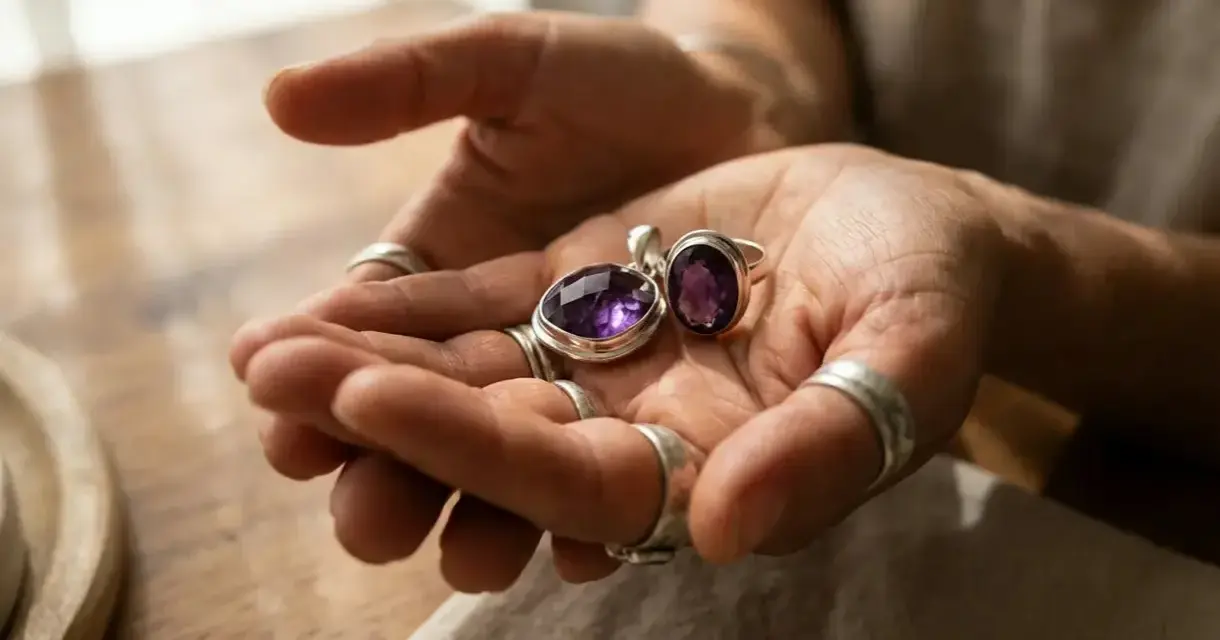
Amethyst is one of the easiest gemstones to recognise and one of the easiest to buy badly. When readers ask where can you find amethyst, I split the answer into two parts: where the stone forms in nature, and where a UK buyer can source a piece that is natural, fairly priced, and suited to the way it will be worn or displayed. That distinction matters, because a beautiful purple quartz crystal can be a rock specimen, a jewellery stone, or a mass-market trinket depending on where you look.
The short version for anyone buying amethyst in Britain
- Natural amethyst usually forms in geodes and volcanic rock, with Brazil, Uruguay, and Zambia among the most important sources.
- In the UK, Cornwall and Devon have produced quartz gems such as amethyst, but Britain is not a major producer.
- For buying, I would start with a trusted jeweller or specialist mineral dealer rather than a random marketplace listing.
- Colour matters most, and a strong, lively purple is usually more important than an impressive origin story.
- Typical UK prices range from about £10 for small stones to well over £1,000 for large display geodes or fine jewellery.
The practical answer is that amethyst comes from nature first, then from trusted sellers
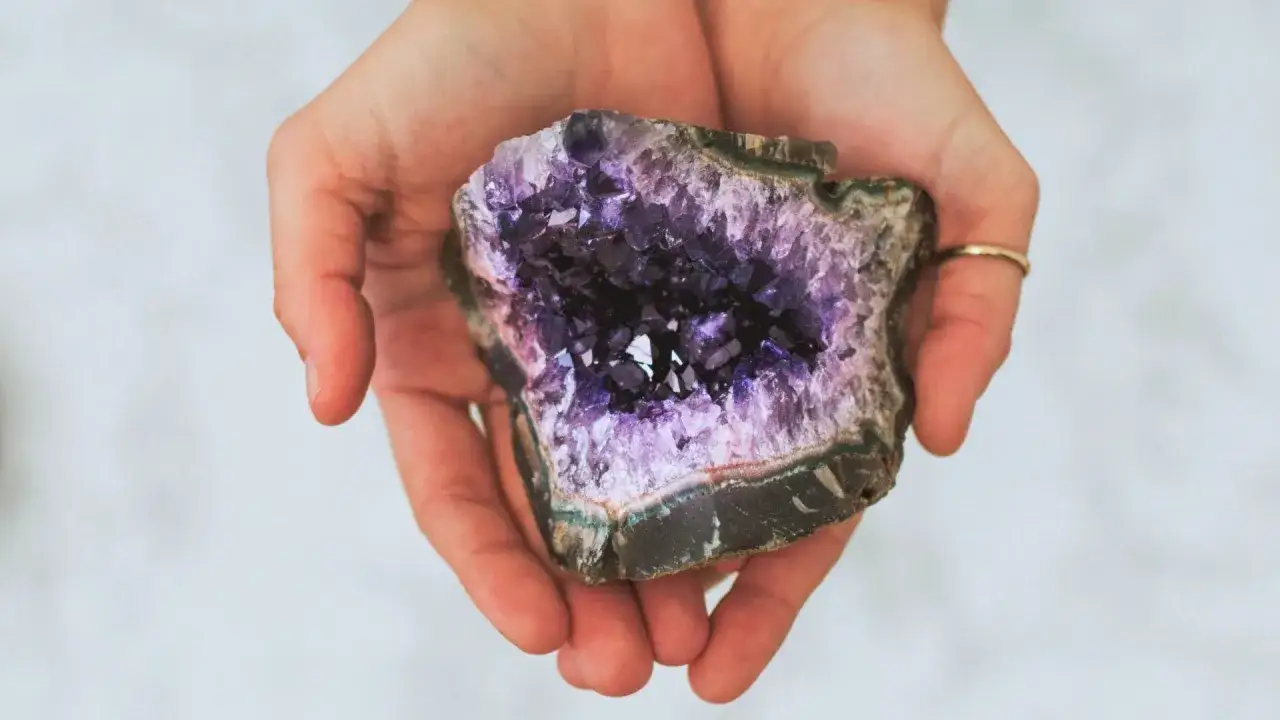
Amethyst is the purple variety of quartz, and it usually forms when silica-rich fluids fill cavities in volcanic rock and crystallise over time. That is why geodes are such a common source: the crystals grow into open pockets, often producing the deep, lustrous faces people expect from a good specimen. Once mined, the rough material is cut into faceted gems, carved pieces, cabochons, clusters, or polished decorative stones.
For a buyer in the UK, that means the word “source” can point to two very different things. One is the geological origin of the stone; the other is the place you actually purchase it. I treat those separately, because a dealer’s reputation matters just as much as the mine the crystal came from. The rest of the article follows that same split, so you can decide whether you are buying a specimen, a ring, or a gift.
Where amethyst forms in the ground
Most commercial amethyst comes from volcanic environments, especially basalt flows and geodes. Brazil and Uruguay are famous for large geodes, while Zambia is known for richly coloured material that often faces up darker and more saturated. Other countries that supply the market include Madagascar, Canada, Russia, and parts of the United States, though quality varies from one locality to another.
If you are thinking about British collecting, keep your expectations realistic. Gem-A notes that Cornwall and Devon have produced quartz gems such as amethyst, but the UK is not a major producer, so you are far more likely to find small occurrences or by-products than commercial-scale material. In practice, that means most UK buyers will source amethyst through the trade rather than by digging it themselves.
If you do want to collect outdoors, check land access, protected-site rules, and local permissions first. The stone may be common in global geology, but collecting rights are not common sense: a good-looking outcrop is not the same thing as an open collecting site. That is where the buying options become more useful.
Where to buy amethyst in the UK without overpaying
For most buyers, the best route depends on whether you want jewellery, a display piece, or a collector’s specimen. I would usually start with a specialist who sells amethyst regularly and can tell you whether the stone is natural, treated, or synthetic. That is especially important if you want something more than a small polished stone.
| Source | Best for | Why it works | What to watch for |
|---|---|---|---|
| Established jewellers | Rings, pendants, gifts | Clear labelling, returns, and aftercare are more common | You may pay more for the setting, branding, and retail service |
| Specialist mineral dealers | Clusters, geodes, specimen pieces | Better range, better photos, and more chance of provenance details | Heavier pieces can cost more to ship, and damage matters |
| Antique and vintage sellers | Characterful jewellery and older settings | Good for one-off designs and stones with a story | Wear, replaced stones, and historic repairs need checking |
| Gem fairs and lapidary shows | Comparing many pieces in person | You can judge colour and cut with your own eyes | Quality varies from stall to stall, so buyer discipline matters |
| Large online marketplaces | Bargain hunting | Huge choice and quick price comparison | Descriptions can be vague, and return protection is not always strong |
In 2026, I still trust a specialist dealer more than a listing with no measurements, no return policy, and no clear description of the stone. If the seller cannot explain what the amethyst is, that silence is information in itself. The next question is whether the piece is actually worth the asking price.
How I judge amethyst quality before I buy
GIA makes the buying rule very clear: origin alone does not add value, and colour is the most important factor. I agree with that completely. For amethyst, a stone with a lively purple tone, good cut, and clean face-up appearance will usually beat a larger stone that looks flat or muddy.
| What I check | What good looks like | Red flag |
|---|---|---|
| Colour | Rich purple, often with a slight reddish or bluish balance that feels alive | Pale, greyish, or uneven colour that disappears in indoor light |
| Cut | Even brilliance with no dark centre and no windowing, which is a see-through area caused by a shallow cut | Flat sparkle, a dead centre, or a cut that makes the stone look smaller than it is |
| Clarity | Most faceted stones are eye clean, and minor inclusions are not a problem if the colour is strong | Obvious fractures or cloudy areas that distract from the gem’s appearance |
| Setting or finish | Clean polish, secure mount, and a design that protects the stone if it is for daily wear | Loose claws, chipped edges, or a setting that looks rushed |
One detail I find useful: larger amethyst is not priced dramatically higher per carat than smaller stones, so size alone is not the deciding factor. That is why a well-cut medium stone often feels more satisfying than a huge piece with weak colour. Once you know what quality looks like, the price bands start to make a lot more sense.
What prices look like in real UK listings
Amethyst is still one of the more accessible gemstones, but “affordable” covers a wide range. On current UK retail listings, I see small tumbled stones and simple crystals start at roughly £10 to £20, while decorative clusters often sit around £25 to £90 depending on size and finish. Large display geodes can move from the low hundreds into four figures, especially when the crystals are dense, dark, and well-presented.
| Type of amethyst | Typical UK price range | What usually drives the cost |
|---|---|---|
| Tumbled stones and pocket pieces | £5 to £20 | Size, polish, and whether the colour is strong enough to look good in hand |
| Small clusters and specimen pieces | £20 to £90 | Crystal quality, shape, and whether the piece is attractive from one angle or several |
| Display geodes | £100 to £1,000+ | Weight, colour depth, crystal density, and how clean the faces are |
| Silver amethyst rings | £25 to £150 for simple styles | Metal quality, design, and the stone size |
| Gold or diamond-set jewellery | £500 to £3,000+ | Brand, craftsmanship, setting material, and whether the piece is designer-grade |
What matters here is context. A £12 cluster can be honest and attractive, while a £1,200 geode can still be disappointing if the colour is weak or the crystal faces are damaged. The goal is not to find the cheapest amethyst; it is to find the one whose price matches its actual visual and material quality.
How to avoid the common mistakes that trip up first-time buyers
The biggest mistake is assuming that a pretty purple stone automatically has strong value. I see buyers focus on origin claims, dramatic photos, or size, and then ignore the basics: colour, finish, and seller transparency. That is backwards. A reliable seller should be willing to say whether the stone is natural, heat-treated, dyed, synthetic, or simply low grade.
I would also be cautious with anonymous bulk listings and pieces described only as “high quality” or “rare.” Those phrases tell you almost nothing. If you are buying a substantial piece, ask for clear photographs in natural light, measurements, and, where appropriate, an identification report. For jewellery, check the prongs, clasp, and overall setting as carefully as the gem itself, because a good stone can be let down by poor mounting.
There is one more subtle point worth keeping in mind: the trade can use amethyst in ways that are technically correct but still confusing to buyers. For example, some colour stories in quartz start with heat-treated material, and some sellers rely on vague mineral labels rather than precise descriptions. If the explanation sounds slippery, I would pass. A straightforward amethyst seller should make the stone easier to understand, not harder.
A simple buying path that works well in Britain
If I were helping someone shop for amethyst in the UK, I would keep the route simple: choose a jeweller for wearable pieces, a mineral dealer for specimens, and a fair or antiques specialist when you want character and variety. That approach gives you the widest choice without forcing you to rely on hype or vague descriptions.
The short version is that amethyst is easy to find in the trade, but the best pieces still reward careful looking. Focus on colour, cut, and seller credibility first, then let origin and size do the rest of the talking. If you do that, you will answer the real question behind the search: not just where amethyst exists, but where you can find a piece worth keeping.