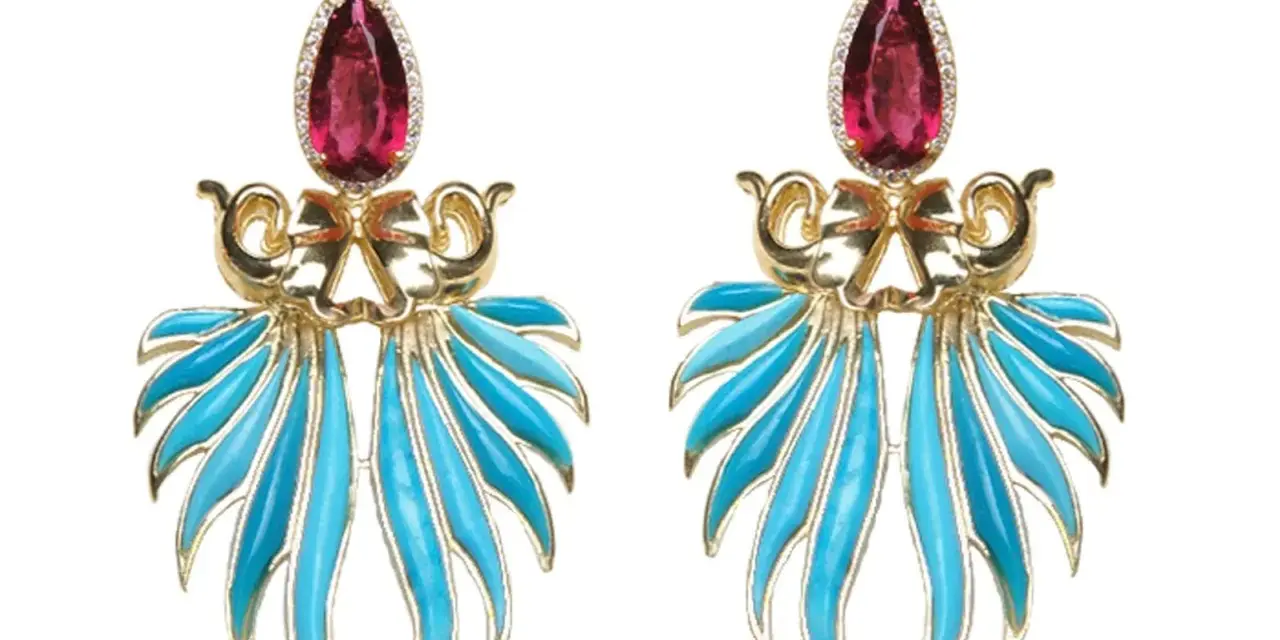
What matters most before you buy
- Brazil is a major source of tourmaline, topaz, beryl, quartz, amethyst, and several other gem families.
- Colour, cut, treatment, and provenance often matter more than carat weight alone.
- Paraíba tourmaline, imperial topaz, aquamarine, emerald, amethyst, and morganite are the names I would learn first.
- Pearls soften strong colour beautifully, especially with blue, green, pink, and golden stones.
- Care depends on the gem: pearls need the gentlest handling, while topaz and emerald need protection from impact and harsh cleaning.
What makes Brazil such a rich source of coloured gems
GIA has long described Brazil as unusually rich in tourmaline, topaz, beryl, and quartz, and that breadth is exactly what makes the country so interesting to jewellery lovers. Geology.com also notes that Brazil is a major source of amethyst geodes and agate nodules, which helps explain why so much Brazilian material has strong colour, attractive crystal growth, and a broad commercial range. In practice, that means you can find everything from accessible everyday stones to rare collector pieces that are priced far more aggressively.
Most of the classic mining areas sit in states such as Minas Gerais, Paraíba, and Rio Grande do Norte. Those names matter because origin can affect both value and identity, especially when a stone is associated with a specific locality rather than just a species. That is the first reason I never treat Brazilian gems as a single category: the geology produces very different results, and the market responds accordingly.
Once you understand that variety, it becomes much easier to see why some Brazilian gems are practical workhorses while others are strictly showpieces.
The Brazilian gemstones I would pay attention to first
Not every gem from Brazil behaves the same way in jewellery, so I always separate the classic, wearable choices from the rarer stones that deserve a more deliberate setting. In everyday buying terms, these are the names that come up most often and for good reason: they combine recognisable beauty with a clear design personality.
| Stone | What it is known for | How I would use it | Care note |
|---|---|---|---|
| Paraíba tourmaline | Neon blue to green colour caused by copper; intensely vivid and highly sought after | A statement ring, pendant, or small but striking accent stone | Ask about origin and treatment; protect from knocks |
| Imperial topaz | Warm peach, orange, and pinkish tones with a rich, glowing look | Best in yellow gold or warm-toned settings | Hard, but not indestructible; avoid hard impacts |
| Aquamarine | Blue to blue-green beryl with a calm, clean look | Excellent for earrings, pendants, and elegant rings | Durable enough for regular wear, but still chip-prone at edges |
| Emerald | Iconic green, usually with visible inclusions | For classic fine jewellery when you want depth and presence | Many stones are treated; use very gentle cleaning only |
| Amethyst | Brazil is famous for strong purple quartz, including geode material | A versatile, affordable colour stone for daily pieces | Keep away from prolonged heat and strong sunlight |
| Morganite | Soft pink beryl with a romantic, airy character | Lovely in rose gold, white gold, or pearl pairings | Decent durability, but settings should protect corners |
The useful next step is to judge quality in a way that goes beyond the label, because a name alone never tells the full story.
How to judge quality before you buy
When I assess a gemstone from Brazil, I start with four questions: is the colour convincing, is the cut doing its job, has the stone been treated, and is the origin important to the price? Those questions matter more than a polished sales pitch, and they are the quickest way to separate a well-chosen stone from one that only looks attractive under shop lighting.
- Colour first. A strong aquamarine should look lively rather than washed out, while a good tourmaline should have depth and saturation instead of a flat, glassy look.
- Ask about treatment. Heat treatment, irradiation, and fracture filling are all part of the gem trade, but they should be disclosed clearly.
- Match the stone to the use. A ring takes more punishment than a pendant, so the best stone for display is not always the best stone for daily wear.
- Check the cut. A well-proportioned cut can make a medium stone look more vivid than a larger but duller one.
- Request documentation when the origin matters. This is especially relevant for high-value Paraíba tourmaline, where provenance and naming affect value.
One point I would not gloss over is the difference between beauty and toughness. Emerald can be spectacular, but it is often included and sometimes treated, which means a jeweller should disclose more than just the weight and colour. Topaz is hard, yet it can still chip because hardness and toughness are not the same thing; that distinction is easy to miss, and it matters a lot in rings.
Once you know what to ask, the styling side becomes much easier, especially when pearls enter the picture.
How these gems work with pearls in jewellery
Pearls are excellent partners for Brazilian gems because they calm everything down without making the design dull. I usually think of pearls as the soft light in the composition: they do not compete with colour the way another bright stone might, and that is precisely why the combination feels refined.
| Gemstone | Best pearl pairing | Result |
|---|---|---|
| Aquamarine | White freshwater or Akoya pearls | Crisp, airy, and easy to wear in daytime jewellery |
| Morganite | Blush or soft pink pearls | Warm and romantic without becoming too sweet |
| Imperial topaz | Cream or golden South Sea pearls | Rich, autumnal, and very polished |
| Paraíba tourmaline | Simple white pearls | High contrast that feels modern rather than busy |
| Emerald | White or slightly cream pearls | Classic, formal, and quietly luxurious |
For British buyers especially, I think this kind of pairing works best when the silhouette is restrained. A single gem pendant with a pearl strand, pearl studs with a coloured-stone ring, or a drop earring that mixes both textures usually looks more expensive than a crowded cluster of competing elements. The aim is contrast, not competition.
I also prefer to keep metal choices simple: yellow gold amplifies warmth in topaz and morganite, while white gold or platinum sharpens aquamarine, emerald, and tourmaline. That brings us to the practical side, because a beautiful pairing only stays beautiful if you protect both materials properly.
Care, storage, and the habits that protect both stone and lustre
Care is where many people get careless, and that is a shame because the wrong routine can dull both a gemstone and a pearl in surprisingly little time. The safest approach is to treat each material according to its weakest point, not its strongest one.
| Material | Mohs hardness | What that means in practice |
|---|---|---|
| Pearls | 2.5 to 4.5 | Wipe after wearing, keep away from perfume and hairspray, and store separately |
| Amethyst and most quartz | 7 | Fine for regular wear, but avoid prolonged heat and sharp knocks |
| Aquamarine and morganite | 7.5 to 8 | Durable for daily use, though corners and edges still need protection |
| Tourmaline | 7 to 7.5 | Good jewellery stone, but not a stone to throw into a mixed box |
| Topaz | 8 | Quite hard, yet prone to chipping if struck because of cleavage |
| Emerald | 7.5 to 8 | Often included or treated, so it needs a gentler cleaning routine |
A few rules save a lot of trouble. Pearls should go on last and come off first. If you wear them often, I would have pearl strands checked and restrung every 12 to 24 months rather than waiting for visible slack. Ultrasonic and steam cleaners are a bad idea for pearls, and I would also avoid them for emeralds or any stone with known fracture filling unless a specialist has confirmed they are safe.
For storage, separate pouches are better than one shared box, because harder stones can scratch softer ones long before you notice the damage. That is especially important when a pearl bracelet shares a drawer with topaz or tourmaline, since the pearl will lose its surface glow first.
With the care side clear, the last question is how to choose a piece that still feels right a few years from now, not just on the day you buy it.
How I would choose one piece that feels timeless
If I wanted a first Brazilian gem piece, I would choose according to wear, not trend. Aquamarine and amethyst are the easiest daily choices, because they are versatile, legible in different lights, and simple to style with pearls or plain metal. If I wanted a stronger signature piece, I would go to imperial topaz for warmth or Paraíba tourmaline for a sharper, more vivid look.
For anyone buying at the higher end, I would ask for clear treatment disclosure, a sensible explanation of origin, and a setting that matches the stone’s strengths. A fine Brazilian gem does not need visual noise around it; it needs proportion, clean workmanship, and enough restraint to let the colour do its job.
The pieces that last are usually the ones that balance rarity with wearability, and that is exactly where Brazil’s gem story becomes so rewarding.