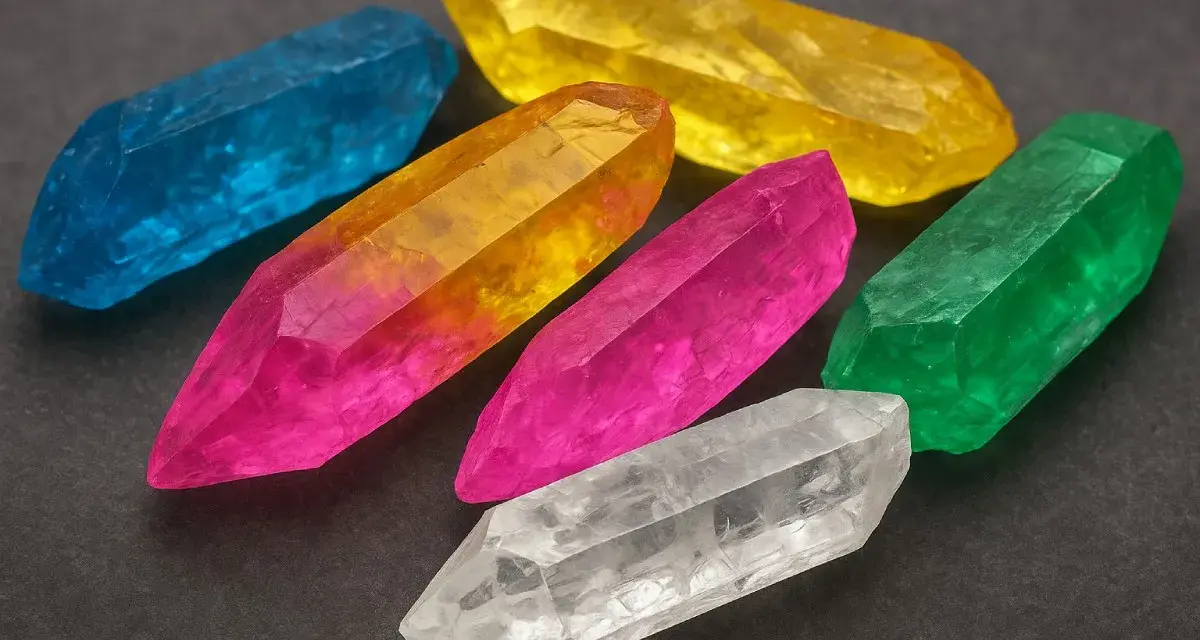
Topaz is a gemstone of place as much as colour. The finest material comes from a limited set of geological environments, which is why some countries become closely associated with it while others only produce the occasional crystal. This article maps the main topaz localities, explains why they matter, and shows what UK jewellery buyers should look for when origin is part of the story.
The main topaz sources sit in a few geological belts rather than one global mining zone
- Brazil, especially Minas Gerais, is the strongest source of gem-quality topaz and the classic imperial material.
- Topaz forms mainly in pegmatites, quartz veins and cavities in volcanic rocks such as rhyolite.
- Russia, the United States, Pakistan and several African and Asian countries also produce topaz, but usually in smaller or less consistent quantities.
- The UK has collector-grade occurrences in places such as Cornwall and Devon, but no major commercial topaz industry.
- Blue topaz in jewellery is often treated, so colour should never be assumed to be natural just because the stone is labelled topaz.
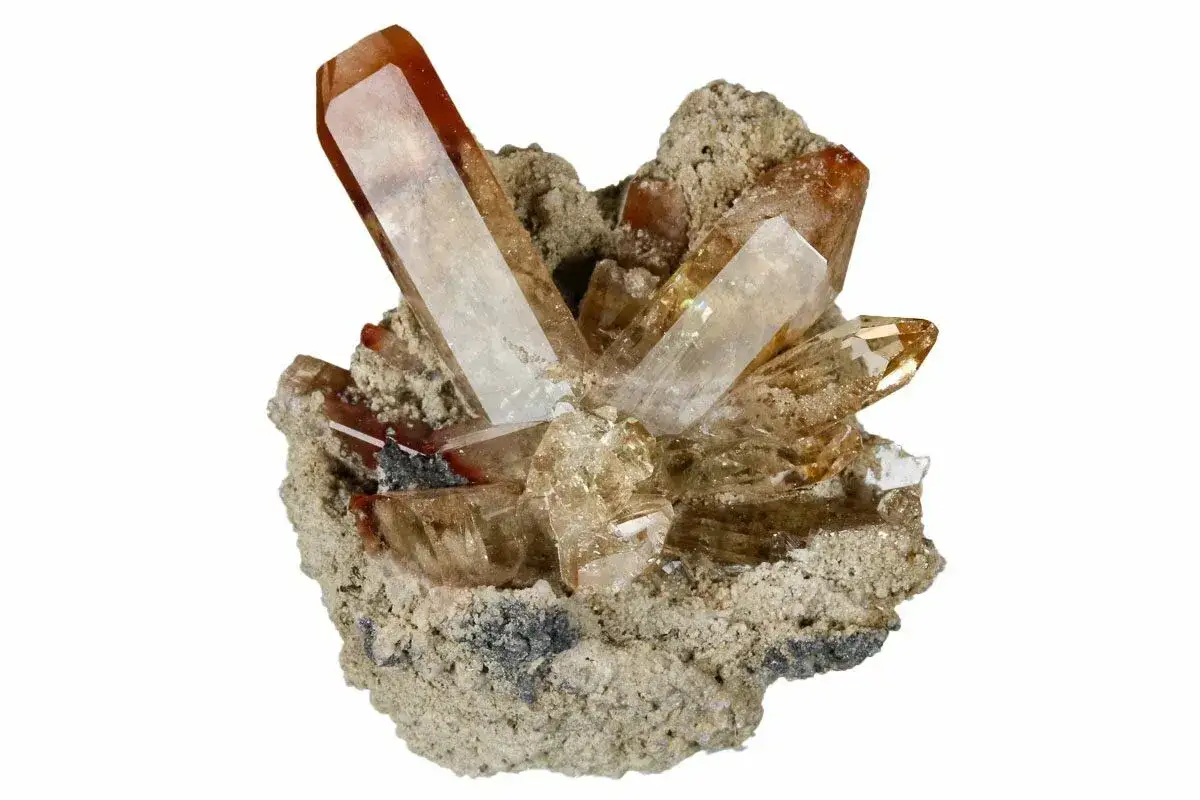
Topaz forms in specific geological settings
I like to start with the geology because it explains the map better than any list of countries does. Topaz usually grows in late-stage igneous environments where fluorine-rich fluids have room to cool slowly. That is why it turns up in pegmatites, high-temperature quartz veins, granites, rhyolites and, in some cases, alpine fissures.
A pegmatite is a very coarse-grained igneous rock that allows large crystals to grow; rhyolite is a volcanic rock whose cavities can trap gems as they form. These are not rare rocks in the abstract, but the conditions needed for gem-quality crystals are specific enough that topaz deposits stay patchy. In practice, that means old volcanic belts and granite-rich districts are far better bets than general farmland or sedimentary basins.
Once you know the host rock, the country map makes more sense, because topaz is almost never evenly spread. It follows the chemistry of the rocks, and that is exactly why a few places dominate the gem trade.
The countries that matter most in the topaz trade
If I strip the story down to the places that recur most often in gem reports and trade discussions, the map looks surprisingly concentrated. These are the names I would expect to see most often on a serious topaz label.
| Country or region | What it is known for | Why it matters |
|---|---|---|
| Brazil | Minas Gerais, especially Ouro Preto and nearby gem districts | The strongest source of fine gem topaz, including imperial topaz |
| Russia | The Ural Mountains | A historic source of topaz, especially prized pink and imperial material |
| United States | Utah, California, New Hampshire and Colorado | Well-known collector localities and some gem-quality stones |
| Pakistan | High-altitude and pegmatitic gem deposits | Important for attractive crystals, though production is less dominant than Brazil’s |
| Madagascar | Pegmatite-related sources | Notable secondary source for coloured stones and crystals |
| Namibia | Gem-bearing pegmatites | Smaller but respected source for occasional fine material |
| United Kingdom | Cornwall, Devon and Cumbria | Collector occurrences rather than large-scale commercial mining |
That table already shows the pattern: Brazil is the heavyweight, while the rest of the world forms a long tail of important but less dominant sources. Other countries worth knowing include Mexico, Sri Lanka, Nigeria, Mozambique, Myanmar and Zimbabwe. They matter because topaz is global, but they rarely change the fact that one country sits at the centre of the fine-gem conversation.
Brazil deserves its own section because it shapes both the market and the reputation of topaz more than any other place.
Why Brazil dominates the conversation
Brazil is the name most jewellery buyers remember because it combines scale and quality. Minas Gerais, and especially the Ouro Preto area, is famous for imperial topaz. That term usually refers to rich orange, pink and reddish stones, and in the market it carries far more prestige than pale yellow material.
Brazil also produces very large crystals. A transparent crystal from Minas Gerais famously weighed 271 kilograms, or 596 pounds, which tells you just how productive the region can be. The important detail for buyers is that Brazilian topaz is not one look; it ranges from common lighter stones to the vivid imperial material that drives much of the attention.
When I see a topaz described simply as “Brazilian,” I do not automatically assume premium quality. I want to know whether the stone comes from a celebrated imperial district, whether the colour is natural, and whether the cut and clarity justify the label. That is where the next group of sources becomes useful.
Other notable sources and what they contribute
Outside Brazil, topaz still appears in a wide range of countries, but the role each one plays is different. Some are important to collectors, some matter historically, and some are useful because they show how topaz can form in very different rock settings.
The United States
Utah’s Topaz Mountain is the classic American locality, and the US also has significant occurrences in California, New Hampshire and Colorado. What I find useful about the US localities is that they reinforce the geology lesson: topaz often shows up in volcanic rocks and pegmatites, not just in one predictable mining style. For collectors, American localities are often about crystal form and mineral association as much as polished jewellery output.
Russia and the historic Urals
Russia’s Ural Mountains gave imperial topaz much of its historic reputation. Today, the country is more important as a reference point in the story of the gem than as a dominant modern supplier. Still, the Russian connection matters because it explains why “imperial” became such a loaded word in topaz history.
Read Also: Real vs Fake Pearls - How to Tell the Difference
Asia and Africa
Pakistan, Sri Lanka, Madagascar, Namibia, Nigeria, Mozambique, Zimbabwe and Myanmar all appear in the topaz story. These countries matter because they show how widespread the mineral can be, yet many of their deposits are smaller, more variable or more collector-focused than Brazil’s big gem districts. That does not make them unimportant; it simply means the quality can be highly uneven from one locality to another.
For a buyer in the UK, this wider geography matters because it explains why two topaz stones can look similar on the surface while carrying very different origin stories.
What topaz origin changes in colour, size and price
Location does not determine everything, but it does influence what a deposit is famous for. Brazil is linked with imperial topaz because its fine material often shows saturated orange-pink tones. Russia is tied to its historic pink stones. The US, Pakistan and several African producers often contribute attractive crystals, but not always the same premium colour profile.
One detail I would never ignore is treatment. Blue topaz in jewellery is often created by treating colourless or pale stones, so the colour alone does not tell you the stone’s natural origin. That is why origin should be read together with treatment disclosure, not instead of it. A buyer can easily overvalue a stone if the colour sounds rarer than it really is.
Size matters too. Some localities are known for large crystals, while others yield smaller but cleaner stones. In real terms, that means a lesser-known country can still produce a beautiful gem, but it may not carry the same market cachet as a classic Brazilian imperial stone. Origin is a clue, not a shortcut to value.
When I evaluate topaz, I think about three things at once: where it formed, whether the colour is natural or treated, and how the stone was cut. That combination tells a fuller story than country name alone ever can.
What UK jewellery buyers should ask for
For a UK buyer, origin is useful but not always decisive. I would ask for the country of origin if the stone is being sold as a higher-value gem, but I would ask about colour treatment first if the stone is blue. Natural blue topaz is uncommon; much of the blue jewellery market starts as colourless material that is treated, then cut and sold through multiple channels.
- Ask whether the colour is natural or treated.
- Ask whether the stone is being sold as imperial topaz, and if so, what supports that claim.
- Ask whether the setting protects the stone, because topaz has a tendency to chip if it takes a hard knock.
- Ask whether the stated origin is documented or simply a marketing description.
The UK does have topaz occurrences in Cornwall, Devon and Cumbria, but they are best seen as mineralogical curiosities and collector localities rather than the basis of a large jewellery industry. If a seller highlights a British origin, I would treat it as interesting provenance, not automatically as a price premium.
That is why the final test is not just the country name but the full label, because a good topaz listing should connect geology with honest gem disclosure.
The label is most useful when it joins geology and gem honesty
My rule of thumb is simple: origin tells you where the crystal formed, treatment tells you what happened after mining, and setting tells you how safely it can be worn. When those three details line up, topaz becomes much easier to judge, whether it came from Minas Gerais, the Urals or a small British locality.
That is the practical answer I would want as a buyer in the UK. Start with Brazil if you are looking for the finest imperial material, keep an eye on other countries for collector or secondary sources, and never let a single place name replace clear disclosure about colour and treatment.