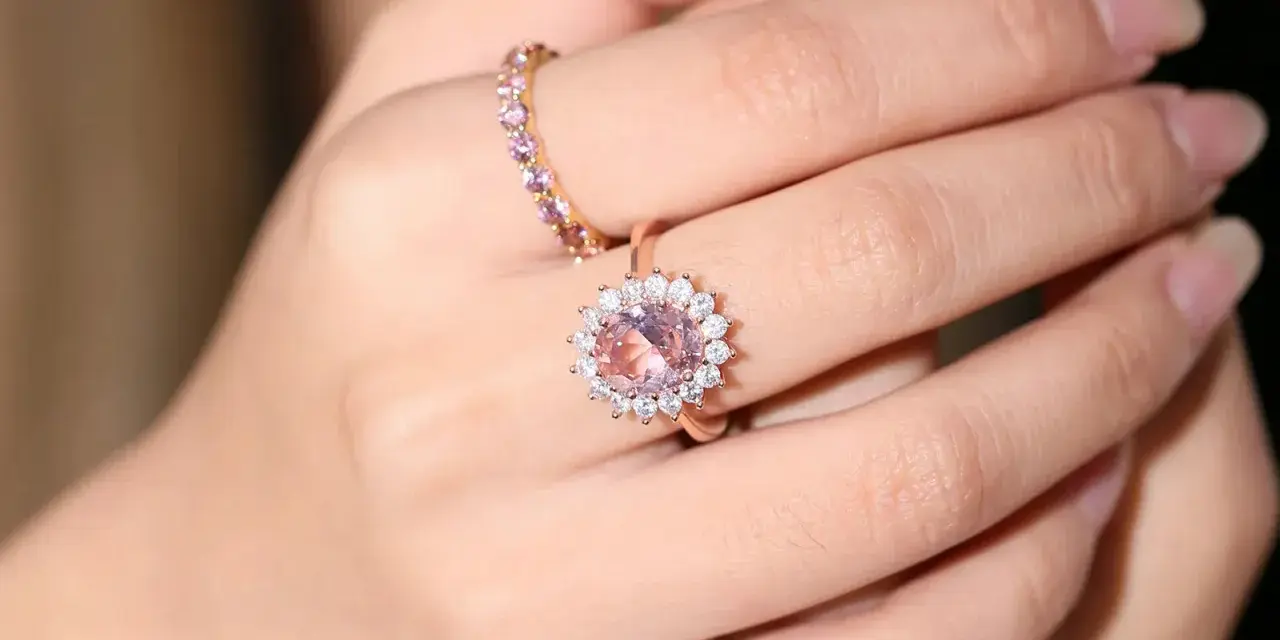
Morganite is the pink-to-peach member of the beryl family, and that is the plain answer to what's morganite. I like it because it gives you the romance of a soft coloured gemstone without feeling fragile in the way many people expect. In this article, I’ll explain what it is, why the colour varies, how it wears in jewellery, how to care for it, and how I would compare it with other pale pink stones.
Morganite in plain English
- Morganite is a variety of beryl, in the same mineral family as emerald and aquamarine.
- Its colour usually sits between blush and peach, with pink, rose, salmon, and orangey-pink tones all appearing in the trade.
- It is durable, but not indestructible, so rings need more thought than earrings or pendants.
- Rose gold is the easiest match, but white metals, yellow gold, and pearls can each change the mood of the stone.
- Colour, cut, and setting matter most when you choose a good one.
What morganite is and why it stands out
Morganite is a variety of beryl, the same mineral family that gives us emerald and aquamarine. Chemically, it is a beryllium aluminium silicate, but the practical point is simpler: it is a distinct gemstone in its own right, not just a pinkish version of something else.
The pink colour usually comes from trace amounts of manganese, which is why the stone can shift from blush to peach or salmon. GIA describes it as a pink-to-orange-pink gemstone, and that range is what makes it so easy to style. I think that softness is its biggest strength: morganite looks refined rather than loud.
It was identified in 1910 and named after J.P. Morgan, which gives it a neat place in gemstone history without making it feel old-fashioned. That mix of modern popularity and relatively recent naming is part of why it still feels fresh in contemporary jewellery. From there, the real question becomes why two morganites can look so different, even when they come from the same family.
Why its colour ranges from blush to peach
Colour is the first thing people notice, and in morganite it does most of the heavy lifting. The best stones usually show a balanced pink with enough saturation to look intentional, but not so much that they lose the gem’s airy character.
The colour range includes pink, rose, peach, and salmon. Pink and rose are often more popular in the market, while peach and salmon can look warmer and sometimes more vintage. I would not dismiss the lighter tones automatically; in the right cut, they can look elegant and more wearable than a stone that tries too hard to be vivid.
- Colour saturation affects value and visual impact more than size alone.
- Even colour distribution keeps the stone from looking pale at the edges or dark in the centre.
- Cut depth matters because shallow stones can appear washed out.
- Lighting changes the look more than many buyers expect, so check morganite in daylight if possible.
When I evaluate colour, I look for a stone that still reads as pink from a normal viewing distance, not one that disappears into a faint tint. That leads naturally to the question of how the gem actually behaves once it is mounted in jewellery.
How morganite looks and wears in jewellery
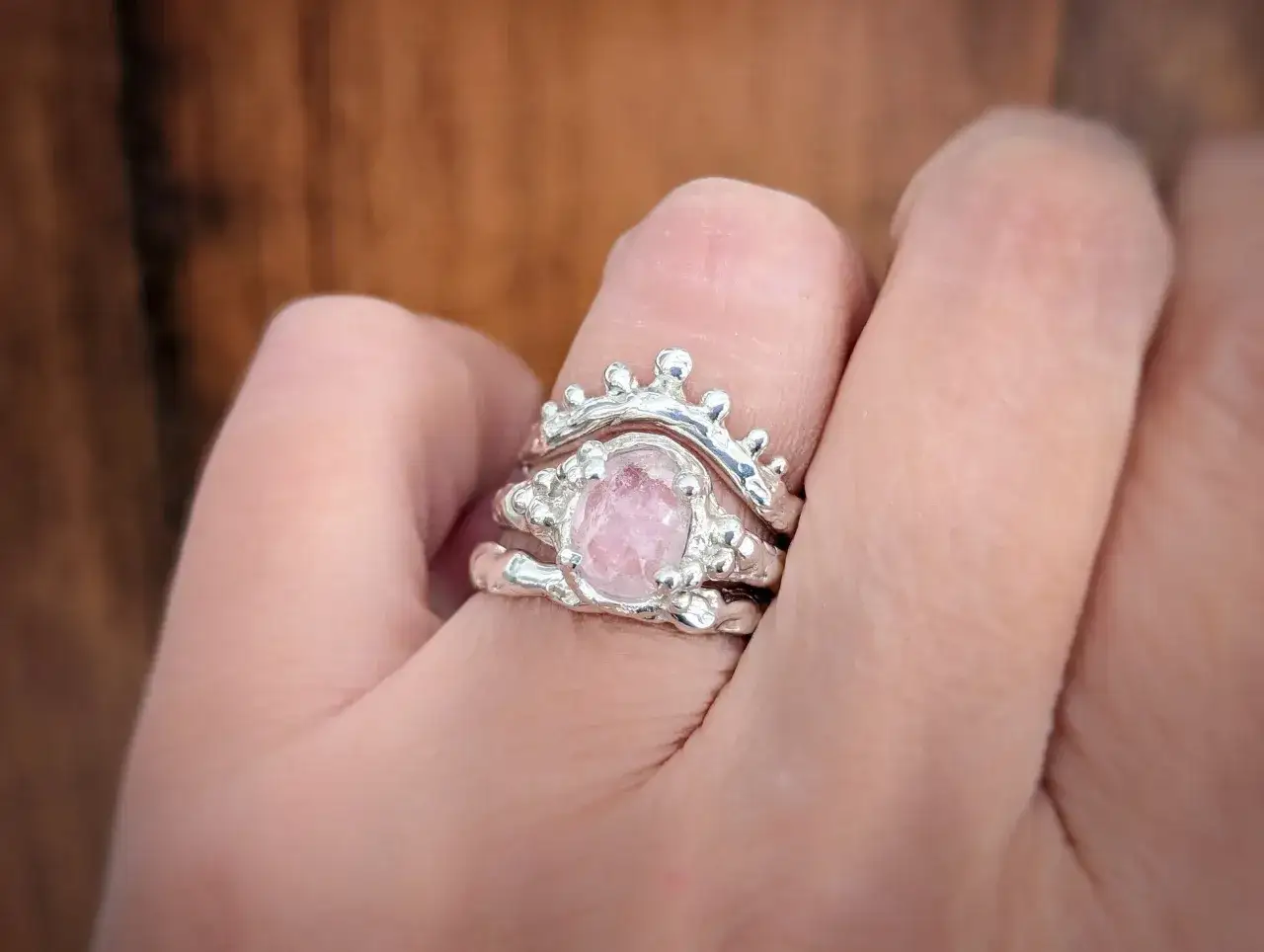
Morganite is most often seen in rings, pendants, earrings, and bridal pieces, and it behaves best when the design protects it. GIA rates it at 7.5 to 8 on the Mohs scale, which means it is durable enough for regular wear but still vulnerable to scratches and hard knocks if the setting leaves the stone exposed.
That is why I usually favour a bezel, halo, or at least a well-protected prong setting for rings. Earrings and pendants are easier to live with because they take less direct contact, so they are a safer choice if the wearer wants the colour without the daily stress of a ring.
Metal choice changes the mood quite a bit. Rose gold warms the peach tones and makes the gem feel softer; yellow gold gives it a slightly more vintage, romantic character; white gold or platinum makes the pink read cooler and cleaner. I also like it with pearls, especially in understated pieces, because both materials rely on glow rather than sparkle, which keeps the design calm and coherent.
In UK jewellery, that quiet elegance works particularly well for engagement rings and occasion pieces. The stone gives a soft focal point without needing a large amount of visual drama, which is exactly why many buyers keep coming back to it.
Once the stone is set and worn, the next issue is simple maintenance, and that is where many people either overthink it or neglect it entirely.
How to care for morganite without overcomplicating it
Morganite is not a high-maintenance gem, but it should not be treated like a diamond either. I would clean it with warm water, mild soap, and a soft brush, then dry it with a lint-free cloth. That routine is enough for most pieces and is the safest default when you do not know how the stone was treated.
Warm, soapy water is always safe. Ultrasonic and steam cleaning are usually fine only if the stone has no fractures or liquid inclusions, and fracture-filled stones should be cleaned gently and only by hand. I take that seriously because you often cannot tell by eye whether a stone has a hidden vulnerability.
Two practical rules do most of the work here: store morganite separately from harder stones, and take it off before heavy cleaning, gym sessions, or any activity that could lead to a sharp knock. Its colour is stable under normal light, so fading is not the real worry. Scratching and impact are.
That distinction matters, because it helps you choose the right gem for the right job, which is exactly where comparisons become useful.
How morganite compares with other pale pink stones
People often compare morganite with rose quartz, pink sapphire, and kunzite because they all sit in the same soft-colour conversation. They are not interchangeable, though, and the differences matter if you want a stone that suits a particular budget, style, or level of wear.
| Stone | What it looks like | Mohs hardness | Best use | Main trade-off |
|---|---|---|---|---|
| Morganite | Blush to peach, often with a warm glow | 7.5 to 8 | Rings, pendants, bridal jewellery | Needs some care in daily wear |
| Rose quartz | Cloudier, softer pink with a more opaque look | 7 | Beads, cabochons, casual pieces | Usually less crisp and less brilliant |
| Pink sapphire | More vivid, brighter, and often more saturated | 9 | Everyday rings and heirloom pieces | Usually costs more |
| Kunzite | Pink-violet with a delicate pastel feel | 6.5 to 7 | Occasional wear, earrings, pendants | More delicate for rings |
If I had to simplify the choice, I would say this: choose morganite when you want the warmth and romance of pink without the heavier price or colour intensity of pink sapphire. Choose rose quartz when softness matters more than brilliance, and choose kunzite when you want a cooler lavender-pink effect but can accept a little less durability.
That comparison makes buying easier, because the best stone is the one that fits the job rather than the one that sounds most glamorous on paper.
How to judge a good morganite before you buy
Colour should always lead the conversation, but it should not be the only thing you inspect. When I assess morganite, I look at colour, clarity, cut, size, and treatment disclosure together, because that combination tells me more than any single number on its own.
| What to check | What good looks like | Why it matters |
|---|---|---|
| Colour | Warm pink with enough life to stay visible at arm’s length | It drives the stone’s personality and much of its value |
| Clarity | Eye-clean or close to it in most lighting | Large visible inclusions can mute the glow |
| Cut | Facets that return light evenly, not a flat or sleepy face-up view | A weak cut can make even a fine colour look dull |
| Setting | Protected edges and a secure mount | Reduces the chance of chips and wear damage |
| Treatment disclosure | Clear, honest information from the seller | Helps you judge value and choose the right care |
For UK buyers, I would be especially careful with two things: seeing the stone in neutral light and asking whether the gem has been treated. That is not about distrust; it is about avoiding the common mistake of buying under warm shop lighting and then being surprised at home. A stone can look charming in the showroom and ordinary by the window if the colour is too weak.
Good morganite should still feel lively when you stop staring at the details and just look at the piece as jewellery. That is the real test I use, and it keeps the purchase grounded in wearability rather than jargon.
What to remember before choosing morganite
Morganite is best understood as a soft-coloured beryl with real jewellery appeal: pretty, versatile, and durable enough for many pieces when it is set and cared for properly. Its strongest cases are rings with protective settings, pendants, earrings, and any design where a warm blush tone can do more work than a large flashy sparkle.
If you want a gemstone that feels romantic but not sugary, contemporary but not cold, morganite is still one of the most balanced choices I know. Choose the colour that looks alive in daylight, insist on clear treatment information, and give the stone the same practical care you would give any gem that lives outside a display case.