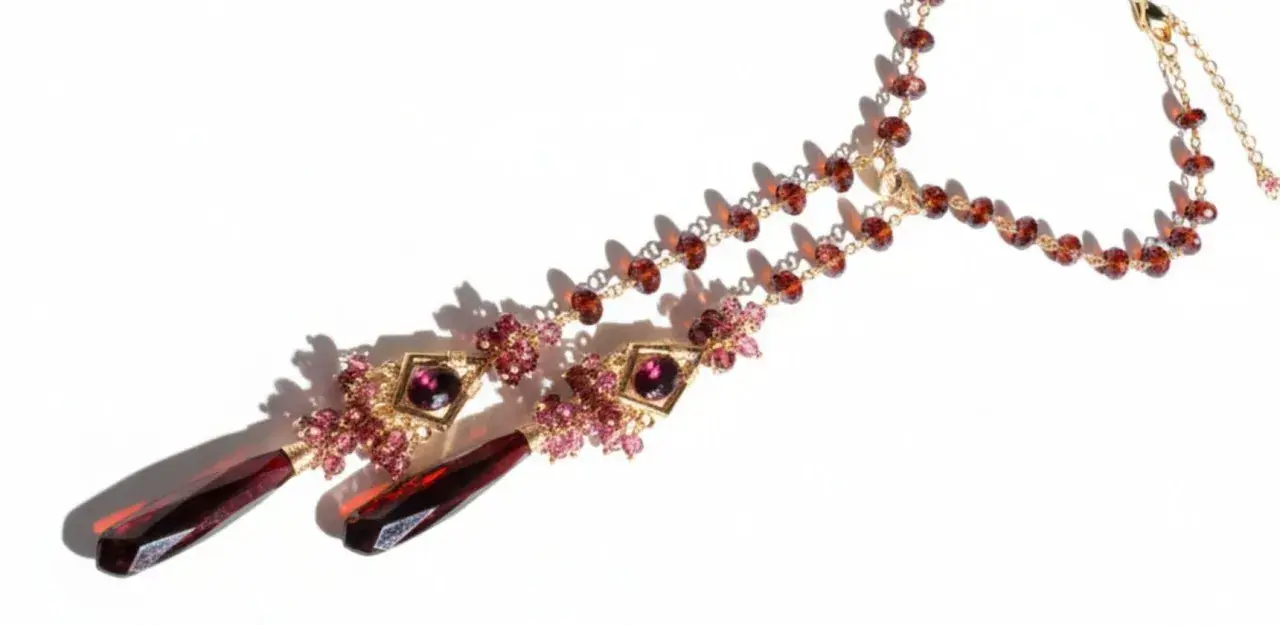
Garnet is not one gemstone but a family of minerals with a surprisingly wide colour range, from deep red classics to vivid greens, oranges, and even rare colour-change stones. This guide breaks down the main garnet varieties, explains how gemologists classify them, and shows what matters most when you are choosing jewellery for everyday wear or a more distinctive piece.
Key points to know before you choose a garnet
- Garnet is a mineral family, not a single stone, and its colour range goes far beyond red.
- The six gem-quality species are pyrope, almandine, spessartine, grossular, andradite, and uvarovite.
- Two main chemical series help make sense of the family: pyralspite and ugrandite.
- Most garnets sit around 6.5 to 7.5 on the Mohs scale, so they are generally suitable for jewellery with sensible care.
- The names you see in shops, such as rhodolite, tsavorite, demantoid, hessonite, and mandarin garnet, describe useful trade varieties rather than a separate mineral class.
How garnet is classified
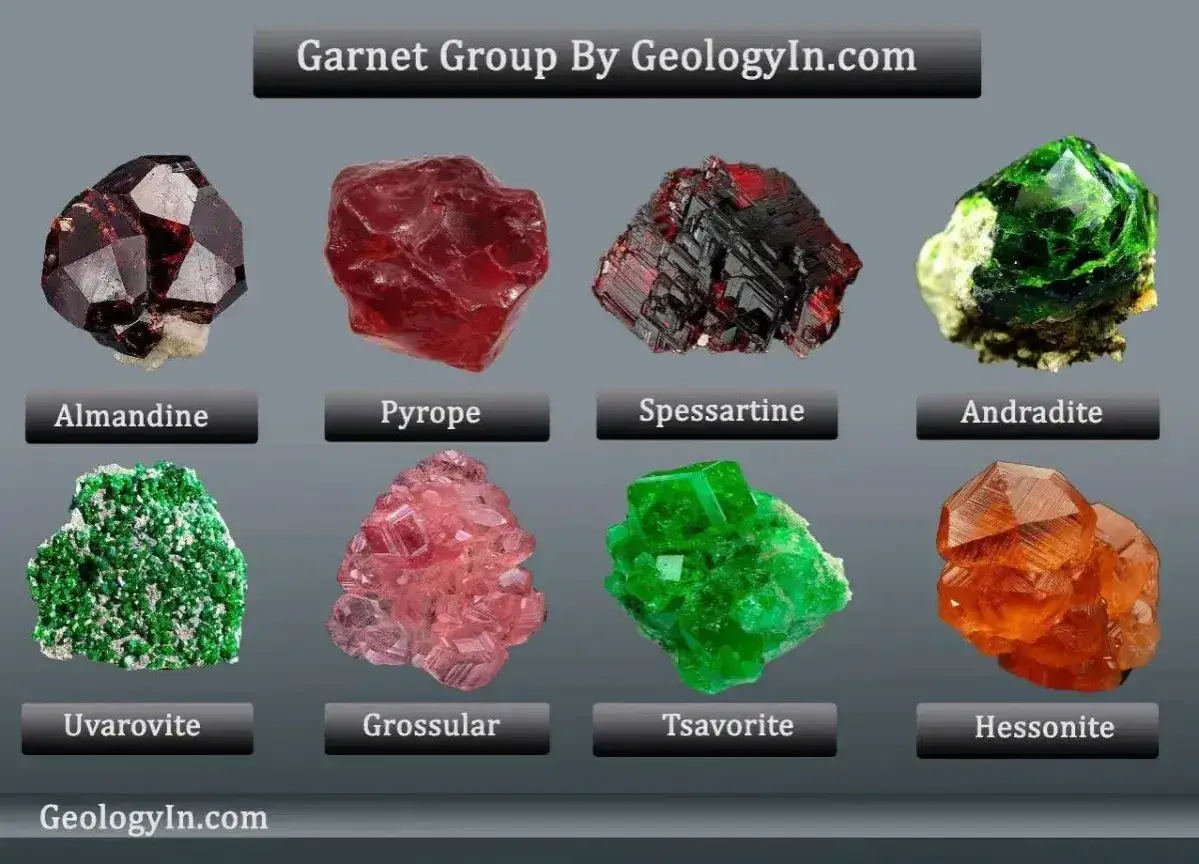
GIA groups garnet as a mineral family with six common gem-quality species, and that is the first thing I would keep in mind: garnet is a structure, not a single colour. In gemology, a solid-solution series means one species can blend chemically into another, so the boundaries are more fluid than a simple list might suggest.
That is why garnet can appear red, pink, orange, yellow, green, brown, or nearly colourless, yet still belong to the same family. The family is usually divided into two main series: pyralspite on one side, which includes pyrope, almandine, and spessartine, and ugrandite on the other, which includes uvarovite, grossular, and andradite.
For me, this classification matters because it explains why two garnets can look completely different in a ring and still share a mineral backbone. Once that is clear, the individual species are much easier to read, which is where I turn next.
The six species that matter in jewellery
Here is the simplest way to separate the main garnet species when you are comparing stones or reading a label:
| Species | Typical colour range | What it means in jewellery |
|---|---|---|
| Pyrope | Deep red to purplish red | A classic red garnet with strong saturation and a traditional look. |
| Almandine | Red to brownish red | Often the richest, darkest red in the family and a very familiar jewellery stone. |
| Spessartine | Orange to mandarin orange | Brighter and hotter in tone, often chosen for a more vivid, modern feel. |
| Grossular | Colourless, yellow, orange, brown, pink, green | A broad species that includes some of the most interesting trade varieties. |
| Andradite | Yellow-green to green, sometimes black | Best known for demantoid, the green variety that stands out for fire and brilliance. |
| Uvarovite | Bright chromium green | Usually too small for faceting, but striking in crystal clusters and contemporary pieces. |
Uvarovite is a good example of why garnet is more varied than many buyers expect: it can be beautiful, but it is rarely the sort of stone you find as a standard faceted gem. Once you know the species, the trade names start to feel less confusing, which is where the jewellery market gets more interesting.
The trade names that actually change the buying decision
Some garnet names tell you more about the stone you will see in jewellery than the species name does. Rhodolite is the best-known example in the red family: it is a blend of pyrope and almandine, usually pinkish red to purple-red, and it tends to look livelier than a very dark garnet. I think that makes it a smart choice when someone wants colour without the heavy, almost black look that some red garnets can develop in low light.
Tsavorite is the green grossular everyone remembers. It is valued because the green is clean and vivid rather than muddy, and that brightness makes it one of the most desirable green gemstones in the garnet family. Demantoid, which is a green variety of andradite, is the one I would call the connoisseur’s choice: it is famous for exceptional fire, but it is also more delicate than the tougher red garnets, so condition and setting matter more.
Hessonite is the orange-to-brown grossular often seen in vintage-style jewellery, and it has a distinctive, slightly swirled internal look that helps identify it. Mandarin garnet usually refers to the bright orange end of spessartine, and it can be astonishingly lively when the cut is good. There are also colour-change garnets, often in pyrope-spessartine mixes, which may shift appearance under different lighting; that is a behaviour, not a separate species.
If I were reading a jewellery label, I would treat these names as practical clues: they tell me whether I am looking at a red classic, a vivid green rarity, a vintage orange stone, or a brighter collector’s gem. That makes the next step much more straightforward, because the right garnet depends on how the piece will actually be worn.
How to choose the right garnet for a ring, pendant, or earrings
The best garnet for jewellery is not always the rarest one. It is the one that suits the setting, the wearer, and the amount of wear the piece will get. For an everyday ring, I usually lean towards pyrope, almandine, spessartine, or a sturdy grossular, because those stones generally tolerate normal use better than a more delicate demantoid set in a high-exposure design.
| Jewellery piece | Best-fit garnet options | Why they work well |
|---|---|---|
| Everyday ring | Pyrope, almandine, spessartine | Good durability, strong colour, and a lower risk of looking dull in smaller settings. |
| Statement ring | Tsavorite, rhodolite, demantoid | Strong visual impact, but the setting should protect the stone if the ring is worn often. |
| Pendant | Any of the main species | Pendants take fewer knocks, so this is a good place for rarer or more unusual stones. |
| Earrings | Tsavorite, rhodolite, hessonite, mandarin garnet | They can show off colour well and are generally less exposed to impact than rings. |
| Vintage-inspired jewellery | Hessonite, demantoid, almandine | These stones suit antique shapes, warmer metals, and heritage-style designs. |
The other thing I would watch is cut quality. Garnet responds well to a cut that brings out colour and brightness, but a dark stone that is cut too deep can look flat or nearly opaque once set. If you want the stone to remain the star of the piece, a well-proportioned cut and a protective setting often matter more than chasing a larger carat weight.
That naturally leads to care, because even a durable gem will look better for longer if it is cleaned and worn in the right way.
How to care for garnet jewellery
GIA’s care advice is refreshingly practical: garnets generally sit between 6.5 and 7.5 on the Mohs scale, warm soapy water is safe, and ultrasonic cleaning is usually acceptable only when the stone is intact and free of fractures. I would avoid steam cleaning, and I would be extra careful with demantoid and any garnet that has visible internal fractures or has been fracture-filled.
- Clean garnet jewellery with warm water, mild soap, and a soft brush.
- Dry it with a soft lint-free cloth rather than a rough towel.
- Store pieces separately so harder stones or metal edges do not mark the surface.
- Avoid hard knocks, especially on rings with larger stones or open settings.
- Check claws and mounts regularly, because a secure setting protects the stone more than any cleaning habit does.
In practice, I treat garnet as a durable jewellery stone, not an indestructible one. That mindset keeps the colour rich, the polish bright, and the setting in better shape for longer, which is the point when you are buying a piece you actually want to wear.
What I would keep in mind before buying one
If you want the most useful short rule, it is this: start with colour, confirm the species, then match the stone to the jewellery. Red garnets are the easiest to find and the most accessible, green tsavorite and demantoid sit higher up the desirability scale, and orange spessartine gives you the boldest, freshest look when you want something less traditional.
For me, the biggest mistake is treating every garnet as if it behaves the same way. Some are ideal for daily wear, some are better as pendant stones, and some are prized more for rarity than for size. Once you separate those categories, garnet becomes much easier to buy well, and much more rewarding to wear.
If you are choosing one for a jewellery piece in the UK market, I would prioritise colour, setting security, and how often you will wear it. Those three factors do more for satisfaction than any generic gemstone label ever will.