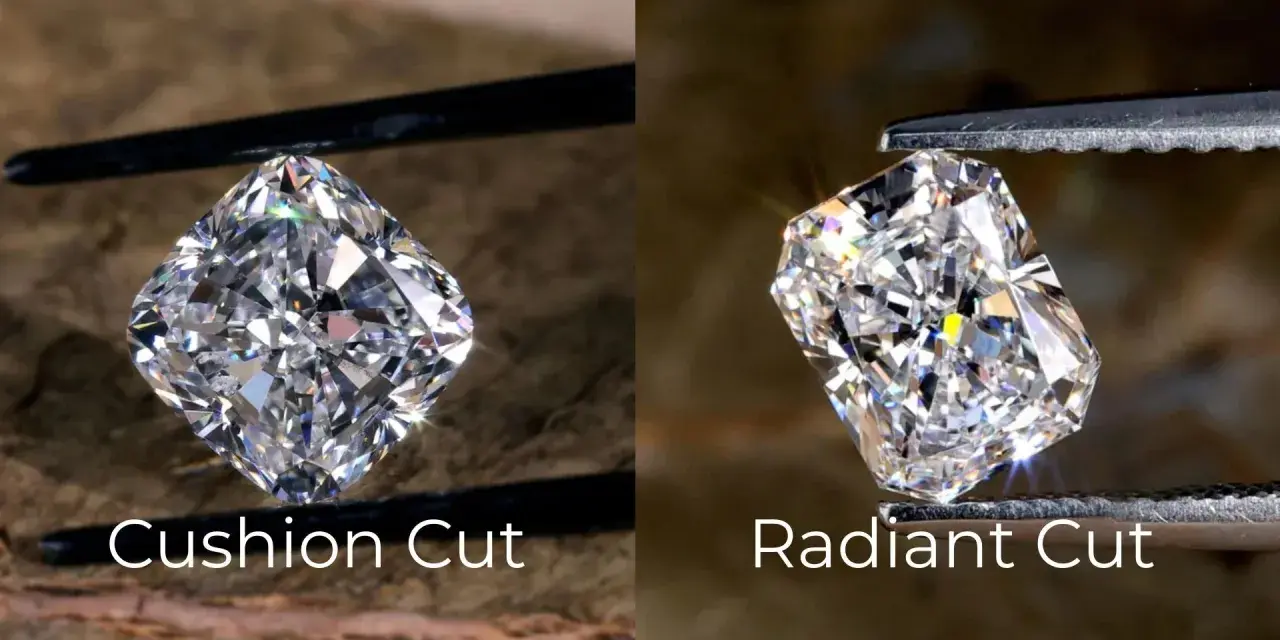
Choosing between a cushion and a radiant diamond is less about rules and more about how you want the stone to behave: softer or sharper, romantic or lively, vintage-leaning or more contemporary. In a cushion cut vs radiant cut comparison, I look at sparkle, size on the finger, setting choices, and the small buying details that make a real difference.
The right choice depends on the kind of light and outline you want
- Cushion cuts have rounded corners and a softer outline, with a look that often feels more romantic and slightly antique.
- Radiant cuts have cut corners and a more angular profile, usually with brighter, more energetic sparkle.
- If you want broad flashes and a vintage mood, cushion is usually the better fit; if you want all-over brilliance, radiant often wins.
- Elongated versions of either shape can make the stone look larger and the finger appear longer, but the effect depends on the exact cut.
- The best stone is not just about shape. Facet pattern, depth, and length-to-width ratio matter just as much.
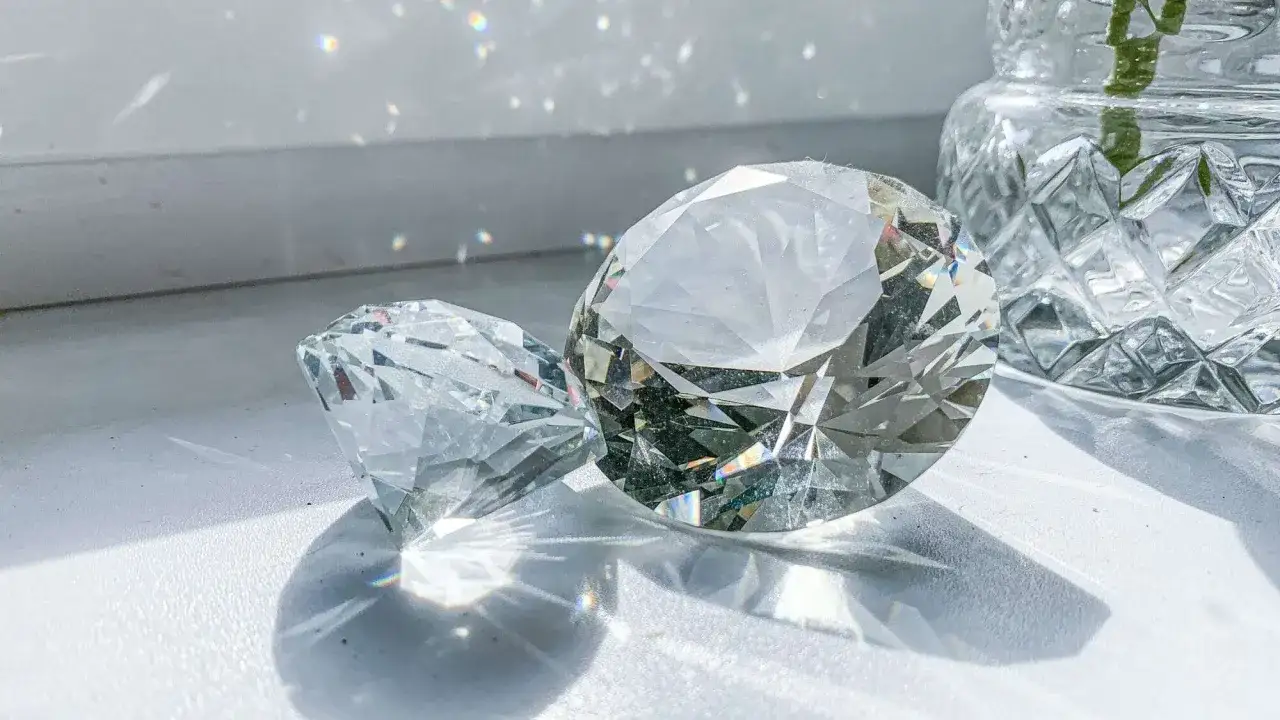
What separates a cushion cut from a radiant cut
The quickest way to tell them apart is to look at the corners and the way the stone handles light. A cushion has rounded corners and a softer, pillow-like outline, while a radiant keeps its corners clipped and usually reads as more geometric. In history, cushion belongs to the older diamond family, while radiant is a much more modern invention, designed to combine the shape of an emerald cut with the sparkle of a brilliant.
That difference is not cosmetic. Cushion cuts can be made with larger, broader facets or with more modified facets, and each version changes the feel of the stone. Radiants are built to maximise brightness, so they tend to create a busier, more energetic pattern of reflections. If you compare two stones side by side, cushion often feels softer and more relaxed; radiant feels sharper and more vivid.
| Feature | Cushion cut | Radiant cut | What it means in practice |
|---|---|---|---|
| Outline | Square or rectangular with rounded corners | Square or rectangular with cut corners | Cushion looks softer, radiant looks more structured |
| Sparkle style | Broad flashes or finer modified sparkle | High, even brilliance across the stone | Cushion feels romantic; radiant feels lively |
| Facet pattern | Varies more from stone to stone | Usually more uniform and brilliant | Radiant is easier to predict visually |
| Visual mood | Soft, classic, slightly antique | Clean, modern, more angular | Your setting choice will amplify this difference |
That table gives the basic shape of the decision, but the real story is in the light performance. Once you know what each cut does in motion, the choice becomes much easier.
How they sparkle under different light
This is where personal taste matters most. A cushion cut usually gives a gentler, chunkier sparkle, especially in a traditional brilliant-style version. I think of it as a stone that throws out broad flashes rather than a constant shower of tiny points. That look can feel warm and flattering, especially in softer indoor lighting.
Radiant cuts usually deliver more of a continuous shimmer. Because the facet pattern is tighter and more angular, the stone tends to look busier and brighter at once. Many buyers love that because it reads as immediate sparkle without much effort. If you want a diamond that catches the eye quickly, radiant often has the edge.
There is one important wrinkle: not every cushion looks the same. A modified cushion can produce a more splintered, “crushed ice” effect, which means the sparkle is made up of many small reflections instead of larger flashes. Some people love that look; others find it less readable than a classic cushion. Radiant can also vary, but the overall personality is usually more consistent from stone to stone.
In practical terms, I would judge them like this: cushion is usually the better choice if you want romance and warmth; radiant is usually better if you want maximum brightness and a sharper visual pop. From here, the next question is not sparkle alone, but how each shape sits on the hand.
Which shape looks bigger and flatters the hand more
Face-up size is one of the most misunderstood parts of diamond shopping. Two stones with the same carat weight can look noticeably different because depth, outline, and facet arrangement all change how much of the diamond is visible from above. In general, elongated versions of both shapes can create a longer, leaner line on the finger, which many people find elegant.
Radiant cuts often look a touch larger than cushions of the same carat weight when the cut is well balanced, because they can spread colour and brightness across a broader surface. Cushions can carry more weight in the body of the stone, so they sometimes appear slightly smaller face-up even when the carat weight is identical. That is not a flaw; it is simply how the proportions work.
If you want the most flattering effect, I usually suggest thinking in terms of proportion, not just carat. A squarer cushion gives a softer, compact look. An elongated cushion stretches the hand a little more. A square radiant feels balanced and neat, while a rectangular radiant is often the most finger-lengthening option of the two.
One caution: a stone that looks larger online is not always the one that will look best in person. Depth can hide weight, and a shallow stone can look impressive but sacrifice balance. When I compare diamonds for clients, I always check the actual measurements as well as the carat number. That leads naturally into the buying details that matter most.
Colour, clarity, and value are not equal across the two cuts
Neither shape should be judged by carat alone. Cut style affects how colour and inclusions show up, and that changes what quality grades make sense. Radiant cuts are often more forgiving of small inclusions because their strong sparkle can help disguise minor imperfections. They can still show warmth, though, especially in the corners or in stones with a deeper body.
Cushion cuts are a little more variable. A classic cushion with broader facets can show a more open pattern, which means clarity matters more than some buyers expect. A modified cushion can hide small inclusions better, but the trade-off is a busier appearance that not everyone loves. In other words, the same shape does not guarantee the same visual result.
For colour, I would not treat either shape as universally forgiving. Radiants can sometimes make colour feel more noticeable in certain lighting, while cushions often benefit from a slightly warmer tone if the setting is yellow gold or rose gold. In platinum or white gold, both shapes tend to look crisper, but only if the stone itself has the right balance.
As for value, there is no simple winner. Market pricing shifts with demand, availability, and the exact proportions of each stone. What matters more is the relationship between appearance and price. A radiant may give you a lot of visible sparkle for the money, while a cushion may give you a more distinctive, romantic feel that is harder to fake. I would rather spend slightly more on a well-cut stone than save money on a shape that looks dead on the finger.
Settings that suit each shape best
The setting can change the personality of either cut almost as much as the cut itself. Cushion diamonds work beautifully in solitaire, halo, and vintage-inspired settings because the rounded corners and softer outline pair well with detail. If you want a classic British feel, a cushion in yellow gold can look especially rich and timeless.
Radiant cuts usually shine in more structured settings. Their clipped corners make them a good fit for bezel settings, four-prong solitaires, and clean three-stone designs. I often think radiant looks strongest when the setting keeps the lines tidy, because that reinforces its modern character.
Metal choice matters too. Platinum gives both cuts a cool, crisp frame, which suits radiant particularly well. Yellow gold softens the overall impression and can make a cushion feel more antique. White gold sits somewhere in the middle, especially if you want the stone itself to do most of the talking.
Here is the practical rule I use: choose a setting that supports the stone’s natural geometry, rather than fighting it. A cushion wants softness around it. A radiant wants clean lines. Once you respect that, the ring feels coherent instead of overdesigned.
How to choose the right stone without second-guessing yourself
If I had to reduce the decision to a few steps, this is how I would do it. First, decide whether you prefer soft or angular edges. That single choice eliminates a lot of noise. Next, compare the sparkle in different lighting, because a shape that looks beautiful in daylight can feel much busier under warm indoor light.
- Look at the stone from a distance first to judge overall outline, then move closer to inspect facet pattern.
- Ask for measurements, not only carat weight, so you can compare face-up size properly.
- Check the length-to-width ratio if you want an elongated look; small changes here make a real visual difference.
- Inspect the corners, especially on a radiant, because sharp edges and symmetry affect both beauty and durability.
- Review the diamond under different lighting so you do not buy a stone that only performs in one environment.
For a UK buyer, I would add one more practical point: always treat the shape name as a starting point, not the final verdict. Two diamonds with the same label can look surprisingly different, and a grading report will not show you everything about sparkle. If possible, ask for high-resolution video and compare a few stones side by side rather than choosing from a single image.
In real life, the best choice is usually the one that matches your taste the moment you see it in motion. If the stone feels calm and plush, you are probably looking at a cushion that suits you. If it feels bright, crisp, and slightly more architectural, the radiant is probably the stronger match.
The simple rule I would use before making the final choice
If you want a diamond that feels softer, more romantic, and a little more vintage, I would lean toward a cushion. If you want stronger sparkle, a sharper outline, and a more modern read, I would lean toward a radiant. That is the cleanest way to think about the comparison, and it stays useful even when the stones vary in size, setting, or budget.
What matters most is not which shape is objectively better, because neither one is. It is which one looks right on your hand, in your lighting, and in the kind of jewellery you actually want to wear for years. If you keep those three things in view, the decision becomes much easier and far less technical than it first appears.
For me, that is the real lesson here: choose the shape that still looks compelling after the first glance, not the one that only wins on paper.