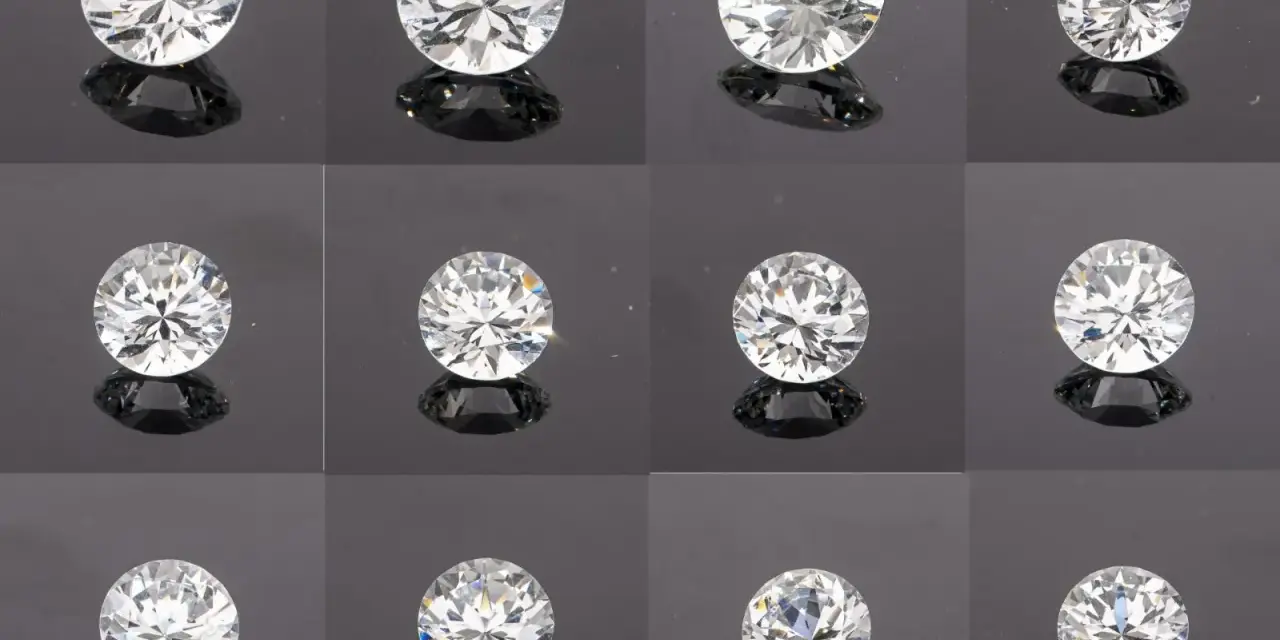
Diamond lookalikes come in more varieties than most people expect: some are lab-created simulants, some are natural gemstones, and one category is still a real diamond. The difference matters because sparkle, durability, price and long-term wear can all change dramatically even when two stones look similar at a glance. I’m breaking down the main options, what each one is best at, and how to choose the right stone for a ring or a smaller piece of jewellery.
The quickest way to narrow the field
- Moissanite is usually the strongest all-round diamond lookalike: bright, durable and still far cheaper than a diamond.
- Cubic zirconia gives the closest low-cost sparkle, but it is the least durable choice for regular wear.
- White sapphire is elegant and hard-wearing, but it is noticeably quieter than diamond in low light.
- Lab-grown diamond is not a simulant; if you want a genuine diamond without a mined origin, this is the closest match.
- Cut and setting matter almost as much as the stone itself, especially in round brilliant styles.
What people usually mean by a diamond lookalike
In gem terms, a simulant is a material that imitates the appearance of diamond without sharing its chemistry. That distinction matters because a stone that looks like a diamond can be either a true substitute or a real diamond created in a lab. I separate those two categories first, because buyers often want different things even when they use the same search terms.
If you mainly want the visual effect, you are comparing sparkle, size and price. If you care about daily wear, resale expectations or heirloom value, the conversation shifts to durability, disclosure and whether the stone is actually diamond at all. Once that is clear, the shortlist becomes much easier to read.
From here on, I’m looking at the materials that do the best job of copying the diamond look in real jewellery, not just on a product page.
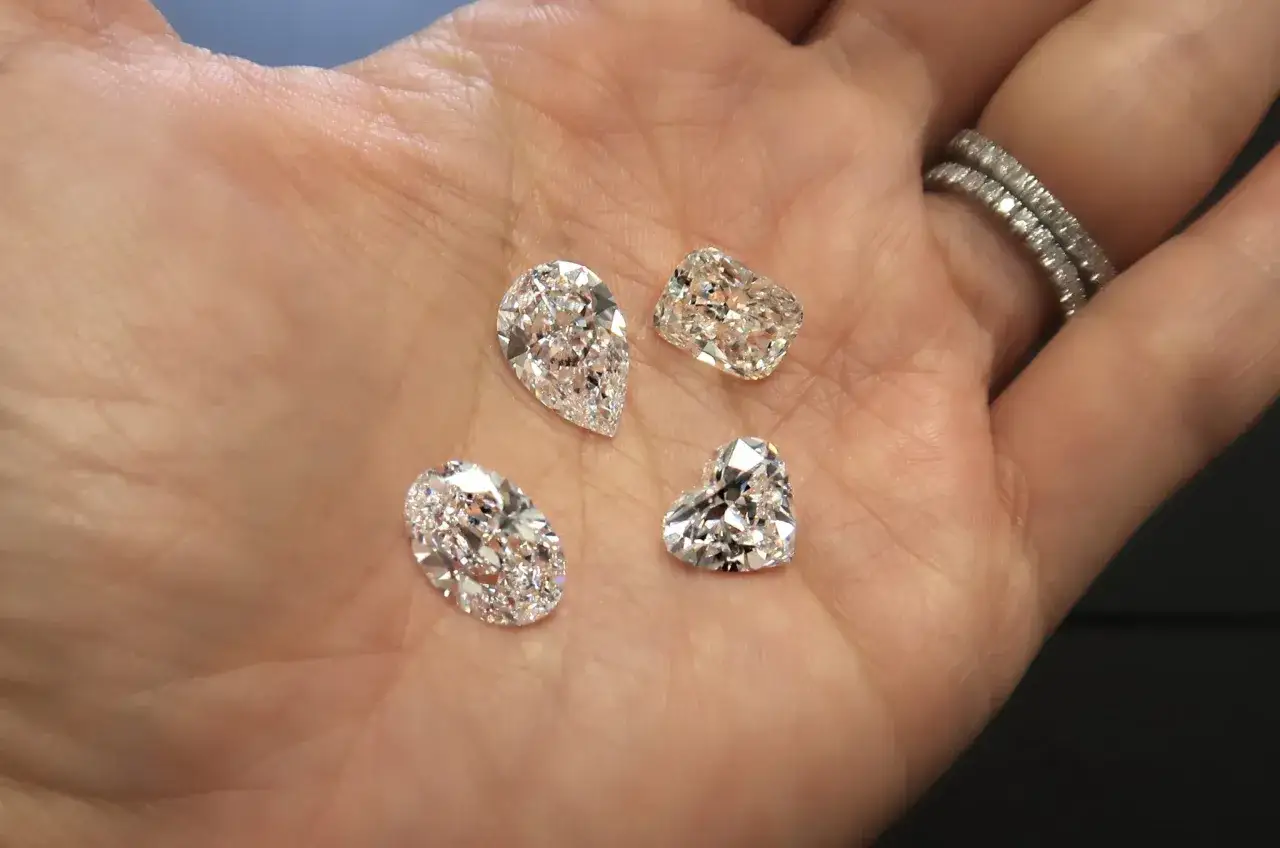
The stones and materials that come closest
When I compare these side by side, the differences are practical rather than academic. Some stones chase the bright, icy look of diamond; others deliver a softer version of it; a few are better described as budget substitutes.
| Stone or material | How it reads visually | Hardness and wear | Best for |
|---|---|---|---|
| Moissanite | Very bright, lively and often more fiery than diamond | 9.25 Mohs, excellent for daily wear | Engagement-style rings and buyers who want the strongest balance of look and durability |
| Cubic zirconia | Strong sparkle, but it can look a little glassy or too perfect | 8 to 8.5 Mohs, prone to scratching and dulling over time | Fashion jewellery, occasional wear and very tight budgets |
| White sapphire | Cool, subtle and elegant, but less brilliant than diamond | 9 Mohs, durable but not as lively | Classic, understated pieces and rings where restraint matters more than flash |
| White zircon | Natural and sparkling, with a diamond-like flash in the right cut | About 6.5 to 7.5 Mohs, less forgiving than the others | Dress jewellery and smaller stones worn with care |
| White topaz | Gentle sparkle, noticeably softer than diamond | 8 Mohs, but with weaker toughness than its hardness suggests | Lower-cost pieces, especially earrings and pendants |
| Lab-grown diamond | Essentially the same visual appearance as mined diamond | 10 Mohs, best-in-class durability | Anyone who wants a real diamond with a different origin story |
White zircon and cubic zirconia are not the same thing, even though the names are easy to confuse. One is a natural gemstone; the other is a laboratory-created simulant. Glass can also appear in very cheap jewellery, but I would not treat it as a serious option for anything you expect to wear often.
The short version is simple: moissanite is the most convincing diamond substitute for most buyers, while lab-grown diamond is the most faithful overall because it is still diamond. The next question is how those stones behave in different cuts and lighting conditions.
Which option looks most like a diamond in real life
The answer depends on more than the material itself. Cut style, stone size, metal colour and lighting all affect whether a piece reads as “diamond-like” or not. I pay the most attention to brilliance, which is the white light return, and fire, which is the coloured flash.
- Round brilliant cuts hide differences better than step cuts such as emerald or Asscher, because they are designed for maximum sparkle.
- Moissanite often looks spectacular, but its rainbow fire is stronger than diamond’s, so it can appear more dramatic in bright light.
- Cubic zirconia can fool the eye at a glance, but larger stones sometimes look glassier and less deep than a well-cut diamond.
- White sapphire gives a cleaner, calmer look that suits people who do not want an overly flashy stone.
- White zircon can be very pretty, but its optical quirks and softer structure make it less forgiving in everyday jewellery.
If you want the most diamond-like result, the setting matters too. White metal, precise prongs and a clean round brilliant cut all help. Yellow gold can still work, but it changes the visual read; the stone often looks warmer and less like a classic colourless diamond.
That is why budget and wear pattern matter as much as colourless sparkle. A convincing look on day one is only useful if the stone still looks good after real-life wear.
How to choose based on wear, budget and setting
For an occasional pendant, the budget can be quite low. For an everyday ring, I raise the bar immediately because rings take more knocks, oils and abrasion than people expect. In the UK market, the metal and setting can move the final price as much as the stone, so I always look at the whole piece rather than the centre stone alone.
| Budget band | What it usually buys in the UK | My take |
|---|---|---|
| Under £100 | Cubic zirconia or simple white topaz in silver or plated settings | Fine for occasional wear, but not ideal for a ring you will wear every day |
| £100 to £500 | Better CZ, white topaz and some white zircon pieces | Good for fashion jewellery and short-term style goals |
| £500 to £1,500 | Moissanite or white sapphire in better metals | A strong sweet spot for buyers who want real durability without diamond pricing |
| £1,500 to £3,000+ | Lab-grown diamond or higher-spec moissanite in gold or platinum | Best if you want a long-term ring with a true diamond feel |
If I were buying for daily wear, I would usually start with moissanite or lab-grown diamond and only move down the durability ladder if the piece were light-use jewellery. White topaz and white zircon are beautiful in the right context, but they are not the first stones I would choose for a ring that has to survive constant contact with desks, door handles and the occasional knock against a sink.
The safest rule is to match the stone to the life the jewellery will actually have. A pendant can tolerate softer materials; a ring usually cannot. That leads straight into the practical question of how to tell what you are actually looking at.
How to tell a real diamond from a convincing substitute
I would not rely on a single home test. Some lookalikes need magnification or specialist equipment, and scratch tests are a bad idea because they can damage both the stone and the setting. The most reliable approach is a combination of visual checks, disclosure and proper testing.
- Watch the sparkle pattern - moissanite and CZ often throw stronger rainbow flashes than diamond.
- Look for doubling under magnification - some simulants, especially zircon and moissanite, can show optical doubling.
- Check the paperwork - a reputable seller should clearly state whether the stone is diamond, lab-grown diamond or a simulant.
- Be cautious with basic testers - simple tools are useful, but they do not settle every case on their own.
- Ask for a lab report when appropriate - that matters most for diamonds and lab-grown diamonds.
In the UK, I also like to see the stone described in plain language on the invoice and the metal properly hallmarked if it is sold as precious metal. If a seller is vague about what the centre stone actually is, I treat that as a warning sign rather than a detail to ignore.
Once you know how to identify the material, the final decision becomes less about guesswork and more about matching the right stone to the right job.
My simple buying rule for choosing the right stone
My rule is straightforward: buy for the life the jewellery will actually live, not for the idea of the jewellery. That means choosing by wear, budget and expectations, not by price alone.
- Choose moissanite if you want the best mix of sparkle, durability and value.
- Choose white sapphire if you prefer a quieter, more elegant look.
- Choose cubic zirconia if cost is the main issue and the piece is not for constant wear.
- Choose lab-grown diamond if you want a true diamond with a different origin.
- Choose white topaz or white zircon only when style matters more than long-term toughness.
If I were choosing for an engagement ring, I would usually narrow the field to moissanite or lab-grown diamond first, then decide whether I want maximum value or an actual diamond with no mined origin. For a smaller fashion piece, white sapphire, white topaz and even CZ can make sense if the design is doing most of the work. The best choice is the one that matches both the look you want and the way you will wear it.