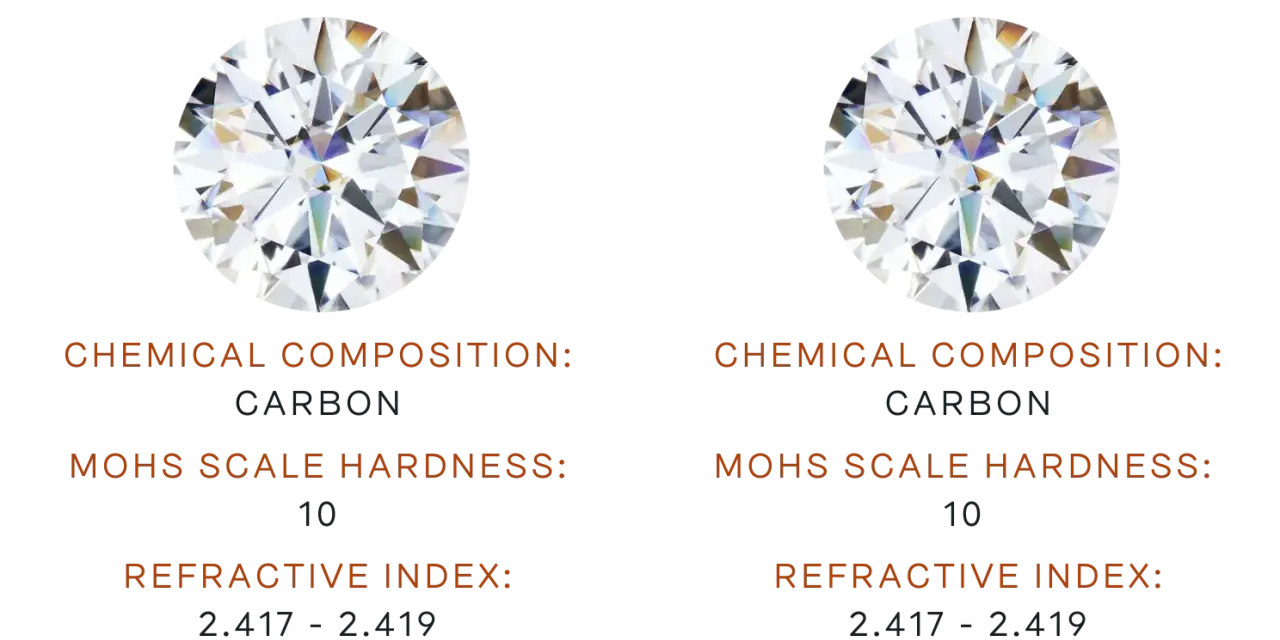
Choosing between a mined stone and a lab-created one is less about sparkle and more about priorities: budget, rarity, resale, and the story you want the piece to carry. The lab grown vs natural diamond decision matters because both options can look beautiful in a ring, yet they behave differently when you look at cost, origin, and long-term value. In this guide, I break down the differences in plain English so you can choose with confidence rather than guesswork.
The real choice comes down to origin, budget, and what you want the diamond to mean
- Both are real diamonds with the same basic crystal structure, so the visual gap is much smaller than many people expect.
- Natural diamonds are geological stones formed over immense time, while lab-grown stones are created in controlled conditions in a matter of weeks.
- Daily wear is similar because both score 10 on the Mohs hardness scale.
- Lab-grown diamonds usually give you more visible size for the same spend, but secondary-market value is typically weaker.
- Natural diamonds usually cost more and still carry the stronger rarity story and resale appeal.
- The best choice is rarely about which stone is “better” in the abstract. It is about which trade-off fits the person buying it.
How these diamonds are actually made
GIA describes natural diamonds as stones that formed over millions to billions of years, deep within the Earth, while lab-grown diamonds are created in a much shorter time under controlled conditions. That difference in origin is the foundation of the whole comparison, because everything else flows from it: rarity, price, traceability, and how the stone is marketed.
I think it helps to separate the process into two simple paths. One is geological. The other is industrial. Both produce diamond, but the route is completely different.
Natural diamonds are geological time pieces
Natural diamonds form under extreme heat and pressure far below the Earth’s surface. They are later brought closer to the surface through volcanic activity and eventually mined, cut, and polished for jewellery. That long chain of events is why people still attach emotional weight to them: each stone is a finite fragment of deep time.
Lab-grown diamonds are engineered crystals
Lab-grown diamonds start with a diamond seed and carbon-rich material. Two methods dominate the market: HPHT, which uses high pressure and high temperature, and CVD, which builds diamond layer by layer in a chamber. The result is still diamond, not a simulant, but it is a diamond made by people rather than geology.
This is also why I do not treat lab-grown stones as a “shortcut” version of the real thing. They are real. They are just not rare in the same way. Once that origin story is clear, the next question is what you can actually see when the stones sit side by side.
Why they can look almost identical in the hand
By eye, most shoppers will struggle to tell the difference, and that is not a sign of ignorance. It is the reality of diamond optics. Both lab-grown and natural stones can be cut to the same standards, and both can return the same bright, crisp sparkle when the cut is strong.
GIA notes that lab-grown diamonds are chemically and optically very similar to natural diamonds, which is why ordinary visual checks are not enough. In practice, that means a jeweller’s loupe may reveal clues, but it will not reliably settle the question of origin on its own.
| Factor | Natural diamond | Lab-grown diamond |
|---|---|---|
| Origin | Formed in the Earth over vast spans of time | Grown in a controlled laboratory or factory setting |
| Hardness | 10 on the Mohs scale | 10 on the Mohs scale |
| Appearance | Can look identical to a lab-grown stone when cut well | Can look identical to a natural stone when cut well |
| Typical clues under magnification | Natural growth features, inclusions, and trace characteristics | Growth patterns, metallic traces in some HPHT stones, or layered features in some CVD stones |
| Durability for daily wear | Excellent | Excellent |
| What matters most visually | Cut quality first, then colour and clarity | Cut quality first, then colour and clarity |
The table makes the important point plain: the look is not where the biggest divide sits. The divide shows up in origin, pricing, and how the market values the stone after purchase. That leads directly to the part most buyers really care about: what they will pay, and what they will get back later.
Price, value, and resale are where the gap becomes obvious
If you want the simplest practical answer, it is this: lab-grown diamonds usually cost less for the same visible quality. That lower price is what makes them attractive for buyers who want a larger carat weight or a more dramatic setting without stretching the budget.
But I would not stop at the headline price. The better question is what kind of value you want. If you are buying for emotional meaning and daily wear, value is mostly about how much joy the piece gives you. If you are thinking about resale, upgrade paths, or heirloom potential, the calculation changes.
| Value factor | Natural diamond | Lab-grown diamond |
|---|---|---|
| Upfront cost | Higher | Lower |
| Size for the same budget | Usually smaller | Usually larger |
| Secondary-market demand | Stronger and more established | Weaker and less predictable |
| Emotional rarity | High, because each stone is finite and geologically rare | Lower, because supply can expand more easily |
| Best fit | Buyers who care about tradition, scarcity, or future resale | Buyers who care about size, design impact, or budget efficiency |
My blunt view is that neither type should be treated as a financial product. A diamond is a jewellery purchase first. If resale matters, natural stones still have the advantage. If visible size matters more than future trade-in value, lab-grown often makes more sense. Once money is on the table, it is worth looking at the ethics and transparency behind each option.
Ethics and sustainability are more nuanced than the marketing
People often assume lab-grown automatically means better, cleaner, or greener. I would be careful with that kind of blanket claim. Lab-grown diamonds remove mining from the equation, which is a real difference, but they still require electricity, equipment, and a manufacturing supply chain. Their footprint depends heavily on the energy source used to make them.
Natural diamonds bring a different set of questions. Mining can have land-use, labour, and community impacts, but it can also be managed responsibly when sourcing is transparent and well governed. In other words, the origin label alone does not tell you whether a stone was produced ethically. The paperwork and the supply chain matter.
The FTC says sellers should describe laboratory-created diamonds clearly as lab-grown or lab-created rather than leaving buyers to guess. I think that principle is useful well beyond the US: clear labelling protects buyers from confusing origin with quality.
- Do not assume “natural” automatically means responsibly sourced.
- Do not assume “lab-grown” automatically means low-impact.
- Do ask where the stone came from, how it was produced, and how the seller can prove it.
- Do insist on clear wording on the invoice, report, and product description.
Those values matter, but the right choice still depends on how you plan to wear the piece. That is where personal priorities become more useful than industry talking points.
How I would choose one for an engagement ring or keepsake piece
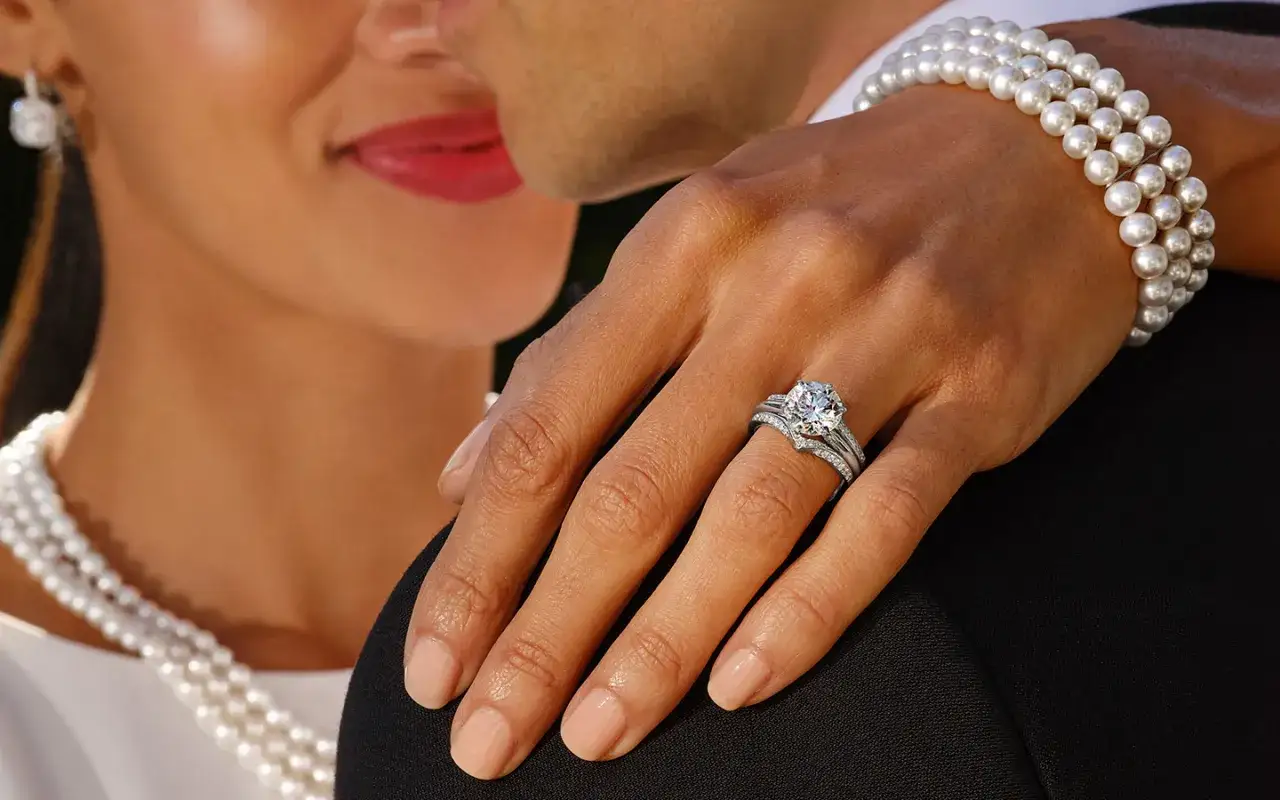
If I were choosing for a ring, I would start with the person, not the category. A diamond should match the wearer’s taste, lifestyle, and view of value. The stone is part of the story, but it is not the whole story.
Choose lab-grown if budget and size matter most
Lab-grown is often the better fit when someone wants a stronger visual presence, a larger centre stone, or a more elaborate setting without pushing the price into uncomfortable territory. It is also a sensible choice for buyers who would rather put money into the ring design, a better cut, or a more substantial setting.
Choose natural if rarity and resale matter more
Natural diamonds still carry the stronger sense of scarcity and the more established resale market. If the ring is meant to be a long-term heirloom, or if the buyer values geological origin as part of the romance, the mined stone usually makes more sense.
Read Also: Princess Cut Diamond - Your Guide to Sparkle & Style
Do not let the label distract from the cut
For everyday jewellery, cut quality matters more than origin for visual impact. A well-cut smaller diamond often looks better than a larger stone with poor proportions. That is one of the most common mistakes I see: people compare carat weight before they compare brilliance.
If the piece is for daily wear, I would also check the setting strength, the height of the stone, and whether the wearer is hard on rings. Both diamonds are extremely hard, but neither is invincible. A 10 on the Mohs scale still can chip if the setting or edge is exposed to a sharp knock. Before paying, there are a few checks that save people from the most common mistakes.
The checks I would make before paying
This is the part that prevents regret. Whether you choose a mined or lab-grown stone, the seller should be able to answer simple questions without hesitation. If the answers are vague, I would walk away.
- Ask for a clear origin statement in writing: natural or lab-grown.
- Check the grading report number and make sure it matches the stone you are buying.
- Compare cut quality first, then colour, clarity, and carat.
- Ask whether the stone has any post-growth or post-mining treatments that affect appearance.
- Confirm the return policy, resizing terms, and aftercare before checkout.
- For UK purchases, compare the final price you will actually pay, not just the headline figure.
If the jeweller cannot explain the diamond’s origin clearly, that is a problem regardless of whether the stone is lab-grown or mined. In the end, the best purchase is the one that matches your priorities without confusion.
What usually matters most once the excitement settles
After all the comparisons, the decision usually narrows to three questions. Do you want the strongest rarity story? Do you want the largest stone for the budget? Or do you want the option that feels easiest to justify on a values level?
My practical answer is simple. If you want maximum size and value efficiency, lab-grown is persuasive. If you want rarity, resale strength, and the traditional romance of a mined stone, natural still leads. If you are buying for love, not for speculation, I would choose the diamond that still feels right after the novelty wears off.
That is the version of this choice that matters most to me: not which stone sounds better in theory, but which one you will still be happy to wear, clean, and look at years from now.