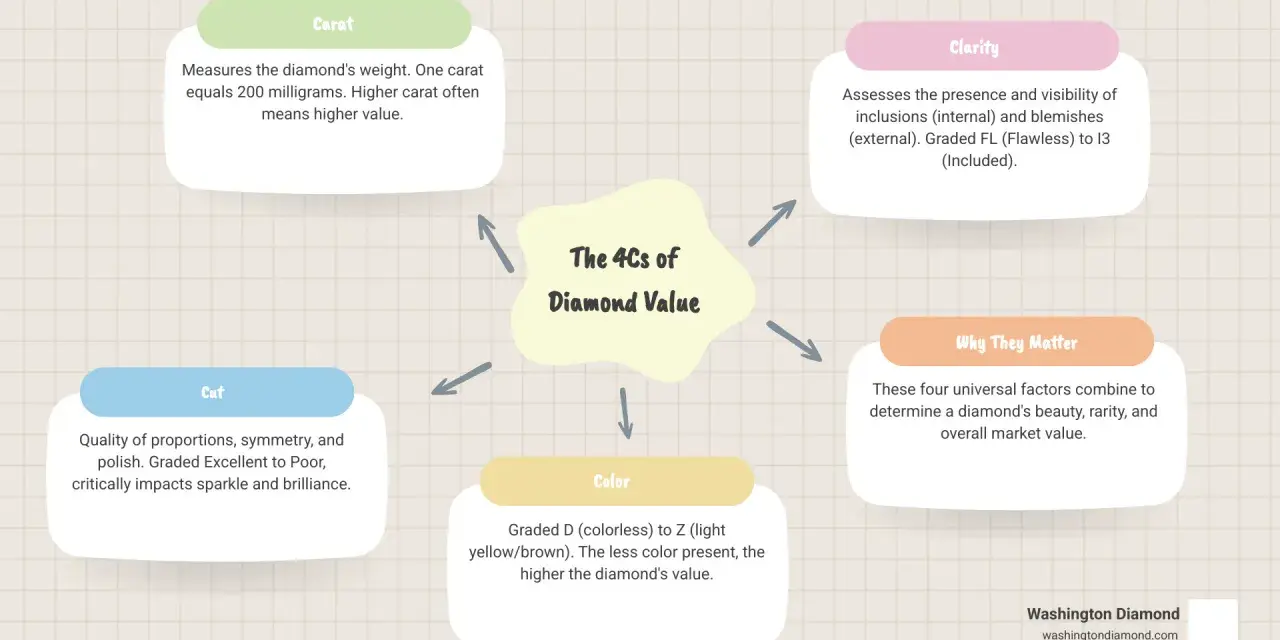
A diamond appraisal is only useful when it answers a specific question: what the stone would cost to replace, what it might sell for, or how it should be described for insurance, probate, or a future sale. I treat the process as a mix of gemmology, market research, and careful documentation, because the number means little without the context behind it. In the UK, that distinction matters even more, since different purposes can produce different values for the same diamond.
The key points I would keep in mind
- Purpose changes value - insurance, probate, and resale can all produce different figures for the same stone.
- The 4Cs still matter most - carat, cut, colour, and clarity remain the backbone of any valuation.
- A report is not a valuation - a laboratory document describes quality, but it does not assign a price.
- Independent inspection matters - a proper valuer should examine the item in person, not estimate from photos.
- UK fees are usually fixed - many standard valuations sit roughly between £50 and £150 per item, with more complex stones costing more.
- Update regularly - a fresh review every three years is a sensible baseline in the UK.
What the value is really for
One of the easiest ways to go wrong is to treat every figure as if it means the same thing. It does not. An insurance valuation aims to estimate the replacement cost of a comparable item from the retail market, while a resale figure is usually closer to what a dealer or private buyer will actually pay. Probate and estate work often sits somewhere else again, because the question is no longer "What would a shop charge?" but "What was this item worth in the relevant market at the relevant date?"
| Purpose | What the figure is trying to do | Typical use |
|---|---|---|
| Insurance | Estimate the cost of replacing the item with a comparable one through the retail market | Cover levels and claims |
| Probate or estate | State a defensible market value at the relevant date | Inheritance and legal work |
| Resale | Estimate what a dealer or private buyer is likely to pay | Selling, part-exchange, family division |
That distinction matters because a beautiful diamond ring can have three sensible values on three different days, all of them defensible. Once you know which figure you need, the rest of the process becomes much easier to judge, and the next question is why two stones that look similar can still appraise very differently.
Which details move the value most
The 4Cs are still the starting point, but they are not the whole story. Carat is weight, not size, and a larger stone is not automatically the better one. In practice, I often see smaller diamonds outperform bigger ones when the cut is better, the colour is cleaner, or the clarity is noticeably sharper.
| Factor | Why it matters | What I look for |
|---|---|---|
| Carat weight | Heavier stones are rarer, but weight alone does not guarantee stronger value | Actual measured weight, not guessed size |
| Cut quality | Cut controls brilliance, fire, and face-up appearance | Symmetry, proportions, polish, and light return |
| Colour | Whiter stones usually command a premium in the natural diamond market | Where the stone sits on the colour scale |
| Clarity | Visible inclusions or blemishes can reduce value | Type, size, and location of internal features |
| Shape | Round brilliants often have the strongest market data, while fancy shapes can vary more | Demand for the shape and how well it is cut |
| Fluorescence | It can help, hurt, or do almost nothing, depending on the stone | Strength and market reaction to the effect |
| Condition and setting | Chips, wear, repairs, and a heavy or damaged mount can change the final figure | Any damage, wear, or design influence on resale and replacement |
| Origin and treatment | Natural, lab-grown, treated, and documented stones are not priced the same way | Disclosure, supporting papers, and market comparables |
I also pay attention to provenance when it is documented, but I never let a story do the work of evidence. A vintage mount, a matching pair, or an antique cut can add interest, yet the final figure still depends on measurable quality and the market for comparable pieces. With those value drivers in mind, the next step is seeing how a competent valuer turns them into a formal report.
How the process works in practice
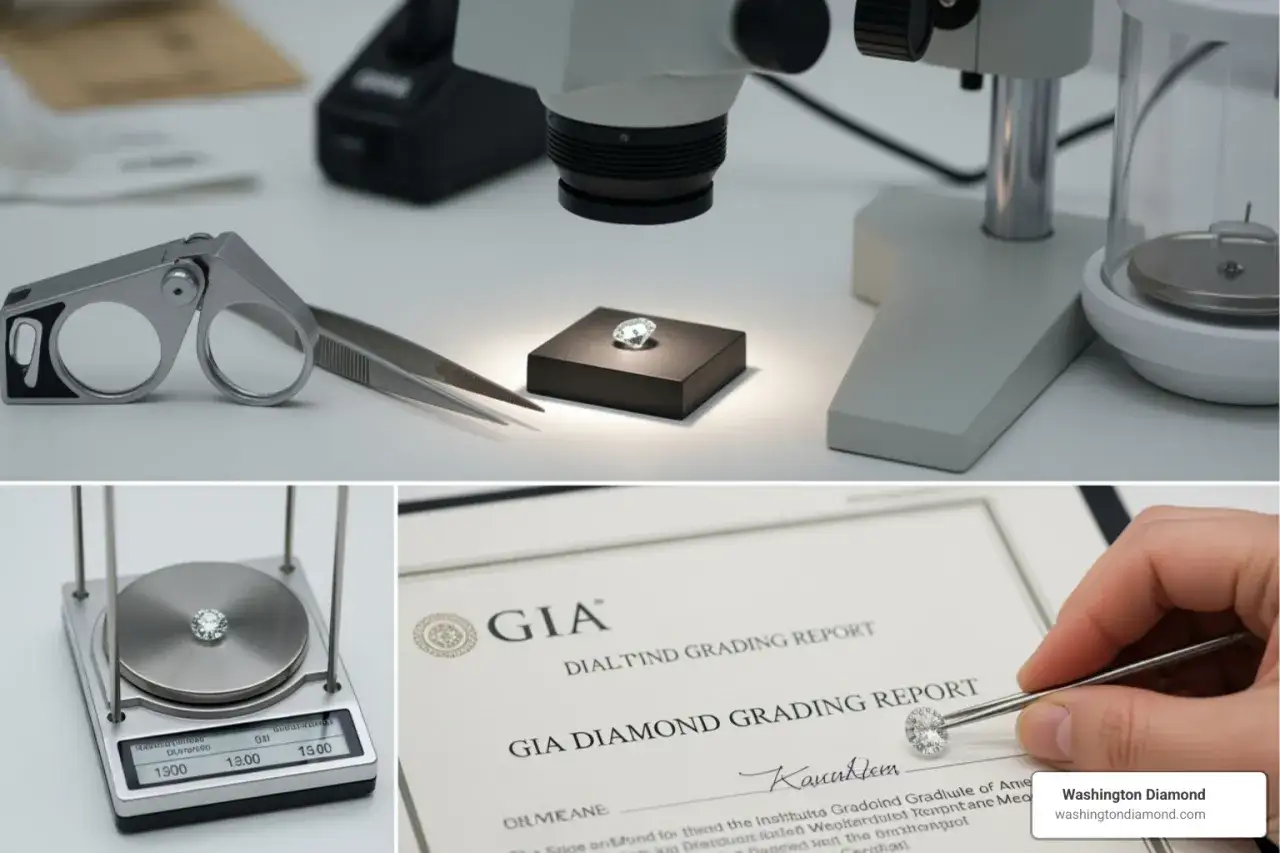
A proper valuation starts with identification, not with a price. The stone is inspected in person, measured, examined under magnification, and checked against any existing paperwork or inscriptions. If there is a laboratory report from GIA, that helps anchor the grading discussion because it records the stone's quality characteristics, but it still stops short of assigning value. I prefer to treat the lab report and the valuation as separate documents, even when they sit in the same file.
- Document the item - note receipts, previous valuations, certificates, and any report numbers.
- Inspect the stone - confirm whether it is natural, lab-grown, or treated, and check the diamond's visible and measured characteristics.
- Assess the setting - on mounted jewellery, the metal, workmanship, and wear all affect the final result.
- Compare the market - research comparable retail replacements or resale evidence, depending on the purpose.
- Write the report - produce a clear description, photographs, measurements, and the value figure with the correct valuation basis.
How to choose the right valuer in the UK
In the UK, I would start with an independent specialist, not the place that sold the ring. Independence matters because the valuation should reflect the item, not a sales target. The National Association of Jewellers IRV directory is a sensible starting point, and I also look for a valuer who can explain their method plainly, charges a fixed fee, and works to a clear written scope.
- Independence - the valuer should not have a reason to inflate or suppress the number.
- In-person inspection - a real valuation needs hands-on examination, not a quick upload.
- Fixed pricing - a professional fee should be based on expertise and research, not a percentage of the item's value.
- Clear purpose - the report should say whether it is for insurance, probate, resale, or another use.
- Specific detail - measurements, photos, metal type, gemstone grades, and stone counts should be easy to find.
- Relevant experience - antique settings, multi-stone rings, and higher-value diamonds often need deeper knowledge than a general high-street estimate.
The trade body also warns, in practical terms, against treating online photo opinions as proper valuations, and that is sound advice. If the valuer cannot examine the piece, test materials, and see the stone in hand, the final figure is only a rough opinion. Once the right person is in place, the remaining questions are cost, timing, and when to return for an update.
What it usually costs and when to update it
Most reputable UK valuers charge a fixed fee rather than a percentage of the diamond's value. That makes sense, because the work is research-heavy and depends on expertise, not commission. Based on current UK fee structures, a standard single item often sits around £50 to £100, document or report fees commonly run around £70 to £100, and single diamonds over 1 carat or more complex pieces frequently start from about £75 to £150 and rise with complexity.
| Item or service | Typical UK price | What pushes it higher |
|---|---|---|
| Standard diamond jewellery | £50-£100 | Multiple stones, antique mounts, unusual workmanship |
| Bound report or document fee | £70-£100 | Extra photographs, detailed research, specialist formatting |
| Single diamond over 1 carat | £75-£150+ | Exceptional colour, clarity, cut, or supporting documentation |
| Complex or high-value piece | £100-£250+ | Multiple stones, designer work, probate, or family division |
For timing, I would review a valuation at least every three years. The National Association of Jewellers recommends that schedule, and it is sensible because gold, diamond, and retail replacement prices do not sit still. If the ring has been resized, the stone reset, or the insurance policy changed, I would update sooner. A stale document is one of the easiest ways to end up underinsured or to overpay for cover.
The paperwork I would keep with the stone
A good valuation is only half the job; the other half is keeping the paperwork together so the number stays useful. I would store the report, any lab paperwork, the original receipt if there is one, and clear photographs in the same place.
- The valuation report - this is the document most insurers or legal advisers will want to see.
- Any lab report - keep the grading paper with the item so the diamond can be matched to its description.
- Receipts and prior valuations - these help show ownership history and how the value has changed.
- Photographs - current images are useful if the piece is later lost, damaged, or altered.
- Repair notes - records of resizing, resetting, or polishing help future valuers understand changes to the piece.
Keeping that trail together saves time, reduces disputes, and makes replacement or sale easier when you actually need it. If I had to reduce the whole process to one rule, it would be this: know why the diamond is being valued, choose a qualified independent valuer, and keep the evidence organised so the figure still means something six months or six years later.