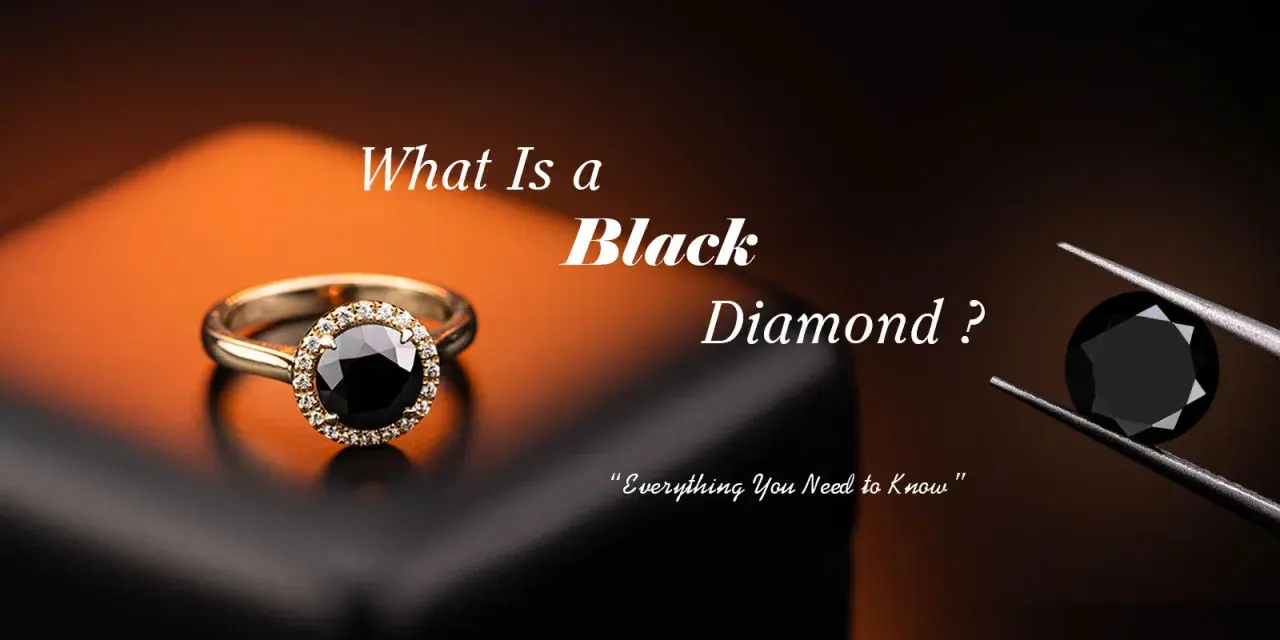
Black diamonds sit in a curious space: they are still diamonds, but they do not behave like the colourless stones most people picture first. The short answer to what is a black diamond is simple: it is a real diamond whose dark appearance comes from dense inclusions, treatment, or, in rarer cases, a polycrystalline structure. In this article I break down how they get their colour, what makes them different from white diamonds, how they are graded, and what I would check before buying or wearing one.
Key facts worth knowing before you choose one
- Black diamonds are real diamonds, not a separate mineral.
- Their colour usually comes from dense inclusions, graphitisation, irradiation, or other treatment.
- They are often opaque, so they are judged more on colour, cut, polish, and origin than on clarity.
- Most black diamonds are treated, so disclosure matters if you are paying for rarity.
- They are still diamonds, but their dark structure can make them more brittle at sharp points and edges.
A black diamond is a real diamond with a different visual signature
Chemically, a black diamond is still diamond: crystalline carbon formed deep in the Earth or grown in a lab. What changes is the way light moves through the stone. Instead of the bright return and rainbow flashes people expect from a transparent diamond, the black stone absorbs and scatters more light, so the surface reads as deep, inky, charcoal, or metallic black.That distinction matters because a black diamond is not simply “a dark stone”. It can be a natural gem, a treated gem, or a lab-grown stone, and each version carries a different story, price point, and level of rarity. I always start there, because the form of the stone shapes everything else: how it looks, how it is graded, and how I would care for it. That leads straight into the real question behind the colour itself.
How black diamonds get their colour
The dark look can come from different causes, and this is where many buyers get tripped up. Some stones are naturally black because they contain dense inclusions of graphite, pyrite, or hematite. Others are colour-enhanced through irradiation or annealing, and some are lab-grown using HPHT or CVD methods that produce a black appearance from the start.
| Type | How it gets its colour | Typical look | Why it matters |
|---|---|---|---|
| Natural fancy black | Dense inclusions and graphitised fractures spread through the stone. | Often opaque, sometimes with dark grey, greenish, or brown undertones. | Rarest and most interesting to collectors; origin matters a lot. |
| Treated black diamond | Colour created or intensified by irradiation, annealing, or related treatment. | Usually very even and very dark, sometimes with a uniform finish. | Common on the market and should be disclosed clearly. |
| Lab-grown black diamond | Formed by HPHT or CVD, sometimes with post-growth treatment. | Often smoother, more uniform, and glossier in appearance. | Real diamond, but a different product with different pricing and value. |
| Carbonado | Polycrystalline aggregate of many tiny diamond crystals fused together. | Rougher, matte, and less reflective. | Technically related, but not the standard faceted black diamond most shoppers mean. |
The important takeaway is that colour alone does not tell the whole story. Two stones can look equally dark and still differ sharply in rarity, value, and long-term appeal. That is why I never judge a black diamond only by its face-up colour; I want to know how that colour was created.
Carbonado is the outlier
Carbonado deserves a separate mention because it is often lumped into the same conversation, even though it behaves differently. It is polycrystalline, which means it is made from many tiny crystals fused together rather than one clean crystal. That gives it a rougher texture and a more matte appearance, and it is usually more relevant to collectors or industrial use than to the typical jewellery buyer. I include it because shoppers often use the same phrase for both, and the distinction changes what you should expect from the stone.
What gives a black diamond its presence
When I look at a black diamond in jewellery, I focus less on sparkle in the traditional sense and more on whether the colour feels intentional. The best stones usually read as deep, even, and glossy rather than patchy or muddy. That comes down to a few characteristics that are easy to miss if you only compare carat weight.
- Colour uniformity matters most. A richer, more even black is usually more desirable than a stone with obvious grey or brown blotching.
- Surface polish changes everything. A well-polished black diamond can look almost liquid, while a dull finish makes it look flat.
- Cut shapes the personality of the stone. Black diamonds are often cut to emphasise surface lustre rather than the bright fire of a colourless stone.
- Opacity is part of the appeal. Many black diamonds are opaque or near-opaque, so they create a bold visual block rather than a transparent sparkle.
- Secondary tones can appear. Dark green, brown, or grey undertones do not automatically make the stone poor quality, but they usually soften the pure black look.
There is also a useful technical distinction here: brilliance is the return of white light, while fire is the coloured flash you see in a transparent diamond. Black diamonds often trade those effects for a denser, more dramatic surface appearance. That is a fair trade if you want presence rather than classic sparkle, but it is not the right choice if you want a stone that behaves like a bright white brilliant.
Once you understand that difference, it becomes much easier to judge value honestly instead of expecting a black stone to perform like a colourless one.
How black diamonds are graded and what affects value
GIA uses a coloured diamond grading system for these stones and gives them a single colour grade: Fancy Black. Because black diamonds are usually opaque and heavily included, they do not receive the same traditional clarity grades used for transparent diamonds. That is important, because the usual diamond checklist changes quite a bit here.
In practice, I look at four things first:
- Origin, because natural, treated, and lab-grown stones do not sit in the same value bracket.
- Evenness of colour, because a consistent black is usually more desirable than a patchy one.
- Cut, polish, and symmetry, because these control how clean and intentional the surface looks.
- Carat weight, which matters, but usually less than colour quality and finish in black diamonds.
In other words, a larger stone is not automatically the better stone. A smaller black diamond with a strong, even colour and a clean polish can be more attractive than a bigger one that looks dull or uneven. A grading or identification report is the clearest way to separate appearance from assumption, especially if you are paying for a natural stone.
That also explains why pricing can feel inconsistent. Two black diamonds that look similar in a shop window may sit in very different categories once their origin is known. That is where jewellery style starts to matter, because the same stone can be framed as fashion-forward, understated, or dramatic depending on how it is set.
Why black diamonds work so well in jewellery
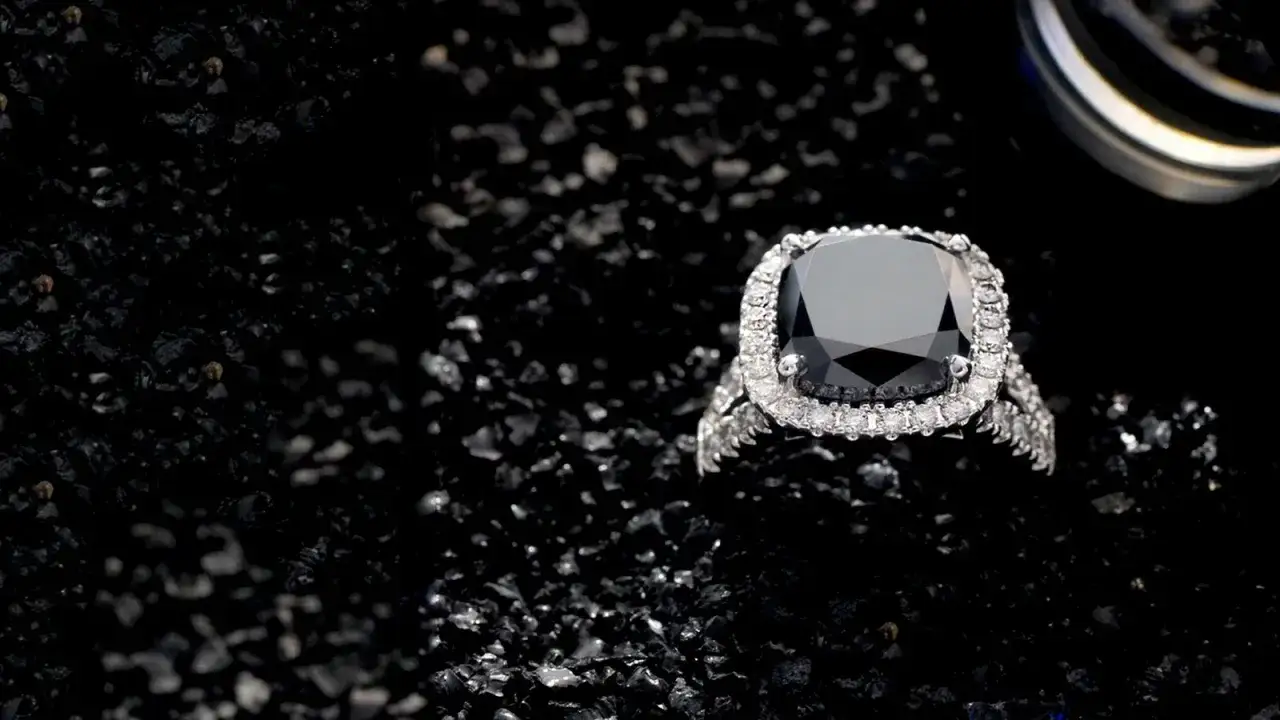
I think black diamonds succeed because they do not try to do the same job as a colourless diamond. They create contrast. In white gold or platinum, they look sharper and more graphic; in yellow gold, they feel warmer and slightly vintage; in rose gold, they become softer and more romantic. The metal you choose changes the entire mood of the piece.
They also suit settings that give the stone a strong outline. Bezel settings make black diamonds look sleek and modern, while halo settings can add light and height around the dark centre. In a minimal solitaire, the stone itself does all the work. In a more ornate design, it can anchor a ring, pendant, or pair of earrings without competing with the rest of the jewellery.
That is why I often recommend black diamonds to readers who want something with character rather than obvious sparkle. They feel deliberate. They read as bold, but not loud. And that balance is exactly what makes them useful in both contemporary and vintage-inspired jewellery.
How to care for black diamond jewellery without overthinking it
Black diamonds are still diamonds, so they are hard, but hardness is not the same thing as toughness. Their dense inclusions and internal structure can make them more vulnerable to chips or fractures than a clean colourless stone, especially at points and thin edges. That matters most in rings, where daily knocks are unavoidable.
My basic care routine is simple:
- Clean with warm water, a little mild soap, and a soft brush or lint-free cloth.
- Avoid hard knocks, especially if the stone has sharp corners or exposed points.
- Store pieces separately so they do not rub against harder or sharper jewellery.
- Check settings regularly, especially prongs and bezels, so the stone stays secure.
- Be cautious with ultrasonic or steam cleaning if the stone has been treated or if you do not know its treatment history.
That last point is the one many people miss. A black diamond may look robust, but if it has been treated, aggressive cleaning is not worth the risk. Gentle maintenance is usually enough to keep the surface looking rich and dark without putting unnecessary stress on the stone. Once you know how to care for it, the final question is whether the piece you are considering is actually worth the asking price.
What I would check before buying one in the UK
If I were choosing a black diamond in the UK, I would not start with carat weight. I would start with disclosure. Is it natural, treated, lab-grown, or carbonado? If a seller cannot answer that clearly, I would pause. A black diamond with a clear origin is much easier to value, compare, and insure.
I would then look at the stone under different lighting. Some black diamonds are beautifully deep and velvety indoors but look uneven in daylight. Others read as very glossy but have a slightly artificial flatness. Neither is automatically wrong; they simply serve different tastes. What matters is whether the look matches the wearer’s style and expectations.
These are the checks I would not skip:
- Ask for a report if the purchase is significant or the seller is marketing the stone as natural.
- Compare the colour in daylight and indoor light, not just under showroom spotlights.
- Inspect the polish and symmetry, because they strongly affect the final look.
- Choose a setting that suits the stone’s structure, especially if you will wear it daily.
- Keep an eye out for lookalikes such as black moissanite or cubic zirconia if the price seems unusually low.
That is the part of buying black diamonds that I find most practical: the label matters, but the stone in front of you matters more. If the origin is clear and the appearance is what you want, the decision becomes much easier. From there, the last step is simply understanding what you are really choosing.
The detail I would never skip when choosing one
The one detail that changes everything is origin. A natural black diamond, a treated stone, and a lab-grown black diamond may all look dark at first glance, but they do not carry the same rarity or the same value story. If you like the look, that is fine, but I would still want the facts before I pay for it.
Once that is clear, the rest becomes a style decision. Do you want a deep, opaque stone with dramatic presence? A smoother lab-grown version with a more uniform finish? Or a rougher carbonado with a very different character? That is the real value of understanding black diamonds: you stop treating them as a novelty and start seeing them as a serious design choice.
And that is usually the moment people realise a black diamond is not the opposite of a white one. It is its own category, with its own beauty, its own limits, and its own logic.