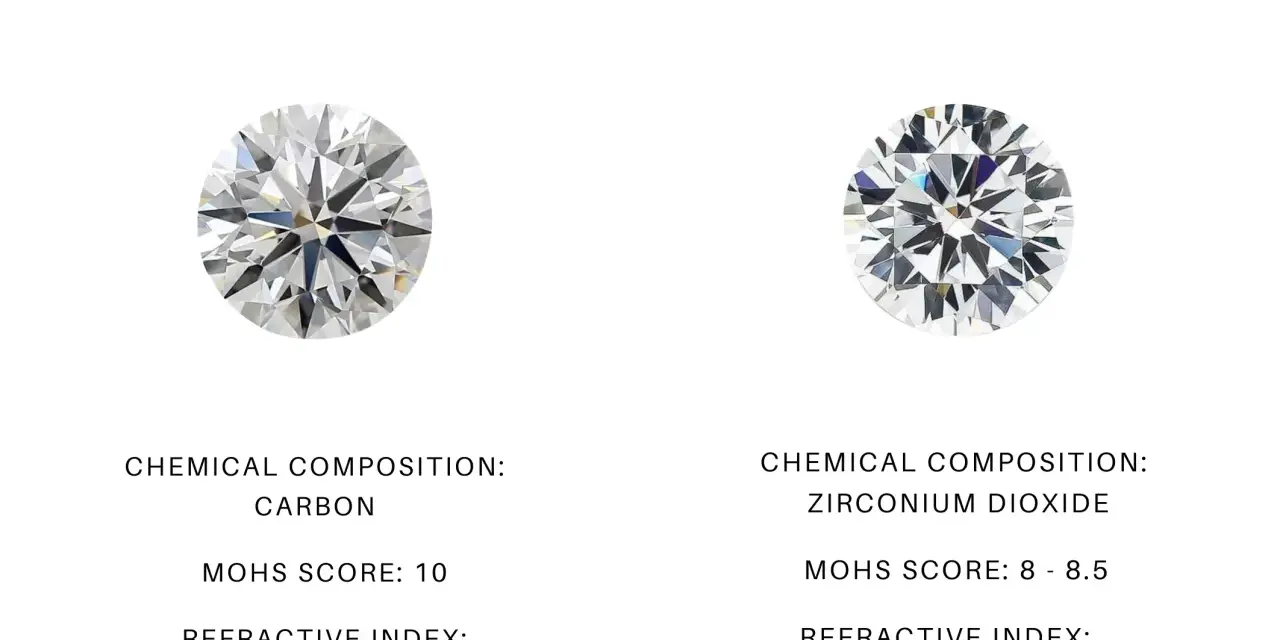
Cubic zirconia can look beautifully close to diamond, but its lifespan works differently. The honest answer to how long does cubic zirconia last is that the stone itself can stay intact for years, while the polish and sparkle may soften sooner depending on how often it is worn and how well it is cared for. In this article, I break down what that really means in everyday jewellery, how CZ compares with diamond, and what extends its life in practice.
What matters most is how the stone wears, not just how long it exists
- Cubic zirconia does not have a fixed expiry date, but its appearance can change with wear.
- Light-wear pieces such as earrings and pendants often stay attractive for many years.
- Daily-wear rings usually show dulling faster because they take more friction and impact.
- Compared with diamond, CZ is less scratch-resistant, though still durable enough for many jewellery styles.
- Regular cleaning and careful storage make the biggest difference to how long it keeps its shine.
The real answer depends on whether you mean structure or sparkle
When I talk about cubic zirconia longevity, I separate it into two timelines. The first is physical survival: whether the stone stays whole, secure, and free from chips. The second is visual life: whether it still looks crisp, bright, and diamond-like to the eye. In many pieces, those two timelines do not end at the same moment.
As a rough guide, CZ in earrings or pendants can look good for many years because those pieces do not face constant rubbing. Occasional-wear rings often hold up well for 3 to 10 years or more if they are cleaned and stored properly. A ring worn every day is a harsher test, and visible dulling can show up in 1 to 3 years if the stone is left uncleaned or knocked against hard surfaces.
That is not a failure of the material so much as a reminder that appearance and integrity age at different speeds. Once you separate those two, the wear patterns start to make much more sense.
What actually shortens a cubic zirconia's life
Cubic zirconia is not fragile in the glass-like sense, but it is still a gem with limits. It has a Mohs hardness around 8.5, which is strong, yet not immune to abrasion. Fine scratches build up gradually, and they are often what steal the brightness first.
The most common causes of wear are surprisingly ordinary:
- Rubbing against hard surfaces such as counters, gym equipment, desk edges, and door handles.
- Contact with other jewellery in a box or pouch, especially if rings are stored together.
- Cosmetic residue from lotion, sunscreen, perfume, hair products, and hand cream.
- Loose settings that let the stone shift and chip at the edges.
- Harsh cleaning products that attack the metal setting or any surface coating.
Some CZ stones also appear to age faster because they are coated or set in lower-quality mountings. In those cases, the problem is not the zirconia itself alone but the way it was finished and mounted. That is why two pieces bought at the same time can age very differently.
Once you know what wears CZ down, the comparison with diamond becomes much clearer.

How cubic zirconia compares with diamond in daily wear
Diamonds sit at 10 on the Mohs scale, which makes them the hardest commonly used gemstone and far more resistant to scratching than CZ. CZ is still durable, but it sits one step lower and will usually show surface wear sooner. In practical terms, that means diamond keeps a polished look for longer, especially on rings that get a lot of contact with the world.
Hardness, though, is only part of the story. Diamond is harder, but it is not indestructible. A hard blow can still chip a diamond or damage a setting, so long-term wear depends on both the stone and the mount. CZ does not win that comparison, but it is often perfectly acceptable for fashion pieces, occasional rings, travel jewellery, and styles where cost matters more than heirloom longevity.
| Factor | Cubic zirconia | Diamond |
|---|---|---|
| Hardness | About 8.5 on the Mohs scale | 10 on the Mohs scale |
| Scratch resistance | Good, but marks appear sooner | Excellent for everyday wear |
| Long-term appearance | Can dull, cloud, or yellow over time | Usually holds its polish longer |
| Best fit | Budget-friendly sparkle, occasional wear, style-led pieces | Daily wear, heirloom pieces, long-term investment jewellery |
My rule of thumb is simple: if you want the piece to look good for a long time with very little fuss, diamond is the safer bet. If you want the look for a much lower cost and you are comfortable treating the piece as more replaceable, CZ still makes sense. That makes care the real lever, not luck.
How to keep CZ bright for as long as possible
If you want your stone to age gracefully, the goal is not heroic maintenance. It is steady, boring care. I usually recommend a light clean every 1 to 2 weeks for a ring worn often, and every few wears for occasional pieces. A quick rinse can remove the film that makes CZ look older than it is.
The safest cleaning method is straightforward:
- Use lukewarm water and a drop of mild washing-up liquid.
- Gently brush around the stone with a soft toothbrush or a jewellery brush.
- Rinse well and dry with a lint-free cloth.
- Store each piece separately in a soft pouch or lined box.
- Remove rings before swimming, cleaning, gardening, or gym sessions.
What I would avoid is just as important. Skip toothpaste, baking soda, abrasive powders, and aggressive polishing cloths. If a piece is glued, heavily plated, or fitted with a delicate setting, I would also be cautious with ultrasonic cleaners and steam. The stone may survive, but the setting or finish may not.
Good care will not make CZ behave like diamond, but it can keep it attractive far longer than most people expect. Even so, no cleaning routine can reverse every form of wear, which is where replacement becomes the honest conversation.
When a CZ piece is past saving
Some pieces are worth cleaning repeatedly; others are simply telling you they have reached the end of their best phase. The signs are usually easy to spot once you know what to look for. If the stone still looks cloudy after a proper clean, if the facets seem rounded rather than crisp, or if the surface has tiny scuffs that catch the light in a dull way, the piece has probably lost its original edge.
I also treat a loose setting as a warning, not a cosmetic issue. A stone that shifts in its mount can chip faster, and a chipped CZ is rarely worth repairing unless the piece has strong sentimental value. In many cases, it is cheaper to replace the stone than to force a tired ring back into daily service.
If the design still matters to you, the smarter move may be to reset the stone into a lower-contact piece, such as a pendant, or reserve it for occasional wear. That approach keeps the jewellery useful without pretending it is a lifetime, no-maintenance gem.
What I would choose if long-term wear is the priority
If the goal is pure longevity, I would choose diamond for a ring you plan to wear every day and expect to keep for decades. If the goal is visual impact at a lower price, CZ is still a good option, especially in earrings, pendants, dress rings, and pieces you rotate rather than live in.
The most useful way to think about CZ is this: it is durable enough for real wear, but not durable enough to be carefree. That single distinction explains almost everything buyers need to know. Treat it as a beautiful, affordable stone that rewards sensible care, and it can stay attractive for a surprisingly long time.
For anyone choosing between CZ and diamond, I would base the decision on how often the piece will be worn, how much cleaning you are willing to do, and whether you want a keep-forever jewel or a stylish, lower-commitment one.