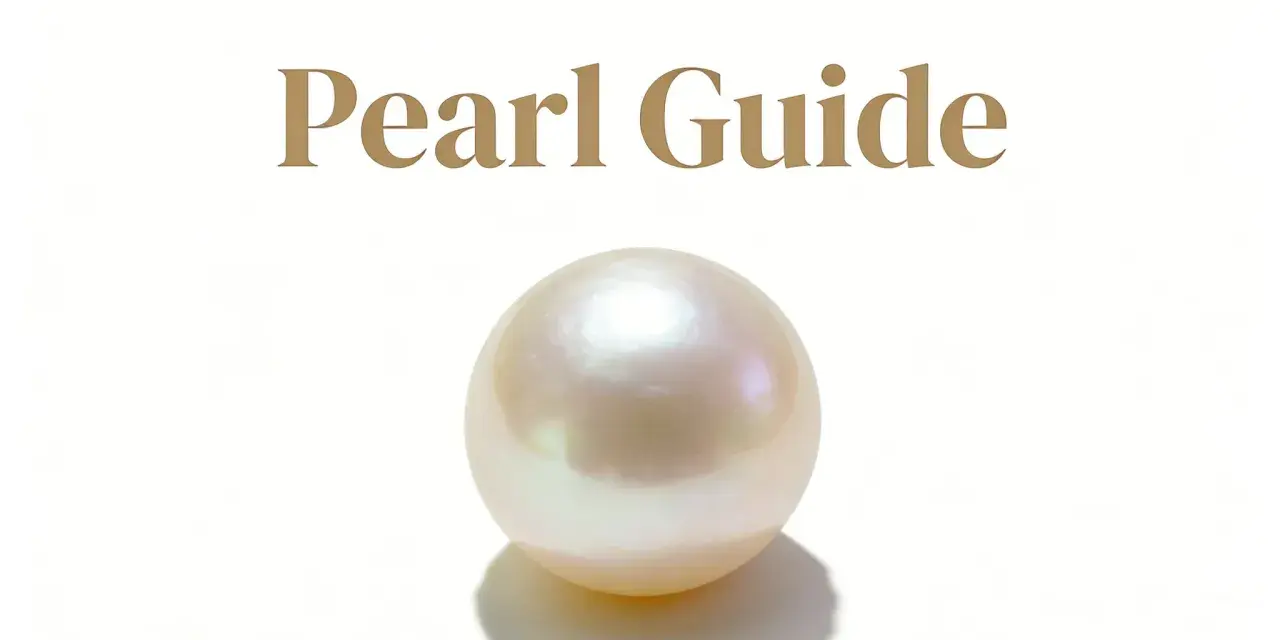
Pearls sit in a curious place in jewellery language: they are precious, beautiful, and worn as adornment, yet they are not minerals in the same way as diamond or sapphire. The clean answer is that a pearl can be a jewel, but in gemmological terms it is better understood as an organic gem material rather than a mineral gemstone. Here I break down that distinction, explain how pearls are classified, and show what it means when you buy, wear, or care for pearl jewellery.
The essentials at a glance
- In ordinary English, a pearl can absolutely be called a jewel.
- In gemmology, a pearl is usually treated as an organic or biogenic gem material, not a mineral gemstone.
- Natural pearls form without human help; cultured pearls are grown with human assistance, but they are still real pearls.
- Pearls are soft, at about 2.5 on the Mohs scale, so they need gentler care than most gemstones.
- Quality depends mainly on luster, surface, nacre, size, shape, colour, and matching.
Is a pearl a jewel?
Yes, in everyday English a pearl is a jewel. The word “jewel” is broad: it can mean a precious stone, a treasured ornament, or a decorative piece worn for beauty. A pearl set in a ring, necklace, or brooch fits that everyday meaning very naturally.
Where the wording becomes more precise is in gemology. I would not call a pearl a mineral gemstone, because it does not grow as a crystal in the earth. It is formed by a living mollusc, which makes it an organic or biogenic gem material rather than a mined stone like ruby, emerald, or sapphire.
That distinction is not just academic. It affects how pearls are described, valued, cleaned, and compared with other gems, so the next step is to look at what pearls actually are.
What pearls are, and how they form
A pearl begins inside a mollusc, usually an oyster or mussel, when layers of nacre build up around a tiny irritant or implanted nucleus. Over time, those layers create the smooth, luminous material people associate with fine pearl jewellery.
There are three ideas worth separating clearly:
- Natural pearls form without human intervention.
- Cultured pearls are formed with human assistance on a pearl farm, but they are still genuine pearls.
- Imitation pearls are not pearls at all; they are made to look like pearls.
Gem-A makes the same basic distinction between pearls that grow naturally and pearls that are cultured, and that distinction matters because origin affects both value and disclosure. Most pearl buyers do not need to become specialists, but they do need to know whether they are looking at a natural pearl, a cultured pearl, or a bead that only imitates one.
Once that origin question is clear, the confusing part becomes the language people use around pearls. That is where “jewel” and “gemstone” start to overlap.
Why the word gemstone causes confusion
In casual speech, people often use “gemstone” and “jewel” as if they mean the same thing. In trade language, they are not identical. A jewel is usually the ornament or prized object itself, while gemstone usually points to the material. Pearls blur the line because they are both a material and, when mounted, part of a jewel.
| Term | Plain meaning | Does a pearl fit? |
|---|---|---|
| Jewel | A treasured ornament or precious adornment | Yes, very comfortably |
| Gemstone | A valued gem material, often understood as a mineral stone | Sometimes, depending on context |
| Organic gem material | A gem material formed by a living organism | Yes, this is the most precise technical label |
| Jewellery | An item worn for personal adornment | Yes, when the pearl is set, strung, or mounted |
The most accurate short version is this: a pearl is a jewel in ordinary English and an organic gem material in technical language. Some specialists prefer the word biogenic because it emphasises biological origin without implying that the material is chemically “organic” in the strict chemistry sense. I find that wording especially useful when I want to be exact without sounding pedantic.
This is why pearl descriptions can feel inconsistent if you compare a retailer’s wording with a laboratory report. The piece may be called a jewel, the material may be called a pearl, and the broader class may be described as a gem material. All of those can be correct. The next question is how experts judge whether one pearl is better than another.
How gemmologists judge pearl quality
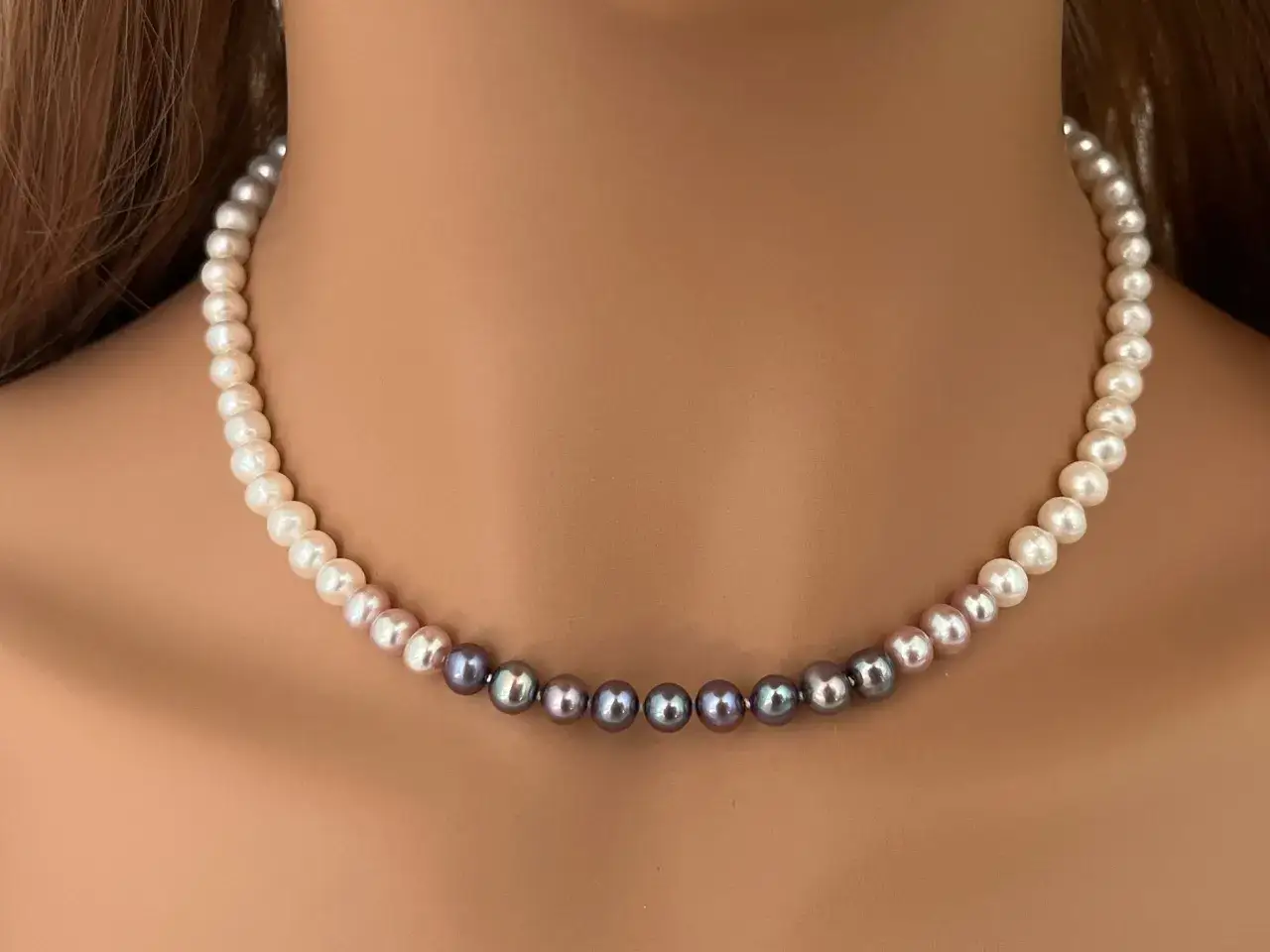
GIA uses the 7 Pearl Value Factors to describe pearls in a structured way: size, shape, colour, luster, surface, nacre, and matching. That system is useful because pearls are not graded the same way as faceted stones. Two pearls can be the same diameter and still look and price very differently because the surface and luster are not the same.
Here is the practical meaning of each factor:
- Size matters because larger pearls are usually rarer and visually stronger.
- Shape ranges from round and near-round to button, drop, oval, baroque, and circled.
- Colour includes body colour, overtone, and sometimes orient, the subtle rainbow effect on the surface.
- Luster is the sharpness and brightness of reflections; in my view, it often makes the biggest visual difference.
- Surface quality affects both beauty and durability.
- Nacre refers to the layer quality and thickness that gives the pearl its glow.
- Matching matters most in strands and earrings, where consistency creates elegance.
GIA notes that cultured pearls can range roughly from 2 mm to 16 mm in diameter, depending on the mollusc and type. That range shows how much variety exists within one category that people often treat as uniform. Once you know how pearls are judged, it becomes easier to see why they need more delicate handling than harder stones.
Why pearls need gentler care than most gemstones
Pearls are beautiful, but they are not tough in the way a sapphire or diamond is. Their hardness is about 2.5 on the Mohs scale, which means they scratch far more easily than most jewellery stones. They are also sensitive to acids, heat, and harsh cleaning methods.
| Property | Pearl | Typical hard gemstone |
|---|---|---|
| Mohs hardness | About 2.5 | Diamond 10, sapphire 9, quartz 7 |
| Cleaning | Warm soapy water and a soft cloth | Depends on the stone, but often more flexible |
| Risk from chemicals | High sensitivity to perfume, hairspray, cosmetics, and acids | Usually lower, though not zero |
| Machine cleaning | Never use ultrasonic or steam cleaners | Some stones can tolerate them, others cannot |
| Storage | Keep separate, in a soft pouch or lined box | Separate storage is still wise, but pearls are more fragile |
That softness changes how you wear pearl jewellery too. I would put pearls on after perfume, hairspray, and makeup, not before. I would wipe them with a soft cloth after wearing them, avoid storing them in hot or very dry places, and keep them away from rough surfaces that can scuff the nacre. If a pearl necklace is strung on silk, the string may also need periodic restringing as it stretches or wears.
This practical side of the story matters because the wrong cleaning habit can damage a pearl long before age would. Once you understand that, the buying decision becomes much clearer too.
What I would check before buying pearl jewellery in the UK
When I look at pearl jewellery, I do not start with price. I start with the pearl’s identity and its visible quality. The four things I would check first are origin, type, luster, and construction.
- Ask whether the pearls are natural or cultured. For most buyers, cultured pearls are the standard choice, but the label should still be clear.
- Ask what kind of pearl you are seeing. Freshwater, Akoya, South Sea, Tahitian, conch, and melo pearls do not behave or price the same way.
- Look at luster before size. A slightly smaller pearl with sharp, clean reflections often looks more luxurious than a larger one with a dull surface.
- Check the setting or stringing. In a necklace, knotting, clasp quality, and strand matching matter a great deal.
For a British buyer, the clearest retail description is usually “pearl jewellery” rather than the looser phrase “gemstone jewellery.” That wording is more accurate and avoids implying that the piece is a faceted stone. If the piece is expensive, I would also want a proper description of nacre quality and matching, because those details often explain more about value than the headline size alone.
That leads to the simplest rule I use when the labels start to overlap.
The simplest rule I use when pearl labels overlap
If I am speaking casually, I call a pearl a jewel. If I am speaking technically, I call it an organic or biogenic gem material. If I am speaking as a buyer, I judge it by luster, nacre, surface, and matching before I worry about the exact label.
- Use jewel when you mean a beautiful precious adornment.
- Use organic gem material when you want the most precise classification.
- Use pearl jewellery when you are describing a finished piece for sale or wear.
That is the cleanest way I would frame it: pearls belong in the world of fine jewellery, but they are not mineral gemstones, and their softness, organic origin, and quiet glow are exactly what make them distinctive. If you keep that distinction in mind, it becomes much easier to read a seller’s description, compare pieces fairly, and choose pearl jewellery that still looks elegant years from now.