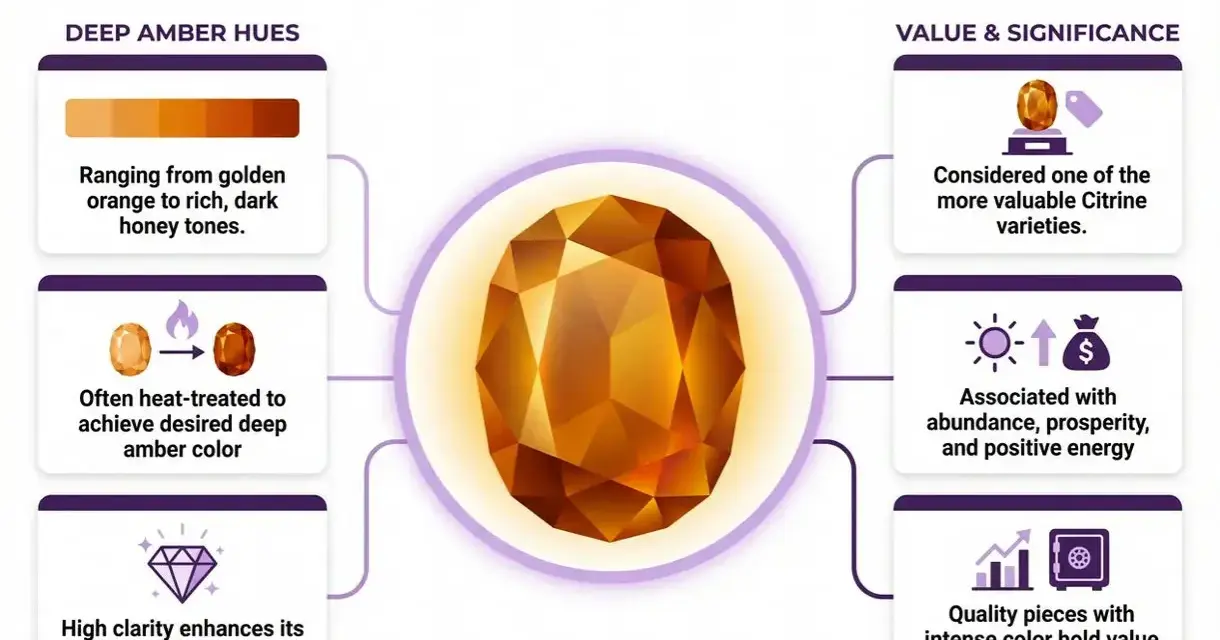
Citrine usually sits in the affordable part of the coloured-gem market, but the price can move more than people expect once colour, cut, treatment, and size enter the picture. So, is citrine expensive? Usually not - but the very best stones, and the best-made jewellery, can sit in a noticeably higher bracket. This article breaks down what citrine really costs, why some pieces are priced higher than others, and how I would judge value if I were buying in the UK.
The short version on citrine pricing
- Citrine is usually a budget-friendly to mid-range gemstone, not a luxury one.
- Richer yellow, orange, and reddish-orange stones cost more than pale stones.
- Natural untreated citrine is rarer than heat-treated material and often carries a premium.
- Large citrine stones stay relatively affordable compared with many other gems.
- In UK retail, the setting and workmanship can matter as much as the stone itself.
- A lab report only makes sense when the stone’s value justifies the cost of testing.
So, is citrine expensive in the real market
In loose-stone terms, citrine is generally inexpensive to moderately priced. I would place it firmly in the value category, especially when compared with gems such as yellow sapphire or yellow diamond. Loose-stone prices are usually quoted in US dollars in the trade, so I’m using those ranges as a neutral reference point; UK retail pricing follows the same logic even when the final ticket is shown in pounds.
| Market tier | Typical loose-stone price per carat | What that usually means |
|---|---|---|
| Commercial heat-treated citrine | About $5-$15 | Common material with decent colour for everyday jewellery |
| Better commercial citrine | About $15-$30 | Cleaner stones, richer colour, better cutting, stronger visual appeal |
| Fine natural citrine | About $30-$100+ | Rarer material, better colour, and a stronger premium for quality |
That is why citrine can look almost suspiciously cheap at first glance. The stone is common enough that even larger examples often remain accessible, and that keeps it from behaving like a true high-pressure gem. When I talk to buyers, I usually describe citrine as affordable with room for premium examples rather than inherently expensive. Once you understand that baseline, the next step is figuring out what pushes a particular stone up or down within it.
What pushes citrine price up or down
Most citrine pricing comes down to a handful of familiar gem factors. None of them is mysterious, but together they explain why two stones that look similar in a shop window can sit in very different price brackets.
- Colour: Saturated yellow, orange, and reddish-orange stones are usually the most desirable. Pale stones are cheaper, and brownish tones tend to lose value quickly.
- Clarity: Eye-visible inclusions are uncommon in good faceted citrine, so visible flaws have a real impact on price.
- Cut: A clean, lively cut can lift a stone noticeably. Poor cutting can make even a decent piece look flat and underwhelming.
- Carat weight: Size matters less here than it does in many other gems, because citrine is available in larger crystals.
- Treatment: Heat-treated citrine is common, stable, and accepted in the trade, but natural untreated material is rarer and often commands more.
The colour label matters more than many shoppers realise. A deep, reddish-orange citrine is often sold as Madeira colour, and that richer tone can lift the price because buyers respond to the visual depth, not just the fact that the stone is quartz. That said, I would never assume a darker orange stone is automatically rare or naturally coloured; the treatment history is part of the value story, and it should be disclosed clearly. Once you know the quality drivers, the next question is why citrine still stays so approachable even when the stone gets bigger.
Why larger stones still stay within reach
This is one of the reasons I like citrine as a practical gemstone. With many gems, price rises sharply as size increases. Citrine behaves differently. Large stones exist in plenty, and that keeps the per-carat price from climbing in the same dramatic way.
| Size factor | What usually happens with citrine |
|---|---|
| Face-up size | Easy to buy big, noticeable stones without a luxury budget |
| Price per carat | Often rises only modestly as size increases |
| Best use | Statement rings, pendants, earrings, and bold cocktail designs |
As GIA notes, large-size citrine is not priced significantly more per carat than smaller stones, which is unusual in coloured gems. That means you can choose a larger, more dramatic stone without paying the kind of premium that would appear on a diamond or a fine sapphire. In plain English, citrine gives you visual impact for the money. That is exactly why a 10-carat citrine can still feel like an attainable purchase, while a 10-carat stone in a rarer gem category becomes an entirely different conversation. With that in mind, the practical issue becomes how to judge whether a quoted price is fair in a UK shop or online listing.
How to judge a fair price in the UK
In the UK, I would assess citrine pricing in two layers: the stone itself and the finished piece. A loose stone can be inexpensive, but a ring or pendant in silver, 9ct gold, or bespoke platinum can cost far more once the metal, setting, and labour are added. That is not a trick; it is simply how retail jewellery works.
| What to check | What I want to see | Why it matters |
|---|---|---|
| Treatment disclosure | Natural or heat-treated stated clearly | Price should reflect rarity, not vague wording |
| Colour description | Yellow to orange, with little muddy brown | Colour is the main value driver |
| Clarity | Eye-clean in faceted stones, or a deliberate cabochon style | Visible inclusions reduce value |
| Cut quality | Even symmetry and good light return | Cut can make a modest stone look premium |
| Setting cost | Stone price separated from metal and labour | The finished piece may cost more than the gem itself |
I also pay attention to whether the seller is pushing a lab report for a small stone. GIA notes that citrine reports are not commonly requested because the report can cost more than the gem itself, and that is a sensible rule of thumb. For everyday citrine, a clear description and honest treatment disclosure matter more than paperwork. For a higher-value natural stone, or anything priced as a premium example, I would expect better documentation and a seller who can explain exactly what I am paying for. Once you know how to assess a fair price, the comparison with other gemstones becomes much easier.
How citrine compares with other gemstones
If your real question is whether citrine gives good value, the answer is yes, especially when you compare it with gems in similar colour families. It is one of those stones that delivers a warm, polished look without dragging you into luxury-gem territory.
| Gemstone | How it usually sits next to citrine | Practical takeaway |
|---|---|---|
| Citrine | Affordable baseline | Good for larger stones and accessible jewellery |
| Smoky quartz / amethyst | Often similar or cheaper | Useful if you want an even lower spend |
| Yellow sapphire | Usually much more expensive | Moves you into a different budget category |
| Yellow diamond | Far more expensive | Luxury territory, not value territory |
The comparison that matters most is not just price, but what you get for the price. Citrine gives you colour, size, and durability at a level that still feels rational for everyday buyers. If you simply want a sunny golden stone in a ring or pendant, citrine is often the smarter spend than jumping to a much rarer gem. From there, the buying decision becomes less about chasing prestige and more about choosing the stone that looks the best for the money.
The value sweet spot I would buy for citrine jewellery
If I were buying citrine for style rather than rarity, I would prioritise colour first, then cut, then setting. A medium-to-deep yellow with a clean, lively face usually looks more expensive than a larger but washed-out stone. That is the part of citrine pricing that buyers often underestimate: the most attractive stone is not always the biggest one, and the most expensive-looking one is not always the most costly.
For rings, I would also think about wearability. Citrine is quartz, so it is reasonably durable for jewellery, but a ring still takes more knocks than a pendant. A protective setting can be the difference between a piece that stays elegant and one that feels fragile after a few months of daily wear. In other words, I would rather pay a bit more for a well-cut stone in a sensible setting than overpay for a dramatic-looking gem that is poorly mounted.
The cleanest answer, then, is this: citrine is usually not expensive, and that is part of its appeal. The best pieces are priced for colour, cut, and honest disclosure, not for rarity alone. If you value warm colour, a generous size, and a polished finish without paying luxury-gem money, citrine remains one of the strongest value choices in jewellery.