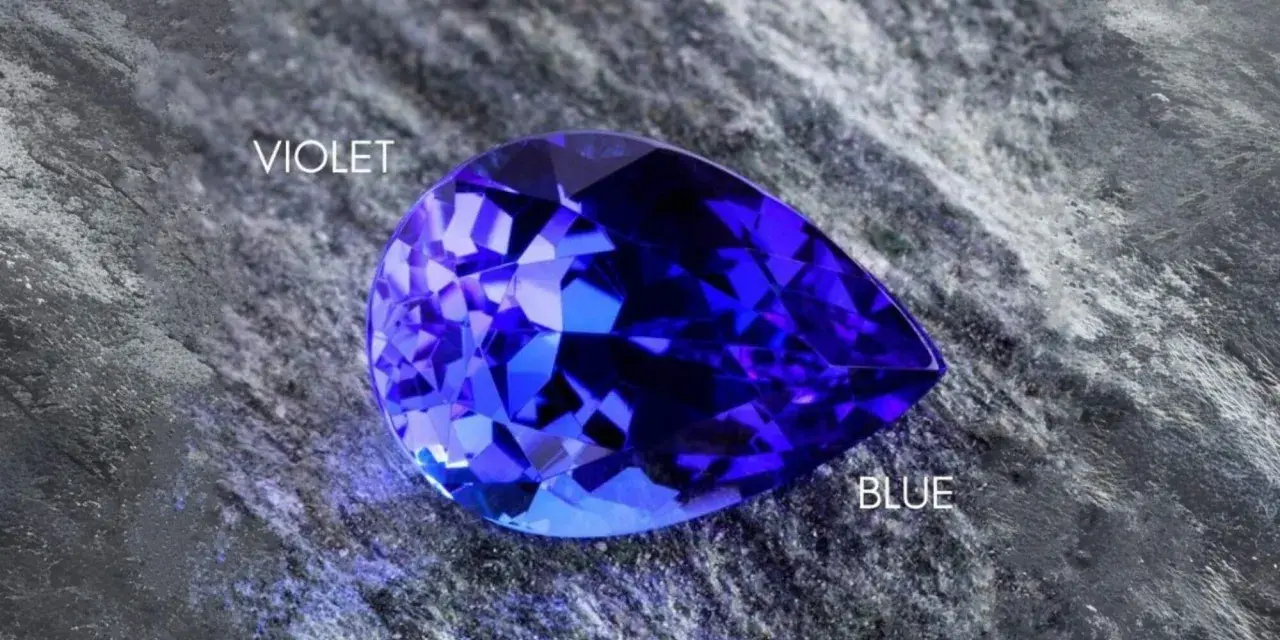
Tanzanite sits in a narrow but interesting price band: it can be accessible in commercial grades, yet sharply expensive once the colour becomes vivid and the stone is well cut. I would treat it as a gemstone where the difference between "nice" and "serious" value is visible almost immediately in the colour. So, is tanzanite expensive? It can be, but the answer changes quickly once you compare a pale stone with a rich blue-violet gem of the same size.
The main things to know before you buy
- I would expect lower-grade loose stones to start under about $50 per carat, while fine stones can move into the $300 to $800 per carat range.
- Colour is the main value driver. The richest blue-violet stones are the ones that make tanzanite feel genuinely premium.
- Most tanzanite on the market is heat-treated, and that is normal rather than a warning sign.
- Stones above 5 carats are more likely to show the deep, saturated colour buyers usually want.
- Tanzanite is softer than sapphire or ruby, so the setting matters almost as much as the gem itself.
Why tanzanite can feel expensive
Tanzanite is found in only one place on Earth, which gives it a built-in rarity premium, but rarity is only part of the story. The bigger reason the stone can be expensive is that the most desirable colour is not equally common across the whole supply. GIA’s gem guide places the finest stones in the deep saturated violet-blue or blue-violet range, and that is exactly where the price starts to climb quickly.
I also think many buyers underestimate how much the gem changes with size. Smaller stones can look pretty but noticeably lighter, while larger stones are more likely to show the depth of colour people associate with high-end tanzanite. That means the stone that looks "special" in a shop window is often the one that costs more per carat, not less.
That is why tanzanite cannot be judged from the name alone. The same gemstone can sit in a very modest price bracket or move into proper luxury territory depending on the material you are looking at, which is where the actual price bands matter.
The price bands I would use as a buyer
In 2026, I prefer to think of tanzanite in broad loose-stone bands rather than one fixed price. Trade guides commonly place commercial material below $50 per carat, decent mid-grade stones around $100 to $300 per carat, fine jewellery-grade stones around $300 to $800 per carat, and exceptional stones above that. Those are working ranges, not hard rules, but they are useful when you are trying to decide whether a quoted price is sensible.
| Quality band | Typical loose-stone price per carat | What it usually looks like | Who it suits |
|---|---|---|---|
| Commercial | Under $50 | Paler colour, more obvious inclusions, less visual depth | Budget jewellery and accent stones |
| Mid-grade | $100 to $300 | Better colour, more balanced brightness, often good for everyday jewellery | Most buyers looking for a strong value-to-beauty balance |
| Fine jewellery grade | $300 to $800 | Rich blue-violet colour, stronger brilliance, cleaner appearance | Buyers who want a standout centre stone |
| Exceptional | Above $800 | Top colour, good size, excellent cut, strong eye appeal | Collectors and high-end bespoke pieces |
As a rule, a finished ring or pendant will cost more than the loose stone alone because the metal, workmanship, and retailer margin all sit on top of the gem price. Once you know the bands, it becomes much easier to understand what pushes one stone upward and leaves another behind.
What actually moves the price
I look at five things first: colour, clarity, cut, carat weight, and disclosure. Each one matters, but not equally. Colour does most of the heavy lifting. Clarity and cut then decide whether the colour looks lively or dull, and size changes how rare the stone becomes.
| Factor | Why it matters | What I would look for |
|---|---|---|
| Colour | The strongest price driver in tanzanite | Deep blue-violet with good saturation, not washed out or overly dark |
| Clarity | Eye-visible inclusions lower value | A stone that looks clean without needing magnification |
| Cut | Cut controls brilliance, shape, and how much colour is visible face up | Even sparkle, no obvious windowing, and a shape that flatters the rough |
| Carat weight | Fine colour is more common in larger stones, which pushes prices up | Strong colour that holds together as the size increases |
| Treatment and disclosure | Normal heat treatment is common, but clear disclosure builds trust | Honest paperwork and no vague claims about "rare untreated" material unless that is truly verified |
One technical term worth knowing is pleochroism, which means the gem can show different shades from different angles. Tanzanite’s colour shifts are part of its appeal, but they also make cut quality more important because a poor cut can hide the best face-up colour. I would be more cautious with stones that look unnaturally dark, flat, or heavily coated, because those can be trying to disguise weaker material rather than showing a genuinely better gem.
How tanzanite compares with sapphire, amethyst, and topaz
Tanzanite usually sits above amethyst and blue topaz in price, but below fine blue sapphire at the top end. That is the comparison that helps most buyers get their bearings. If you are used to colourful gemstones that are widely available, tanzanite can feel surprisingly expensive; if you are comparing it with premium sapphire, it can look like a much more approachable alternative.
| Gemstone | Typical price position | What that means in practice |
|---|---|---|
| Amethyst | Usually much cheaper | Good for colour on a budget, but not a direct substitute for fine tanzanite |
| Blue topaz | Usually cheaper | Widely available and bright, but less rare and less valuable as a centre stone |
| Tanzanite | Mid to high | Priced for rarity and colour, especially in richer blue-violet stones |
| Blue sapphire | Often higher at the fine end | More durable and often more expensive when quality is strong |
The practical takeaway is simple: tanzanite is expensive relative to everyday purple and blue gems, but not necessarily expensive relative to the strongest coloured stones on the market. That difference matters even more in the UK, where the final ticket price often depends on how the gem is mounted and sold.
How I would buy tanzanite in the UK
If I were shopping in the UK, I would separate the gemstone price from the jewellery price immediately. A neat setting in gold or platinum can add a lot to the bill, and that is fine, but I still want to know exactly what I am paying for. For a useful comparison, ask for the carat weight, the colour description, whether the stone is heated as expected, and whether a report is available for higher-value pieces.
- Choose colour first, because that is what your eye will remember.
- Check the cut, especially for windowing, which is when the centre looks see-through because too much light leaks through.
- Compare similar stones in the same light, not across different shops or wildly different displays.
- Ask how the stone will sit in the setting, because a beautiful tanzanite can be let down by a weak mount.
- Look at the total piece price, not just the gem price, so you do not underestimate the finished cost.
If I had to choose between two similar stones, I would usually favour the better colour and cut over the bigger size. With tanzanite, size helps, but colour is what makes the stone feel genuinely valuable.
Why care and setting matter as much as price
Tanzanite has a hardness of about 6 to 7 on the Mohs scale, so it is softer than sapphire or ruby and needs a more considerate setting. For rings, I prefer protective designs such as bezels or halos, especially if the piece will be worn often. Earrings and pendants are easier to live with because they are less exposed to knocks and abrasion.
This matters financially because a costly stone in a vulnerable setting can lose appeal faster than buyers expect. I would never judge tanzanite on price alone if the intended use is daily wear, since the real value includes how well the piece survives normal life. A stone that needs constant caution is not automatically a poor purchase, but it is only worth paying for if the jewellery design matches that reality.
What I would remember before buying a tanzanite piece
The short version is that tanzanite is expensive when it earns the price through colour, cut, and size, not just because it is uncommon. I would rather own a smaller stone with vivid, lively colour than a larger one that looks flat in ordinary light.
If you are buying in the UK, compare the gem and the setting separately, ask for honest treatment disclosure, and choose a mount that suits how often the piece will be worn. That is the most reliable way to get a tanzanite that feels worth the money rather than merely costly.