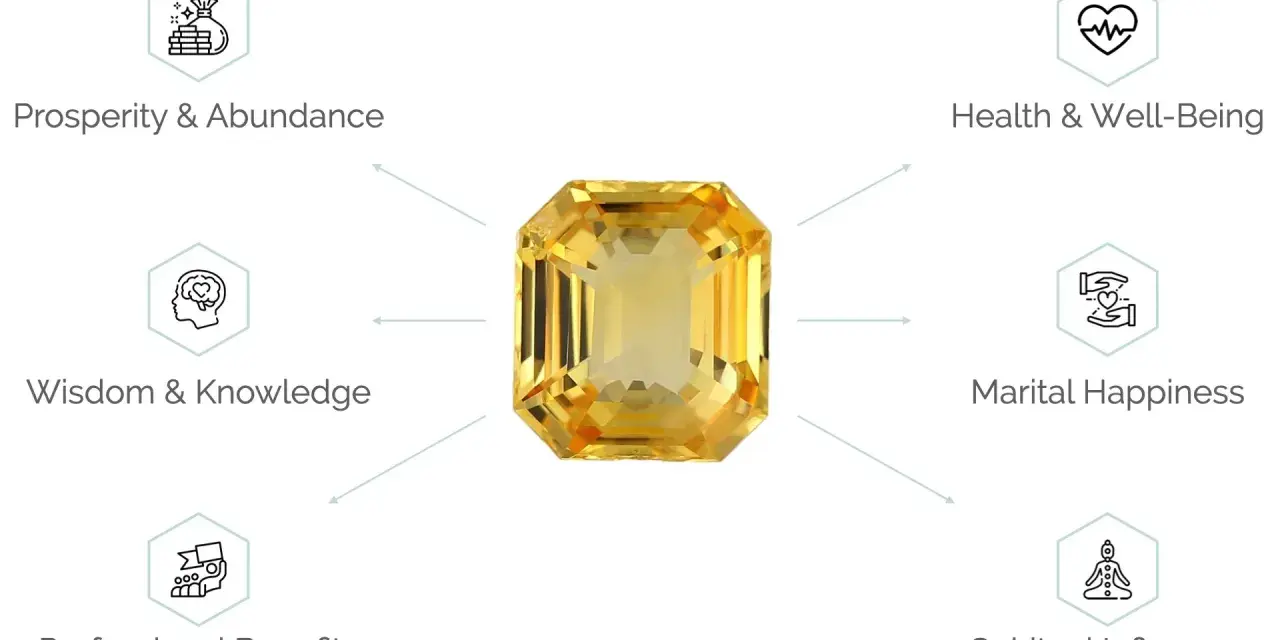
The short answer to pukhraj stone in English is yellow sapphire. More precisely, it is the yellow variety of corundum, the same mineral family that gives us ruby and the rest of the sapphire range. I’m keeping this practical: what the name means, how it differs from similar yellow stones, what quality markers matter, and how to care for it in everyday jewellery.
The name is yellow sapphire, but the quality clues are what really matter
- Pukhraj is commonly used for yellow sapphire in South Asian gem trade and jewellery language.
- Gemologically, it belongs to the corundum family and ranks at 9 on the Mohs scale, so it is suitable for daily wear.
- Its colour should be judged carefully, because yellow sapphire can overlap visually with citrine, yellow topaz, and other yellow gems.
- For buying, the most important checks are species, treatment disclosure, colour, and a written gem report.
- For care, warm soapy water is usually safe for untreated sapphire, while treated stones need gentler handling.
What pukhraj means in practice
In jewellery terms, pukhraj is the name most people use for yellow sapphire. That matters because the English name is not just a translation exercise; it tells you what mineral family you are dealing with, how hard the stone is, and what level of durability you can expect. I would write it on an invoice as yellow sapphire (pukhraj), because that keeps the meaning clear without leaving room for confusion.
There is also a cultural layer here. In South Asian markets, pukhraj is often talked about with astrology, especially in relation to Jupiter, but the gemstone itself is still a real mineral with measurable properties. The label should therefore tell you both the name and the stone type, not just the tradition attached to it. Once that is clear, the next step is separating yellow sapphire from the lookalikes that are often sold beside it.
How it differs from similar yellow stones
Yellow gemstones can look deceptively alike in a showroom, especially under warm lighting. That is why the English name alone is not enough; you need to know whether you are buying sapphire, topaz, citrine, or something else entirely. Here is the practical comparison I would use.| Stone | Mineral family | Hardness | Why it gets confused | Buying note |
|---|---|---|---|---|
| Yellow sapphire | Corundum | 9 | Can range from pale lemon to rich golden yellow | The most durable and usually the most valuable of the group |
| Yellow topaz | Topaz | 8 | Similar colour in some cuts, especially in rings and pendants | Usually less expensive and easier to mistake for pukhraj |
| Citrine | Quartz | 7 | Often sold in the same yellow colour family | Much more affordable, but not the same gem or value profile |
| Yellow tourmaline | Tourmaline | 7 to 7.5 | Can show a warm yellow hue with similar brightness | Interesting choice, but its wear and price characteristics are different |
The key point is simple: if you want the real thing, the English name should be matched to the mineral, not just the colour. A stone can be bright yellow and still be the wrong gem. That distinction matters most when you start judging quality, because the same colour family can produce very different results in price and durability.
What makes a good yellow sapphire
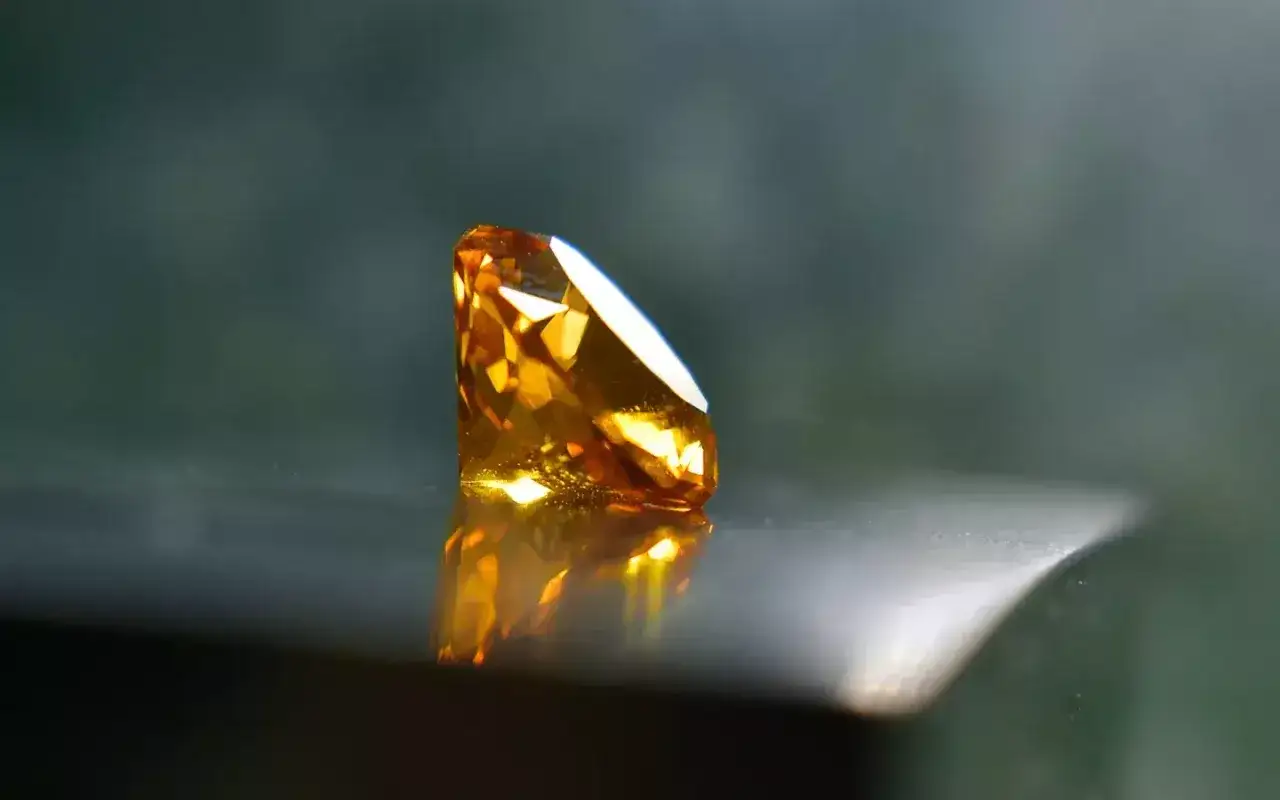
When I evaluate a yellow sapphire, I look at four things first: colour, clarity, cut, and treatment. GIA describes the finest yellow sapphire as yellow to orangy yellow with vivid saturation, which is a useful benchmark because it reminds you that the best stones are not necessarily the palest ones. A stone that looks lively and balanced usually reads better than one that is washed out or overly dark.
- Colour: Aim for a clean yellow or yellow-orange tone with even distribution. Stones that lean too green or too brown can look less appealing in jewellery.
- Clarity: Eye-clean is ideal, but slight inclusions are not automatically a problem. What matters is whether they distract from the face-up look.
- Cut: A well-proportioned cut can lift an otherwise average stone. Poor cutting often makes a gem look sleepy, even when the colour is good.
- Treatment: Heat treatment is common in sapphire and is not automatically a red flag if it is disclosed. The issue is undisclosed treatment, because that changes what you are really paying for.
I also pay attention to how the stone behaves in different light. A yellow sapphire that looks great only under one set of lights is not a strong buy; the better stones stay attractive in daylight and indoor light alike. From there, the question becomes how to buy with confidence rather than just admiration.
How to buy one in the UK without getting the label wrong
If you are buying in the UK, the safest approach is to treat the label as the starting point, not the proof. Ask for the exact species name, whether the stone is natural or synthetic, and whether any treatment has been applied. For a serious purchase, I would want a written gem report, because a certificate is far more useful than a sales description that simply says “pukhraj”.
My practical checklist is straightforward: ask whether the stone is yellow sapphire, ask how it was treated, ask for the carat weight and dimensions, and ask to see the stone in neutral light. If a seller starts drifting into vague language, that is usually a sign to slow down. A clean, precise label is especially important when a stone is being sold for both jewellery and astrological use, because the wrong name can hide the wrong gem.
GIA’s buyer guidance is useful here: it notes that sapphire is a durable gemstone for daily wear, but treated material should be handled according to the treatment it received. That is exactly the kind of detail I want a jeweller to explain clearly before money changes hands.
How to care for it in jewellery
Yellow sapphire is one of the more wearable coloured gemstones because corundum is tough. With a Mohs hardness of 9, it stands up well in rings, pendants, earrings, and bracelets. Still, hardness does not make a stone invincible. A sharp knock on a faceted edge or a loose setting can damage even a hard gem.
For routine cleaning, warm soapy water is usually safe for untreated sapphire, and a soft brush will remove dirt from around the setting. If the stone has been fracture-filled, cavity-filled, dyed, or otherwise specially treated, I would avoid stronger cleaning methods unless the jeweller specifically approves them. GIA also notes that treated sapphire should be cleaned more carefully, which matches the cautious approach I would take myself.
Storage matters more than many people realise. Keep yellow sapphire separately from harder stones like diamonds and from other jewellery that can scratch the setting. If you wear it often, have the claws or bezel checked from time to time, because the stone’s security is usually the real weak point, not the gem material itself. That leads naturally to the simplest way I would read the label before paying for one.
How I would read the label before paying for one
When I see pukhraj on a tag, I read it as yellow sapphire first and as a buying decision second. The name tells me what the stone should be, but the value depends on whether the colour is attractive, the treatment is honest, and the cut suits the gem. If any of those three pieces are weak, the label does not save the purchase.
That is why I prefer a stone that is described plainly, shows a lively yellow or yellow-orange colour, and comes with proper disclosure. In a jewellery case, that combination is usually more important than any romantic description attached to the name. When those basics line up, yellow sapphire remains one of the most practical coloured gemstones you can choose for both style and daily wear.