In fine jewellery, a blue precious stone can mean very different things depending on whether you care most about tradition, rarity, or how the piece will wear day to day. In this guide, I look at the blue gems that genuinely sit at the top of the market, explain how I judge their quality, and show where pearls fit naturally into the picture. I will also point out the buying mistakes I see most often, especially when a stone looks beautiful but is not as durable or as valuable as it first appears.
Key takeaways before you choose a blue stone
- Sapphire is the benchmark blue gem for most buyers because it combines beauty, durability, and long-term value.
- Blue diamond is rarer and far more expensive, but it is usually a collector's choice rather than a practical first purchase.
- Many blue stones sold in jewellery are beautiful but not traditionally precious, so treatment, hardness, and origin matter.
- If you want everyday wear, I would start with stones at 7.5 on the Mohs scale or higher; sapphire sits at 9.
- Pearls pair beautifully with blue gems, but their softness means they need gentler handling than any of the stones in this article.
What people usually mean by a blue precious stone
In gem language, "precious" is not just a flattering word. Traditionally, the precious stones are diamond, ruby, sapphire, and emerald, so once the colour turns blue, the conversation narrows quickly. In practice, that leaves blue sapphire as the most important stone for most buyers and blue diamond as the true rarity at the top end.
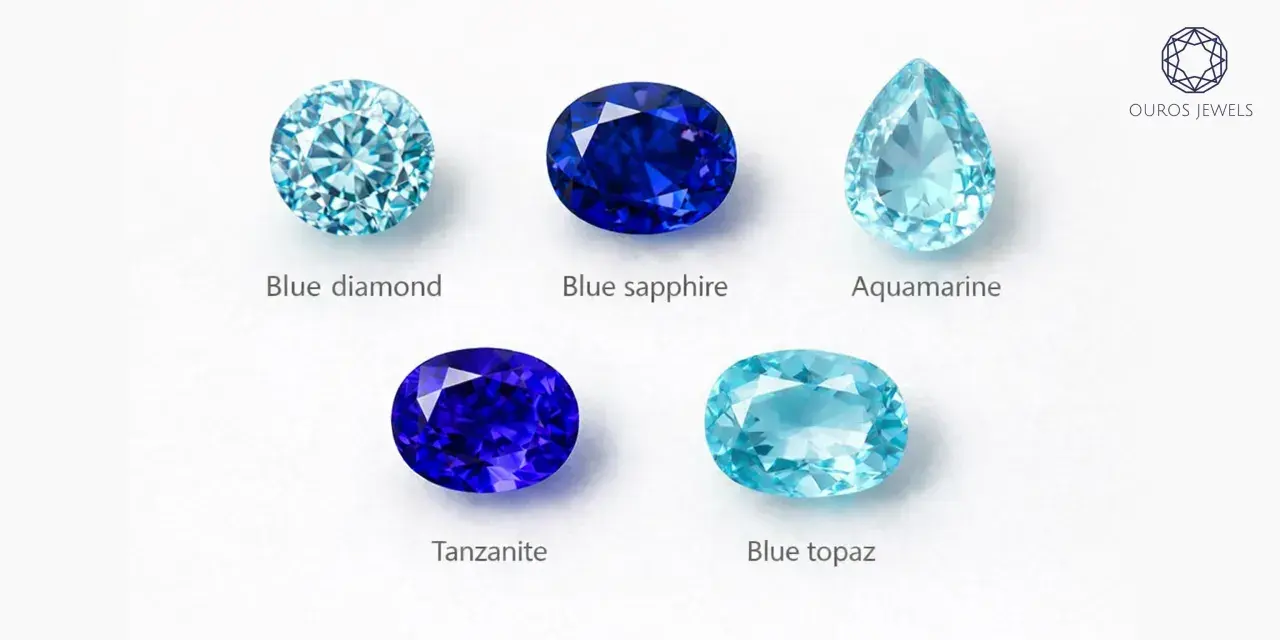
That distinction matters because many beautiful blue gems are often grouped together by shoppers even when they sit in very different places in the market. Blue topaz, aquamarine, tanzanite, and blue spinel can all be desirable, but they are not all precious in the strict traditional sense, and they do not behave the same way in daily wear. I would never buy them as if they were interchangeable.
For a buyer in the UK, this is the first filter I use: ask whether you want a classic precious gem, a luxury collectible, or simply the best blue colour within a set budget. Once that is clear, the rest of the choice becomes much easier.
That leads naturally to the stone that defines the category for most jewellery lovers: sapphire.
Why sapphire is still the reference point
Blue sapphire remains the standard because it checks three boxes at once: colour, durability, and history. It is the best-known blue gem for a reason. The most valued stones show a velvety blue to violetish blue colour with medium to medium-dark tone and strong saturation; if the stone is too light, too dark, or too grey, the visual impact drops fast.
From a practical standpoint, sapphire is one of the few coloured gems I am comfortable recommending for regular wear. It scores 9 on the Mohs scale, which puts it just below diamond in hardness and makes it suitable for rings, earrings, and pendants that will actually be worn instead of stored. Sapphire has also decorated royal jewellery for centuries, which is part of why it still feels timeless rather than trendy.
There is one important caveat: treatment is common. Heat treatment can improve colour and clarity, and that is normal in the sapphire trade, but it still affects price and should be disclosed. An unheated blue sapphire is rarer and usually commands a premium, so I always want to know whether I am looking at a treated or untreated stone before I pay for rarity.
When the colour is right, sapphire gives you the deepest everyday value proposition in the blue family. The next step is to look at the one blue gemstone that sits above it in prestige but not necessarily in practicality.
When blue diamond belongs in the conversation
Blue diamond is the extreme end of the blue market. Its colour usually comes from boron in the crystal structure, and even a trace amount can be enough to create the effect. That scientific detail matters because it explains both the colour and the scarcity: you are not just paying for a pretty blue stone, you are paying for one of the rarest colour occurrences in nature.
In jewellery terms, blue diamond is usually a collector's stone. It is harder than sapphire, but it is also dramatically more expensive and far less forgiving to budget. A small natural blue diamond can cost many times more than a fine sapphire of the same size, and the price rises sharply as colour intensity improves. In the UK market, I would treat it as a high-end purchase that demands a reputable report and a very clear purpose.
The other thing to remember is that blue diamonds are judged differently from blue sapphires. Colour grading, not just carat weight, drives the value, and the most vivid stones sit at the top of the market. If the goal is everyday elegance, blue diamond is usually overkill. If the goal is a serious investment-style jewel or a once-in-a-lifetime piece, it becomes much more interesting.
Because so many buyers compare blue diamond with sapphire, it helps to see the broader field side by side.
The blue stones I would compare before buying
The ranges below are broad 2026 retail bands, not fixed price lists, because cut, treatment, origin, and size can move the number a lot. I would compare the major options like this:
| Stone | How it fits the precious idea | Mohs hardness | Best use | Very rough UK retail band | What I would watch for |
|---|---|---|---|---|---|
| Blue sapphire | Traditional precious stone | 9 | Rings, heirloom pieces, daily wear | GBP 300 to GBP 8,000+ per carat | Colour quality, heat treatment, origin, cut |
| Blue diamond | Traditional precious stone and ultra-rare | 10 | Collector pieces, luxury commissions | GBP 20,000 to GBP 400,000+ per carat | Natural vs lab-grown, colour grade, report |
| Blue spinel | Highly desirable, but not traditionally precious | 8 | Elegant alternative for informed buyers | GBP 100 to GBP 700+ per carat | Saturation and cut; market recognition is lower |
| Tanzanite | Beautiful but not traditionally precious | 6.5-7 | Pendants and occasional-wear rings | GBP 80 to GBP 500+ per carat | Lower hardness and sensitivity to rough wear |
| Aquamarine | Popular blue gem, not precious | 7.5-8 | Light, calm-coloured jewellery | GBP 30 to GBP 250+ per carat | Paler colour usually means lower value |
| Blue topaz | Commercial blue gem, usually treated | 8 | Affordable fashion jewellery | GBP 10 to GBP 50+ per carat | Colour treatment and limited rarity |
My rule is simple: if you want prestige and longevity, start with sapphire. If you want rarity at any cost, blue diamond sits in its own category. If you want the look without the price, spinel or aquamarine may be smarter than a gemstone sold under a grand-sounding label but without the durability or pedigree to back it up.
Once you know which stone makes sense, the next decision is how it will actually be worn, especially if pearls are part of the design.
How I would choose one for a ring, pendant, or pearl pairing
For a ring, I would prioritise hardness first and colour second. That sounds backward to some buyers, but rings take more impact than pendants, so durability is what keeps the piece looking good after six months of real life. For that reason, sapphire and diamond are my first choices, spinel is a credible second tier, and I would only use tanzanite in a ring if the wearer is careful and accepts the risk.
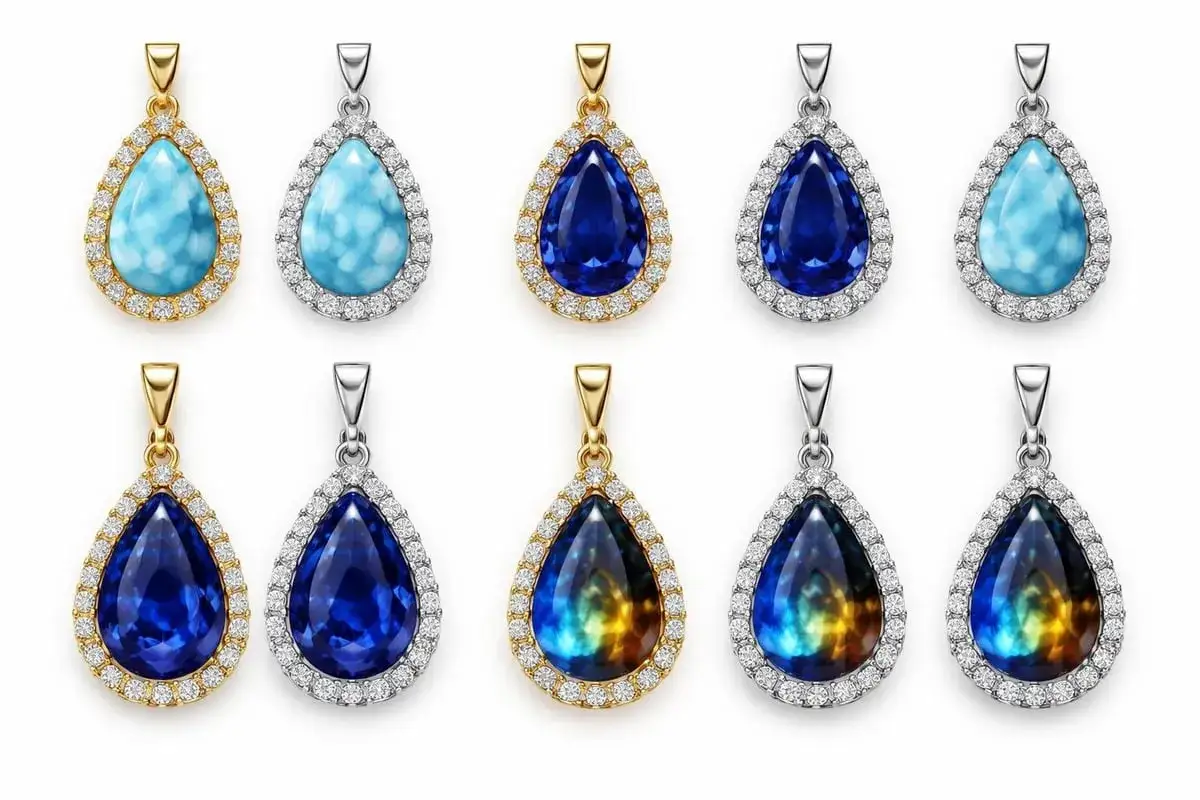
For a pendant, the field opens up. A slightly softer stone can work beautifully because it gets less direct abrasion, so tanzanite and aquamarine become more viable. That is where design starts to matter as much as gem quality: a clean bezel, a slim halo, or a simple solitaire setting can make a modest stone feel elegant without pretending it is something it is not.
When pearls enter the design, the aesthetic changes again. Blue stones and pearls work because the contrast is soft but not dull: the gem adds structure, while the pearl adds warmth and light. I like this combination in drop earrings, riverside-style necklaces, and classic studs with a blue centre stone. It feels refined rather than flashy, which suits the style many UK buyers want for occasion jewellery.
The caution is obvious but important: pearls are delicate. They are much softer than any gem in this article, so if a piece combines both materials, I want the pearl surfaces protected and the setting checked for wear. Good design should make the pairing look effortless; bad design just creates future repairs.
That brings us to the part most buyers skip too quickly: care, storage, and the questions that reveal whether a piece is worth the money.
Care, storage, and the checks that protect your money
GIA's pearl care guidance is blunt for a reason: pearls can be damaged by heat, chemicals, perfume, cosmetics, and even perspiration. I follow the same rule with mixed jewellery pieces. Put pearls on last, take them off first, and wipe them with a soft cloth after wearing. Never use ultrasonic or steam cleaners on pearls, and do not store them in a plastic bag.
Blue sapphires are much tougher, but that does not mean careless treatment is harmless. Warm water, mild soap, and a soft brush are usually enough for most coloured stones, but I still avoid aggressive cleaning around settings and I never rinse directly over an open sink. For sapphire, a secure setting matters almost as much as the gem itself because a perfectly good stone loses value if the mount is loose or badly finished.
Before buying, I would ask five direct questions:
- Is the stone natural, treated, or lab-grown?
- If it is sapphire, has it been heated?
- If it is diamond, is it natural or laboratory-grown?
- Is there an independent report from a respected lab?
- How does the stone look in daylight, not just under showroom lighting?
If a seller cannot answer those points cleanly, I slow down. In my experience, the best blue pieces are rarely the ones with the loudest pitch; they are the ones with honest disclosure, good cutting, and a colour that still looks convincing when the lights are less flattering.
What separates a memorable blue gem from an expensive mistake
The difference is usually smaller than buyers expect. A memorable stone has the right colour for its species, enough durability for its intended use, and paperwork that supports the story being sold. An expensive mistake is often just a pretty stone with weak disclosure, poor cut quality, or a gem chosen for its name rather than its performance.
If I were shopping today, I would keep three priorities in order: first, choose the right species; second, judge colour honestly; third, decide whether the piece will live with pearls, daily wear, or special occasions. That sequence prevents most regret. It also stops you paying sapphire money for a stone that only looks impressive in a tray.
For most buyers, the smartest answer is still sapphire. For a small number of collectors, blue diamond is worth the leap. And for anyone who wants a softer, more wearable piece with pearls, the design can be beautiful as long as the materials are matched to real-life use. If you want the simplest rule I use, it is this: buy the stone that suits the job, not the one that sounds the rarest.