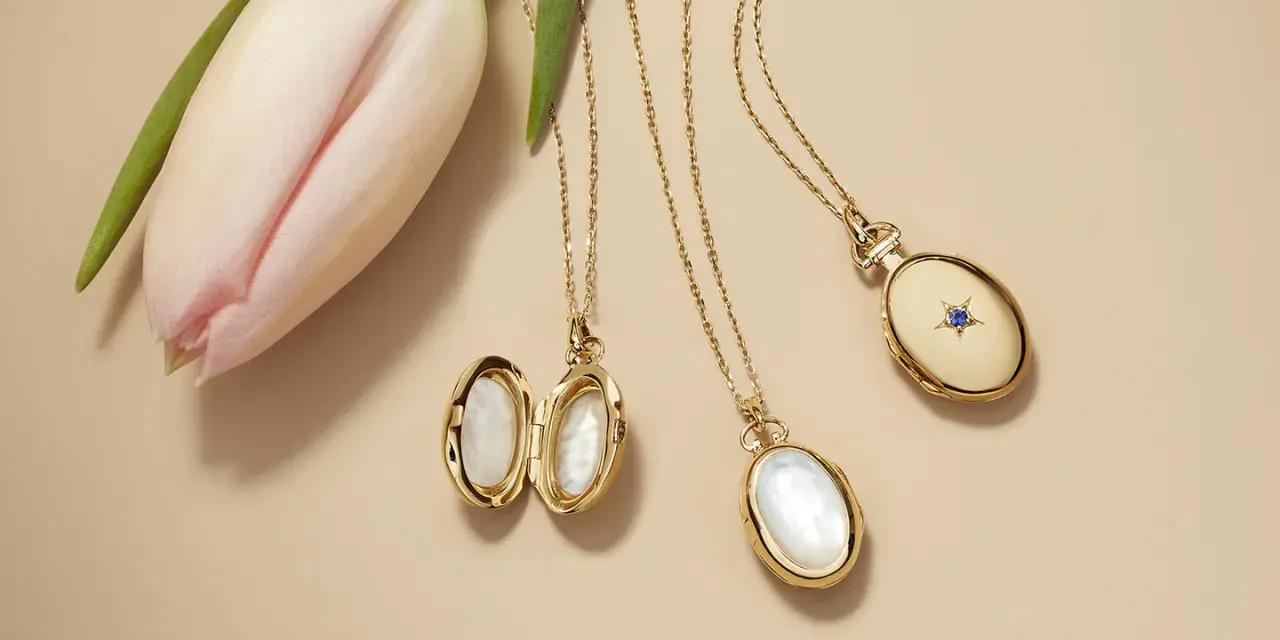
The practical facts you need before choosing mother of pearl
- Mother of pearl is nacre, the iridescent inner layer of certain mollusc shells.
- Pearls are made from the same material, but they are separate gems, not shell linings.
- The layered structure creates the glow, which is soft and shifting rather than glittery.
- Treat it as a delicate organic material with a Mohs hardness around 2.5 to 3.
- Gentle wiping and separate storage matter more than elaborate cleaning.
- A protected setting helps it last longer, especially in rings and bracelets.
What mother of pearl is and why it looks luminous
Technically, mother of pearl is nacre: a layered organic-inorganic material laid down inside the shells of certain molluscs. It is not a mineral gemstone in the strict sense, but in jewellery it behaves like a gem material because of its colour, sheen, and ability to transform a design.
The glow comes from microscopic layers of aragonite and natural protein that interfere with light rather than reflect it in one flat flash. That is why the effect feels soft and shifting instead of glittery. I usually describe it as light with depth rather than sparkle.
Not every shell has nacre. Pearl oysters, freshwater mussels, abalone, and a few other species are the classic sources, and each one can produce a slightly different tone and pattern. That layered structure also explains how the material is built in the shell itself.
How it forms inside mollusc shells
The shell-forming tissue, called the mantle, secretes nacre in thin successive layers. The purpose is protective: the mollusc is trying to seal off irritation and strengthen the inner surface of the shell, not create decoration for us.
If a foreign particle becomes trapped, the same process can eventually produce a pearl. A cultured pearl follows the same basic logic, but with human help: a bead or piece of tissue is introduced, and the mollusc coats it with nacre. That is why mother of pearl and pearls are so closely related.
Over time, the layering affects thickness, colour, and durability. Thicker, more continuous nacre generally looks richer and tends to wear better, while thin or uneven layers can show a flatter, chalkier appearance. Because the same material can sit as a shell lining or become a pearl, the distinction between the two is where most confusion starts.
Mother of pearl, nacre and pearls are related but not identical
The terms get mixed up all the time, but the difference is straightforward once you separate the object from the material.
| Term | What it refers to | How you usually see it | Why it matters |
|---|---|---|---|
| Mother of pearl | The iridescent shell lining used in jewellery and décor | Flat inlays, watch dials, buttons, cabochons | It is a shell surface, so shape and finish matter more than carat-style weight |
| Nacre | The scientific name for the same material | Gemology and materials descriptions | Useful when you want the technical term |
| Pearl | A separate gem formed when nacre builds around a nucleus | Loose pearls, strands, earrings | It is a distinct object, not a shell lining |
A seller saying “mother of pearl dial” means shell material, not a pearl cut into a circle. That distinction matters because a flat shell surface behaves differently from a rounded pearl, both visually and physically. If you are comparing pieces, judge mother of pearl by lustre, thickness, finishing, and setting rather than by the assumptions you might bring from pearl strands. Once you know what you are looking at, the next question is where this material shines best in jewellery.
Why jewellers use it so often
I like mother of pearl in pieces that need elegance without heaviness. It gives a design movement and light, but it never shouts the way a high-sparkle stone can.
In the UK, it shows up beautifully in watch dials, pendants, earrings, brooches, cufflinks, and inlay work. White and cream remain the classic choices, while pink, silver-grey, and softly green shells create a more contemporary feel. Abalone is the dramatic outlier: beautiful, but busier and less restrained.
The metal pairing changes the mood too. Yellow gold warms the material and makes cream tones feel richer; silver and white metal keep the look cooler and cleaner. In practice, I find mother of pearl works best in pieces that let the surface breathe rather than crowding it with too many competing details.
- For everyday wear, small studs, slim pendants, and watch faces are the easiest to live with.
- For occasion pieces, drop earrings and brooches let the sheen move as you move.
- For vintage-inspired styling, inlay and carved settings give the material real character.
That restrained glow is also the reason the material needs careful handling rather than rough daily treatment.
How to care for mother of pearl jewellery
The rule is simple: treat it like a delicate organic surface, not a hard stone.
- Wipe it after wearing. Use a very soft, dry cloth to remove skin oils, sweat, and dust.
- Use only gentle cleaning when needed. Lukewarm water with a drop of mild soap is enough for an occasional clean.
- Avoid chemicals. Put on perfume, hairspray, and lotion first, and keep the jewellery away from cleaning agents and strong acids.
- Skip ultrasonic and steam cleaners. They are too aggressive for nacre and can dull or crack the surface.
- Store it separately. A soft pouch or lined box prevents scratches from harder gems and metal.
- Watch heat and dryness. Prolonged heat can dehydrate the surface, especially in thinner or treated pieces.
- Check stringing. If the piece is strung on silk, inspect the thread and have it restrung when it starts to weaken.
If you do need to clean a strung necklace, let it dry fully before wearing it again. Good care extends the life of the surface, but buying wisely matters too, especially if you want the piece to age well.
How to judge quality before you buy
Mother of pearl is subtle, which means quality shows up in small details rather than dramatic ones. I would look at the finish first, then at how well the shell is integrated into the design.
| What to inspect | Good sign | Why it matters |
|---|---|---|
| Surface | Even lustre with minimal pits, chips, or dull patches | Shows the finish has been cut and polished carefully |
| Thickness | Solid, continuous sheen rather than a thin, washed-out look | Thicker nacre tends to look richer and handle wear better |
| Setting | Protective bezels or well-designed edges for rings and bracelets | Reduces abrasion on vulnerable corners |
| Colour | A tone that suits the metal and the overall design | Mother of pearl is subtle; the best pieces look coherent, not flashy |
| Disclosure | Clear mention of dyeing, coating, or other treatments | Treatments can change how the material ages |
Natural variation is part of the appeal, so I would not chase perfect sameness the way you might with calibrated stones. What you want is a surface that feels intentional, clean, and well protected. If you prefer stronger colour, abalone is the more expressive option, but it gives up some of the quiet elegance that makes classic mother of pearl so wearable. Those simple checks are usually enough to tell a lasting piece from one that will look tired too quickly.
Why this material still feels fresh in modern jewellery
Mother of pearl works because it sits in a rare middle ground: softer than most gemstones, but more alive than a flat painted surface. It adds depth to jewellery without making the design feel heavy or overworked.
If you want a piece for regular wear, choose a protected setting and a smooth, high-quality finish. If you want a statement, look for stronger colour play or a larger surface area, but accept that the more dramatic the effect, the more you will notice scratches and wear.
For me, that is the real charm of mother of pearl: it rewards attention rather than demanding it. In a good pendant, watch dial, or pair of earrings, it brings just enough shimmer to feel special and just enough restraint to stay elegant.