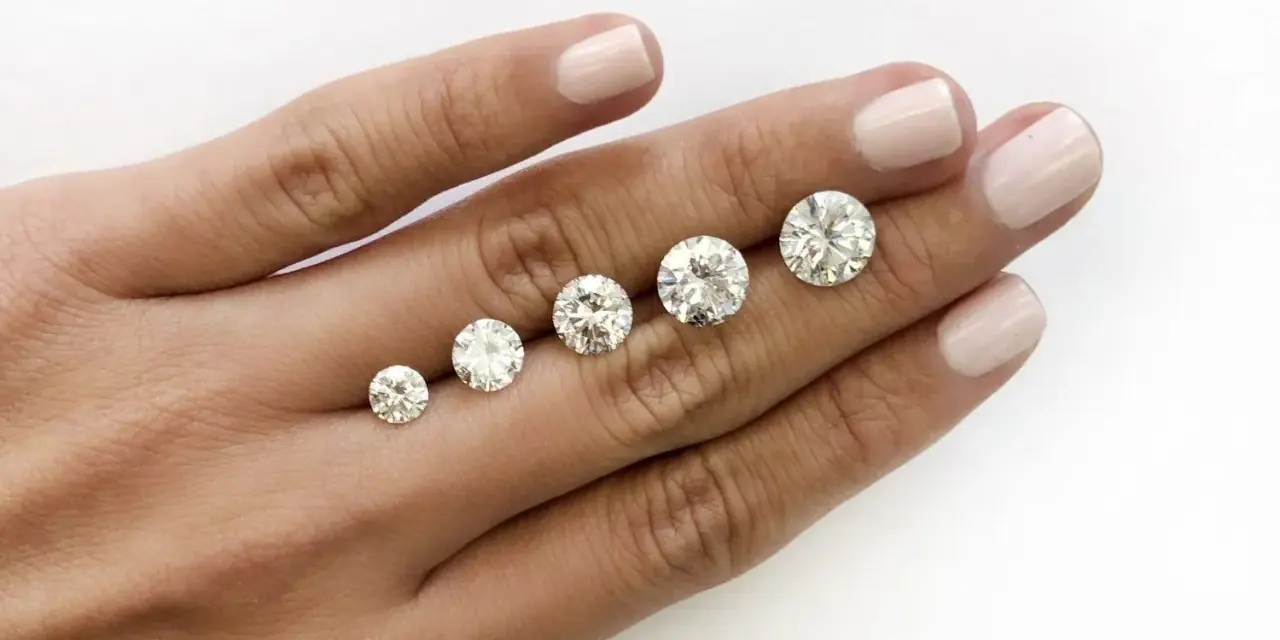
The question of what is considered a big diamond does not have one universal answer. In the UK, a stone can feel substantial at 1 carat in one setting and modest in another, because shape, cut, finger size and jewellery type all change the result. This article breaks down the practical benchmarks, the visual cues, and the mistakes that make buyers pay for weight they cannot actually see.
The short answer is that size is relative, but the hand gives the final verdict
- For a solitaire ring in the UK, around 1 carat is where many people start calling a diamond "big".
- For earrings and pendants, the same carat weight can feel larger or smaller depending on how the piece is worn.
- Carat is weight, not visible size; a 1 ct round stone is about 6.5 mm across, while a 2 ct round is roughly 8.1 mm.
- Oval, pear and marquise cuts usually look larger face-up than a round diamond of the same weight.
- A thin band, halo or open prong setting can make a centre stone look bigger without adding much carat weight.
- UK buyers often use a lower benchmark than US social media does, so context matters a lot.
What counts as big in everyday diamond buying
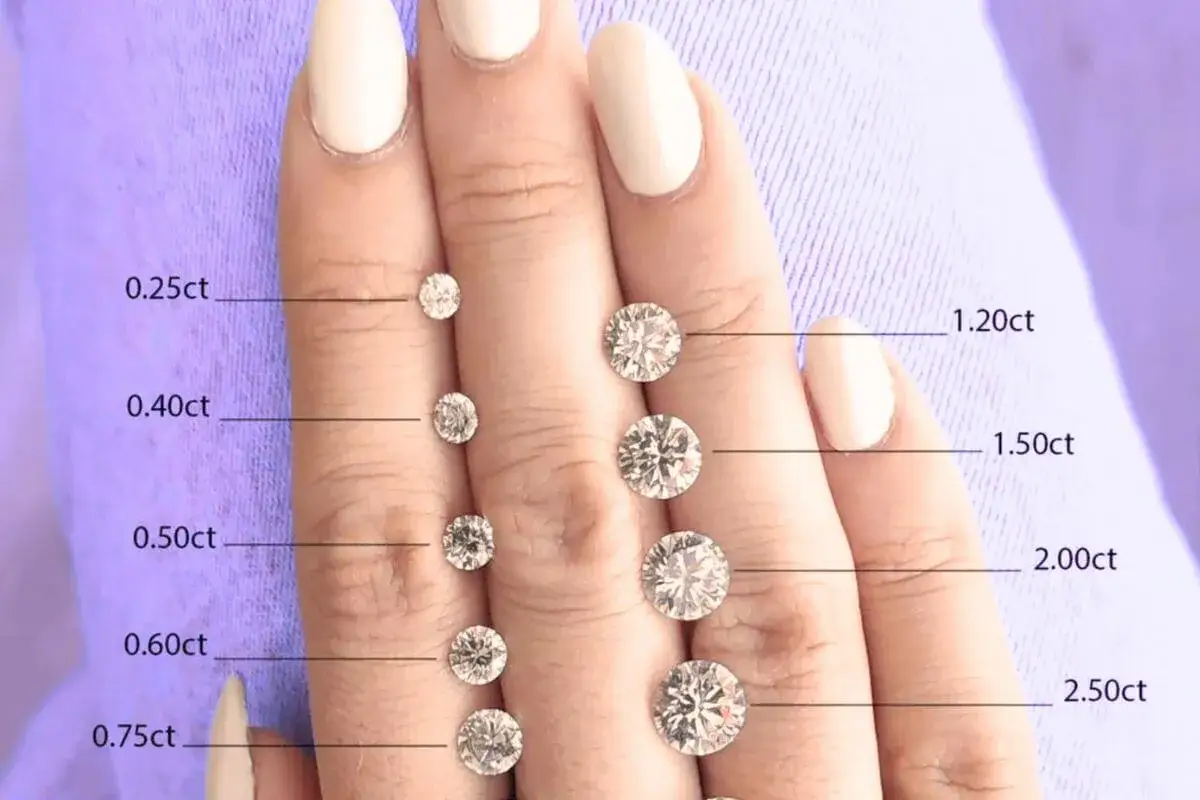
I usually separate diamond size into three practical bands rather than treating it as a single yes-or-no category. In ring buying, 1.00 to 1.49 carats is where many UK shoppers first start describing a stone as big, 1.50 to 1.99 carats feels very large, and 2.00 carats and above is firmly statement territory. Outside rings, the threshold shifts: a one-carat diamond in a pendant can feel refined, while a half-carat stone in studs can already read as substantial.
| Jewellery context | Where it usually starts to feel big | Why it reads that way |
|---|---|---|
| Stud earrings | About 0.50 ct per stone and up | The stones sit close to the face, so balance and symmetry matter more than raw weight. |
| Pendant necklace | About 0.75 to 1.50 ct | It hangs in open space, so the outline is easy to read from a distance. |
| Solitaire ring | Around 1.00 ct in the UK | The hand gives a clear scale reference, so the diamond is judged more strictly. |
| Statement ring | 2.00 ct and above | The stone becomes the centre of the design rather than just the focal point. |
For a round brilliant, the face-up diameter matters as much as the weight. A 1 ct round diamond is roughly 6.5 mm across, while a 2 ct round is about 8.1 mm across, so the visual jump is real but not as dramatic as the carat jump sounds. That is the first useful rule here: size and weight are connected, but they are not the same thing. Once that baseline is clear, the next question is what the carat number is actually telling you.
Why carat weight is only part of the answer
According to GIA, one carat equals 200 milligrams, or 0.2 grams. That is a weight measurement, not a size measurement, which is why two diamonds with the same carat weight can look very different on the hand. A stone can carry extra weight in the depth of the pavilion or a thick girdle and still show less surface area than a better-proportioned diamond.This is also why a 0.90 ct diamond and a 1.00 ct diamond can look almost identical once they are set, even though the market treats them differently. Jewellers sometimes call thresholds like half-carat, three-quarter carat, one carat and two carats magic sizes because prices tend to jump there faster than the visible difference suggests. I would never buy on carat alone if the goal is visual impact.
A heavier diamond is not automatically more impressive. A small but well-cut stone can look sharper, brighter and more elegant than a larger one that hides weight where the eye cannot see it. That distinction matters even more once shape and setting enter the picture.
Shape, cut, and setting can change the whole impression
If you want a diamond to read larger without jumping a full carat band, shape is the first place I would look. GIA notes that elongated shapes such as oval, pear and marquise can create the illusion of greater size compared with a round diamond of the same weight. In practice, that effect is strongest when the outline is clean and the proportions are balanced.
Shapes that usually look larger face-up
Oval stones often look generous because the length stretches the visual footprint. Pear cuts can have a similar effect, especially when the point is sharp and the shoulders are balanced. Marquise diamonds are the most dramatic of the three; they can look surprisingly large for their weight because so much of their outline extends across the finger.
Round brilliants still remain the default choice for many buyers, but they are not the most efficient shape if maximum spread is the goal. I often tell clients that a well-cut 1.2 ct oval can look more substantial than a deep 1.4 ct round, simply because the face-up area is doing more work.
Read Also: Diamond Cuts & Shapes - Which Sparkles Best For You?
Settings that either help or hold the stone back
- Thin shank or band - makes the centre stone look larger by comparison.
- Halo setting - adds a frame of smaller stones around the centre, increasing the visual footprint.
- Open prong setting - exposes more of the diamond, so the outline reads more clearly.
- Bezel setting - very secure, but it covers more of the edge, so the stone can appear smaller.
Cut quality ties all of this together. "Face-up size" is the visible footprint of the diamond when you look at it from above, and that is where proportions matter. A diamond with a shallow or well-spread profile can look larger without necessarily being heavier, while a deep stone can hide a meaningful amount of weight below the surface. That is why the shape conversation naturally leads into the market context, especially in the UK.
Why the UK benchmark feels smaller than online shopping makes it seem
The UK reference point is usually lower than people expect if they spend a lot of time looking at American content or celebrity rings. Queensmith's ring-trend reporting puts the average engagement ring around 0.6 to 0.8 carats, with Londoners often closer to 1.25 ct. That means a clean 1 ct centre stone already sits above the everyday norm for much of the country, while 1.5 ct and 2 ct move quickly into clearly luxurious territory.In 2026, lab-grown diamonds have also made larger stones more accessible, which can push expectations upward again. But accessibility does not change perception: a diamond still looks big or small against the hand, the setting and the social circle around it. I think this is where many buyers get confused. They compare a realistic UK budget to a feed full of macro photography and assume their own ring should look twice as large.
Finger size matters too. A 1 ct diamond can look bold on a slim hand and merely proportionate on a broader one. Long fingers also tend to carry larger stones more easily, while shorter fingers often benefit from elongated shapes that create the illusion of length. The right benchmark is not a celebrity snapshot; it is the person who will actually wear the piece.
How to choose a diamond that looks large without wasting money
When size is the goal, I always recommend working backwards from the look you want rather than from the carat number itself. That approach is more honest, and usually better value. If you want presence, ask first whether you want a diamond that looks delicate, noticeable or unmistakably bold on the body.
- Prioritise cut before carat. A poorly cut diamond can waste weight and look dull, which is a bad trade if impact matters.
- Choose shape strategically. Oval, pear and marquise shapes usually give you more visible spread per carat than a round stone.
- Use the setting as a frame. A thin band or halo can make the centre stone read larger without forcing you into the next carat band.
- Check dimensions, not just the certificate number. Two diamonds with the same carat weight can differ noticeably in millimetres.
- Consider the thresholds just below the obvious jumps. Stones like 0.90 ct, 1.40 ct or 1.90 ct can offer very similar visual presence to the next size up.
- Match the stone to the piece. A ring, pendant and pair of studs do not need the same carat weight to feel balanced.
My practical bias is simple: I would rather see a beautifully proportioned diamond that wears well than a heavier one that looks top-heavy, dull or awkward. If the setting, shape and cut are doing their job, a slightly smaller stone can often deliver more actual presence than the bigger number would suggest. That is the point where the size conversation stops being theoretical and starts becoming personal.
The size threshold that matters is the one you can actually live with
A diamond is big when it feels visually dominant in the jewellery it belongs to, not when it merely crosses a nice round number. For most UK buyers, that means around 1 carat is the first clearly large benchmark for a ring, while 2 carats and above moves into unmistakable statement territory. Everything in between depends on shape, cut, finger size and the design around it.
If you remember only one thing, let it be this: carat is a starting point, not the final answer. The best large-looking diamond is the one that balances presence, sparkle and wearability, so the piece feels intentional rather than inflated. That is usually the most satisfying result, and the one that still looks right years later.