June is the pearl month, and the practical details matter just as much as the symbolism
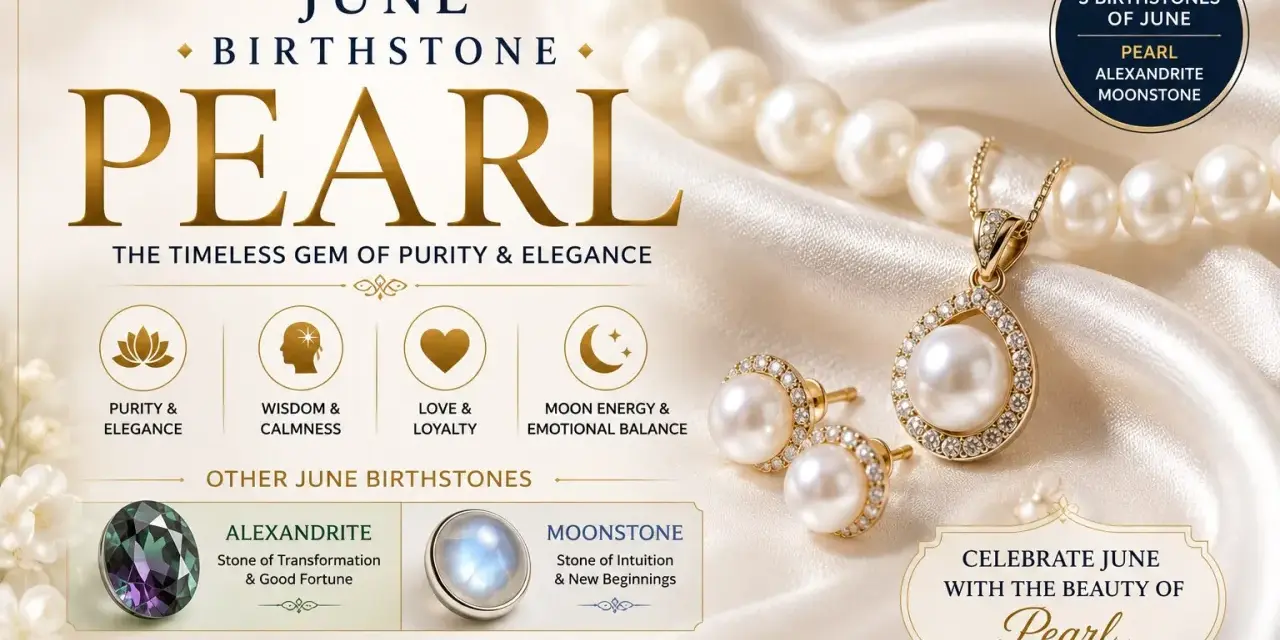
- June is the month most commonly linked with pearls in both traditional and modern birthstone charts.
- Pearl, moonstone and alexandrite are the three stones now often associated with June.
- Pearls are organic gemstones, so they need gentler handling than diamonds, sapphires or rubies.
- For gifts, stud earrings, a pendant or a short strand are the easiest choices to wear often.
- Good pearl jewellery is judged first by lustre, then by shape, surface and size.
- Keep pearls away from perfume, acids, steam and harsh cleaners if you want the finish to stay bright.
Why June is the pearl month
June is the month most people mean when they ask about pearls and birthstones. In the UK, that is the safest and most useful answer: pearls are the classic June birthstone, even though modern charts often include moonstone and alexandrite as well. Birthstone traditions evolved over time, so the list is not a rigid law; it is a cultural convention that changed as jewellers, historians and collectors standardised it.That is why June feels richer than some other birthstone months. Pearls carry the old, established meaning, while moonstone and alexandrite broaden the choice for people who want a different look or budget. In other words, if you want the traditional answer, pearl is it. If you want the full modern picture, June gives you three options instead of one. That makes the next question more interesting: what actually sets pearls apart from the other birthstones?
What makes pearls different from other birthstones
Pearls are not mined from the earth. They form inside molluscs such as oysters and mussels, which is why they are usually described as organic gems rather than mineral gemstones. That alone changes how they look, how they age and how they should be worn.
They are valued for lustre, not sparkle
Lustre is the sharp, soft glow that seems to come from within the pearl. It is what makes a good pearl look alive rather than merely shiny. I usually tell people to judge lustre before size, because a smaller pearl with excellent lustre will look more luxurious than a larger one that appears flat.
They are softer than most people expect
Pearls sit at roughly 2.5 to 4.5 on the Mohs scale, so they scratch more easily than most precious stones. They can also react badly to acids, perfumes and strong detergents. That does not make them fragile in the delicate, unwearable sense, but it does mean they reward careful habits.
The pearl family is wider than many buyers realise
- Freshwater pearls are the most accessible and often the best starting point for everyday jewellery.
- Akoya pearls are known for a cleaner round shape and a classic white or cream look.
- South Sea pearls are larger and tend to sit at the higher end of the market.
- Tahitian pearls are prized for darker tones, including grey, green and peacock shades.
- Mother-of-pearl is the shell lining, so it shares the same family of beauty but is not the same thing as a pearl.
Most pearls you see in shops today are cultured, which means the process begins with human assistance but the pearl still forms inside a mollusc. That is normal, not inferior by default; what matters is the quality of the final pearl. Once you understand those differences, it becomes much easier to compare pearl with the other June birthstones instead of treating them as interchangeable.
How pearl jewellery compares with the other June stones
June is unusual because it gives you a genuine choice. Pearls feel traditional and quietly formal; moonstone feels softer and more ethereal; alexandrite is the rare, dramatic outlier. If you are helping someone choose a birthday gift, that difference matters more than people think.
| Stone | Look | Strength | Trade-off | Best for |
|---|---|---|---|---|
| Pearl | Soft glow, classic white, cream, pink or grey tones | Timeless, elegant, easy to recognise | Softer surface, needs gentle care | Traditional gifts, formal jewellery, heirloom pieces |
| Moonstone | Milky body colour with a floating sheen | Romantic and slightly modern | Can feel less structured and more delicate visually | People who like subtle colour and a softer mood |
| Alexandrite | Colour-changing from greenish in daylight to reddish under warm light | Rare and highly distinctive | Usually far more expensive than pearl or moonstone | Collectors, statement gifts, high-end jewellery |
How to choose a pearl piece that suits real life
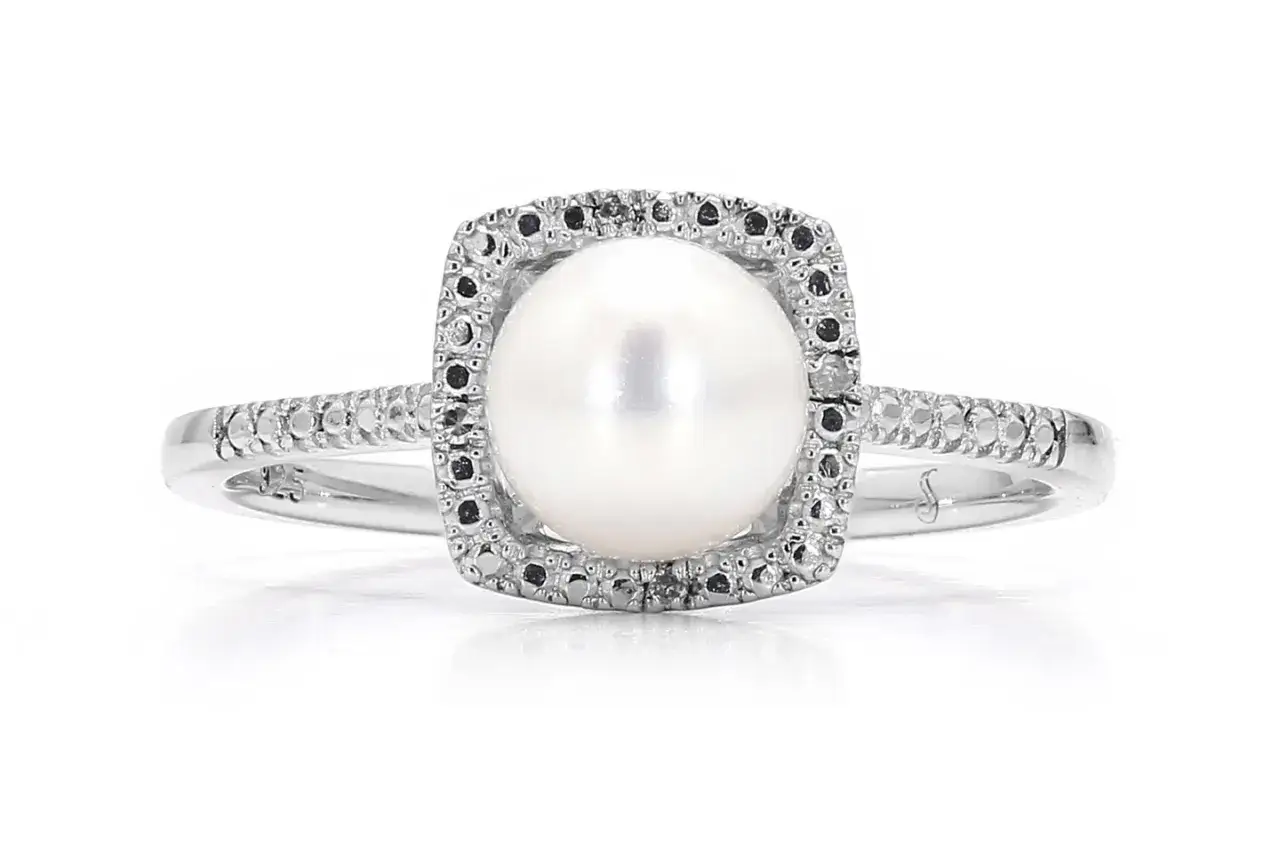
The best pearl purchase is the one the wearer can actually live in. For me, that usually means starting with the jewellery format rather than the gemstone alone. A pearl pendant behaves differently from a strand, and a pair of studs solves a different problem from a statement necklace.
The safest formats for gifts
- Stud earrings are the easiest everyday choice and usually the least risky if you do not know the wearer’s style well.
- Pendants sit close to the body and work with both casual knitwear and smarter outfits.
- Bracelets can look lovely, but they are more exposed to knocks, so they are not my first pick for a hard-wearing piece.
- Strands are the most classic pearl statement and the most formal in feel.
What to check before you buy
Buy with your eyes first. Strong lustre is the main quality marker, followed by a clean surface, attractive shape and sensible matching if you are buying a pair or strand. Nacre is the layered material that gives a pearl its body and depth. Thicker nacre usually means a richer look and better long-term wear.
Read Also: May 25th Birthstone - Emerald or Chrysoprase? Your Guide
Typical UK price bands
Prices vary with size, lustre, metal and origin, but these broad ranges are useful when you want a realistic budget:
| Jewellery type | Typical UK price range | Why it makes sense |
|---|---|---|
| Freshwater pearl studs | £20-£150 | Good first pearl purchase and easy to wear every day |
| Simple pearl pendant | £30-£300 | Works for gifting and adds polish without feeling formal |
| Single-strand pearl necklace | £80-£800+ | Classic birthday or milestone piece with strong versatility |
| Akoya, South Sea or fine matched pearls | £250-£2,000+ | Higher-end choice when lustre and matching matter most |
My rule is simple: do not let size bully you into a bad purchase. A smaller pearl with excellent lustre usually looks better than a larger one with a dull surface. Once that decision is made, care becomes the real difference between jewellery that keeps its glow and jewellery that fades too quickly.
How to care for pearls so they keep their lustre
Pearls are easy to love and slightly more demanding to maintain. The good news is that proper care is not complicated. It just needs consistency, because pearls react badly to the kinds of shortcuts that do not bother harder gemstones.
- Put pearls on last after perfume, hairspray, lotion and make-up have dried.
- Take them off first when you get home, especially before cleaning or changing clothes.
- Wipe them gently with a soft cloth after wear to remove skin oils and product residue.
- Store them separately in a soft pouch or lined box so they do not rub against harder jewellery.
- Avoid ultrasonic and steam cleaners, which are too harsh for pearl surfaces.
- Restrung strands should usually be checked regularly; if worn often, every 12 to 24 months is sensible.
It also helps to remember that nacre can dry out or dull if pearls are neglected for long periods. I would never soak them in water or expose them to abrasive cloths, toothbrushes or chemical dips. If they need more than a quick wipe, they probably need professional attention rather than a stronger home fix. That is the last practical issue worth settling before you choose a piece with confidence.
The simplest way to choose a June pearl gift
If I had to narrow the decision down to one rule, it would be this: choose the pearl piece the wearer is most likely to wear often, not the one that looks most ceremonial in the box. For many people, that means freshwater studs or a small pendant; for someone who loves classic dressing, it may mean a short strand or an elegant Akoya pair. The right choice depends less on price than on how the jewellery fits into real life.
- For a minimal wardrobe, choose small white or cream studs.
- For a more classic style, choose a pendant or short strand in white or ivory tones.
- For a modern look, consider baroque pearls or darker Tahitian shades.
- For a meaningful gift on a tighter budget, prioritise lustre and finish over carat-style size comparisons.
That is why pearls remain such a strong June birthstone: they are elegant without being loud, and they can be styled for everyday wear or saved for occasions. If you want one clear answer, June is the pearl month; if you want the better answer, it is the month that rewards careful choice and gentle care.